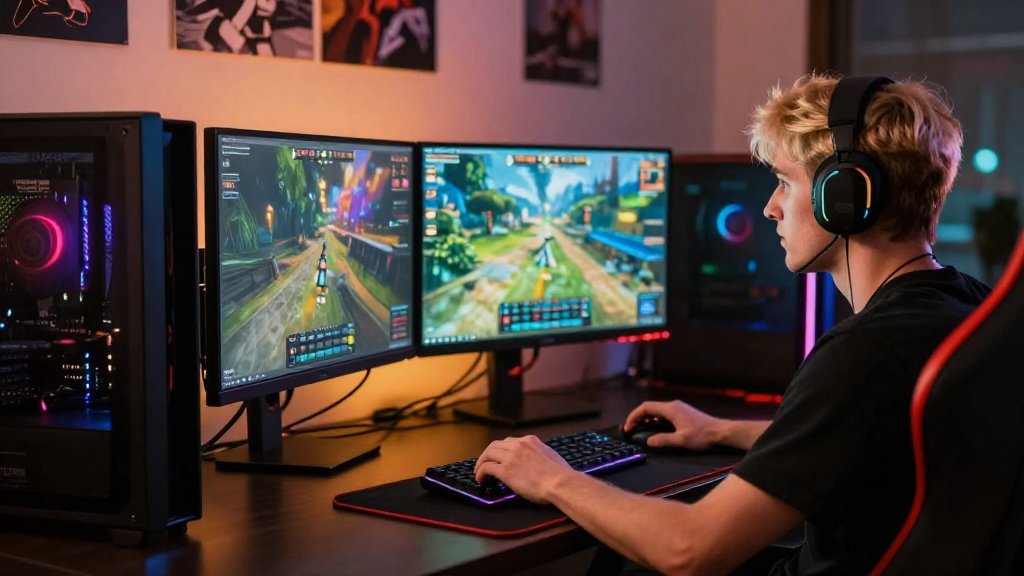
In the digital age, understanding how gamers simulate scenarios has become integral to both gameplay experience and game development.
This article dives deep into this fascinating topic, exploring the techniques, tools, and psychology behind scenario simulation in gaming.
Why Do Gamers Simulate Scenarios?
Simulating game scenarios allows players to engage with the game world in profound and intricate ways.
Here are a few reasons why this practice is so popular:
-
Strategic Planning
Gamers can devise and refine strategies by testing various approaches in a simulated environment. -
Skill Improvement
Players often simulate scenarios to sharpen their skills and improve their reaction times. -
Experimentation
Simulation provides a safe space to experiment with game mechanics without the fear of permanent consequences. -
Realism
Many contemporary games offer realistic simulations that allow players to experience life-like situations. -
Narrative Development
Players can explore different outcomes by manipulating scenarios, leading to unique story arcs.
Understanding how gamers simulate scenarios can enhance both playability and player satisfaction.
What Tools Do Gamers Use for Simulation?
Gamers have a plethora of tools at their disposal for simulating scenarios.
This includes software and gaming genres specifically designed for this purpose:
-
Sandbox Games
Games like Minecraft and Garry’s Mod allow players to build, explore, and manipulate environments. -
Simulation Games
Titles such as The Sims, Cities: Skylines, and Microsoft Flight Simulator offer players the tools to create complex scenarios. -
Game Editors
Many games come equipped with level editors or modding tools that let players craft custom scenarios. -
AI Simulations
Advanced AI systems can simulate opponents and scenarios, allowing players to practice different tactics. -
Virtual Reality (VR)
VR technology allows for immersive simulations, making scenario-based practice more engaging and realistic.
With a range of tools available, players can effectively implement their strategies and test various scenarios at their own pace.
How Does Scenario Simulation Work in Different Genres?
Understanding how gamers simulate scenarios can vary significantly across gaming genres.
Let’s break down the approach used in various categories:
Action and Adventure Games
In action games, players often engage in rapid-fire situation simulations.
For example, in games like Dark Souls, players can practice combat scenarios repeatedly to master the game’s mechanics.
Strategy Games
Strategy games such as StarCraft and Civilization involve deeper scenario simulation as players analyze resources, anticipate opponent moves, and develop long-term plans.
The simulation of resources, troop movements, and battlefield tactics is crucial for success.
Role-Playing Games (RPGs)
In RPGs like The Witcher series, players simulate scenarios by making choices that impact the narrative.
By testing different dialogue options, players can explore multiple endings and character developments.
Sports Games
In sports titles like FIFA or NBA 2K, gamers simulate match scenarios to practice plays and strategies.
They can experiment with formations and player skills to find the winning combination.
Simulation and Management Games
Games such as Football Manager and RollerCoaster Tycoon center around deep scenario simulation.
Players control various aspects of their teams or parks and can adjust strategies based on simulated fan reactions or weather conditions.
What Psychological Factors Influence Scenario Simulation?
Psychology plays an essential role in how gamers simulate scenarios.
Several elements keep players engaged and willing to explore alternative outcomes:
-
Fear of Failure
Simulating scenarios allows players to confront their weaknesses without facing consequences in the real game. -
Curiosity
Many players are inherently curious about what-if scenarios and will simulate them out of a desire to discover unknown outcomes. -
Learning
Observing the results of different approaches can provide valuable lessons that players can apply in actual gameplay. -
Reward Systems
Gamers are often driven by the rewards, such as achievements or unlockables, that can be gained by successfully simulating scenarios. -
Social Interaction
Multiplayer games encourage players to simulate scenarios together, leading to teamwork and competition.
This psychological perspective provides insight into why and how well gamers simulate scenarios in their gaming experiences.
How Do Developers Create Simulations?
Game developers also dive into how gamers simulate scenarios when designing their worlds.
Creating a compelling simulation involves several considerations:
-
Realism and Mechanics
Developers must craft realistic systems and mechanics that players can manipulate effectively. -
Feedback Loops
Immediate feedback on player actions enhances the simulation experience, making the gameplay more engaging. -
Scalability
Developers consider how their scenarios can adapt and scale based on player skill levels. -
Emergent Gameplay
Fostering systems that lead to unexpected interactions allows gamers to create unique scenarios spontaneously. -
Balancing Difficulty
Balancing the challenge of scenarios keeps players engaged without causing frustration.
These design principles ensure that players find value in simulating scenarios, enhancing overall game enjoyment.
How Can Gamers Use Scenario Simulation to Better Themselves?
For gamers looking to improve their skills, understanding how gamers simulate scenarios can lead to tangible benefits.
Here are some tips to harness the power of simulation:
1. Experiment with Different Game Styles
Dive into various genres and styles to discover new strategies and techniques.
2. Study Professional Players
Watch streams or tournaments to understand how top gamers simulate scenarios and adapt their strategies.
3. Practice Regularly
Dedicate time to simulate scenarios regularly, focusing on specific skills you want to improve.
4. Collaborate with Others
Join communities or groups where you can share insights and techniques for better scenario simulation.
5. Analyze Your Play
Record your gameplay to review and see how effective your scenario simulations are in practice.
Conclusion
The way how gamers simulate scenarios is intricate, involving a myriad of tools, psychological influences, and gaming genres.
As technology progresses, so too will the methods of simulation, leading to even more immersive and educational experiences for players.
By embracing these techniques and principles, gamers can enhance their performance and enjoyment, making each gaming adventure unique and rewarding.
Stay ahead of the gaming curve by continually exploring new strategies on how to simulate scenarios effectively.