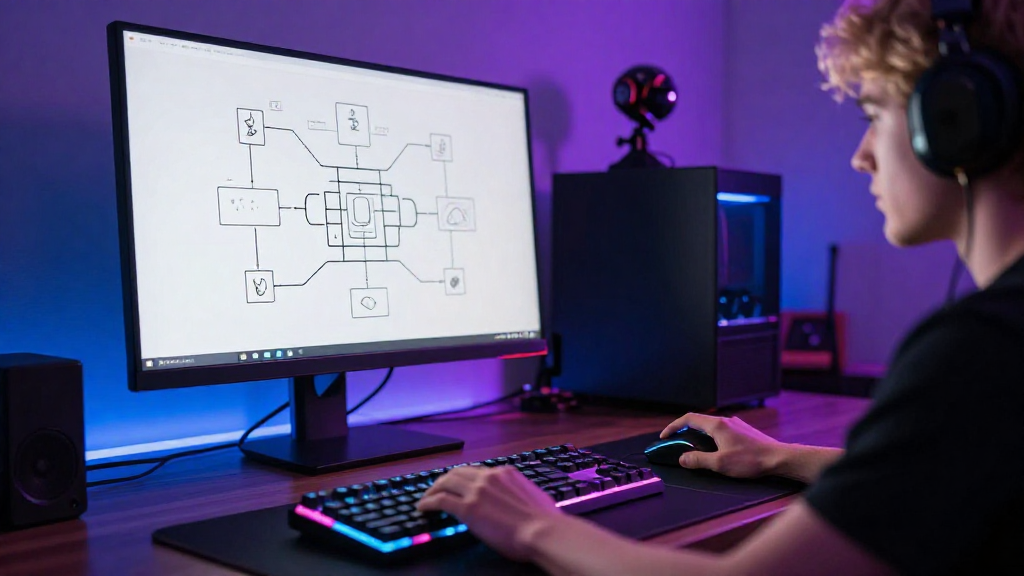
Are you curious about how gaming and thought mapping intertwine?
More than just a buzzword, thought mapping has become an essential technique in the gaming industry for both developers and players.
In this informative article, we delve into the concept of thought mapping as it relates to gaming.
We’ll explore its role, benefits, and how you can implement it within your gaming experiences.
How Does Thought Mapping Enhance Gameplay?
Thought mapping involves visually organizing ideas, concepts, or items to comprehend better the relationships between them.
In gaming, this visual map can create a clearer understanding of complex mechanics, storyline plots, or character developments.
Key Aspects of Thought Mapping in Gaming:
-
Enhanced Clarity: By visually laying out the game’s elements, players can easily grasp intricate systems.
-
Problem Solving: Thought maps help players strategize and navigate challenges effectively.
-
Creative Design: Designers utilize thought mapping to brainstorm and develop game concepts.
Why Is Thought Mapping Important for Game Developers?
For developers, gaming and thought mapping can be critical during the development process.
It allows them to:
-
Outline Storylines: Crafting intricate plots is easier when ideas are visualized.
-
Design Characters: Developers can ensure their characters have unique backstories and motivations by mapping them out.
-
Plan Game Mechanics: Thought maps help in visualizing how different mechanics work together to create an engaging experience.
What Techniques Are Used in Thought Mapping?
There are various techniques for effective thought mapping in gaming. Some of the most common are:
- Mind Maps: Starting with a central idea and branching out into related concepts. This is particularly useful for game plot development.
- Tips for Mind Mapping:
- Start with a central theme (e.g., game genre).
- Create branches for characters, plots, mechanics, etc.
- Use colors and symbols to make the map visually appealing.
- Flowcharts: Best for illustrating processes and mechanics in gameplay.
- Benefits of Flowcharts:
- They clarify user pathways and decision trees.
- Help in identifying areas for improvement in gameplay.
- Concept Maps: Ideal for showcasing multiple relationships between ideas.
- Application in Gaming:
- Useful for depicting character interactions or faction relationships in games.
How Can Players Use Thought Mapping to Improve Their Skills?
Players can leverage thought mapping to enhance their gaming abilities in several ways:
-
Strategy Development: By mapping out a game level or scenario, players can devise effective strategies.
-
Tracking Progress: Visual maps can show players how far they are in a game and what resources remain.
-
Skill Improvement: Players can isolate their weaknesses by mapping skills or character abilities.
Practical Steps for Players:
-
Choose a Tool:
– Use digital software like MindMeister or Miro, or go old-school with pen and paper. -
Identify Game Elements:
– List the major components you want to map (characters, plot twists, strategies). -
Create Connections:
– Draw lines to connect related concepts. For example, a character’s backstory might influence their decision in the game. -
Review and Adjust:
– Keep the map updated as you progress to capture new developments in your understanding.
What Are Some Examples of Thought Mapping in Popular Games?
Many popular games utilize thought mapping, though often in a less overt way. Here are some examples:
-
The Legend of Zelda series: Uses intricate maps where players must navigate through dungeons, utilizing a mix of maze-like designs and story-based progression.
-
Final Fantasy series: Features interconnected story arcs and character relationships that can be visually mapped to understand the sprawling narrative.
-
The Witcher 3: Allows for character interactions and quests that can be plotted out, helping players manage intricate storylines.
Can Thought Mapping Help With Game Design Education?
Absolutely! Learning institutions that specialize in game design often incorporate gaming and thought mapping into their curricula:
-
Course Projects: Students develop thought maps for their game projects, fostering creativity and organizational skills.
-
Collaborative Learning: Groups can work together to create maps, improving teamwork and communication.
-
Visual Communication: Students learn to convey complex ideas visually, preparing them for industry demands.
What Are the Future Trends of Thought Mapping in Gaming?
As technology evolves, so does the potential for thought mapping in gaming.
Here are some emerging trends:
-
AI Integration: Artificial intelligence could be used to create dynamic thought maps based on player behavior and choices.
-
Enhanced Tools: Future software may offer real-time updates of thought maps as gameplay progresses.
-
Immersive Experiences: With VR and AR technology, thought mapping could turn into a more interactive process, allowing players to visualize strategies in real time.
Conclusion: Embracing Thought Mapping in Gaming
In conclusion, gaming and thought mapping offer numerous benefits to both players and developers.
By harnessing visualization techniques, they can navigate complex gameplay elements and enhance storytelling.
Whether you are diving into a new gaming experience or developing one, consider the power of thought mapping.
Start creating pathways through your narratives, plots, and strategies, and elevate your gaming or design experience to the next level!
The integration of thought maps will not only enrich your understanding but could also lead to improved performance, creativity, and enjoyment in the vast world of gaming. Happy mapping!