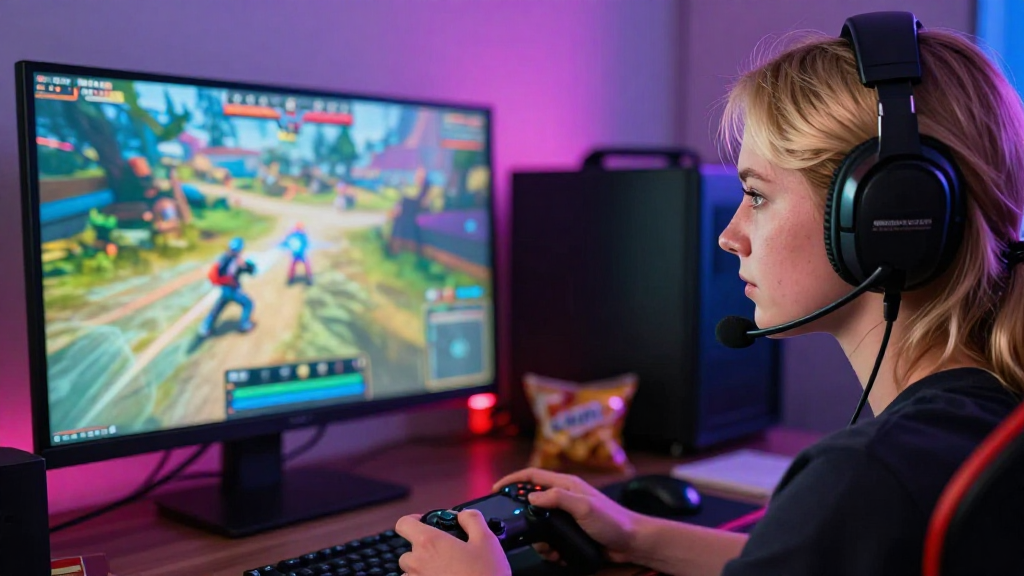
In recent years, the debate around whether gaming enhances observational skills has gained significant traction.
Many researchers and gamers alike are exploring the connection between gaming and various cognitive abilities, particularly observational skills.
What Are Observational Skills?
Observational skills refer to the ability to notice and accurately interpret details in one’s environment.
These skills are essential in daily life, influencing how individuals process information, respond to their surroundings, and engage with others.
For example, strong observational skills can improve situational awareness, enhance problem-solving, and facilitate effective communication.
How Does Gaming Affect Observational Skills?
Numerous studies suggest that gaming can play a significant role in enhancing observational skills.
Here are some potential ways that gaming and observational skills intersect:
-
Increased Attention to Detail:
Fast-paced games often require players to notice small changes in their environments quickly.
For instance, players in puzzle or mystery games must identify clues and anomalies, honing their attention to detail. -
Spatial Awareness:
Many games involve navigating complex environments that challenge players to understand three-dimensional space.
This could lead to improved spatial reasoning, a crucial component of observational skills. -
Decision-Making Under Pressure:
Action and strategy games frequently put players in high-stakes situations that require split-second decisions.
This can improve players’ abilities to assess and react to multiple factors simultaneously, enhancing their observational prowess. -
Pattern Recognition:
Gamers are often trained to recognize patterns quickly, which is closely linked to observational skills.
For example, in games that involve enemy behaviors or strategic moves, recognizing these patterns becomes critical for success. -
Dual-Task Performance:
Many games involve multitasking — managing resources, monitoring health, and observing the environment.
This can improve players’ capacity to sustain attention across various stimuli, thus enhancing their observational skills.
Can Any Type of Gaming Enhance Observational Skills?
Not all gaming experiences are created equal.
The genre and type of game played can significantly influence the extent to which gaming enhances observational skills.
Here are some popular genres and their potential benefits:
1. Action Games
Action games are characterized by speed and require fast reflexes.
Players must constantly observe their surroundings to avoid obstacles and enemies.
Benefits:
– Enhances reaction time
– Improves visual acuity
2. Puzzle Games
Puzzle games challenge players’ reasoning and attention to detail.
They require careful observation to solve intricate problems and advance.
Benefits:
– Strengthens critical thinking
– Develops analytical skills
3. First-Person Shooters (FPS)
FPS games often demand acute spatial awareness and quick decision-making regarding positioning and movement.
Benefits:
– Enhances spatial awareness
– Improves resource management skills
4. Role-Playing Games (RPG)
RPGs involve storytelling and complex character development.
They allow players to explore diverse environments and engage in various quests.
Benefits:
– Encourages exploration
– Promotes narrative awareness
Are There Exceptions?
While gaming can enhance observational skills, it is essential to recognize that not all gaming experiences are beneficial.
Excessive gaming or engaging in repetitive games with little cognitive challenge may not provide the necessary stimulation for skill enhancement.
Unproductive Gaming Habits:
-
Playing Low-Quality Games:
Games that lack challenge or depth can lead to minimal cognitive engagement. -
Excessive Screen Time:
Overindulgence in gaming can lead to decreased attention to real-world observations. -
Neglecting Real-World Interactions:
Spending too much time gaming can result in underdeveloped social skills and reduced engagement with one’s surroundings.
What Does Research Say?
A growing body of research supports the idea that gaming can enhance observational skills.
For instance, a study published in the journal Nature found that gamers performed better in tasks requiring quick assessments and decisions compared to non-gamers.
Furthermore, psychological studies have demonstrated that action-game players are more adept at processing visual information and can track multiple moving objects more effectively.
How Can You Leverage Gaming to Enhance Observational Skills?
If you’re looking to use gaming as a tool for developing observational skills, here are some tips to maximize your experience:
-
Choose the Right Games:
Opt for games that challenge your mind.
Look for action, puzzle, and strategy games that require observation. -
Set Goals:
Set specific goals for each gaming session.
For example, focus on noticing finer details in the game’s environment or improving your reaction time. -
Take Breaks:
Ensure that you take regular breaks to give your mind a chance to process what you’ve learned. -
Reflect on Your Gameplay:
After gaming sessions, reflect on what skills you practiced and how you improved your observational abilities. -
Combine with Real-World Practice:
Try to apply the skills developed in gaming to real-life scenarios.
For instance, practice situational awareness by observing your surroundings when you’re outside.
Conclusion
Overall, the connection between gaming and observational skills appears to be quite promising.
The right games can enhance attention to detail, spatial reasoning, and quick situational assessments.
However, it’s important to strike a balance and remain mindful of how gaming fits into a healthy lifestyle.
By choosing engaging and challenging games, setting specific goals, and integrating your gaming experience with the real world, you can optimize the potential benefits of gaming and observational skills.
As the gaming industry continues to evolve, it is likely that we will gain even deeper insights into the cognitive benefits of gaming, including its potential to enhance observational skills in players of all ages.