Choosing the right soldering iron can make RC repairs, battery work, and FPV drone builds faster and more reliable. The best tool depends on whether you value portability, precise temperature control, high wattage, or a complete bench setup.
We selected 10 options spanning cordless irons, compact digital pens, traditional temperature-controlled models, and 2-in-1 hot-air stations so hobbyists can match the tool to their projects and workspace.
Best 10 Rc Soldering Irons for Hobbyists Picks for 2026
Best Outdoor FPV Pick
HGLRC RC2 65W Soldering Iron Kit

- 65W power with approximately 9-second heating
- OLED display and configurable sleep settings
- Supports PD3.0, QC2.0, and 12V–25V DC input
Best For: Portable FPV drone repairs and field soldering
Best Cordless Controls
FNIRSI HS-03 Rechargeable Soldering Iron

- 2600mAh battery with USB-C powered operation
- 3-second heating and 212°F–842°F temperature range
- Tool-free tip changes and adjustable IPS display
Best For: Mobile electronics repair and modding
Best Traditional Bench Option
Hakko FX601-02 67W Soldering Iron

- 67W corded power for bench work
- Closed-loop electronic temperature control
- Slender ergonomic handpiece with included T19-D5 tip
Best For: Consistent temperature-controlled bench soldering
Best Precision Repair Kit
Fanttik T1 Max Cordless Soldering Iron

- 7-second heating with four included C210 tips
- 2600mAh cordless battery plus USB-C operation
- Includes stand, tweezers, desoldering pump, and sponges
Best For: Portable PCB, wire, and precision electronics repair
Best All-in-One Station
WEP 8786D-I SE 2-in-1 Rework Station
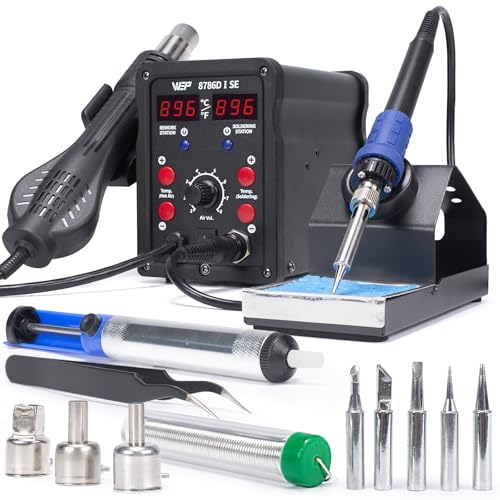
- Combines soldering and hot-air rework
- Includes tips, nozzles, tools, and consumables
- Digital controls with PID stabilization
Best For: Hobbyists needing soldering and hot-air rework in one station
Best Portable Starter Kit
60W Adjustable Soldering Iron Kit

- Compact plug-in pencil design
- Heats to temperature in about 15 seconds
- Includes five tips, solder, flux, and stand
Best For: Beginners and hobbyists handling basic electronics and wiring
Best Accessory-Packed Value
60W Premium Soldering Iron Kit

- Adjustable 200–450°C temperature range
- Includes tips, solder, flux, pump, and tweezers
- Ceramic heater with on/off switch
Best For: DIY users wanting a complete handheld kit for small electronics
Best Overall

- 80W ceramic heater warms in about 20 seconds
- LCD temperature control from 180°C to 480°C
- Includes five tips and essential starter accessories
Best For: Beginners and general DIY repairs
Best Compact Starter
60W Adjustable Soldering Iron Kit
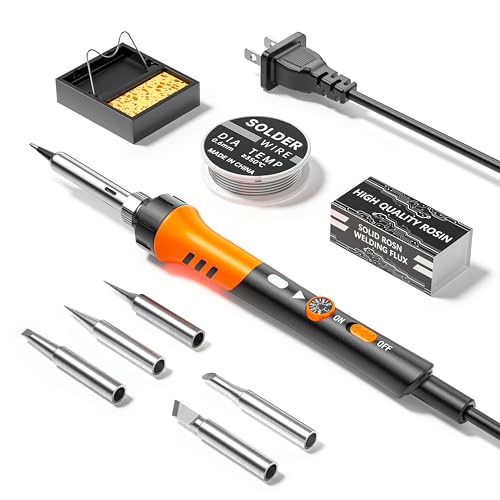
- 60W corded iron with 200°C–450°C adjustment
- Five tips cover varied small repair tasks
- On/off switch and heat-resistant ergonomic handle
Best For: Light electronics and small DIY projects
Best High-Power Pick
100W LED Digital Soldering Kit

- 100W heater reaches working heat in about 15 seconds
- LED display supports 180°C–500°C and dual units
- Includes wick braid, tips, stand, and soldering supplies
Best For: PCB repairs and higher-output hobby work
Best Outdoor FPV Pick – HGLRC RC2 65W Soldering Iron Kit
For hobbyists looking for RC soldering irons for hobbyists, the HGLRC RC2 is designed around portable FPV and drone work. It offers rapid heating, an OLED display, and several power options for benches, vehicles, or field repairs.
Best For: FPV drone builders and hobbyists who need a portable, higher-power soldering iron.
Pros:
- 65W output and heating in about 9 seconds.
- OLED display with adjustable brightness, temperature units, and sleep settings.
- Supports PD3.0, QC2.0, and 12V–25V DC power sources.
- Includes tips, charger, and portable storage bag.
Cons:
- Requires a compatible external power source for many portable setups.
- Its listed maximum temperature is 842°F, which may not suit every high-temperature task.
The RC2 stands out when portability and power flexibility matter more than a traditional plug-in workstation. Its display and quick heat-up also make it practical for repeated drone and electronics jobs.
Best Cordless Controls – FNIRSI HS-03 Rechargeable Soldering Iron
The FNIRSI HS-03 is a flexible choice among RC soldering irons for hobbyists who want cordless operation and precise temperature adjustments. Its rechargeable battery, fast heating, and tool-free tip changes suit electronics projects and repairs away from the workbench.
Best For: Electronics hobbyists and modders who value cordless use, adjustable controls, and a clear display.
Pros:
- 2600mAh battery supports cordless use, while USB-C allows soldering during charging.
- Heats in about 3 seconds and offers a 212°F–842°F range.
- Combines five quick temperature levels with fine 1–50°F adjustments.
- Includes K-, I-, and IS-style tips that can be changed without tools.
Cons:
- Its 10W rating is lower than some full-size corded soldering irons.
- Charging and powered use depend on a 5V USB-C source.
With an IPS color screen, left- and right-hand modes, and adjustable sleep settings, the HS-03 is built for comfortable, mobile precision work. It is particularly appealing for small electronics and gaming modifications.
Best Traditional Bench Option – Hakko FX601-02 67W Soldering Iron
The Hakko FX601-02 takes a more conventional approach to RC soldering irons for hobbyists. Its corded 67W design uses closed-loop electronic temperature control, making it a straightforward option for consistent work at a fixed bench.
Best For: Hobbyists who prefer a durable, corded iron with dial-based temperature control.
Pros:
- Closed-loop electronic control helps maintain consistent heat.
- Dial lets users select the working temperature directly.
- Slender ergonomic handpiece supports comfortable handling.
- Includes a lock key and T19-D5 standard tip.
Cons:
- Corded operation limits portability.
- It does not include the cordless, digital-display features found on the other options.
The FX601-02 is a sensible pick for a dedicated workbench where predictable temperature control matters more than portability. Its durable construction and strain relief also support regular hobby use.
Best Precision Repair Kit – Fanttik T1 Max Cordless Soldering Iron
The Fanttik T1 Max is a compact option for RC soldering irons for hobbyists working on precision electronics, circuit boards, and wires. It combines cordless and USB-C operation with C210 tips, automatic sleep, and a storage stand that helps keep accessories organized.
Best For: Precision electronics repair, 3D-printing projects, and hobbyists who want a complete portable kit.
Pros:
- Heats in about 7 seconds and includes four C210 tips.
- 2600mAh battery provides cordless operation, with up to 60 minutes listed at 840°F.
- Offers six temperature levels from 390°F to 840°F.
- Includes tweezers, desoldering pump, sponges, and a 360° swivel stand.
Cons:
- Its maximum listed output is 16W, so it is less suited to high-demand work than 65W–67W irons.
- Temperature selection uses six preset levels rather than continuously adjustable control.
The T1 Max is attractive for hobbyists who want portability without assembling a separate accessory kit. Its C210 tips and sleep-and-restart behavior make it especially convenient for detailed, intermittent repair work.
Best All-in-One Station – WEP 8786D-I SE 2-in-1 Rework Station
For hobbyists looking beyond basic bench work, this 2-in-1 station combines a temperature-controlled soldering iron with hot-air rework. It is a versatile option among rc soldering irons for hobbyists, particularly when RC electronics require both conventional soldering and component rework.
Best For: Hobbyists who want one station for soldering, desoldering, and hot-air rework.
Pros:
- Combines a soldering station and adjustable hot-air station.
- Includes five soldering tips, three hot-air nozzles, tweezers, solder wire, and a desoldering pump.
- Offers digital temperature displays, PID stabilization, and useful standby or sleep modes.
Cons:
- It is a benchtop station rather than a compact plug-in pencil iron.
- Rated for 110–127V USA power; it should not be connected to a 220V socket.
This is the most capable and feature-rich choice in the group. Its hot-air functionality adds flexibility for rework, while the included accessories let you start on projects without assembling a separate toolkit.
Best Portable Starter Kit – 60W Adjustable Soldering Iron Kit
This 60W pencil-style iron keeps the setup simple: plug it in, select a temperature, and begin working. Its compact format makes it a practical pick for hobbyists comparing rc soldering irons for hobbyists for basic electronics, wiring, and occasional repairs.
Best For: Beginners and hobbyists who want a portable, ready-to-use soldering kit.
Pros:
- Adjustable temperature from 392°F to 842°F (200°C to 450°C).
- Ceramic heating core reaches the desired temperature in about 15 seconds.
- Includes five interchangeable tips, solder wire, flux paste, a stand, and a sponge.
Cons:
- It does not include a full soldering station or hot-air rework function.
- The kit is corded and designed for 110V power.
Choose this model when portability and a straightforward control layout matter more than advanced station features. The included supplies make it especially approachable for first-time users.
Best Accessory-Packed Value – 60W Premium Soldering Iron Kit
With adjustable 200–450°C operation and a broad accessory set, this 60W iron is aimed at hobbyists who want one compact kit for varied small projects. It is a sensible value-oriented option among rc soldering irons for hobbyists for work involving wires, connectors, and small electronics.
Best For: DIY users who want multiple tips and basic desoldering supplies in one kit.
Pros:
- Provides adjustable temperature control and a ceramic heater.
- Includes soldering tips, solder wire, flux, a pump, stand, and anti-static tweezers.
- Features an on/off switch, six air vents, and a heat-resistant ergonomic handle.
Cons:
- It is a standalone iron rather than a full temperature-controlled station.
- Uses corded 110V power.
This kit offers more included tools than a bare iron while retaining a familiar handheld format. It is a good fit for hobby benches that need a capable general-purpose iron and basic cleanup accessories.
Best Overall – 80W LCD Soldering Iron Kit
For hobbyists comparing rc soldering irons for hobbyists, this 80W kit offers a practical balance of adjustable heat, quick warm-up, and included accessories. Its LCD display shows the selected temperature, while the ceramic heater reaches working heat in about 20 seconds.
Best For: Beginners and hobbyists handling circuit boards, appliance repairs, jewelry projects, and general DIY work.
Pros:
- 80W power with a 180°C–480°C adjustable temperature range
- LCD display makes temperature settings easy to read
- Includes five tips, stand, sponge, solder wire, and flux paste
- Ventilation holes and a heat-resistant handle support longer sessions
Cons:
- Uses corded 110V power
- Included stand is described as simple
This is a well-rounded starter kit for hobbyists who want a visible temperature setting and the basic supplies needed to begin soldering without assembling a separate accessory collection.
Best Compact Starter – 60W Adjustable Soldering Iron Kit
This 60W kit is a straightforward choice for hobbyists seeking rc soldering irons for hobbyists with simple controls and a compact pen-style design. It includes an on/off switch, adjustable temperature, five tip shapes, and a silicone protective cover for the handle.
Best For: Light electronics repairs, wire work, guitars, watches, mobile devices, and small DIY projects.
Pros:
- Adjustable temperature from 200°C to 450°C
- On/off switch supports convenient operation and energy saving
- Five interchangeable tips accommodate different soldering tasks
- Ergonomic, heat-resistant handle is designed for a non-slip grip
Cons:
- Lower 60W output than the other kits in this roundup
- Temperature display is not listed among the included features
- Runs from corded 110V power
With its modest power level and broad tip selection, this kit suits hobbyists who primarily work on smaller repairs and value simple operation over higher output.
Best High-Power Pick – 100W LED Digital Soldering Kit
For hobbyists who want extra output from rc soldering irons for hobbyists, this 100W kit combines rapid heating with digital temperature control. The ceramic heater reaches working heat in about 15 seconds, and the display supports both Celsius and Fahrenheit settings.
Best For: PCB work, equipment maintenance, computer and phone repairs, home appliances, and hobbyists who prefer higher power.
Pros:
- 100W ceramic heater warms in approximately 15 seconds
- Temperature adjusts from 180°C to 500°C with calibration support
- LED display switches between Celsius and Fahrenheit
- Includes tips, solder wire, wick braid, stand, sponge, flux, and a hex key
Cons:
- Uses corded power
- Higher 500°C maximum temperature requires careful handling
- Child-lock password setup requires following the manual
This is the strongest option here for users who prioritize fast heat-up and high adjustable output. Its child-lock feature and temperature calibration add useful control, while the accessory set supports more involved repair work.
How We Picked the Best Rc Soldering Irons for Hobbyists
We focused on features that matter during real RC work: heating speed, adjustable temperature, usable wattage, tip variety, portability, power requirements, and included accessories. We also considered whether each iron suits delicate electronics, heavier battery connectors, field repairs, or a permanent workbench.
Because hobbyists have different setups, this list includes both standalone irons and kits. Cordless models are useful at the track or flying field, while corded and station-style tools generally provide more consistent power for extended repair sessions.
Quick Comparison
| Type | Best For | Main Advantage | Potential Limitation |
|---|---|---|---|
| Cordless iron | Field repairs and portability | No outlet required | Battery runtime and recharge time |
| Digital corded iron | General RC bench work | Adjustable heat and steady power | Requires a suitable outlet |
| High-wattage iron | Large wires and connectors | Better heat recovery | Can be excessive for delicate boards |
| Hot-air station | Rework and desoldering | Handles surface-mount tasks | Larger footprint and steeper learning curve |
Key Buying Factors for Rc Soldering Irons for Hobbyists
Temperature Control and Heat Recovery
Adjustable temperature helps prevent lifted pads, damaged insulation, and overheated components. Look for a clear display or simple controls, along with enough heat recovery to maintain temperature when soldering larger connectors.
Wattage and the Work You Do
Lower- and mid-wattage irons are suitable for small wires, circuit boards, and general electronics. Higher-wattage models are better for thick battery leads, XT-style connectors, and other jobs that draw heat away from the tip. Wattage alone does not determine performance, so tip design and heater response also matter.
Power Source and Portability
For field work, a rechargeable iron can be more convenient than carrying an inverter or extension cord. Check battery capacity, charging method, warm-up time, and whether the iron can operate while charging. For a workshop, a corded model or station usually offers longer continuous use.
Tips, Safety, and Included Accessories
Choose a kit with tip shapes suited to your work, such as chisel tips for wires and finer tips for boards. A stable stand, heat-resistant storage, solder, brass wool, and desoldering tools add practical value. Always use ventilation, eye protection, and a nonflammable work surface.
Who Should Buy Which Rc Soldering Irons for Hobbyists?
Choose a cordless model if you repair RC cars, planes, or FPV drones away from your bench. Choose a compact digital iron for everyday hobby electronics and occasional connector work. Choose a higher-wattage adjustable model if your projects commonly involve thick wires or battery leads. Choose a Hakko-style professional bench iron when temperature stability, durability, and repeatable results matter most. Choose a hot-air rework station if you regularly remove surface-mount parts or need both conventional soldering and hot-air capability.