The best portable podcast recorders make it easier to capture clean, flexible audio without carrying a full studio setup. The right model can simplify interviews, provide multiple headphone feeds, and preserve separate tracks for editing.
This roundup compares 10 options from Zoom, including dedicated podcast recorders, handheld models, multitrack field recorders, and bundles for creators who need microphones or accessories.
Best 10 Portable Podcast Recorders Picks for 2026
Best for Multi-Person Shows

- Four XLR inputs with phantom power
- Four headphone outputs with separate volume controls
- Mix-minus for phone and remote interviews
Best For: In-person podcasts and interviews with multiple participants
Best for Flexible Field Recording

- 32-bit float recording for clip-free audio
- Built-in stereo mics plus two XLR/TRS inputs
- USB-C connection with simultaneous SD backup
Best For: Podcasters and creators recording varied audio sources
Best for Assisted Podcast Mixing

- Four XLR inputs and four headphone outputs
- AI noise reduction and tone enhancement
- Direct connection to phone video
Best For: Multi-person podcasts and mobile video production
Best for Lightweight Solo Recording

- Three built-in mics with nine recording patterns
- 32-bit float recording without constant gain adjustment
- Up to 20 hours of battery life
Best For: Solo podcasters, journalists, and field recordists
Best Multitrack Podcast Kit

- Four XLR inputs with phantom power
- Four independent headphone outputs
- Includes four ZDM-1 podcast microphones
Best For: Multi-person podcasts and interview setups
Best Versatile Handheld Recorder

- 32-bit float recording across six tracks
- Four XLR/TRS inputs and built-in X/Y mics
- USB interface with SD-card backup recording
Best For: Podcasts, music, filmmaking, and field recording
Best Compact Field Bundle
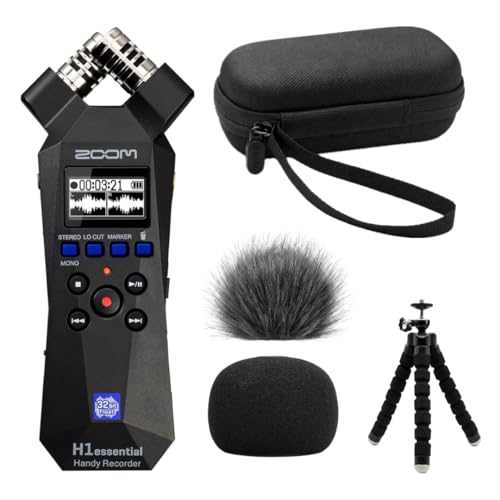
- 32-bit float stereo recording
- Includes case, windscreens, and flexible tripod
- USB-C microphone support for computers and mobile devices
Best For: Solo podcasts, travel interviews, and outdoor recording
Professional Field Pick

- 32-bit float recording helps prevent clipped audio
- Dual locking XLR/TRS inputs
- Low-noise preamps and flexible power options
Best For: Professional location recording with external microphones
Everyday Content Pick

- Built-in X/Y stereo microphones
- 32-bit float recording
- USB-C microphone mode for calls and streaming
Best For: Simple portable recording for podcasts and content creation
Flexible XLR Pick

- Two XLR/TRS combo inputs
- 32-bit/96kHz recording
- OLED waveform display and SDXC support up to 1TB
Best For: Portable two-input podcast and interview setups
Best for Multi-Person Shows – Zoom PodTrak P4
For creators comparing portable podcast recorders, the Zoom PodTrak P4 is built around straightforward multi-person recording. Four XLR inputs, four individually controlled headphone outputs, phone connectivity, and battery operation make it especially practical for interviews and small podcast setups.
Best For: In-person podcasts with up to four microphone inputs and remote call-in guests.
Pros:
- Four XLR microphone inputs with phantom power support.
- Four headphone outputs with individual volume controls.
- Automatic mix-minus supports phone and remote interviews.
- Programmable sound pads and multitrack recording add production flexibility.
Cons:
- Battery life is listed at up to 3.5 hours on two AA batteries.
- It is more specialized for podcasting than general field recording.
The P4 is a strong fit when several people need microphones and headphones at the same time. Its dedicated podcast features are more useful for hosted shows than for simple one-person recording.
Best for Flexible Field Recording – Zoom H4 Essential
The Zoom H4 Essential is a versatile choice among portable podcast recorders for creators who also record music, video audio, interviews, or live performances. Its built-in stereo microphones, two XLR/TRS inputs, 32-bit float recording, and USB-C connectivity cover a broad range of workflows.
Best For: Podcasters, musicians, filmmakers, and interviewers who need both built-in microphones and external inputs.
Pros:
- 32-bit float recording helps capture audio without distorted takes.
- Built-in stereo microphones work alongside two XLR/TRS inputs.
- Can record to an SD card while connecting to a phone, tablet, or computer over USB-C.
- Spoken menu guidance supports more accessible operation.
Cons:
- It provides two XLR/TRS inputs rather than four.
- Two AA batteries are required.
Choose the H4 Essential if you want one recorder for podcasting and broader creative projects. It is less suited to four-person panel recording, but its flexible input options and clip-free recording are useful across many situations.
Best for Assisted Podcast Mixing – Zoom PodTrak P4next
The Zoom PodTrak P4next brings AI-assisted features to the portable podcast recorders category. It combines four XLR inputs, four headphone outputs, up to +70dB of gain, and direct phone-video connectivity for creators who want a capable multi-person setup with less manual mixing.
Best For: Podcast teams and mobile video creators who want noise reduction and straightforward multi-person monitoring.
Pros:
- Four XLR inputs support recording up to four people plus a call-in guest.
- AI noise reduction, Tone Enhancement, and COMP assist with balanced audio.
- Up to +70dB of gain supports demanding microphones.
- Four headphone outputs have separate volume controls.
Cons:
- The supplied notes do not specify battery life.
- Its AI-focused features may be unnecessary for simple recording setups.
The P4next is the most feature-focused option here for multi-person podcast production. Its direct phone-video connection is particularly useful when audio needs to go straight into mobile video without a separate syncing step.
Best for Lightweight Solo Recording – Zoom H2 Essential
The Zoom H2 Essential is a compact option among portable podcast recorders for solo hosts, journalists, and field creators. Three built-in microphones, nine selectable recording patterns, 32-bit float recording, and USB microphone mode make it adaptable without requiring an external mic setup.
Best For: Solo podcasts, interviews, field recordings, and creators who want a lightweight recorder with built-in microphones.
Pros:
- Three built-in microphones provide nine selectable recording patterns.
- 32-bit float recording reduces the need for manual gain adjustment.
- Works as a USB microphone while recording a backup to an SD card.
- Battery life is listed at up to 20 hours on two AA batteries.
Cons:
- It does not list XLR inputs for connecting external microphones.
- Its built-in microphone design is less suited to a four-mic panel.
The H2 Essential is a practical pick when portability and quick setup matter more than multiple external microphone connections. Its selectable patterns also give solo creators flexibility for close dialogue and wider stereo recording.
Best Multitrack Podcast Kit – Zoom PodTrak P4 Bundle
Zoom PodTrak P4 Portable Multitrack Podcast Recorder Bundle with 4X Zoom ZDM-1 Podcast Pack
Check Price On AmazonThe Zoom PodTrak P4 Bundle is a practical choice among portable podcast recorders when you need to record a multi-person show. It combines four high-gain XLR inputs, four independent headphone outputs, sound pads, and included ZDM-1 podcast microphones.
Best For: Multi-person podcasts, interview setups, and creators who want a bundled recorder-and-microphone kit.
Pros:
- Four high-gain XLR microphone inputs with +48V phantom power
- Four independent headphone outputs for guest monitoring
- Four sound pads for music and samples
- Supports simultaneous TRRS and USB call-ins
Cons:
- Uses two AA batteries
- Its bundled microphones and four-input design may be more than needed for solo recording
With four included Zoom ZDM-1 podcast microphones, this bundle is particularly convenient for starting a group podcast. It is less focused on ultra-compact field recording than the handheld models, but it offers a ready-made setup for multiple speakers.
Best Versatile Handheld Recorder – Zoom H6 Essential
The Zoom H6 Essential is one of the more flexible portable podcast recorders for creators who work across podcasts, music, interviews, and video. Its 32-bit float recording, four XLR/TRS inputs, built-in X/Y microphones, and USB interface support a wide range of recording workflows.
Best For: Podcasters, musicians, filmmakers, and field recordists who need multiple inputs and adaptable microphone options.
Pros:
- 32-bit float recording across six tracks helps avoid clipped takes
- Four XLR/TRS combo inputs plus built-in X/Y microphones
- Interchangeable mic capsule system supports different recording scenarios
- Can function as a USB audio interface while recording to an SD card
Cons:
- Requires four AAA batteries
- Its broader feature set may be unnecessary for simple solo podcasting
The H6 Essential stands out when recording conditions and source types vary. Its six-track capacity and interchangeable capsule system provide more flexibility than a basic handheld recorder, while audio guidance adds accessibility for visually impaired users.
Best Compact Field Bundle – Zoom H1essential Recorder Kit
The Zoom H1essential Bundle is a compact option among portable podcast recorders for solo creators, interviews, and travel recording. It pairs 32-bit float recording and stereo X/Y microphones with a protective case, two windscreens, and a flexible tripod.
Best For: Solo podcasters, mobile interviews, outdoor recording, and creators who want useful travel accessories included.
Pros:
- 32-bit float recording helps prevent clipping and distortion
- Stereo X/Y microphones capture sound up to 120 dB SPL
- Includes furry and foam windscreens for different recording conditions
- USB-C connection supports use as a microphone with computers and mobile devices
Cons:
- Has a stereo X/Y microphone setup rather than multiple XLR inputs
- Uses two AAA batteries
- Its 0.96-inch screen is relatively small
This bundle is appealing when portability and ready-to-use accessories matter more than multi-person mixing. The case, windscreens, and tripod make it better equipped for travel and outdoor work straight away, while the compact recorder remains suitable for simple podcast and interview setups.
Professional Field Pick – Zoom F3
The Zoom F3 is one of the most capable portable podcast recorders for demanding interviews, film work, and location sessions. Its 32-bit float recording helps protect against clipping, while dual locking XLR/TRS inputs and low-noise preamps suit more complex, unpredictable setups.
Best For: Run-and-gun filmmakers, professional recordists, and podcasters using external XLR microphones.
Pros:
- 32-bit float recording with dual A/D converters helps capture quiet dialogue and sudden peaks without constant level adjustments.
- Two locking XLR/TRS inputs keep microphone connections secure.
- Battery-powered, USB-compatible, and suitable for standalone or larger workflows.
- Ultra-low-noise preamps support clean recordings in uncontrolled environments.
Cons:
- It does not include built-in stereo microphones for quick grab-and-go recording.
- The feature set may be more than casual users need.
The F3 is a strong choice when reliable external-mic recording matters more than simplicity. Its compact design, flexible power options, and clip-resistant workflow make it especially useful for location podcasting and professional production.
Everyday Content Pick – Zoom H1 Essential
The Zoom H1 Essential is a compact portable podcast recorder for creators who want clear stereo sound without a complicated setup. Its built-in X/Y microphones, 32-bit float recording, and USB-C microphone mode make it useful for podcasts, interviews, videos, calls, and quick field recordings.
Best For: Podcasters, content creators, musicians, and anyone recording voices or stereo sound on the go.
Pros:
- Built-in X/Y stereo microphones provide a simple way to capture voices, music, ambience, and room tone.
- 32-bit float recording helps reduce concerns about sudden level changes.
- USB-C microphone mode supports livestreams, remote meetings, calls, and computer or mobile recording.
- Lightweight 92 g design and approximately 10-hour battery life suit portable use.
Cons:
- It has stereo built-in microphones rather than dual XLR inputs for a multi-microphone setup.
- Its 10-hour battery life is shorter than some dedicated long-session workflows.
Choose the H1 Essential when portability and ease of use are priorities. It is a practical all-purpose recorder for solo podcasts, interviews, content clips, and everyday sound capture.
Flexible XLR Pick – Zoom H1 XLR
The Zoom H1 XLR is a versatile portable podcast recorder for users who want external microphone connections in a compact format. It records in 32-bit/96kHz, provides two XLR/TRS combo inputs, and adds a waveform display plus 3.5mm connectivity for flexible monitoring and source options.
Best For: Podcasters, filmmakers, and musicians building two-input recording setups.
Pros:
- Two XLR/TRS combo inputs accommodate microphones, instruments, and other sources.
- 32-bit/96kHz recording supports detailed audio capture.
- OLED waveform display provides a quick view of recording levels.
- SDXC support up to 1TB allows extended recording sessions.
Cons:
- It requires external microphones for the XLR recording workflow.
- Its listed battery life is approximately 10 hours.
The H1 XLR is a good middle ground between a basic handheld recorder and a larger professional rig. It is particularly appealing for two-microphone podcasts, interviews, and music sessions that need portable XLR connectivity.
How We Picked the Best Portable Podcast Recorders
We focused on features that matter during real podcast production: microphone and input support, headphone monitoring, multitrack recording, portability, battery operation, remote-interview connectivity, and ease of use. We also considered whether each recorder suits a specific workflow, such as solo narration, two-person interviews, roundtable discussions, location recording, or video production.
Because the lineup includes several recorder types, we did not treat the product with the most inputs as automatically best. A compact two-channel device may be a better choice for a mobile interviewer, while a four-input podcast recorder may be more practical for a small panel.
Quick Comparison
| Best For | Look For |
|---|---|
| Solo shows and simple interviews | Compact size, built-in microphones, and straightforward controls |
| Two-person conversations | At least two inputs and independent headphone monitoring |
| Roundtable podcasts | Four XLR inputs, multiple headphone outputs, and multitrack recording |
| Field and video work | Low-noise preamps, rugged construction, and flexible microphone support |
| Creators needing a complete setup | Bundles with microphones, windscreens, a case, or a tripod |
Key Buying Factors for Portable Podcast Recorders
Inputs and Microphone Compatibility
Count how many people you need to record at once. Four XLR inputs are useful for panel discussions, while a two-channel recorder is often lighter and less expensive. Check whether the device supports your microphones, phantom power, and the connectors you already own.
Monitoring and Remote Interviews
Multiple headphone outputs let every participant hear the conversation directly. If you interview guests by phone or computer, look for phone or USB connectivity designed for that workflow. A dedicated podcast recorder can be easier to manage than combining several adapters.
Recording Quality and Editing Flexibility
Separate tracks give you more control over each voice during editing. Built-in microphones are convenient for spontaneous recording, but external XLR inputs offer more choice and can better suit treated or noisy environments. Noise-reduction features may help, but microphone placement still matters most.
Portability, Power, and Accessories
Consider weight, battery life, storage media, and how quickly the recorder can be set up. Wind protection is important for outdoor work, while a case and tripod can make a bundle more useful immediately.
Who Should Buy Which Portable Podcast Recorders?
Choose a PodTrak P4 or P4next if your priority is a structured podcast setup with several guests, headphone monitoring, and podcast-focused controls. The P4 bundle is especially appealing if you also need multiple podcast microphones.
Choose an H1 Essential or H2 Essential for lightweight recording, quick notes, solo content, ambient sound, and simple interviews. The H1 XLR is a practical middle ground for creators who want a compact recorder with external microphone support.
The H4 Essential and H6 Essential suit musicians, filmmakers, and podcasters who need more flexible input options. Pick the H6 when you expect a more demanding multitrack workflow. The F3 is better suited to professional field recording where compact size and reliable audio capture are priorities. Finally, the H1 Essential bundle makes sense for beginners who want useful accessories included from the start.