If you need a flexible way to store, share, and protect large amounts of data, a four-bay setup is one of the smartest options. It gives you more capacity and RAID choices than smaller enclosures, while still staying compact enough for home and office use.
This roundup focuses on the best nas enclosure with four bays options for different buyers, from direct-attached storage to full network NAS systems.
Best 10 Nas Enclosure with Four Bays Picks for 2026
Pro-Performance NAS
UGREEN DXP4800 Pro 4-Bay for Power Users

- Intel Core i3-1315U with DDR5 memory
- 10GbE + 2.5GbE networking for fast transfers
- Docker, VMs, and AI photo features
Best For: IT pros and power users who need storage plus compute
RAID Expansion DAS
QNAP TR-004 4 Bay USB-C Storage
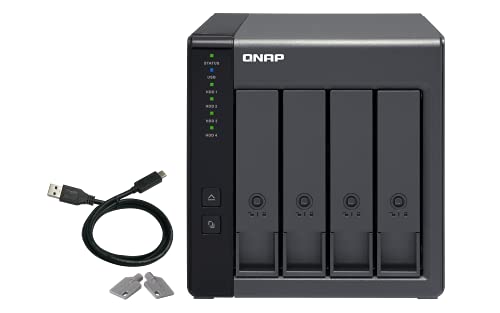
- USB-C direct-attached storage for major OSes
- Hardware RAID with RAID 0/1/5, JBOD, and individual disks
- Lockable metal bays for backup expansion
Best For: Backup and extra capacity for an existing computer or NAS
Versatile Drive Dock
WAVLINK 4-Bay USB-C Aluminum Enclosure

- Four bays for 3.5-inch and 2.5-inch SATA drives
- USB-C up to 10Gbps with 4K HDMI output
- Aluminum shell with dual fans and bay power switches
Best For: Desktop storage expansion with cooling and display connectivity
Creator NAS
UGREEN DXP4800 GT 4-Bay for Teams

- AMD Ryzen Embedded R2514 with up to 64GB RAM support
- Dual 10GbE plus SSD expansion for fast workflows
- Includes Docker, VMs, and surveillance support
Best For: Creators and teams needing fast shared storage with local apps
Reliable 4-Bay USB-C DAS
Sabrent 4-Bay USB-C 10Gbps Enclosure
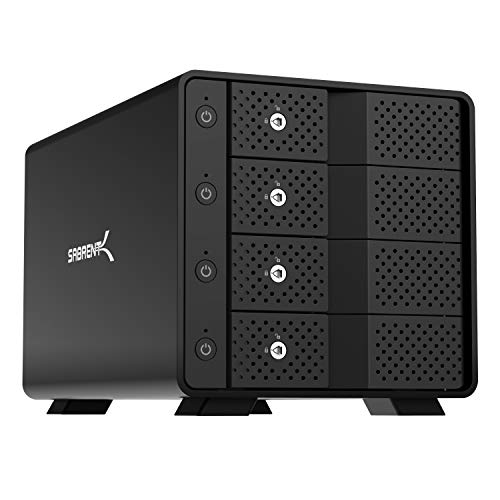
- Dedicated controller per bay for stable drive access
- Trayless hot-swap design with per-bay switches
- Aluminum-metal body with active cooling fan
Best For: Direct-attached four-drive storage without RAID
Compact 4-Bay Desktop NAS
QNAP TS-464-8G-US 4 Bay Desktop NAS
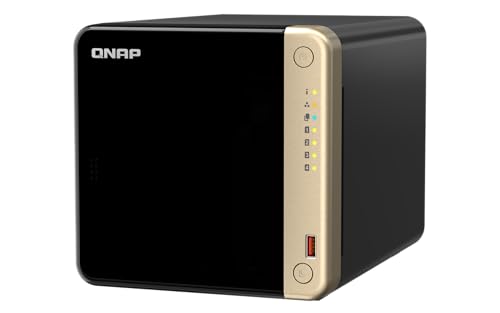
- Quad-core Intel CPU with 8GB DDR4 RAM
- Dual 2.5GbE ports for faster file sharing
- Two M.2 NVMe slots for cache or SSD pools
Best For: Home or small-team shared storage with upgrade headroom
Quiet High-Speed 4-Bay DAS
TerraMaster D4-320 External 4-Bay Enclosure

- 10Gbps USB 3.2 Gen 2 connectivity
- Supports 3.5-inch HDDs and 2.5-inch SATA SSDs
- Quiet cooling with tool-free hot-swap trays
Best For: Quiet plug-and-play local storage expansion
Budget 4-Bay Cloud Starter

- 2.5GbE port for faster transfers
- RAID 0/1/5/6/10 support
- Btrfs snapshots and WORM protection
Best For: Affordable home or small-office NAS backups
Simple High-Capacity DAS
CENMATE Aluminum 4 Bay Enclosure

- Up to 80TB across four bays
- USB 3.0 with up to 5Gbps transfer
- Aluminum case with cooling fan
Best For: Direct-attached storage for desktop backup and large media libraries
RAID-Ready Desktop Storage

- 8 RAID modes for flexible setup
- USB 3.0 and eSATA connectivity
- Up to 80TB capacity across four bays
Best For: RAID-capable direct-attached storage with flexible connections
Pro-Performance NAS – UGREEN DXP4800 Pro 4-Bay for Power Users
If you want a NAS enclosure with four bays that can also act like a serious private workhorse, the UGREEN DXP4800 Pro is built for demanding workflows. Its Intel Core i3-1315U, DDR5 memory, 10GbE networking, and support for Docker and virtual machines make it a strong fit for users who need storage and compute in one box.
Best For: IT professionals, developers, video editors, and power users who need fast local storage plus app hosting.
Pros:
- Intel Core i3-1315U processor with 8GB DDR5 RAM, expandable up to 96GB
- Dual networking with 10GbE + 2.5GbE for high-speed transfers
- Supports Docker, virtual machines, and AI-powered photo recognition on-device
- 4-bay design with dual M.2 PCIe 4.0 slots and up to 144TB capacity
Cons:
- More feature-rich than a basic home file server, so it may be overkill for simple backups
- Storage drives are not included
This model stands out if you want a four-bay NAS that goes beyond storage and into productivity, virtualization, and media management. It is aimed at users who will take advantage of the stronger hardware and broader software tools.
RAID Expansion DAS – QNAP TR-004 4 Bay USB-C Storage
QNAP TR-004 4 Bay USB Type-C Direct Attached Storage (DAS) with hardware RAID (Diskless)
Check Price On AmazonFor buyers searching for a nas enclosure with four bays that works as direct-attached storage, the QNAP TR-004 is a practical expansion box rather than a full network NAS. It connects by USB Type-C, supports hardware RAID, and is meant to add backup or extra capacity to compatible computers and QNAP NAS systems.
Best For: Users who need simple four-bay RAID expansion over USB for backup or extra storage.
Pros:
- USB Type-C direct-attached storage for Windows, macOS, and Linux
- Hardware RAID support includes RAID 0, 1, 5, JBOD, and individual disks
- Lockable drive bays and metal enclosure for a more secure build
- Can expand capacity or serve as external storage for NAS backups
Cons:
- Not a standalone NAS and does not support NAS applications
- Compatibility is limited with some older QNAP models
- Drives migrated to or from another device may not be recognized
The TR-004 makes sense if you already have a system and mainly want dependable, RAID-capable storage expansion. It is less flexible than a full NAS, but that simplicity is part of the appeal for backup-focused setups.
Versatile Drive Dock – WAVLINK 4-Bay USB-C Aluminum Enclosure
If you need a nas enclosure with four bays for large local storage, the WAVLINK unit focuses on versatility and fast USB-C connectivity. It supports both 3.5-inch and 2.5-inch SATA drives, adds HDMI output, and includes built-in cooling fans for users who want a flexible desktop storage hub.
Best For: Desktop users who want a four-bay enclosure for drives, transfers, and simple workstation expansion.
Pros:
- Four SATA bays for 3.5-inch and 2.5-inch HDDs or SSDs
- USB 3.2 Type-C with up to 10Gbps transfer speed
- Aluminum shell with dual built-in fans for cooling
- Independent power switches for each bay plus 4K HDMI output
Cons:
- 2.5-inch drives need extra mounting brackets, which are not included
- HDMI output depends on host USB-C video support
This enclosure is a good fit if you want a straightforward, multi-drive storage dock with extra connectivity rather than a networked NAS. Its cooling, hot-swappable bays, and display output make it especially handy on a busy desk.
Creator NAS – UGREEN DXP4800 GT 4-Bay for Teams
The UGREEN DXP4800 GT is a strong choice if you want a nas enclosure with four bays that can handle creative work, backups, and small-team use. With AMD Ryzen hardware, dual 10GbE, SSD expansion, and built-in surveillance tools, it is designed for users who need fast local storage and flexible app support.
Best For: Creators, office teams, and tech enthusiasts who want fast storage with app and surveillance features.
Pros:
- AMD Ryzen Embedded R2514 with 8GB DDR4 RAM, expandable to 64GB
- Dual 10GbE networking with support for fast backups and 4K/8K editing
- Supports Docker, virtual machines, SAN Manager, and UGREEN Surveillance Center
- Four drive bays plus M.2 SSD support and up to 144TB total capacity
Cons:
- Best features are aimed at users who will use the advanced software stack
- Drives are not included
Compared with simpler four-bay options, this model offers a broader mix of speed, software, and local security tools. It is a better match for households or teams that want one device to cover storage, backup, media, and camera recording.
Reliable 4-Bay USB-C DAS – Sabrent 4-Bay USB-C 10Gbps Enclosure
If you want a NAS enclosure with four bays that focuses on simple, direct storage, this Sabrent model is built for stable multi-drive access over USB-C. It uses a dedicated ASMedia ASM1351 controller for each bay, so each drive gets its own independent connection rather than sharing one lane across all four.
Best For: Users who want a trayless 4-bay DAS for individual drive access, hot-swap convenience, and a sturdy metal build.
Pros:
- Independent controller for each bay helps keep connections stable.
- Tool-free trayless hot-swap design with per-bay power switches and activity LEDs.
- Aluminum-and-metal housing with a 92mm fan supports 24/7 operation.
- Works with Windows, macOS, and Linux, and supports up to 80TB total.
Cons:
- This is DAS/JBOD storage, not hardware RAID.
- Drives are not included.
- Best performance depends on using a USB-C to USB-C connection.
Overall, this is a practical choice if you want straightforward four-bay expansion with strong cooling and independent drive mounting. It suits users who care more about reliable direct attachment than RAID features.
Compact 4-Bay Desktop NAS – QNAP TS-464-8G-US 4 Bay Desktop NAS
If you need a NAS enclosure with four bays for shared storage, the QNAP TS-464-8G-US is built around network access rather than direct USB attachment. It combines an Intel quad-core processor, 8GB of DDR4 RAM, and dual 2.5GbE ports to help speed up file sharing and larger transfers.
Best For: Small teams or home users who want a true 4-bay desktop NAS with faster networking and expansion options.
Pros:
- Quad-core Intel N5105/N5095 CPU with 8GB DDR4 RAM.
- Dual 2.5GbE ports can improve file sharing and transfer performance.
- Two M.2 PCIe Gen3x2 NVMe slots support cache acceleration or SSD pools.
- Hot-swappable SATA bays and multiple USB 3.2 Gen 2 ports add flexibility.
Cons:
- Drives are not included.
- It is a network NAS, not a USB DAS enclosure.
- Setup is more involved than a simple direct-attached dock.
This model makes sense if you want a fuller NAS platform with networking, caching, and room to grow. It is a stronger fit for shared storage workflows than for quick plug-and-play local use.
Quiet High-Speed 4-Bay DAS – TerraMaster D4-320 External 4-Bay Enclosure
The TerraMaster D4-320 is a good fit if you want a NAS enclosure with four bays in the broader sense of multi-drive expansion, but it is actually a DAS, not a NAS. It offers USB 3.2 Gen 2 10Gbps connectivity, hot-swapping, and tool-free trays for easy everyday use across Mac, Windows, and Linux systems.
Best For: Users who want a quiet, plug-and-play four-bay enclosure for mixed drive types and fast local transfers.
Pros:
- Up to 10Gbps USB 3.2 Gen 2 transfer speeds.
- Supports 3.5-inch HDDs, 2.5-inch SATA HDDs, and 2.5-inch SATA SSDs.
- Tool-free trays and hot-swap support simplify drive changes.
- Temperature-controlled fan and sound-damping design help reduce noise.
Cons:
- This is a DAS with no RAID function.
- The enclosure is plastic rather than metal.
- Drives are sold separately.
For buyers who want easy local storage expansion with broad compatibility, the D4-320 is a very practical option. Its quiet design and mixed-drive support make it especially appealing for desktop use where convenience matters.
Budget 4-Bay Cloud Starter – Asustor Drivestor 4 Gen 2
If you want a practical nas enclosure with four bays for home storage or small-office backups, the Asustor Drivestor 4 Gen 2 keeps the focus on everyday speed and easy expansion. Its 2.5GbE port, quad-core processor, and 4-bay design make it a solid entry point for file sharing, snapshots, and 4K media use without pushing into expensive territory.
Best For: Users who want an affordable 4-bay NAS for backup, personal cloud access, and light media streaming.
Pros:
- Quad-core 1.7GHz processor with 1GB DDR4 supports smooth multitasking for routine storage tasks.
- 2.5GbE networking can improve file transfers and backup performance over standard Gigabit.
- Supports RAID 0/1/5/6/10 for flexible capacity and redundancy.
- Btrfs snapshots and WORM support add extra protection against accidental deletion and ransomware.
Cons:
- Diskless design means you still need to buy your own drives.
- 1GB of RAM is modest for heavier workloads.
- Best suited to home and small-office use rather than advanced enterprise needs.
This is a well-rounded choice if you want a budget-friendly 4-bay NAS with modern networking and data-protection features. It balances capacity, speed, and ease of use for general-purpose storage.
Simple High-Capacity DAS – CENMATE Aluminum 4 Bay Enclosure
If you need a straightforward nas enclosure with four bays for local storage expansion, this CENMATE unit is built for simple plug-and-play use as a DAS rather than a networked NAS. It supports 2.5/3.5-inch SATA HDDs and SSDs, includes active cooling, and can handle up to 80TB total capacity for desktop backup or media storage.
Best For: Users who want a direct-attached 4-bay enclosure for easy external storage and large-capacity drive pooling.
Pros:
- Supports four 2.5/3.5-inch SATA drives with up to 80TB total capacity.
- USB 3.0 with UASP is rated up to 5Gbps for faster everyday transfers.
- Aluminum-alloy body and built-in fan help manage heat during use.
- Tool-free, plug-and-play setup works across Windows, Mac, and Linux.
Cons:
- It is a DAS, so it does not provide NAS/network features.
- Fan noise is listed around 40-50 decibels.
- No RAID functionality is included on this version.
This enclosure makes sense if your priority is simple, high-capacity direct storage rather than a full network appliance. It is a practical fit for users who want easy expansion without the complexity of RAID or NAS software.
RAID-Ready Desktop Storage – CENMATE 4 Bay RAID Enclosure
For buyers comparing a nas enclosure with four bays but needing local direct-attached storage, this CENMATE RAID model adds more flexibility than a basic enclosure. It supports 2.5/3.5-inch SATA HDDs and SSDs, offers 8 RAID modes, and includes both USB 3.0 and eSATA connectivity for desktop storage setups that need multiple configuration options.
Best For: Users who want a 4-bay DAS with RAID options and both USB and eSATA connections.
Pros:
- Eight RAID modes, including RAID 0/1/3/5/10, plus CLONE, LARGE, and NORMAL.
- USB 3.0 and eSATA interfaces provide flexible connectivity choices.
- Supports up to 80TB total capacity across four drives.
- Aluminum construction and dual-fan cooling help with heat management.
Cons:
- It is still a DAS, not a NAS, so it lacks network storage features.
- RAID mode changes require a specific reset process and can cause data loss if handled incorrectly.
- MAC OS does not have RAID software support for this model.
This is the more flexible CENMATE option if you want RAID behavior without moving to a full networked NAS. It suits users who are comfortable managing RAID settings and want the extra eSATA option.
How We Picked the Best Nas Enclosure with Four Bays
We looked for models that balance capacity, performance, noise, thermal management, and long-term value. For this category, the most important differences are whether the unit is a true NAS or a direct-attached enclosure, what RAID modes it supports, and how well it handles sustained multi-drive use.
We also favored products with practical connectivity, easy drive installation, and clear upgrade paths for users who may want more speed or more network features later.
Quick Comparison
Not every Nas Enclosure with Four Bays serves the same purpose. Some are built for always-on network access, while others are better as USB-C DAS units for local editing, backups, or expansion. That distinction matters more than brand alone.
In general, choose a NAS if you want shared access, remote features, or app support. Choose a DAS-style enclosure if you want simple high-capacity storage with direct computer connection and lower setup complexity.
Key Buying Factors for a Nas Enclosure with Four Bays
NAS Vs. DAS
Decide first whether you need network storage or direct-attached storage. NAS systems are better for multi-user access, file syncing, and 24/7 availability. DAS enclosures are usually simpler, often faster to set up, and ideal for local storage pools, backups, and media projects.
RAID Support and Data Protection
Four bays let you choose between more usable capacity, redundancy, or a balance of both. If your files matter, look for RAID 1, RAID 5, RAID 10, or vendor-specific protection options. Remember that RAID is not a backup; you still need a separate backup plan.
Performance and Connectivity
Match the connection to your workload. USB-C and 10Gbps are useful for fast local transfers, while 2.5GbE or faster network ports matter for shared NAS usage. If you work with large video files or multiple users, bandwidth can become the limiting factor.
Cooling, Noise, and Build Quality
Four drives generate heat, so active cooling and a well-designed chassis are important. Aluminum bodies, temperature-controlled fans, and tool-free trays can improve both reliability and day-to-day usability.
Who Should Buy Which Nas Enclosure with Four Bays?
Buy a full NAS if you want shared access, remote management, or a central home or office server. Choose a DAS enclosure if you mainly need fast local expansion for a desktop, laptop, or editing workstation.
Power users and developers will usually benefit from more advanced NAS models with stronger processors and better networking. Creators should prioritize transfer speed, quiet cooling, and easy expansion. Budget buyers and small offices can often get excellent value from simpler four-bay systems that still offer RAID and solid storage growth.