Fast, dependable media offload is essential when you are moving high-resolution footage from a camera to a laptop, SSD, or editing workstation. The right reader can reduce transfer bottlenecks while keeping your setup compatible with the cards you actually use.
We’ve gathered 10 options spanning CFexpress, CFast, SD, microSD, and multi-format workflows, with practical differences in speed, connectivity, portability, and simultaneous card support.
Best 10 Memory Card Reader for Videographers Picks for 2026
Pro-Level CFast/SD
CFast & SD UHS-II Dual-Slot Reader

- Dual CFast and SD UHS-II slots
- Up to 1,250MB/s transfers
- Magnetic laptop mounting plate
Best For: Professional CFast and SD UHS-II workflows
Versatile Three-Format

- Reads SD, microSD, and CompactFlash
- Up to 312MB/s for SD and microSD
- Includes USB-C and USB-A cables
Best For: Mixed SD, microSD, and CompactFlash media
CFexpress Workflow
ProGrade CFexpress Type B & SD Reader
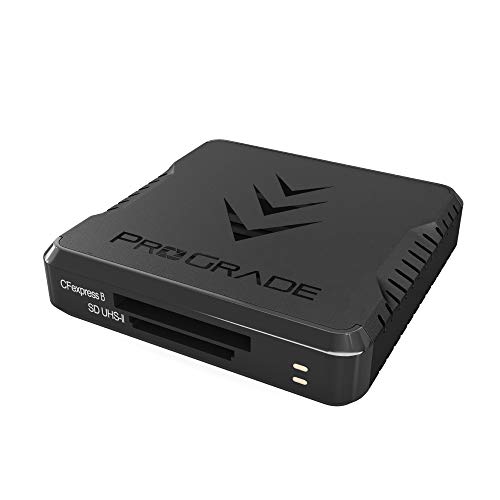
- Dual CFexpress Type B and SD slots
- Up to 1.25GB/s simultaneous transfers
- Magnetic laptop mounting system
Best For: Fast CFexpress Type B and SD offloads
Universal Four-Format

- Supports four card formats
- Reads four cards simultaneously
- USB-C and USB 3.0 connectivity
Best For: Mixed-format media and everyday mobile transfers
Professional CFexpress Speed

- CFexpress Type B and SD support
- USB-C 3.2 Gen 2 up to 10Gbps
- Includes USB-C-to-USB-A adapter
Best For: Fast CFexpress and SD offloads
Versatile Media Support

- Supports seven card types
- USB-C and USB 3.0 connectors
- Transfers at up to 5Gbps
Best For: Mixed-format camera media workflows
Travel-Ready CFexpress Workflow
USB-C and USB-A Dual-Slot Reader

- CFexpress Type B and SD slots
- USB 3.2 Gen 2 up to 10Gbps
- Built-in USB-C and USB-A connections
Best For: On-location CFexpress and SD transfers
Versatile Format Support
7-in-1 USB-C Multi-Card Reader

- Supports CF, SD, microSD, XD, and Memory Stick formats
- Reads and writes up to five cards simultaneously
- USB-A and USB-C connectivity with 5Gbps transfers
Best For: Videographers using several card formats across different cameras
Professional Multi-Format Hub
8-Slot CFexpress Multi-Card Reader

- Supports CFexpress A/B, XQD, SD, TF, MS, XD, and CF
- Offers 10Gbps transfers and simultaneous multi-card reading
- Includes aluminum cooling and a 2-in-1 USB cable
Best For: Professional crews managing multiple high-speed card formats
Pro-Level CFast/SD – CFast & SD UHS-II Dual-Slot Reader
For videographers working with CFast and SD UHS-II media, this memory card reader for videographers combines dual-slot access with USB 3.2 Gen 2 connectivity. Its stated 1,250MB/s transfer rate and magnetic mounting plate make it suited to fast, mobile offloads.
Best For: Professional filmmakers and creators using CFast and SD UHS-II cards who need a field-ready dual-slot workflow.
Pros:
- Supports CFast and SD UHS-II cards.
- Transfers both cards simultaneously at up to 1,250MB/s, according to the supplied specifications.
- Includes an adhesive magnetic plate for mounting to a laptop.
- Includes a two-year warranty and serialized quality tracking.
Cons:
- Does not read CF or CompactFlash cards.
- Its higher-speed workflow is most useful with compatible cards and USB 3.2 Gen 2 hardware.
This is a focused choice for crews whose cameras use CFast and SD UHS-II rather than a general-purpose reader. The dual-slot design and mounting system are particularly practical when downloading footage in the field.
Versatile Three-Format – Lexar 3-in-1 Card Reader
The Lexar 3-in-1 is a practical memory card reader for videographers who move between SD, microSD, and CompactFlash media. It supports transfers up to 312MB/s for SD and microSD, includes USB-C and USB-A cabling, and remains compatible with USB 3.1 and 2.0 ports.
Best For: Videographers and editors who need one compact reader for SD, microSD, and CompactFlash cards.
Pros:
- Reads SD, microSD, and CompactFlash cards.
- Offers speeds up to 312MB/s for SD and microSD and up to 160MB/s for CompactFlash.
- Includes USB-C and USB-A cables for flexible computer connectivity.
- Backwards compatible with SD and microSD UHS-I cards.
Cons:
- It is not listed as supporting CFast or CFexpress media.
- CompactFlash transfers are rated lower than SD and microSD transfers.
Choose this Lexar model when format flexibility matters more than dual-slot simultaneous downloading. Its three-card support and included cables make it a convenient option for mixed media libraries.
CFexpress Workflow – ProGrade CFexpress Type B & SD Reader
Built for newer high-throughput media, this memory card reader for videographers pairs CFexpress Type B and SD support with USB 3.2 Gen 2. It can transfer data from both cards simultaneously at up to 1.25GB/s, making it a strong fit for demanding post-production workflows.
Best For: Videographers using CFexpress Type B and SD cards who prioritize fast downloads and mobile editing setups.
Pros:
- Supports CFexpress Type B and SD cards in a dual-slot design.
- Offers up to 10Gb/s or 1.25GB/s transfer speeds, according to the supplied notes.
- Includes an adhesive metal plate with magnetic mounting for laptop use.
- Includes a two-year warranty and supports ProGrade Refresh Pro functionality.
Cons:
- It is designed for CFexpress Type B and SD media rather than CFast or CompactFlash.
- Real-world speed depends on the cards and connected hardware.
This reader is a targeted choice for modern camera systems that use CFexpress Type B. Its simultaneous dual-slot transfers and magnetic mounting system can help streamline downloads away from the studio.
Universal Four-Format – BENFEI 4-in-1 USB Card Reader
For videographers handling several legacy and current card formats, the BENFEI 4-in-1 is a flexible memory card reader for videographers with SD, microSD, Memory Stick, and CompactFlash slots. Its integrated USB-C/USB 3.0 design can read and write all four card types simultaneously at speeds up to 160MB/s in UHS-I mode.
Best For: Creators who need broad card-format support and direct USB-C or USB-A connectivity.
Pros:
- Supports SD, microSD, Memory Stick, and CompactFlash media.
- Can read four cards at the same time.
- Integrated USB-C and USB 3.0 connectors support newer and older computers.
- Includes plug-and-play operation and an 18-month warranty.
Cons:
- Transfer speeds are listed up to 160MB/s in UHS-I mode, below the faster ProGrade options here.
- Does not support Memory Stick Standard, Memory Stick Micro (M2), or CF Type I, according to the supplied notes.
- Final performance depends on the card and USB port.
This is a useful general-purpose reader for mixed media kits, especially when simultaneous access to four card types is valuable. It is less appropriate for users seeking CFexpress or the highest-speed professional offloads.
Professional CFexpress Speed – Dual-Slot 10Gbps Reader
For videographers working with CFexpress Type B and SD media, this memory card reader for videographers combines two useful slots with USB-C 3.2 Gen 2 transfer speeds. Its aluminum alloy housing and included USB-C-to-USB-A adapter make it a practical choice for fast offloads across newer and older computers.
Best For: Videographers and photographers who regularly transfer 4K footage, RAW files, and other large files from CFexpress Type B and SD cards.
Pros:
- Supports CFexpress Type B plus SD, SDHC, and SDXC cards, including UHS-I and UHS-II.
- USB-C 3.2 Gen 2 provides up to 10Gbps transfer speeds.
- Includes a USB-C-to-USB-A adapter for broader computer compatibility.
- Plug-and-play support for Windows, macOS, Linux, and Android.
Cons:
- Only supports CFexpress Type B and SD media, not a wider range of legacy card formats.
- Maximum transfer performance depends on the connected device, port, and card.
This reader is a focused, high-speed option for creators whose workflow centers on CFexpress Type B and SD cards. The dual-slot design, 10Gbps interface, and USB-A compatibility make it well suited to both field and desktop transfers.
Versatile Media Support – 7-in-1 Multi-Card Reader
This memory card reader for videographers is designed for mixed media workflows, supporting SD, microSD, CompactFlash, Memory Stick, and xD cards. With both USB-C and USB 3.0 connectors, it can connect directly to many laptops, tablets, and smartphones without requiring a separate adapter.
Best For: Videographers, photographers, and editors who handle several card formats across cameras and mobile devices.
Pros:
- Seven-in-one design supports SD, microSD, CF, MS, and xD card formats.
- Offers USB-C and USB 3.0 connectors for flexible device compatibility.
- Supports up to 5Gbps transfer speeds and backward compatibility with USB 2.0 and 1.1.
- Includes plug-and-play operation and a one-year warranty.
Cons:
- Its 5Gbps interface is slower than 10Gbps readers for very large video transfers.
- The broader format support may be unnecessary for workflows limited to CFexpress and SD.
Choose this reader when card-format flexibility matters more than maximum interface speed. Its seven-slot layout and dual connectors make it a convenient option for studios or crews managing media from multiple camera systems.
Travel-Ready CFexpress Workflow – USB-C and USB-A Dual-Slot Reader
For creators seeking a memory card reader for videographers, this dual-slot model pairs CFexpress Type B and SD support with a USB 3.2 Gen 2 interface. Built-in USB-C and USB-A connectivity, an aluminum alloy body, and compatibility with computers and mobile devices make it suitable for fast transfers on location.
Best For: Videographers moving large 4K or 8K files between CFexpress Type B or SD cards and USB-C or USB-A devices.
Pros:
- Supports CFexpress Type B cards up to 2TB and SD media.
- USB 3.2 Gen 2 offers up to 10Gbps transfer speeds.
- Built-in USB-C and USB-A connections avoid the need for separate adapters or cables.
- Compact aluminum construction helps with durability and heat dissipation.
Cons:
- Supports only CFexpress Type B and SD formats.
- Maximum speed depends on the card, host port, and connected device.
This is a strong fit for mobile production kits that need direct USB-C and USB-A connectivity. It keeps the feature set focused while providing the speed and portability needed for large video and RAW-file transfers.
Versatile Format Support – 7-in-1 USB-C Multi-Card Reader
For videographers working with several camera formats, this memory card reader for videographers offers broad compatibility in one compact adapter. It supports CF, SD, microSD, XD, and Memory Stick cards, with USB-A and USB-C connectivity for convenient transfers across laptops, tablets, and phones.
Best For: Videographers and creators who use multiple legacy and current memory card formats.
Pros:
- Supports seven card-reader slots and can read and write up to five cards simultaneously.
- USB 3.0 transfer speeds reach up to 5Gbps for faster photo and video offloading.
- USB-A and USB-C connectors support Windows, Mac, Linux, Chrome OS, and Android devices.
- Plug-and-play operation includes a 12-month warranty.
Cons:
- Its 5Gbps interface is slower than the 10Gbps readers designed for newer high-speed cards.
- Broad format support may be unnecessary if your workflow uses only one card type.
This is a practical all-purpose choice for mixed-camera kits and shared production environments. Choose it when format flexibility and simultaneous card access matter more than maximum transfer speed.
Fast CFexpress Offloads – Acer CFexpress Type B Reader
This memory card reader for videographers is built specifically for CFexpress Type B media, making it a focused option for fast 4K and 8K footage transfers. Its USB 3.2 Gen 2 interface supports up to 10Gbps when paired with compatible cards, ports, and host devices.
Best For: Videographers using CFexpress Type B cards who want a compact, high-speed offload solution.
Pros:
- 10Gbps USB 3.2 Gen 2 performance is suited to large video files and high-resolution images.
- USB-C and USB-A connectors work with laptops, desktops, tablets, and smartphones.
- Plug-and-play design requires no driver or software installation.
- Aluminum housing, heat dissipation, and a locking/ejection mechanism support portable use.
Cons:
- Only supports CFexpress Type B cards; it does not support SD, microSD, XQD, or CFexpress Type A cards.
- Full 10Gbps performance requires a compatible USB 3.2 Gen 2 port and card.
For a CFexpress Type B-only workflow, this reader keeps the design simple while emphasizing speed and portability. It is less suitable for crews needing one reader for several media formats.
Professional Multi-Format Hub – 8-Slot CFexpress Multi-Card Reader
For demanding productions, this memory card reader for videographers combines CFexpress Type A and Type B support with slots for XQD, SD, TF, MS, XD, and CF cards. Its 10Gbps USB 3.2 connection and simultaneous multi-card reading are designed to streamline large offloads on set or in the studio.
Best For: Professional videographers and production teams managing multiple premium card formats.
Pros:
- Eight-slot design supports CFexpress Type A/B, XQD, SD, TF, MS, XD, and CF media.
- 10Gbps transfers help move RAW photos and large video files more quickly.
- Simultaneous multi-card reading can reduce card swapping during busy shoots.
- Aluminum construction, heat dissipation, and a 2-in-1 USB cable suit mobile workflows.
Cons:
- Actual transfer speed depends on the card, computer hardware, and USB interface.
- Only USB-protocol XQD cards are supported.
- The extensive format support may be more than needed for a single-camera setup.
This is the most flexible option of the three for crews handling mixed professional media. Its combination of 10Gbps connectivity, simultaneous reading, and dual USB cable compatibility makes it well suited to fast, varied production workflows.
How We Picked the Best Memory Card Reader for Videographers
We focused on the factors that matter during real production workflows: supported card formats, interface speed, slot layout, compatibility, build quality, and ease of use. Readers in this roundup include dedicated CFexpress and CFast models as well as versatile adapters for teams handling several media types.
Advertised transfer rates are theoretical maximums. Actual performance depends on the card, computer, cable, port, file size, and sustained thermal performance. A reader is most useful when its interface does not limit the cards and storage devices in your workflow.
Quick Comparison
| Reader Type | Best For | What to Check |
|---|---|---|
| CFexpress Type B | Modern cinema and mirrorless cameras | USB 3.2 Gen 2 support and reliable cooling |
| CFexpress Type A | Cameras using smaller Type A cards | Type A compatibility; it is not interchangeable with Type B |
| CFast and SD | Professional cameras using mixed media | Whether both slots can be used at the same time |
| Multi-card | Editors, crews, and travel kits | Supported formats and simultaneous read/write limits |
| SD and microSD | Consumer cameras, drones, and action cameras | UHS-II support if using high-speed SD cards |
Key Buying Factors for a Memory Card Reader for Videographers
Card Compatibility
Start with the cards used by your cameras. CFexpress Type A, Type B, CFast, XQD, SD, microSD, CompactFlash, and Memory Stick are different standards. A multi-format reader is convenient, but unused slots add little value if your production kit relies on one professional format.
Connection and Sustained Speed
USB 3.2 Gen 2, commonly rated at up to 10Gbps, is a strong baseline for fast transfers. Confirm that your computer has a matching USB-C or USB-A port and use a capable cable. For large video files, sustained performance matters more than a short burst-speed claim.
Slot Design and Workflow
Dual-slot readers can save time when copying footage from different cards, but “simultaneous” read/write support is not universal. Check the specifications if you need concurrent transfers, backups, or offloading from multiple cameras.
Portability and Durability
A compact reader suits location work, while a sturdier model may be better for a permanent edit bay. Look for secure card insertion, a stable cable connection, heat management, and a design that does not block neighboring ports.
Who Should Buy Which Memory Card Reader for Videographers?
- CFexpress Type B users: Choose a dedicated Type B reader for the simplest, fastest camera-to-workstation workflow.
- Mixed professional-media users: A CFast-and-SD or CFexpress-and-SD reader can reduce the number of accessories in your kit.
- Editors handling many formats: Select a multi-card reader, but verify its exact standards and whether multiple cards work simultaneously.
- Traveling videographers: Prioritize a compact USB-C model with broad compatibility and, ideally, a USB-A option or adapter.
- SD-focused shooters: Look for UHS-II support rather than paying for card formats you will not use.
The best Memory Card Reader for Videographers is the one that matches your camera cards, computer ports, and transfer routine without creating a new bottleneck. Confirm both card and interface compatibility before buying.