The right ergonomic office chair can make long work sessions more comfortable while supporting better posture and easier movement at your desk. This roundup compares 10 options across mesh, executive, high-back, reclining, and footrest designs.
Use the guide below to narrow your choices by adjustability, body size, desk setup, materials, and budget before selecting the chair that best fits your daily routine.
Best 10 Ergonomic Office Chair Picks for 2026
Best Overall
High-Back Mesh Chair with Headrest

- Adjustable headrest, lumbar support, seat, backrest, and arms
- Wide breathable mesh seat with 90–120° tilt lock
- 300-pound capacity and three-year warranty
Best For: Long workdays and users wanting a roomy, highly adjustable chair
Best Reclining Design

- 90–145° reclining backrest with retractable padded footrest
- Adjustable lumbar support and pivoting linkage armrests
- Cooling mesh, high-resilience cushion, and heavy-duty base
Best For: Workspaces where reclining comfort and leg support matter
Best Budget-Friendly Pick

- Breathable mesh back with curved lumbar-support design
- Adjustable 17.1–20.3-inch seat height and swivel base
- Compact mid-back build supports up to 250 pounds
Best For: Everyday desk work and compact home-office setups
Best for Higher Weight Capacity
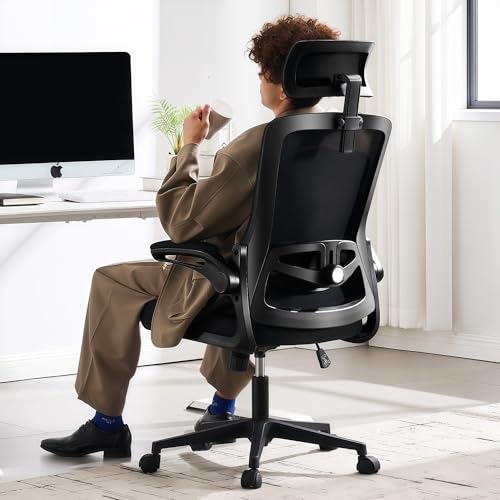
- Listed capacity up to 400 pounds with heavy-duty base
- Adjustable headrest, lumbar support, and reversible armrests
- 125° tilt, 360° swivel, and silent rollers
Best For: Users prioritizing sturdiness and extensive ergonomic adjustments
High-Capacity Comfort Pick
Adjustable Lumbar Office Chair

- Adjustable lumbar support and a 3.2-inch foam seat
- 400-pound capacity with a wide seat
- Breathable mesh and smooth-rolling casters
Best For: Long workdays and users wanting a wide, supportive seat
Flexible Workday Pick

- Two-way adjustable lumbar support
- 3D armrests and 90°–120° tilt range
- Breathable mesh with BIFMA X5.1 certification
Best For: Customizable support in home or shared offices
Work-and-Rest Pick
Reclining Office Chair with Footrest

- 135° recline with three lockable positions
- Retractable steel footrest and adjustable headrest
- 3D armrests, steel base, and three-year parts warranty
Best For: Workspaces where reclining and leg support are useful
Best Value PU Leather Ergonomic Office Chair
Comfortable Mesh-Back Task Chair

- Padded PU leather seat with breathable mesh back
- Adjustable lumbar support, height, and tilt
- Flip-up arms and 300-pound capacity
Best For: Budget-conscious users seeking cushioned everyday desk comfort
Most Adjustable Ergonomic Office Chair
Marsail Mesh Chair with Headrest

- Adjustable headrest, lumbar support, recline, and 3D arms
- Breathable mesh back with thick foam seat
- 330-pound maximum weight recommendation
Best For: Users who want extensive posture and armrest customization
Best Space-Saving Ergonomic Office Chair

- Large adjustable lumbar cushion and S-shaped backrest
- Flip-up arms and quiet rubber wheels
- 15-year warranty and 264-pound capacity
Best For: Compact home offices and multipurpose rooms
Best Overall – High-Back Mesh Chair with Headrest
This high-back ergonomic office chair combines broad seating with adjustable support for the head, back, hips, and arms. Its breathable mesh construction, 90–120° tilt range, and 300-pound capacity make it a practical choice for extended home-office or workplace sessions.
Best For: Users seeking a roomy, adjustable chair for long workdays, especially those between 5’2″ and 6’1″.
Pros:
- Adjustable seat height, headrest, backrest, lumbar support, and flip-up arms
- Wide mesh seat and back promote airflow and accommodate different body types
- 90–120° tilt lock, smooth casters, and a 300-pound capacity
- Includes a three-year warranty and setup tools
Cons:
- Recommended height range may not suit users outside 5’2″–6’1″
- Its wide, high-back design may require more desk and floor space
Choose this model if you want a feature-rich ergonomic office chair with a roomy cushion and space-saving flip-up arms. Confirm the size guidance before ordering.
Best Reclining Design – Ergonomic Chair with Footrest
This ergonomic office chair is designed for switching between focused work and relaxed breaks. It offers a 90–145° reclining range, a retractable padded footrest, adjustable lumbar support, and cushioned linkage armrests.
Best For: Home-office users who want a chair that supports both upright computer work and reclining breaks.
Pros:
- Backrest locks at angles from 90° to 145°
- Retractable two-inch padded footrest supports leg stretching
- Two-way adjustable lumbar support and adjustable pivoting armrests
- High-resilience cushion, cooling mesh back, and heavy-duty base
Cons:
- Reclining and footrest features may need additional clearance behind or beneath the desk
- Seat height is listed at 21 inches, which may not fit every desk or user
With its lounge-oriented features and 360-pound listed maximum recommended load, this is a strong option for people who value break-time comfort alongside everyday workstation support.
Best Budget-Friendly Pick – Mid-Back Mesh Desk Chair
This mid-back ergonomic office chair keeps the design straightforward with breathable mesh, lumbar support, adjustable height, and a cushioned seat. Its compact dimensions and 250-pound capacity make it suited to everyday home-office or desk use.
Best For: Shoppers who want a simple, compact chair for routine desk work and smaller office setups.
Pros:
- Ventilated mesh back helps promote airflow during extended sitting
- Curved mid-back design includes lumbar support and ergonomic armrests
- Adjustable seat height from 17.1 to 20.3 inches with smooth swivel movement
- BIFMA-standard components and 10–15-minute assembly claim
Cons:
- Mid-back design provides less upper-body coverage than a high-back chair
- 250-pound maximum recommended weight is lower than several larger models
- Limited listed reclining functionality
This model is a sensible fit when you prefer a smaller, uncomplicated ergonomic office chair. Consider a high-back alternative if you want a headrest or more recline flexibility.
Best for Higher Weight Capacity – Adjustable Mesh Office Chair
This ergonomic office chair emphasizes adjustability and a higher stated weight capacity. It includes a height- and angle-adjustable headrest, multi-directional lumbar support, reversible armrests, breathable mesh, and a 125° tilt function.
Best For: Users who need a sturdier chair with extensive adjustment options and a listed capacity of up to 400 pounds.
Pros:
- Supports up to 400 pounds with a heavy-duty base and pneumatic height adjustment
- Headrest adjusts up and down and changes angle
- Lumbar support adjusts vertically and forward or backward
- 125° tilt, 90° adjustable armrests, silent rollers, and 360° swivel
Cons:
- One-year warranty is shorter than some competing models in this group
- Recommended user height range begins around 5’4″ and ends around 6’3″
- The extensive adjustment system may take time to dial in
If weight capacity and personalized positioning are priorities, this chair stands out. Verify the dimensions and height range for a proper fit, particularly because the listed seat height is relatively high.
High-Capacity Comfort Pick – Adjustable Lumbar Office Chair
This ergonomic office chair is a practical choice for long workdays, combining a thick foam seat with highly adjustable lumbar support. Its wide seat, breathable mesh, and 400-pound capacity make it worth considering for users who prioritize support and stability.
Best For: Home offices, corporate workspaces, and users seeking a wide, supportive chair with a higher weight capacity.
Pros:
- Lumbar support adjusts forward/backward and vertically for a more personalized fit.
- 3.2-inch high-density foam cushion is designed to resist sagging during extended sitting.
- Supports up to 400 pounds and includes smooth-rolling casters.
- Suitable for users approximately 5’4″ to 6’3″ tall.
Cons:
- Assembly is required, although installation is described as taking about 15–20 minutes.
- The chair has one reclining position count, offering less adjustment than some reclining models.
Choose this model if seat cushioning, broad sizing, and a substantial weight rating matter more than extensive reclining features. It is a straightforward ergonomic office chair for everyday work and study spaces.
Flexible Workday Pick – 3D-Arm Mesh Office Chair
This ergonomic office chair focuses on adjustability, with multidirectional lumbar support, 3D armrests, and a 90°–120° reclining range. The breathable mesh design and wide cushion suit shared offices, home workspaces, and users who regularly shift between focused work and brief breaks.
Best For: People who want customizable arm and lumbar positioning for office work at home or in a shared workplace.
Pros:
- Lumbar support adjusts both vertically and forward/backward.
- 3D armrests provide adjustable support for the arms and shoulders.
- Three reclining positions range from 90° to 120°.
- BIFMA X5.1 certification is listed, along with a two-year warranty.
Cons:
- Assembly requires attention to the packaging note because the base leg is stored inside the seat component.
- The supplied notes do not specify a maximum weight capacity.
- Users needing a different gas-lift height may need to contact the manufacturer.
This is a strong fit when adjustability is the priority. Its reclining range and configurable armrests offer more positioning flexibility than a basic task chair, though setup and fit may require extra attention.
Work-and-Rest Pick – Reclining Office Chair with Footrest
This ergonomic office chair adds relaxation features to a full workstation setup, including a 135° recline, retractable footrest, adjustable headrest, and 3D armrests. It is designed for users who want to work, read, game, or take breaks without changing chairs.
Best For: Users who want an ergonomic office chair that can transition from upright work to reclining rest.
Pros:
- Three lockable positions include 90°, 110°, and 135°.
- Retractable steel footrest extends up to 18.1 inches.
- 3D armrests and a height- and angle-adjustable mesh headrest support personalized positioning.
- Steel base, large-diameter legs, silent wheels, and a three-year parts warranty add practical support.
Cons:
- Its 300-pound capacity is lower than some heavy-duty office chairs.
- The footrest and reclining design may require more space than a basic task chair.
- The listed intended user height range is approximately 5’3″ to 6′.
Consider this model if breaks, reclining, and leg support are part of your daily routine. It is more feature-rich than a conventional desk chair, but its larger reclining setup may not suit compact workspaces.
Best Value PU Leather Ergonomic Office Chair – Comfortable Mesh-Back Task Chair
If you want an ergonomic office chair with a cushioned seat and straightforward adjustability, this model combines a thick PU leather sponge seat with a breathable mesh back. Its adjustable lumbar support, height range, tilt function, and flip-up arms make it practical for everyday home-office or desk work.
Best For: Budget-conscious users who want a padded seat, adjustable lumbar support, and a space-saving design.
Pros:
- Thick, resilient sponge seat with easy-clean PU leather upholstery
- Adjustable lumbar support and seat height from 17.72 to 22.44 inches
- Flip-up arms, 360-degree swivel, and quiet casters help save space and move smoothly
- Rated for up to 300 pounds and tested to SGS and BIFMA standards
Cons:
- The PU leather seat may feel warmer than a fully mesh seat
- Assembly is required, although the included instructions and video are designed for a 15- to 20-minute setup
This is a sensible ergonomic office chair for buyers who prioritize cushioned seating and flexible desk storage. It offers useful adjustments without adding a headrest or more complex armrest controls.
Most Adjustable Ergonomic Office Chair – Marsail Mesh Chair with Headrest
This ergonomic office chair is designed for users who want more ways to fine-tune their sitting position. It includes an adjustable headrest, 3D armrests, adjustable lumbar support, and a backrest that reclines from 90 to 120 degrees, while the mesh back helps promote airflow during long work sessions.
Best For: Users who want extensive adjustment options, a headrest, and a higher stated weight capacity.
Pros:
- Headrest, lumbar support, recline, and 3D armrests provide multiple adjustment points
- Lumbar support moves 1.18 inches forward and backward and 2.16 inches up and down
- Thick high-density foam seat and wider seating area support daily work comfort
- Supports up to 330 pounds and includes breathable mesh upholstery
Cons:
- Its numerous adjustments may take more time to set up for your preferred posture
- Assembly is required
With the broadest adjustment package of these options, this Marsail chair is a strong choice when personalization matters most. The combination of a headrest, movable lumbar support, and flexible armrests makes it especially suited to varied work postures.
Best Space-Saving Ergonomic Office Chair – Khaki Mesh Desk Chair
This ergonomic office chair focuses on lower-back support and easy storage in compact work areas. Its large adjustable lumbar cushion, S-shaped backrest, waterfall-edge seat, flip-up arms, and quiet rubber wheels make it a practical fit for a home office, study, or multipurpose room.
Best For: Small workspaces and buyers who want padded lumbar support, quiet movement, and a neutral khaki finish.
Pros:
- Large adjustable lumbar cushion with thick sponge padding
- Flip-up, padded armrests let the chair slide under a desk
- 3.74 inches of height adjustment, 360-degree swivel, and reclining function
- Waterfall-edge foam seat and breathable mesh help support comfort during extended use
Cons:
- Its maximum weight recommendation is 264 pounds, lower than the other listed chairs
- The product notes describe fewer adjustment features than the Marsail model
This chair is a practical ergonomic office chair for rooms where storage and quiet rolling are important. Its 15-year warranty adds reassurance, while the khaki color offers an alternative to the usual black office-chair finish.
How We Picked These Ergonomic Office Chairs
We focused on features that matter during extended desk use: adjustable lumbar support, seat comfort, armrest design, recline range, headrest availability, breathable materials, stability, and overall fit. The selection includes compact mid-back chairs, high-back mesh models, footrest and reclining designs, executive-style options, and chairs marketed for larger users.
Because comfort is highly personal, we treated feature range and adjustability as important indicators rather than assuming one chair suits every body type. Certifications, such as BIFMA compliance, can also provide useful context when listed by the manufacturer, but they should be considered alongside warranty coverage, assembly requirements, and return policies.
Quick Comparison
| Chair type | Best suited to | Features to prioritize |
|---|---|---|
| High-back mesh | Long workdays and warmer rooms | Lumbar adjustment, breathable back, headrest |
| Footrest or reclining | Breaks, reading, and extended sessions | Stable base, recline lock, padded footrest |
| Mid-back task chair | Smaller spaces and everyday desk work | Compact dimensions, seat depth, armrest clearance |
| Executive or PU leather | Traditional office styling | Cushioning, ventilation, easy-clean upholstery |
| Big-and-tall design | Larger users or wider desks | Seat width, weight rating, reinforced base |
Key Buying Factors for an Ergonomic Office Chair
Adjustability and Lumbar Support
Look for a seat height that lets your feet rest flat, along with lumbar support that reaches your lower back rather than pushing into it. Adjustable armrests can reduce shoulder tension, while a tilt lock lets you choose between upright typing and relaxed reclining.
Seat Size and Body Fit
Check seat width, depth, back height, and the stated weight capacity. A seat that is too deep can prevent proper back contact, while one that is too narrow may restrict movement. Taller users often benefit from a high back and headrest; shorter users should verify that the lowest seat setting works with their desk.
Materials, Base, and Movement
Mesh improves airflow, while foam or leather-style upholstery may provide a softer, more substantial feel. Inspect caster compatibility with your flooring and choose a sturdy five-star base. If you plan to recline or use a footrest, stability matters more than decorative features.
Desk Compatibility and Maintenance
Measure the chair arms against your desk height and confirm that the chair can slide underneath when needed. Mesh is usually easy to maintain, while PU leather can be wiped clean but may feel warmer. Review assembly instructions, warranty terms, and return costs before buying.
Who Should Buy Which Ergonomic Office Chair?
Choose a high-back mesh Ergonomic Office Chair if you work full days, need airflow, or want stronger upper-back support. A footrest or 135-degree reclining model suits users who alternate between focused work and short rest periods, provided the desk setup allows enough clearance.
A mid-back chair is a practical choice for compact workspaces, lighter daily use, or users who prefer greater shoulder mobility. Executive-style PU leather models work well when appearance and easy cleaning matter, but they may be less breathable. Larger users should prioritize explicitly stated seat dimensions, weight capacity, and a reinforced base instead of relying on the word “big” in a product name.