For musicians, a cassette recorder can be a practical tool for capturing rehearsals, songwriting ideas, interviews, and lo-fi demos without relying on a computer. The best models balance simple controls with useful features such as built-in microphones, headphone outputs, auxiliary inputs, USB conversion, or SD card recording.
We compared 10 portable cassette recorders across recording flexibility, monitoring options, portability, power, and ease of use. Use the guide below to narrow the list based on how you plan to record and play back your music.
Best 10 Cassette Recorders for Musicians Picks for 2026
Best All-in-One Converter

- Direct cassette-to-WAV conversion on USB
- Records to cassette or USB
- Built-in speaker, microphones, and headphone jack
Best For: Musicians archiving tapes and making simple recordings
Best Simple Recorder

- One-touch cassette recording
- Standing and external microphone support
- AUX input and AC/DC operation
Best For: Musicians wanting simple analog recording
Best Connectivity

- Records USB audio to cassette
- Captures cassette, Bluetooth, FM, or line-in to USB
- Includes MP3 playback and a built-in speaker
Best For: Musicians using multiple audio sources and formats
Best Compact Converter

- Converts tapes to MP3 on SD or via USB
- Includes 16GB SD card and USB reader
- Compact design with LCD and USB-C power
Best For: Musicians needing portable Type I tape conversion
Best One-Touch Option
JENSEN Portable Cassette Recorder

- One-touch recording with automatic level control
- Aux input plus built-in and external microphone support
- Portable design with retractable carrying handle
Best For: Simple portable recordings and musicians who value easy operation
Best Hands-Free Setup
Coby Cassette Tape Player & Voice Recorder
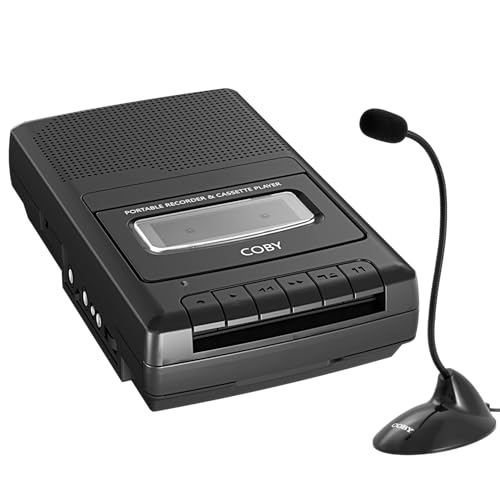
- Includes a detachable standing microphone
- Supports AC or four C-battery operation
- Built-in speaker, headphone jack, and aux input
Best For: Tabletop recording, voice notes, and flexible home or portable use
Best Radio-Recording Combo
Mersoco Portable Cassette Recorder
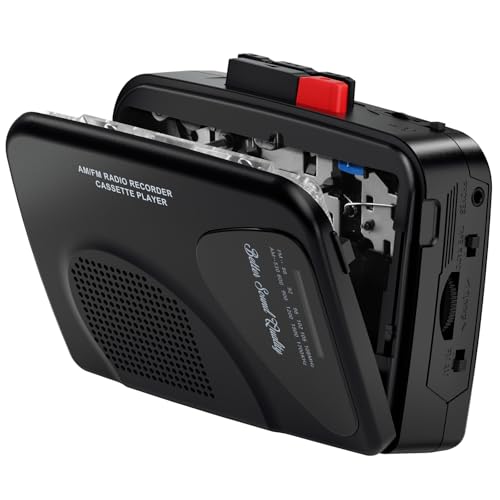
- Records external audio or AM/FM broadcasts to cassette
- Voice activation supports hands-free recording
- Compact, battery-powered design includes earphones
Best For: Portable recording with AM/FM radio and simple cassette capture
Best Compact Pick
TOMASHI Portable Cassette Recorder

- Small, lightweight portable design
- Built-in microphone and speaker
- Automatic stop and headphone output
Best For: Musicians needing simple, portable recording
Best Simple Controls

- Plays and records cassette tapes
- Built-in microphone for quick notes
- AC or four-C-battery operation
Best For: Easy voice notes and basic tape recording
Best Radio Feature Set
G Keni AM/FM Cassette Recorder

- Records voice, music, or radio
- Built-in AM/FM radio and antenna
- AC or battery operation with handle
Best For: Portable cassette recording with radio listening
Best All-in-One Converter – USB Cassette Recorder
For musicians seeking cassette recorders for musicians with flexible analog and digital workflows, this portable shoebox model combines cassette playback, recording, USB audio support, and WAV conversion. It also includes a built-in speaker, integrated microphone, dedicated microphone, and 3.5mm headphone output.
Best For: Musicians who want to archive tapes to WAV while also recording voice, music, or external audio.
Pros:
- Converts cassette content directly to WAV on a USB flash drive without a computer.
- Records external audio to either cassette or USB in the appropriate mode.
- Offers a built-in 3W speaker, microphone options, headphone jack, and retractable handle.
- Supports AC power through the included USB-to-DC cable or four C batteries.
Cons:
- AC adapter is sold separately.
- Four C batteries are not included.
This is a versatile choice when tape preservation and straightforward recording matter as much as portability. Its direct WAV workflow is especially useful for musicians digitizing a cassette collection.
Best Simple Recorder – PROSCAN Cassette Player
PROSCAN Cassette Player & Recorder with Microphone, Headphone Jack, Aux in, Black
Check Price On AmazonThis PROSCAN model is a straightforward option among cassette recorders for musicians, combining cassette playback and recording with one-touch operation. Its standing microphone, external microphone jack, automatic level control, AUX input, and headphone output support basic practice, rehearsal, interview, and songwriting use.
Best For: Musicians who want an uncomplicated portable cassette recorder for quick analog recordings.
Pros:
- One-touch recording simplifies capturing ideas, classes, interviews, or rehearsals.
- Includes a free-standing microphone and external microphone jack.
- Automatic level control is designed for crisp, clear recordings.
- Provides AUX input, headphone jack, fast forward, rewind, and AC/DC operation.
Cons:
- Does not list USB or SD recording and conversion features.
- Its recording format is analog cassette rather than a digital file format.
Choose this model for familiar cassette-based recording without added conversion features. It is lightweight at about 1.74 pounds and has a carry handle for moving between rooms or sessions.
Best Connectivity – QFX RETRO-39BT Recorder
The QFX RETRO-39BT stands out among cassette recorders for musicians who want several ways to move audio between formats. It can record USB audio to cassette, capture cassette, Bluetooth, FM radio, microphone, or line-in audio to USB, and play MP3 files or Bluetooth audio through its built-in speaker.
Best For: Musicians who need cassette recording alongside USB, Bluetooth, line-in, and MP3 playback.
Pros:
- Supports USB-to-cassette recording for transferring digital audio to tape.
- Records cassette, Bluetooth, FM, microphone, or line-in audio to USB.
- Includes USB, line-in/out, external microphone support, and a 3.5mm headphone jack.
- Offers a built-in 3.5-inch speaker and AC or four-C-battery power.
Cons:
- Four C batteries are not included.
- The supplied notes specify digital recording time of 60 minutes.
This is the most connectivity-focused option in the group. Its two-way recording choices make it a practical fit for musicians combining cassette projects with digital playback and external sources.
Best Compact Converter – SEMIER Cassette Recorder
For musicians who prioritize portability, the SEMIER is a compact choice among cassette recorders for musicians. It plays and records Type I tapes, converts cassette audio to MP3 on an included 16GB SD card or through USB with Audacity, and supports recording through its built-in microphone.
Best For: Musicians who want a lightweight cassette recorder with SD and USB conversion options.
Pros:
- Weighs about 0.52 pounds and measures 6.3 by 3.9 by 1.2 inches.
- Converts cassettes to MP3 on an included 16GB SD card or through USB and Audacity.
- Includes LCD navigation, a 2W speaker, and a 3.5mm earphone jack.
- Runs from USB-C power or four AA batteries.
Cons:
- Does not support Type IV or metal tapes.
- USB conversion requires the included Audacity software workflow.
This model is a strong fit for musicians who want a small recorder and a convenient path to MP3 storage. The included SD card and USB reader add useful transfer flexibility, while the Type I limitation should be checked before buying.
Best One-Touch Option – JENSEN Portable Cassette Recorder
For musicians seeking straightforward cassette recorders for musicians, the JENSEN combines one-touch recording with a built-in condenser microphone. Automatic level control helps keep recording volume consistent, while the auxiliary input supports recording from smartphones, tablets, and other audio sources.
Best For: Musicians and casual users who want simple portable recording with flexible input options.
Pros:
- One-touch recording is quick and easy to operate.
- Built-in microphone and automatic level control support consistent recordings.
- Auxiliary input, headphone jack, and external microphone jack add flexibility.
- Retractable handle and shoebox-style design make it convenient to carry.
Cons:
- The notes do not specify advanced musician-focused controls or multitrack capabilities.
- Its built-in microphone is suited to simple recordings rather than detailed studio capture.
The JENSEN is a practical pick when ease of use matters most. It bridges cassette playback and modern sources without adding complicated controls, making it useful for quick ideas, rehearsals, notes, or informal recordings.
Best Hands-Free Setup – Coby Cassette Tape Player & Voice Recorder
The Coby is a versatile choice among cassette recorders for musicians, especially when hands-free voice capture is useful. Its detachable standing microphone, built-in speaker, auxiliary input, and large controls cover everyday recording and playback needs, with either battery or AC power.
Best For: Musicians, students, and home users who want a tabletop microphone and flexible power options.
Pros:
- Detachable standing microphone supports hands-free tabletop recording.
- Built-in speaker, headphone jack, and aux input provide multiple listening options.
- Runs on four C batteries or the included AC adapter.
- Large Play, Stop, Record, Rewind, and Fast Forward buttons are easy to use.
Cons:
- The listed microphone operation modes are mono and stereo, but the notes do not describe detailed recording controls.
- Its 1.8-pound body is portable, though less compact than the smallest cassette players.
Choose the Coby if a stationary microphone is more useful than an ultra-minimal setup. The tabletop design and dual power options make it adaptable for practice spaces, classrooms, interviews, and casual musical idea capture.
Best Radio-Recording Combo – Mersoco Portable Cassette Recorder
The Mersoco adds AM/FM listening to the core features expected from cassette recorders for musicians. Its recording function can capture external sound or AM/FM broadcasts to cassette, while voice activation, battery operation, included earphones, and a compact body support portable use.
Best For: Musicians and listeners who want cassette recording alongside portable AM/FM radio.
Pros:
- Records external sounds and AM/FM broadcasts to cassette.
- Voice activation can help start recording when sound is detected.
- Compact design supports portable use with two AA batteries or DC 5V power.
- Includes a USB-to-DC cable, 3.5mm headphones, and user manual.
Cons:
- The 2 AA batteries are not included.
- A 5V power adapter is required separately when using the included DC cable.
- The listed frequency response is 125 Hz–6.3 kHz, which may not suit wide-band recording needs.
The Mersoco stands out for musicians who also want radio functionality and a lightweight travel format. It is best viewed as a compact, multifunctional recorder for sketches, broadcasts, and everyday analog capture rather than a full-featured recording system.
Best Compact Pick – TOMASHI Portable Cassette Recorder
If you want compact cassette recorders for musicians, the TOMASHI is an easy-to-carry option for basic playback and voice recording. It includes a built-in microphone, speaker, headphone jack, and straightforward transport controls, making it practical for quick musical ideas, practice notes, or tape listening.
Best For: Musicians who prioritize portability and simple voice or tape recording.
Pros:
- Small, lightweight design that is easy to handle and carry.
- Supports cassette playback and recording through the built-in microphone.
- Offers built-in speaker and headphone listening.
- Automatic stop helps reduce unnecessary tape and mechanism wear.
Cons:
- Uses a single built-in speaker rather than a stereo speaker setup.
- Two AA batteries and USB power supply are not included.
- Its compact format is better suited to basic recording than elaborate music production.
The TOMASHI is a sensible choice when size and simplicity matter most. Its automatic stop, headphone output, and dual power options make it convenient for casual practice recordings and portable cassette use.
Best Simple Controls – Coby Cassette Tape Recorder
Among cassette recorders for musicians, the Coby stands out for its uncomplicated controls and flexible power options. It plays tapes, records through a built-in microphone, and provides headphone and auxiliary connections for straightforward use at a desk or while traveling.
Best For: Musicians who want an easy-to-operate recorder for voice notes, interviews, or simple tape playback.
Pros:
- Combines cassette playback and recording in one device.
- Built-in microphone captures voice without extra equipment.
- Can run from AC power or four C batteries.
- Includes a headphone jack and auxiliary input for flexible listening.
Cons:
- At 1.4 pounds, it is less lightweight than the smallest portable models.
- Four C batteries are required for battery operation and are not noted as included.
- The supplied information emphasizes voice recording rather than dedicated musical inputs.
The Coby is a practical, accessible recorder for musicians who value clear buttons and versatile placement. It is especially useful for capturing spoken ideas or demonstrations without adding separate recording equipment.
Best Radio Feature Set – G Keni AM/FM Cassette Recorder
For musicians seeking cassette recorders for musicians with more listening flexibility, the G Keni adds AM/FM radio to cassette playback and recording. Its built-in microphone can record voice, music, or radio broadcasts, while the carry handle and AC-or-battery operation support use around the home or away from an outlet.
Best For: Musicians who want cassette recording plus radio listening and portable speaker playback.
Pros:
- Records voice, music, or radio broadcasts directly to cassette.
- Includes AM/FM radio with a telescopic antenna.
- Provides built-in stereo speaker playback and a 3.5mm headphone jack.
- Works from AC power or four C batteries and includes a carry handle.
Cons:
- Its 1.9-pound weight and larger body are less convenient for ultralight travel.
- Four C batteries are not included.
- The product notes do not identify dedicated instrument inputs for direct musical recording.
The G Keni offers the broadest everyday feature set of these options, especially if radio matters alongside cassette use. Choose it for a roomier portable format, stereo speaker listening, and recording from several built-in sources.
How We Picked the Best Cassette Recorders for Musicians
We focused on the features that matter when recording music outside a studio. Each model was considered for microphone placement, one-touch or manual recording controls, playback quality, headphone monitoring, auxiliary connectivity, and compatibility with external storage or USB transfer. We also weighed portability, power options, speaker usefulness, and controls that are straightforward during rehearsals or quick songwriting sessions.
Because these products vary widely, some are better suited to voice notes and casual demos than detailed musical recordings. A built-in microphone is convenient, while USB or SD conversion is more useful if you want to archive tapes or move recordings to a computer.
Quick Comparison
- Best for simple portable recording: Choose a compact model with a built-in microphone, speaker, and headphone jack.
- Best for tape digitizing: Look for USB drive, USB computer, or SD card conversion features.
- Best for rehearsals: A larger speaker, dependable controls, and AC power can be more practical than minimum size.
- Best for flexible playback: AM/FM radio, auxiliary input, and both battery and wall power add versatility.
Key Buying Factors for Cassette Recorders for Musicians
Recording Inputs and Monitoring
Check whether the recorder uses a built-in microphone, a standing microphone, an auxiliary input, or a combination of these. A headphone jack is especially valuable for checking levels and reviewing takes without disturbing others. Built-in speakers are useful for quick playback but are not a substitute for headphones when judging detail.
Digital Conversion
If you plan to preserve old demos or transfer new recordings, confirm exactly how conversion works. USB and SD support may send cassette audio to a drive, memory card, or computer, depending on the design. Verify the required storage device and file format before buying.
Power and Portability
Battery operation helps with rehearsals, travel, and outdoor songwriting, while AC or USB power is better for extended sessions. Smaller units are easy to carry, but larger models may offer easier controls and louder speakers.
Sound and Tape Compatibility
These recorders are generally intended for standard compact cassettes and casual recording rather than studio-grade multitracking. Look for stable playback, clear controls, and a reliable tape mechanism. If overdubbing, separate tracks, or precise level control is essential, a dedicated multitrack cassette recorder may be a better category to explore.
Who Should Buy Which Cassette Recorders for Musicians?
Songwriters who need fast idea capture should prioritize a lightweight recorder with one-touch recording and a built-in microphone. Musicians digitizing older tapes should choose a model with clearly documented USB or SD conversion. Rehearsal users may prefer a unit with AC and battery operation, a strong speaker, and a headphone output. Buyers seeking an inexpensive secondary recorder can choose a basic portable model, while those wanting radio or auxiliary playback should select a feature-rich AM/FM or AUX-equipped option.