Choosing among the best 8-channel logic analyzers can make embedded debugging faster, especially when you need to inspect several digital signals at once. This roundup compares compact USB models, bundled test-hook kits, and premium Saleae options for common development and fault-finding tasks.
Whether you are checking UART traffic, decoding I²C or SPI, or troubleshooting an Arduino and FPGA project, focus on software support, sampling performance, included probes, and the type of work you do most often.
Best 10 8 Channel Logic Analyzers Picks for 2026
Best Budget Pick
Comidox CP317 24MHz 8-Channel Analyzer

- Eight digital channels with up to 24 MHz sampling
- Supports Saleae software and PulseView
- Decodes UART, SPI, and I2C protocols
Best For: Makers and embedded debugging
Best Pocket Option
GREYWAWA Pocket 24MHz 8-Channel Analyzer
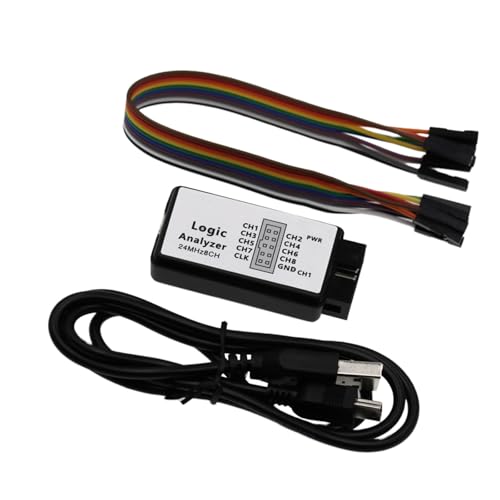
- Pocket-size design for portable troubleshooting
- Eight-channel simultaneous digital input
- Supports real-time data uploading
Best For: Compact embedded diagnostics
Best Performance Pick

- Up to 500 MS/s digital sampling
- Eight multi-use digital or analog inputs
- Works with Windows, Mac, and Linux
Best For: High-speed mixed-signal analysis
Best Compact Tester
Miniature 24MHz 8-Channel Analyzer
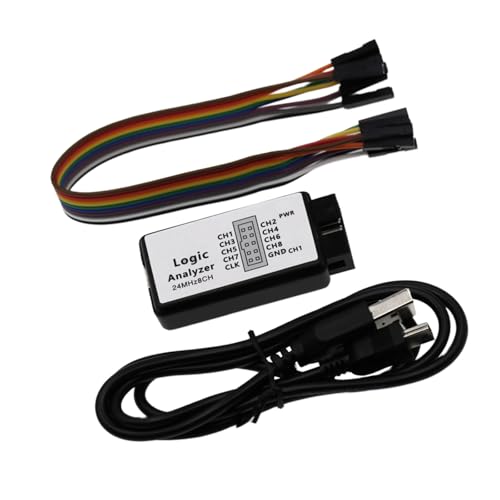
- Miniature USB form factor
- Eight-channel simultaneous signal monitoring
- Up to 24 MHz capability for testing
Best For: Compact general-purpose debugging
Premium Pick

- Eight digital/analog inputs
- Up to 100 MS/s digital sampling
- Decodes SPI, I2C, and 23+ protocols
Best For: Mixed-signal development and advanced debugging
Value Multipack
HiLetgo 24MHz 8-Channel Analyzer

- Two analyzers included
- 24 MHz maximum sampling rate
- Supports UART, IIC, and SPI debugging
Best For: Entry-level labs and general digital testing
Software-Friendly Choice

- Sigrok PulseView compatible
- Eight channels at up to 24 MHz
- Supports 2.0V to 5V logic systems
Best For: PulseView-based embedded debugging
Best Starter Kit
24MHz 8-Channel Analyzer with Test Hooks

- Includes 12 six-color SMD test hook clips
- Supports UART, IIC, SPI, and sigrok-compatible workflows
- Suitable for Arduino, ARM, MCU, and FPGA debugging
Best For: Beginners and developers who need included probing accessories
Best for Extended Captures
Compact 24MHz 8-Channel Analyzer

- Eight inputs with selectable 25KHz–24MHz sampling
- Advertises real-time transfer and up to 10T collection depth
- Supports multiple basic and combined trigger conditions
Best For: Extended digital-signal captures and timing troubleshooting
Best Accessory Bundle
Zerodis 24MHz 8-Channel Analyzer

- Includes 12 color-coded test hook clips
- Monitors eight channels with 24MHz sampling
- Provides protocol decoding and configurable triggers
Best For: Embedded projects needing bundled probes and clear channel identification
Best Budget Pick – Comidox CP317 24MHz 8-Channel Analyzer
The Comidox CP317 is a practical entry point for anyone comparing 8 channel logic analyzers for Arduino, ARM, FPGA, and other digital electronics projects. It supports Saleae Logic Analyzer software and PulseView, with sampling rates up to 24 MHz and protocol decoding for UART, SPI, and I2C.
Best For: DIY electronics, robotics, embedded debugging, and makers who need portable multi-channel protocol analysis.
Pros:
- Offers eight digital channels with sampling rates up to 24 MHz.
- Works with Saleae Logic Analyzer software and PulseView.
- Supports automatic analysis of UART, I2C, SPI, and other standard protocols.
- Includes a USB cable and 10 Dupont lines.
Cons:
- Its 1.5 V threshold and 0–5.5 V input range may not suit every signal standard.
- USB connectivity requires a compatible computer setup.
With broad software compatibility and useful protocol support, the CP317 is a sensible low-cost option for general digital troubleshooting and learning.
Best Pocket Option – GREYWAWA Pocket 24MHz 8-Channel Analyzer
For buyers who prioritize portability, this pocket-size model provides eight-channel digital capture at up to 24 MHz. Among 8 channel logic analyzers, it is positioned for simultaneous signal monitoring during embedded development, laboratory testing, and hardware troubleshooting.
Best For: Embedded developers, electronics engineers, educators, and users who want a compact diagnostic tool.
Pros:
- Pocket-size design is convenient for mobile workbenches and field troubleshooting.
- Eight inputs can monitor multiple digital signals simultaneously.
- Designed for circuit debugging, data acquisition, and fault diagnosis.
- Offers real-time data uploading for signal analysis.
Cons:
- The supplied notes do not specify software compatibility or protocol-decoding support.
- Included components are listed only as described, so accessory details are limited.
This is a compact choice when size and basic multi-channel acquisition matter more than a clearly documented software ecosystem.
Best Performance Pick – Saleae Logic Pro 8
The Saleae Logic Pro 8 is the performance-focused choice in this group of 8 channel logic analyzers. Its eight multi-use digital and analog inputs, digital sampling up to 500 MS/s, and cross-platform support make it suitable for detailed signal investigation on Windows, Mac, and Linux.
Best For: Engineers and advanced users who need high-speed capture, analog visibility, and extensive protocol-analysis capability.
Pros:
- Provides eight inputs that can be used for digital or analog signals.
- Reaches up to 500 MS/s digital and 50 MS/s analog sampling.
- Decodes SPI, I2C, and more than 23 additional analyzers.
- Supports Windows, Mac, and Linux.
Cons:
- Its advanced capabilities may be more than needed for simple low-speed projects.
- Large capture capacity uses PC memory and USB 3.0.
Choose the Logic Pro 8 when capture speed, analog-and-digital flexibility, and broad platform support justify stepping up to a more capable analyzer.
Best Compact Tester – Miniature 24MHz 8-Channel Analyzer
SUtonup USB Logics Analyzers Device Miniature Size 8 Channel Input Memory Up to 24MHz for Testing
Check Price On AmazonThis miniature USB analyzer offers eight-channel input and memory up to 24 MHz for routine testing and signal capture. It is a straightforward candidate among 8 channel logic analyzers for laboratory work, embedded-system development, and troubleshooting electronic products.
Best For: Hardware enthusiasts, educators, and engineers seeking a small analyzer for general digital debugging.
Pros:
- Miniature size is convenient for crowded benches and portable kits.
- Eight channels support simultaneous monitoring of digital signals.
- Provides up to 24 MHz memory or sampling capability as specified.
- Designed for testing, data acquisition, and complex circuit debugging.
Cons:
- The supplied notes do not identify supported operating systems or analysis software.
- Protocol-decoding features are not specified.
This model makes sense for users who want a compact, uncomplicated USB tester, but confirm software support and workflow compatibility before buying.
Premium Pick – Saleae Logic 8
For buyers seeking one of the most capable 8 channel logic analyzers, the Saleae Logic 8 combines digital and analog inputs with high sampling rates and broad protocol support. Its USB-connected design works with Windows, Mac, and Linux, making it a versatile choice for embedded debugging and signal analysis.
Best For: Engineers, developers, and serious hobbyists who need both digital and analog capture.
Pros:
- Eight inputs support digital or analog measurement.
- Decodes SPI, I2C, and more than 23 additional digital protocols.
- Offers digital sampling up to 100 MS/s and analog sampling up to 10 MS/s.
- Compatible with Saleae Logic 2 software on Windows, Mac, and Linux.
Cons:
- Uses USB 2.0 and PC memory for storage, so performance depends partly on the host computer.
- Its capabilities may be more than needed for basic, low-speed debugging.
The Logic 8 stands out when measurement flexibility and software support matter more than minimizing cost. It is a strong fit for complex projects involving mixed analog and digital signals.
Value Multipack – HiLetgo 24MHz 8-Channel Analyzer
This HiLetgo model is a practical low-cost option among 8 channel logic analyzers, especially for basic UART, IIC, and SPI debugging. The pack includes two analyzers, each offering selectable sampling rates up to 24 MHz for microcontrollers, single-board computers, and electronic components.
Best For: Beginners, classrooms, and teams that want two inexpensive analyzers for general-purpose digital testing.
Pros:
- Pack of two provides a convenient spare or second test setup.
- Supports eight channels with sampling up to 24 MHz.
- Offers selectable rates from 24 MHz down to 25 kHz.
- Accepts common 3.3V and 5V logic levels within its stated input range.
Cons:
- The 24 MHz rate is aimed at general applications rather than very high-speed work.
- Supplied notes do not identify included analysis software.
- The stated input range does not indicate support for 1.8V logic.
With two units in the package and straightforward USB connectivity, this analyzer offers useful coverage for routine digital troubleshooting. Confirm software compatibility and signal requirements before purchase.
Software-Friendly Choice – hiBCTR 24MHz Logic Analyzer
For buyers who prefer open-source tools, this 8 channel logic analyzer supports Sigrok PulseView and decodes UART, I2C, and SPI. It captures eight digital signals at up to 24 MHz and supports several common logic levels for microcontroller and FPGA debugging.
Best For: Embedded developers who want PulseView compatibility, broad everyday logic-level support, and USB operation.
Pros:
- Works with Sigrok PulseView and common UART, I2C, and SPI decoding.
- Supports sampling rates from 24 MHz down to 25 kHz.
- Compatible with 5V, 3.3V, 2.5V, and 2.0V systems.
- Includes an EMI ferrite ring on the USB cable to help reduce noise.
Cons:
- Operation with 1.8V systems is not recommended.
- Its 24 MHz maximum rate is intended for general-purpose debugging, not high-speed analysis.
- It is a digital-only analyzer according to the supplied product information.
The hiBCTR is a sensible choice when software flexibility and common logic-level support are priorities. Its defined input characteristics and noise-reducing cable add useful practical detail for routine bench work.
Best Starter Kit – 24MHz 8-Channel Analyzer with Test Hooks
For shoppers comparing 8 channel logic analyzers, this kit stands out by including 12 SMD IC test hook clips in six colors. Its 24MHz sampling specification and support for UART, IIC, SPI, and related debugging make it a practical option for Arduino, MCU, ARM, and FPGA work.
Best For: Microcontroller, ARM, FPGA, and communication-protocol debugging where included test clips are useful.
Pros:
- Includes 12 test hook clips in six colors.
- Supports eight-channel analysis at up to 24MHz.
- Designed for UART, SPI, IIC, and other communication debugging.
- Works with compatible logic-analysis software and open-source tools such as sigrok.
Cons:
- The supplied notes do not specify advanced triggering modes or recording depth.
- Maximum voltage is listed as 5V, so users should verify compatibility with their signals.
This is a well-equipped choice when accessories and broad protocol support matter more than advanced capture specifications. The included tutorial resources may also help newer users get started.
Best for Extended Captures – Compact 24MHz 8-Channel Analyzer
Among 8 channel logic analyzers, this compact model emphasizes real-time transfer and long collection capability. It offers selectable sampling rates from 25KHz to 24MHz, eight simultaneous inputs, and host-based compressed storage advertised with collection depth up to 10T.
Best For: Developers who need flexible sampling rates, extended captures, and multiple trigger conditions in a small device.
Pros:
- Provides eight input channels for monitoring several digital signals at once.
- Supports sampling rates from 25KHz through 24MHz.
- Offers rising, falling, high-level, and low-level triggering, including combinations.
- Compact design weighs 1.52 ounces and includes a status indicator light.
Cons:
- The supplied notes do not list included test clips.
- Software compatibility details beyond UART, IIC, and SPI use are not provided.
This model is a strong fit for users prioritizing capture flexibility over bundled accessories. Its selectable rates and trigger options can help isolate timing problems across common 5V, 3.3V, 2.5V, and 2.0V systems.
Best Accessory Bundle – Zerodis 24MHz 8-Channel Analyzer
This Zerodis entry gives shoppers considering 8 channel logic analyzers a bundled approach, pairing eight simultaneous inputs with 12 test hook clips. It is specified for 24MHz sampling, real-time uploads, protocol decoding, and debugging UART, IIC, SPI, FPGA, ARM, and SCM projects.
Best For: Multi-line protocol debugging where color-coded probes, signal indicators, and broad trigger options are helpful.
Pros:
- Includes 12 color-coded test hook clips for channel identification.
- Supports eight-channel simultaneous monitoring at up to 24MHz.
- Offers rising, falling, high-level, and low-level triggers with combinations.
- Lists 5pF capacitance and 100kΩ impedance for each channel.
Cons:
- The supplied notes do not identify the included USB cable or software package.
- Its 24MHz maximum sampling rate may not suit faster digital signals.
Choose this model if the included probe set and visual channel indicators are valuable in a busy development setup. The stated real-time upload, protocol decoding, and extended collection support make it versatile for common embedded debugging tasks.
How We Picked the Best 8 Channel Logic Analyzers
We prioritized analyzers that provide eight digital inputs, USB connectivity, and support for common protocols such as UART, I²C, and SPI. We also considered stated sampling rates, portability, probe accessories, operating-system compatibility, software usability, and overall suitability for electronics development. The selection includes affordable generic tools for occasional testing and Saleae models aimed at users who value polished software and a streamlined workflow.
Specifications can vary by operating mode and software, so treat advertised sample rates and memory claims as maximums rather than guaranteed performance in every protocol or channel configuration.
Quick Comparison
| Best For | What to Look For |
|---|---|
| Budget troubleshooting | 24 MHz USB analyzer with included clips |
| Portable field work | Compact housing, short USB cable, and probe storage |
| Frequent professional debugging | Reliable software, clear decoding, and strong documentation |
| Multiple test setups | Extra probes or a two-pack for convenient access |
Key Buying Factors for 8-Channel Logic Analyzers
Sampling Rate and Capture Depth
A 24 MHz analyzer is suitable for many low- and moderate-speed digital buses, including typical Arduino, UART, I²C, and slower SPI work. Faster signals may require a higher-speed instrument. Capture memory and streaming behavior also matter when you need to record longer events or inspect infrequent glitches.
Software and Protocol Decoding
Hardware is only part of the experience. Check whether the analyzer works with your operating system and whether its software can decode the protocols you use. Saleae units generally stand out for polished cross-platform software, while low-cost analyzers may depend on third-party applications and community drivers.
Probes, Grounding, and Signal Access
Included hook clips can reduce setup time, but inspect the number of clips, color coding, cable length, and ground connections. Use short ground leads where possible to reduce noise and avoid attaching probes to signals outside the analyzer’s voltage limits.
Build Quality and Portability
Small USB analyzers are easy to carry between benches, but lightweight housings and permanently attached cables may be less durable. For frequent use, prioritize strain relief, secure connectors, and a stable probe arrangement.
Who Should Buy Which 8 Channel Logic Analyzers?
Choose a budget 24 MHz model if you occasionally debug Arduino, ARM, FPGA, UART, I²C, or SPI projects and want the lowest-cost path to basic waveform capture.
Choose a bundled probe kit if you are starting from scratch or need color-coded clips for repeated bench setups. A two-pack can also make sense for shared workspaces or backup equipment.
Choose a Saleae Logic 8 or Logic Pro 8 if dependable software, easier decoding, and a refined workflow matter more than minimizing purchase price. These are especially appealing to developers who debug regularly and want to spend less time configuring tools.
Before buying, confirm the required voltage range, operating-system support, software compatibility, and maximum signal speed for your project. The best choice among these 8-channel logic analyzers is the one that matches your bus speeds and workflow—not simply the model with the highest advertised number.