Long coding sessions demand more than a comfortable seat. The best ergonomic office chair for programmers supports a stable posture while giving you enough adjustment to move, focus, and work without constant discomfort.
This roundup compares 10 promising options across mesh designs, high-back models, footrests, adjustable lumbar systems, generous weight capacities, and budget-friendly features. Use the buying guide below to narrow the list to the chair that best fits your desk, body, and work habits.
Best 10 Ergonomic Office Chair for Programmers Picks for 2026
Versatile Support

- Wide breathable mesh seat with 300-lb capacity
- Adjustable headrest, lumbar support, and backrest
- Flip-up arms and 90°–120° tilt range
Best For: Programmers wanting a roomy, adjustable mesh chair
Precision Fit
ProtoArc EC200 Adjustable-Depth Chair

- Five-position seat depth adjustment
- Adjustable lumbar height and depth
- Four recline locks from 90° to 130°
Best For: Users needing precise seat-depth and lumbar adjustments
Relaxed Productivity
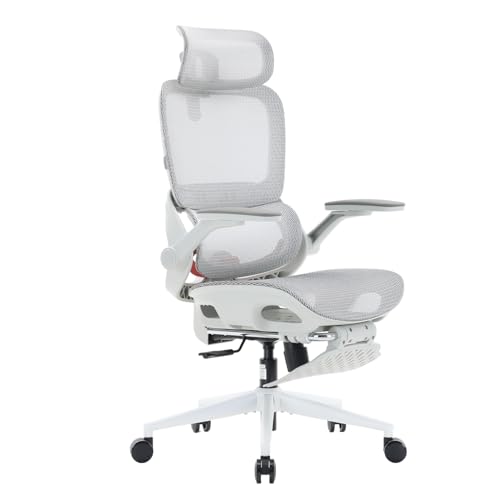
- Adaptive lumbar support follows changing posture
- 4D armrests and three lockable recline angles
- Retractable footrest and 300-lb capacity
Best For: Home offices combining programming with relaxation or gaming
High-Capacity Choice
Fizzin Adjustable Mesh Office Chair
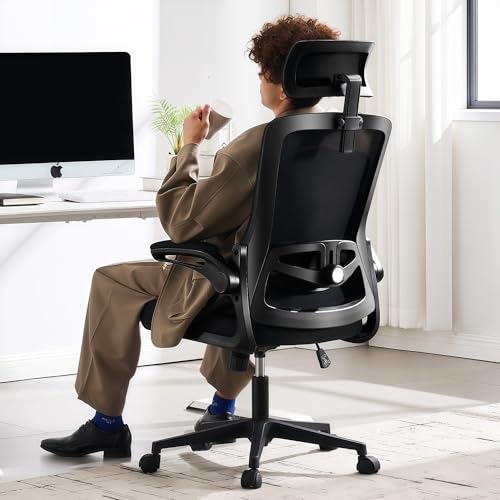
- 400-pound maximum weight recommendation
- Adjustable lumbar support and angled headrest
- 125° tilt with reversible 90° armrests
Best For: Programmers prioritizing capacity and broad adjustability
Best for Focused Posture

- 8° forward tilt for typing and coding
- Dual-mode adjustable lumbar support
- 330-pound capacity with adjustable seat depth
Best For: Programmers who prefer an engaged posture and customizable lower-back support
Best for Work-to-Rest Flexibility

- 135° recline with three lockable positions
- 3D armrests and adjustable headrest
- Retractable steel footrest for breaks
Best For: Programmers who want a reclining chair for work, reading, and short rests
Best for Heavy-Duty Desk Work

- Eight-level micro-adjustable lumbar support
- 400-pound capacity with stainless-steel base
- Large breathable seat and flip-up arms
Best For: Programmers who want precise back support and a high-capacity frame
Comfort-Focused Value
Supportive PU Leather Task Chair

- Thick, resilient PU leather seat
- Adjustable lumbar and seat height
- Flip-up arms and 300-pound capacity
Best For: Cushioned home-office workspaces
All-Day Adjustability
Marsail Mesh Chair with Headrest

- 2D headrest and 3D adjustable armrests
- Forward/back and vertical lumbar adjustment
- 330-pound capacity with padded mesh design
Best For: Customizable long-session desk work
Maximum Customization
400-Pound Mesh Ergonomic Chair

- Eight-position lumbar and nine-position backrest
- 4D padded arms and removable 3D headrest
- 400-pound capacity with 90–135° recline
Best For: Highly adjustable long-session support
Versatile Support – Gabrylly GY01 Ergonomic Chair
The Gabrylly GY01 is an ergonomic office chair for programmers who want a wide, breathable seat and several adjustable support points for extended desk sessions. Its headrest, lumbar support, backrest, seat height, and flip-up arms can be adjusted to suit users approximately 5’2″ to 6’1″.
Best For: Programmers seeking a roomy mesh chair with a 300-pound capacity and space-saving flip-up arms.
Pros:
- Wide mesh seat and breathable mesh back promote airflow during long work periods.
- Adjustable headrest, lumbar support, seat height, and backrest provide a customizable fit.
- 90°–120° tilt range, 45° flip-up arms, and quiet casters add everyday versatility.
- Supports up to 300 pounds and includes a three-year warranty according to the supplied notes.
Cons:
- The recommended user height range is approximately 5’2″ to 6’1″.
- The larger frame may be more chair than needed for compact workspaces.
With its wide cushion, adjustable features, and breathable construction, the GY01 is a practical choice for programmers who prioritize roominess and flexibility over a minimalist footprint.
Precision Fit – ProtoArc EC200 Adjustable-Depth Chair
The ProtoArc EC200 stands out as an ergonomic office chair for programmers because its seat depth can be adjusted independently. Five depth positions, adjustable lumbar support, and a four-position recline help users fine-tune posture for focused work, reading, calls, and breaks.
Best For: Users around 5’4″–6’0″ and under 220 pounds who need more control over seat depth and lower-back support.
Pros:
- Five-position seat-depth adjustment provides up to 1.97 inches of travel.
- Lumbar support adjusts in height and depth to help accommodate different body shapes.
- Four recline locks from 90° to 130° and adjustable tilt tension suit varied work modes.
- High-density foam, mesh back, and a 3D headrest are designed for extended sitting.
Cons:
- The stated maximum weight recommendation is 220 pounds.
- The intended user height range is approximately 5’4″–6’0″.
- The armrests offer height adjustment, but the supplied details do not list broader 3D or 4D adjustment.
The EC200 is a strong fit for programmers who have trouble finding a comfortable seat depth. Its narrower body-size guidance and 220-pound limit should be checked before purchase.
Relaxed Productivity – SIHOO B100 PRO Mesh Chair
The SIHOO B100 PRO is an ergonomic office chair for programmers who alternate between concentrated typing and relaxed breaks. Its adaptive lumbar design, 4D armrests, wide headrest, breathable mesh, and retractable footrest support both work and downtime.
Best For: Home-office users who want a supportive work chair that can also recline for relaxation, gaming, or short rest periods.
Pros:
- Adaptive dynamic lumbar support is designed to move with changing seated positions.
- 4D armrests can adjust, rotate, or flip up for posture changes and desk clearance.
- Three lockable recline angles—110°, 125°, and 135°—cover work and relaxation.
- Retractable footrest, wide headrest, full mesh, and a 300-pound capacity add comfort and versatility.
Cons:
- The footrest and reclining features may be unnecessary for programmers seeking a simpler task chair.
- The supplied details identify the color as Light White, which may show desk-area wear more readily than darker finishes.
For programmers who spend long stretches at a desk but also use the chair for breaks or entertainment, the B100 PRO offers an unusually broad comfort feature set. Its size and multi-function design may be more than needed for strictly task-focused setups.
High-Capacity Choice – Fizzin Adjustable Mesh Office Chair
The Fizzin chair is an ergonomic office chair for programmers who need a higher stated weight capacity and broad adjustment coverage. It combines adjustable lumbar support, an angled headrest, reversible armrests, a thickened cushion, and a 125° tilt function.
Best For: Users approximately 5’4″ to 6’3″ who want a mesh chair rated for up to 400 pounds.
Pros:
- 400-pound maximum weight recommendation provides substantial capacity.
- Headrest adjusts vertically and by angle, while lumbar support moves vertically and forward or backward.
- Reversible 90° armrests, 125° tilt, and 360° swivel support flexible desk use.
- Breathable mesh, silent rollers, and approximately 15-minute assembly add practicality.
Cons:
- The supplied notes specify a one-year warranty, shorter than some alternatives in this roundup.
- The product details contain differing dimensional entries, so workspace measurements should be verified before ordering.
The Fizzin is worth considering when capacity and adjustability are the main priorities. Its 400-pound rating and wide height guidance make it adaptable, while the shorter warranty may matter to long-term buyers.
Best for Focused Posture – Axis One Lumbar Support Chair
If you want an ergonomic office chair for programmers that keeps you close to the desk during typing and coding, the Axis One emphasizes adjustable lumbar support, forward tilt, and seat-depth customization. Its 330-pound capacity and broad fit make it a practical option for longer home-office sessions.
Best For: Programmers who want forward-tilt support, customizable lumbar positioning, and a roomy fit.
Pros:
- 8-degree forward tilt supports an engaged posture for typing, drafting, and coding.
- Dual-mode lumbar support offers vertical, depth, and angle adjustments.
- Supports up to 330 pounds and includes adjustable arms, headrest, and seat depth.
- Arrives 95% assembled and includes five-year product support.
Cons:
- Its recommended user range is limited to approximately 5’4″ to 6’3″.
- The leg-rest recline mode is more useful for breaks than active desk work.
The Axis One stands out for programmers who prefer a forward-leaning work posture and detailed lower-back adjustments. It is also a strong choice for larger users, though shoppers outside its stated height range should compare the dimensions carefully.
Best for Work-to-Rest Flexibility – Gabrylly Chair with Footrest
This ergonomic office chair for programmers combines work-focused adjustability with a retractable footrest and 135-degree recline. The adjustable lumbar support, 3D armrests, and headrest help you fine-tune your position for long coding sessions, while the recline settings are useful during breaks.
Best For: Programmers who want an adjustable chair that can transition from desk work to reclining breaks.
Pros:
- Two-way lumbar adjustment provides up to 3 inches of vertical and 1.6 inches of horizontal movement.
- 3D armrests adjust up/down, front/back, and inward/outward for typing support.
- Three recline positions reach 135 degrees, with a retractable steel footrest.
- Large steel base and silent wheels support stability and smooth movement.
Cons:
- Its stated fit is for users approximately 5’3″ to 6′ tall.
- Assembly is estimated at 15–25 minutes, rather than arriving nearly assembled.
- The footrest and reclining design may be more chair than some minimalist workspaces need.
The Gabrylly is a versatile pick when your workday includes both concentrated screen time and short rest periods. Its extensive armrest and headrest adjustments are especially useful for dialing in a typing posture, while the footrest adds flexibility for breaks.
Best for Heavy-Duty Desk Work – 400lb Mesh Computer Chair
For programmers seeking an ergonomic office chair for long desk sessions, this model focuses on micro-adjustable lumbar support, a large ventilated seat, and a 400-pound capacity. Flip-up arms and silent PU wheels also make it easier to adapt the chair to different desk setups.
Best For: Users who need a high-capacity chair with precise lumbar adjustment for extended workdays.
Pros:
- Eight-level lumbar adjustment provides two inches of fine-tuning.
- Wide Aerovith Mesh seat promotes airflow and supports users during long sits.
- 400-pound capacity, stainless-steel base, and SGS gas lift prioritize stability.
- Flip-up arms and silent PU wheels help save space and protect hard floors.
Cons:
- The stated fit is approximately 5’5″ to 6’2″, so it may not suit every body size.
- Assembly typically takes about 30 minutes.
- The backrest reclines to 90, 110, or 125 degrees, which is less reclined than some lounge-oriented chairs.
This chair is a compelling option for demanding home-office use where capacity and durable construction matter. Its detailed lumbar adjustment is the main attraction for programmers, while the flip-up arms add practical flexibility when the chair needs to slide under a desk.
Comfort-Focused Value – Supportive PU Leather Task Chair
If you want an ergonomic office chair for programmers that balances cushioning with practical adjustability, this model offers a thick PU leather seat, breathable mesh back, adjustable lumbar support, and a rocking function. Its flip-up arms also make it easier to tuck the chair beneath a desk.
Best For: Programmers who want a cushioned, easy-to-clean chair for extended home-office work.
Pros:
- Thick sponge seat and wider cushion provide soft, resilient support.
- Adjustable lumbar support and seat height help accommodate different users.
- Breathable mesh back, flip-up arms, quiet casters, and 360-degree swivel add everyday practicality.
- Rated for up to 300 pounds and reported to have SGS and BIFMA testing.
Cons:
- The PU leather seat may feel less breathable than a fully mesh seat.
- The lumbar support adjusts up and down, but the notes do not indicate depth adjustment.
This chair is a practical pick for programmers who prioritize a soft seat and straightforward ergonomic features. It is especially useful in smaller workspaces, where flip-up arms can help maximize room beneath the desk.
All-Day Adjustability – Marsail Mesh Chair with Headrest
For programmers who spend long stretches at a desk, this ergonomic office chair for programmers emphasizes personalized positioning. It combines a 2D headrest, adjustable lumbar support, 3D armrests, a breathable mesh back, and a 90- to 120-degree reclining range.
Best For: Users who want multiple adjustment points and a headrest for changing work and rest postures.
Pros:
- Lumbar support adjusts 1.18 inches forward/backward and 2.16 inches up/down.
- 3D armrests move forward, backward, and side to side, and can flip up.
- Adjustable headrest and reclining backrest support different working positions.
- Thick high-density foam seat, breathable mesh back, and 330-pound capacity suit extended use.
Cons:
- It has more adjustment features to configure than a simpler task chair.
- The supplied notes specify assembly is required but do not provide an assembly time.
The Marsail is a strong middle-ground option for programmers who want a cooler mesh back without giving up a padded seat. Its broad adjustment range makes it easier to fine-tune arm, neck, back, and recline support.
Maximum Customization – 400-Pound Mesh Ergonomic Chair
This ergonomic office chair for programmers is built for detailed fit adjustments, with multi-position lumbar and backrest settings, 4D padded armrests, a removable 3D headrest, and a 90- to 135-degree recline. Its breathable mesh and silent casters are suited to long work sessions.
Best For: Programmers who want extensive spinal, arm, head, and recline customization with a higher weight rating.
Pros:
- Eight-position lumbar support and nine-position backrest adjustment enable detailed fitting.
- 4D soft-padded armrests adjust vertically, laterally, front to back, and by rotation.
- Removable 11-position headrest includes a hanger for a jacket or bag.
- Supports up to 400 pounds and includes three lockable recline positions with dynamic lumbar support.
Cons:
- The extensive adjustment system may take more time to dial in.
- The supplied notes do not specify the seat height, seat depth, or assembly time.
Choose this chair when fine-grained adjustability and capacity matter more than keeping the design simple. The removable headrest and wide recline range also let you shift between focused coding and relaxed breaks.
How We Picked the Best Ergonomic Office Chair for Programmers
We focused on features that matter during extended programming and desk work: adjustable lumbar support, seat-depth or cushion design, armrest positioning, recline control, breathable materials, headrest support, base stability, and stated weight capacity. We also considered whether each chair suits a particular use case, such as compact home offices, taller users, frequent reclining, or users who prefer a footrest.
A strong Ergonomic Office Chair for Programmers should offer more than a padded seat. It should let you position your hips, back, arms, and screen comfortably without forcing one rigid posture for the entire day.
Quick Comparison
| Feature | Best For | What to Look For |
|---|---|---|
| Adjustable lumbar support | Long coding sessions | Height, depth, or dynamic movement |
| Adjustable seat depth | Different leg lengths | A seat that supports your thighs without pressing behind the knees |
| 4D or flip-up arms | Keyboard and desk flexibility | Arms that align with your elbows and move out of the way |
| Recline and tilt lock | Reading, meetings, and breaks | Several lockable angles with controlled tension |
| Footrest | Reclining or relaxed work | A stable, retractable support rather than a substitute for seat fit |
| High weight capacity | Big-and-tall users | A capacity that comfortably exceeds your body weight |
Key Buying Factors for an Ergonomic Office Chair for Programmers
Fit Comes Before Feature Count
Check seat width, seat depth, backrest height, and weight capacity first. Your feet should rest flat on the floor, your knees should remain near a right angle, and the seat edge should not press into the backs of your legs. A wide cushion can help larger users, but excessive depth may leave shorter users without proper back support.
Lumbar and Arm Support
Adjustable lumbar support is especially useful when your workday alternates between typing, reading, and meetings. Armrests should allow your shoulders to relax while your elbows stay close to your body. Flip-up arms are useful in smaller spaces, while 3D and 4D arms offer more precise positioning.
Materials, Movement, and Recline
Breathable mesh can reduce heat during long sessions, while PU leather is easier to wipe clean but may feel warmer. Look for smooth-rolling casters, a sturdy five-star base, and tilt tension that matches your body weight. A footrest and deep recline are helpful for breaks, but they should not compensate for poor lumbar or seat fit.
Who Should Buy Which Ergonomic Office Chair for Programmers?
- For all-day coders: Prioritize adjustable lumbar support, seat-depth adjustment, breathable mesh, and independently adjustable armrests.
- For taller or heavier users: Choose a wide high-back chair with a suitable 330- or 400-pound capacity and a reinforced base.
- For compact workspaces: Look for flip-up arms, a manageable footprint, and reliable height and tilt controls.
- For users who recline often: Consider a model with a footrest, headrest, multiple tilt locks, and a stable base.
- For mixed home-office use: A chair combining mesh ventilation, adjustable lumbar support, and a clean executive-style design may offer the best balance.
Before buying, measure your desk height and available floor space, then compare the chair’s dimensions with your own. The best choice is the one that fits your body and lets you maintain relaxed, supported posture throughout your actual workday.