The best ergonomic office chairs with lumbar support make long work sessions more comfortable by combining adjustable back support, breathable materials, and a fit that suits your body.
We selected 10 options ranging from compact task chairs to big-and-tall models with headrests, footrests, reclining functions, and flexible armrests.
Best 10 Ergonomic Office Chairs with Lumbar Support Picks for 2026
Adjustable Mesh Comfort

- Adjustable lumbar support and 3D headrest
- Wide breathable mesh seat supports up to 300 lb
- Flip-up arms and 90–120° recline
Best For: Users wanting a roomy, breathable chair with broad adjustability
Soft Lumbar Cushioning
Marsail Chair with 2D Headrest
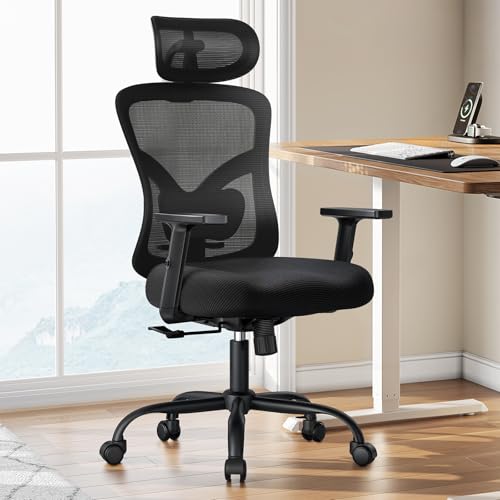
- 2.4-inch height-adjustable lumbar pad
- Tilting, height-adjustable 2D headrest
- 3.15-inch foam seat and breathable mesh back
Best For: Work or gaming sessions where cushioned lumbar and seat support are priorities
Maximum Adjustability

- 3D adjustable lumbar with depth, height, and rotation
- 5D flip-up arms and three-stage reclining
- Extendable footrest and breathable mesh design
Best For: Users wanting a versatile work, gaming, and reclining chair
Heavy-Duty Support
Nexthro Chair with Adjustable Lumbar

- 400-pound maximum weight recommendation
- Lumbar adjusts 3.15 inches vertically and 1 inch forward/back
- Wide seat with 3.2-inch high-density foam cushion
Best For: Users seeking a wide, sturdy chair with higher weight capacity
Heavy-Duty Comfort Pick
400-Pound Ergonomic Mesh Chair

- Eight-level, 2-inch lumbar adjustment
- Cooling mesh seat with adjustable headrest
- 400-pound capacity and five-year parts coverage
Best For: Long workdays and users seeking highly adjustable support
Compact Flexibility Pick
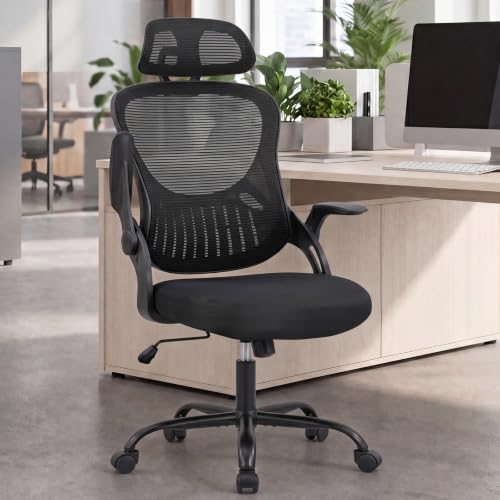
- Curved lumbar support and breathable mesh back
- Flip-up arms help save desk space
- 107°–144° rocking with adjustable headrest
Best For: Flexible home-office, study, and gaming setups
Balanced Adjustment Pick

- Lumbar adjusts vertically and front to back
- 3D armrests, headrest, and 90°–120° recline
- 330-pound capacity with thick foam seat
Best For: Customizable daily office seating with added cushioning
Space-Saving Comfort

- Large adjustable lumbar cushion and S-shaped backrest
- Flip-up padded armrests save desk space
- Breathable mesh, reclining function, and 15-year warranty
Best For: Compact home offices needing adjustable back support
Work-to-Rest Support

- Two-way adjustable lumbar support and 135-degree recline
- Retractable steel footrest with headrest and 3D armrests
- 300-pound capacity and large steel base
Best For: Workstations doubling as reading or relaxation spaces
Durability-Focused Value

- Depth-adjustable lumbar mechanism for personalized support
- High-resilience molded-foam seat and breathable mesh back
- 330-pound capacity with reinforced base and BIFMA gas cylinder
Best For: Budget-conscious users prioritizing durable core features
Adjustable Mesh Comfort – High-Back Chair with Headrest
For shoppers comparing ergonomic office chairs with lumbar support, this high-back mesh model emphasizes broad adjustability and a roomy seat. Its lumbar support, headrest, seat height, backrest, and flip-up arms can be adjusted to help accommodate users from about 5’2″ to 6’1″.
Best For: Home or office users who want a breathable, spacious chair with a headrest and space-saving arms.
Pros:
- Adjustable lumbar support and 3D headrest provide multiple support points.
- Wide mesh seat and back promote airflow and support up to 300 pounds.
- 90–120° recline, flip-up arms, and smooth-rolling casters add everyday flexibility.
- Includes a stated three-year warranty and tools for assembly.
Cons:
- The recommended user-height range is approximately 5’2″ to 6’1″.
- The chair requires assembly, estimated at 15–20 minutes.
This is a practical choice when adjustability, ventilation, and a generous seat matter more than a highly specialized lumbar system. Confirm the dimensions and recommended height range before ordering.
Soft Lumbar Cushioning – Marsail Chair with 2D Headrest
This Marsail model is one of the ergonomic office chairs with lumbar support that focuses on a soft, adjustable lower-back pad. The lumbar support has a 2.4-inch height range, while the thick foam seat and breathable mesh back are intended to keep longer work or gaming sessions comfortable.
Best For: Office, study, reading, or gaming setups that need adjustable lumbar and neck support with a cushioned seat.
Pros:
- Height-adjustable lumbar support is designed to follow the spine’s natural curve.
- 2D headrest tilts 45° and adjusts 2.8 inches vertically.
- Thick 3.15-inch foam seat adds cushioning for hips and thighs.
- Metal base, Class 3 gas lift, and casters support up to 300 pounds.
Cons:
- The armrests adjust vertically only, according to the supplied details.
- Assembly is required.
Choose this chair if a soft lumbar pad and padded seat are priorities. Its support adjustments are useful, though shoppers seeking extensive armrest positioning may prefer a more configurable design.
Maximum Adjustability – X100 Mesh Chair with Footrest
The ELABEST X100 stands out among ergonomic office chairs with lumbar support for its extensive adjustment system. Its 3D lumbar support offers depth, height, and rotation adjustments, while the chair also adds a reclining mechanism, headrest, multi-directional arms, and an extendable footrest.
Best For: Users who want a highly adjustable work-and-gaming chair that can also support reclining and leg elevation.
Pros:
- 3D lumbar system adjusts depth, height, and rotation and includes auto-tracking springs.
- 5D flip-up armrests offer height, width, forward/backward, rotation, and flip adjustments.
- 18-inch footrest, three-stage recline, and adjustable headrest support relaxation breaks.
- Breathable mesh, BIFMA-certified structure, and a 300-pound capacity add practical appeal.
Cons:
- The large number of adjustments may take time to configure.
- Assembly is required, although the supplied notes estimate about 15 minutes.
This is the feature-rich option for shoppers who want more than basic lumbar adjustment. Its footrest and extensive controls make it especially versatile, but its larger feature set may be unnecessary for a simple task chair.
Heavy-Duty Support – Nexthro Chair with Adjustable Lumbar
For buyers prioritizing capacity, this Nexthro model combines adjustable lumbar support with a wide seat and a 400-pound maximum weight recommendation. The lumbar mechanism moves 1 inch forward and backward and 3.15 inches vertically, giving users more control over lower-back positioning.
Best For: Users who need a wide, heavy-duty office chair with a substantial foam cushion and adjustable lower-back support.
Pros:
- Lumbar support adjusts both vertically and forward/backward to fit different body types.
- Wide 20.9-inch seat and 3.2-inch high-density foam cushion support extended sitting.
- 400-pound capacity, breathable mesh, and a heavy-duty base emphasize stability.
- Suitable for home offices, corporate workspaces, study rooms, and gaming rooms.
Cons:
- Assembly is required, with setup estimated at 15–20 minutes.
- The supplied details provide fewer specific recline and headrest adjustments than some competing models.
This chair is a strong fit when weight capacity and seat width are central buying considerations. Its adjustable lumbar range adds flexibility, while the simpler feature set may appeal to shoppers who do not need numerous controls.
Heavy-Duty Comfort Pick – 400-Pound Ergonomic Mesh Chair
If you need ergonomic office chairs with lumbar support for long desk sessions, this high-back mesh model offers unusually extensive adjustment. Its micro-adjustable lumbar system, cooling mesh seat, headrest, and 400-pound capacity make it a strong option for users who prioritize fit and durability.
Best For: Long workdays, larger users, and anyone wanting highly adjustable lower-back support.
Pros:
- Eight-level lumbar adjustment provides 2 inches of positioning range.
- Cooling mesh seat and high back are designed for extended sitting.
- Includes adjustable headrest, flip-up arms, three tilt-lock positions, and quiet PU wheels.
- Supports up to 400 pounds and includes complimentary replacement parts for five years.
Cons:
- Its extensive adjustments may take more time to fine-tune.
- The 38-pound build may be less convenient to move than lighter chairs.
This is the most robust and adjustment-focused choice in the group. It is particularly compelling if precise lumbar positioning and a higher weight capacity matter more than keeping the chair lightweight or simple.
Compact Flexibility Pick – DUMOS Ergonomic Office Chair
For shoppers comparing ergonomic office chairs with lumbar support on a smaller budget or footprint, the DUMOS combines a supportive back with useful everyday adjustments. Its breathable mesh, flip-up arms, adjustable headrest, and rocking range suit a home office that also serves as a study or gaming space.
Best For: Home offices, bedrooms, and users who want a versatile chair with space-saving arms.
Pros:
- Lumbar support follows the spine’s natural curve.
- Flip-up armrests can clear space beneath a desk.
- Height adjustment ranges from 18.5 to 22.2 inches, with 107°–144° rocking.
- Adjustable headrest provides height and angle customization.
Cons:
- Its 250-pound weight recommendation is lower than the other chairs here.
- The supplied specifications list no manufacturer warranty.
- It is lighter and may feel less substantial than heavier-duty alternatives.
The DUMOS is a practical multipurpose option rather than a maximum-capacity chair. Choose it when flexible positioning, a breathable back, and easy storage are more important than extensive lumbar micro-adjustment or a high weight rating.
Balanced Adjustment Pick – Marsail Mesh Lumbar Chair
The Marsail is a well-rounded choice among ergonomic office chairs with lumbar support, pairing a breathable mesh back with a lumbar system that adjusts both vertically and forward or backward. Its 3D armrests, recline range, and thick foam seat give you several ways to tailor the chair for daily desk work.
Best For: Users who want detailed posture adjustments, a padded seat, and a moderate 330-pound capacity.
Pros:
- Lumbar support adjusts 2.16 inches up and down and 1.18 inches forward and backward.
- 3D armrests move forward, backward, and side to side, and flip up.
- Adjustable headrest and 90°–120° backrest recline support multiple postures.
- Thick high-density foam seat and 330-pound weight capacity add everyday support.
Cons:
- The supplied dimensions are unusually listed with a 46.9-inch depth, so verify available space before ordering.
- Assembly is required.
- It weighs 30.4 pounds, so it may not be the easiest chair to reposition frequently.
This chair strikes a useful middle ground between extensive adjustability and cushioned sitting comfort. It is a strong fit for buyers who want precise lumbar and arm positioning without moving to the 400-pound class.
Space-Saving Comfort – Adjustable Lumbar Mesh Chair
If you want ergonomic office chairs with lumbar support for a compact home-office setup, this khaki mesh chair combines a large adjustable lumbar cushion with a space-saving design. Its flip-up armrests, breathable back, reclining function, and waterfall-edge seat make it suited to everyday desk work.
Best For: Home offices and study spaces where adjustable back support and under-desk storage matter.
Pros:
- Large, adjustable lumbar cushion with thick sponge and an S-shaped backrest.
- Flip-up, padded armrests help the chair slide under a desk when not in use.
- Breathable mesh, a high-density foam seat, quiet rubber wheels, and 360-degree swivel.
- Includes a 15-year warranty and assembly instructions, video, and tools.
Cons:
- Weight capacity is limited to 264 pounds.
- The listed seat height is 21.6 inches, which may not suit every desk or user.
This is a practical option for shoppers prioritizing adjustable lumbar support and space efficiency. The armrests and quiet casters add everyday convenience, while the recline feature provides a way to change position during breaks.
Work-to-Rest Support – Reclining Chair with Footrest
For shoppers seeking ergonomic office chairs with lumbar support that can also serve as a rest station, this GABRYLLY model adds a retractable footrest, headrest, and 135-degree recline. Its two-way lumbar adjustment and sturdy steel base are designed for extended work sessions.
Best For: Users who want a highly adjustable chair for work, gaming, reading, and occasional breaks or naps.
Pros:
- Two-way lumbar support adjusts 3 inches vertically and 1.6 inches horizontally.
- Three recline positions—90, 110, and 135 degrees—support work and relaxation.
- Retractable steel footrest, adjustable headrest, and 3D armrests provide multiple comfort adjustments.
- 300-pound capacity, large steel base, silent wheels, and an all-mesh design.
Cons:
- The chair is designed for users approximately 5 feet 3 inches to 6 feet tall.
- Its footrest and high-back recliner format require more space than a basic task chair.
- The warranty is 3 years for parts, shorter than some competing coverage periods.
This model stands out when adjustability extends beyond lumbar support. The footrest and recline positions make it more versatile than a conventional desk chair, although its larger feature set may be unnecessary for a simple workstation.
Durability-Focused Value – Molded-Foam Lumbar Chair
This TRALT chair is aimed at shoppers comparing ergonomic office chairs with lumbar support on a practical budget. It focuses on a depth-adjustable lumbar mechanism, a high-resilience molded-foam seat, a breathable mesh back, and reinforced components rather than adding a headrest.
Best For: Home-office users who prioritize durable seating materials and dependable height support over extra accessories.
Pros:
- Adjustable lumbar mechanism changes depth to match the spine’s natural curve.
- High-density molded foam is designed to retain its shape over time.
- Breathable mesh back helps limit heat buildup and peeling upholstery.
- 330-pound capacity, metal-reinforced base, BIFMA-certified gas cylinder, and silent casters.
Cons:
- No headrest is included, as the design emphasizes core support features instead.
- The warranty is 2 years, shorter than some chairs in this roundup.
- Its listed seat-height range may not fit users outside approximately 5 feet 4 inches to 6 feet 2 inches.
The TRALT is a sensible value-oriented choice for buyers concerned about common budget-chair problems such as seat sagging, sinking cylinders, and weak bases. Its feature set is deliberately focused, making it less suitable if you want a headrest or reclining workstation.
How We Picked the Best Ergonomic Office Chairs with Lumbar Support
We focused on features that affect everyday comfort rather than relying on appearance alone. The shortlist includes chairs with adjustable or built-in lumbar support, supportive high backs, breathable mesh or cushioned seats, and useful seat-height and recline adjustments. We also considered capacity, armrest design, headrest availability, footrests, wheel and base construction, and whether each chair suits a home office, gaming setup, or extended desk work.
Because chair comfort is highly personal, this list covers several designs and price points instead of assuming one style works for everyone. Product specifications and user feedback were weighed alongside practical considerations such as assembly, space requirements, and adjustability.
Quick Comparison
| Chair type | Best suited for | Notable features |
|---|---|---|
| Standard ergonomic task chair | Everyday home-office work | Adjustable lumbar support, tilt, mesh back |
| Big-and-tall ergonomic chair | Larger users or wider desks | Higher weight capacity, wide seat, reinforced base |
| Chair with headrest | Users who recline or need neck support | High back, adjustable headrest, tilt lock |
| Chair with footrest | Breaks, reading, and reclining | Extended leg support and deeper recline |
| Flip-up armrest chair | Compact workspaces | Arms that clear the desk when not in use |
Key Buying Factors for Ergonomic Office Chairs with Lumbar Support
Adjustability and Fit
Lumbar support should contact the curve of your lower back without pushing aggressively. Look for height or depth adjustment when available, along with a seat-height range that lets your feet rest flat and your knees remain near a right angle. A seat that is too deep can leave unsupported space behind your lower back.
Seat and Back Construction
Mesh backs improve airflow and may feel cooler during long sessions, while padded seats can provide a softer feel. Check seat width, cushion thickness, and the chair’s stated weight capacity. Big-and-tall models may offer a wider seat and sturdier frame, but they can take up more room.
Armrests, Headrests, and Recline
Adjustable armrests help keep shoulders relaxed, while flip-up arms are useful when the chair must slide under a desk. A headrest is most valuable if you regularly recline. Confirm the recline range and whether the tilt can lock at a comfortable working angle.
Base, Wheels, and Workspace
A stable five-point base and smooth-rolling casters matter on hard floors and carpet. Measure your desk clearance, chair footprint, and available space before choosing a model with a footrest or extra-wide seat.
Who Should Buy Which Ergonomic Office Chairs with Lumbar Support?
Choose a standard mesh task chair if you want a practical everyday option for focused desk work. A big-and-tall chair is a better match for users who need additional seat width, stronger support, or a higher weight rating. Select a headrest model if you alternate between upright typing and reclining.
For compact rooms, flip-up arms make storage and desk clearance easier. A footrest chair suits users who read, watch content, or take breaks in a reclined position, but it may be unnecessarily bulky for a small workstation. Finally, prioritize the most adjustable lumbar system you can find if lower-back comfort is your main concern; a chair with more settings is easier to fine-tune as your posture and work habits change.