The best ergonomic office chairs with footrests combine everyday desk support with a more comfortable way to recline, stretch out, or take short breaks. Adjustable lumbar support, armrests, headrests, and mesh ventilation can make a noticeable difference during long work sessions.
We compared 10 options across adjustability, reclining range, materials, comfort features, and suitability for different users. The guide below explains what to prioritize before choosing a chair for your office, study, or gaming setup.
Best 10 Ergonomic Office Chairs with Footrest Picks for 2026
Premium Spine Support

- Dynamic 3D lumbar and 5D armrest adjustment
- 18-inch extendable footrest with 3-stage recline
- BIFMA-certified, 300-pound capacity
Best For: Long work sessions and larger users seeking extensive adjustment
Everyday Reclining Value

- 135-degree reclining backrest
- Retractable footrest and breathable mesh
- Adjustable headrest, lumbar, seat, and armrests
Best For: Home offices and study spaces needing practical reclining support
Heavy-Duty Lounge Support
Adjustable Footrest Office Chair

- 90-to-145-degree reclining range
- 2D lumbar and 3D linkage armrest adjustment
- Reinforced base with stated 350-pound capacity
Best For: Users wanting a deeper recline and heavy-duty support
Highly Adjustable Mesh Comfort
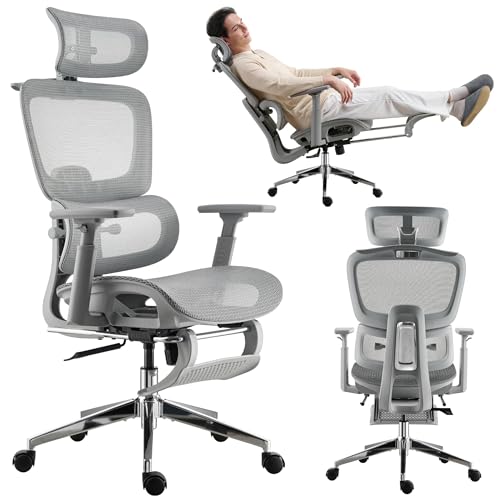
- Six sequential lumbar adjustment levels
- 3D headrest and multi-directional armrests
- Breathable mesh with retractable footrest
Best For: Versatile work, gaming, reading, and relaxation setups
Best Overall
Adjustable Mesh Chair with Footrest

- Adjustable lumbar support, headrest, and 4D arms
- Three-position recline with retractable footrest
- 350-pound capacity and BIFMA-tested components
Best For: Remote workers seeking highly adjustable mesh seating
Best for Plush Comfort
Brown Executive Chair with Footrest

- Memory sponge and layered five-point cushioning
- 135-degree recline with adjustable lumbar support
- Supports up to 400 pounds and wipes clean easily
Best For: Tall or heavier users who prefer padded executive seating
Best for Breathability
Grey Adaptive Mesh Chair with Footrest

- 3D adjustable headrest and five-level backrest
- Adaptive lumbar support with 3D armrests
- Breathable mesh and three-year warranty
Best For: Office and gaming users who prioritize breathable mesh seating
Balanced Comfort Pick
Adjustable Reclining Chair with Footrest

- 90°–160° lockable recline with retractable footrest
- Adjustable headrest and lumbar support
- 300-pound capacity with breathable mesh back
Best For: Home offices, studying, gaming, and work-to-rest transitions
Stability-Focused Pick
Heavy-Duty Mesh Chair with Footrest

- 135° recline with three lockable positions
- Three-way armrests and adjustable mesh headrest
- Large steel base and 300-pound capacity
Best For: Long work sessions, gaming, and users wanting a stable base
Relaxation-Ready Pick
High-Back Mesh Recliner with Footrest

- 90°–160° lockable recline and retractable footrest
- Dual-back lumbar support with 2D headrest
- 300-pound capacity and breathable racing mesh
Best For: Long hours, gaming, reading, and occasional naps
Premium Spine Support – ELABEST X100 Mesh Chair
If you want ergonomic office chairs with footrest support for long workdays, the ELABEST X100 emphasizes adjustability, airflow, and active lumbar support. Its recline system, extendable footrest, and broad adjustment range suit both focused desk work and breaks.
Best For: Long work sessions, larger users, and workspaces that also double as gaming setups.
Pros:
- Dynamic 3D lumbar support adjusts in height, depth, and rotation.
- 5D flip-up armrests offer extensive positioning and can tuck beneath a desk.
- Breathable mesh, a 3-stage recline, and an 18-inch footrest support work and relaxation.
- BIFMA-certified construction supports up to 300 pounds.
Cons:
- The extensive adjustment system may take time to configure.
- Its listed seat-height range starts at 18.3 inches, which may not suit every desk setup.
The X100 is the most feature-rich option here, particularly for buyers who prioritize fine-tuned spinal support and flexible arm positioning. Its tool-free assembly and dual-purpose design add practical value.
Everyday Reclining Value – ATORPOK Ergonomic Chair
The ATORPOK is a straightforward choice among ergonomic office chairs with footrest features, combining a 135-degree reclining backrest with adjustable lumbar support, headrest, seat depth, and height. Its mesh construction is designed for airflow during routine desk work.
Best For: Home offices, study areas, and gaming rooms needing a reclining chair with broad basic adjustments.
Pros:
- Reclines to 135 degrees for working, reading, gaming, or relaxing.
- Retractable footrest provides additional leg support during breaks.
- Adjustable headrest, lumbar support, armrests, seat depth, and seat height.
- Wide five-point base and smooth-rolling casters support stability and mobility.
Cons:
- The armrests offer vertical adjustment only.
- The standard-size design may provide less customization than more advanced models.
This chair focuses on the features most users expect for daily use without an especially complex control system. The 330-pound weight recommendation and retractable footrest make it a practical general-purpose option.
Heavy-Duty Lounge Support – Adjustable Footrest Office Chair
For shoppers comparing ergonomic office chairs with footrest support and a higher weight rating, this model combines a 90-to-145-degree reclining range with dynamic lumbar and linkage armrest adjustments. A padded pull-out footrest makes it suitable for switching between desk work and rest.
Best For: Users who want a heavy-duty chair with deeper recline, targeted lumbar adjustment, and a padded footrest.
Pros:
- Backrest locks at angles from 90 to 145 degrees.
- 2D lumbar support adjusts vertically and in depth for targeted positioning.
- 3D linkage armrests pivot and adjust to support different postures.
- Reinforced base, Class 4 gas cylinder, and a stated 350-pound capacity provide sturdy support.
Cons:
- The product information lists a 21-inch seat height, which may be high for some desks.
- Its 30-pound listed weight may not reflect the heavier construction some buyers expect from a heavy-duty chair.
This is a strong fit for buyers who value a generous recline and more targeted support controls. The three-year warranty and included assembly tools add reassurance for regular use.
Highly Adjustable Mesh Comfort – M2001 Office Chair
The M2001 stands out among ergonomic office chairs with footrest designs for its sequential lumbar adjustment, 3D headrest, and 3D armrests. Its breathable mesh seat and back, retractable footrest, and smooth casters cover work, gaming, reading, and relaxation.
Best For: Buyers who want a versatile mesh chair with multiple head, arm, and lumbar positions.
Pros:
- Backrest and lumbar support provide six sequential adjustment levels.
- 3D armrests adjust up and down, forward and backward, and rotate 40 degrees.
- Breathable, elastic mesh is designed to resist heat buildup and deformation.
- Retractable footrest and a built-in hanger add convenience for extended use.
Cons:
- The lumbar adjustment must be made in sequence, and the return position cannot be fixed.
- The supplied details do not specify a recline angle or warranty period.
The M2001 is a flexible option for users who frequently change positions or use one chair for several activities. Its adjustment sequence requires attention, but the 3D armrests and breathable mesh offer useful everyday versatility.
Best Overall – Adjustable Mesh Chair with Footrest
If you want ergonomic office chairs with footrest support for long workdays, this mesh model offers a strong mix of adjustability and reclining comfort. Its adjustable lumbar support, customizable headrest, 4D armrests, and three-position tilt system make it suitable for work, study, and downtime.
Best For: Remote workers and everyday computer users who want extensive posture adjustments and a 350-pound capacity.
Pros:
- Adjustable lumbar support and headrest help personalize back and neck support.
- 4D armrests adjust for height, depth, width, and pivot.
- Retractable footrest and three reclining positions support breaks and relaxation.
- Mesh upholstery, BIFMA-tested components, and 350-pound capacity suit regular use.
Cons:
- The black mesh design may feel less plush than an upholstered executive chair.
- Assembly and adjustment options may take time to dial in.
This is a versatile choice when adjustability matters most. It is particularly appealing for users who alternate between typing, reading, reclining, and extended computer sessions.
Best for Plush Comfort – Brown Executive Chair with Footrest
Among ergonomic office chairs with footrest features, this brown executive model emphasizes cushioned, sofa-like comfort. Memory sponge padding, layered support, an adjustable lumbar pillow, and a 135-degree recline make it a practical option for work, gaming, or occasional naps.
Best For: Tall or heavier users who prefer padded PU leather and a spacious, executive-style chair.
Pros:
- Layered sponge cushioning provides support across the head, shoulders, back, hips, and legs.
- Memory sponge adapts to body shape and weight.
- Adjustable lumbar pillow, armrests, recline, and retractable footrest support multiple uses.
- PU leather is waterproof, scratch resistant, pet friendly, and easy to wipe clean.
Cons:
- PU leather may feel warmer than breathable mesh during extended sessions.
- At 46.4 pounds, it is heavier than the mesh options in this roundup.
- The large footprint may require more room around a desk.
Choose this chair if cushioning and an executive appearance take priority over mesh breathability. Its 400-pound capacity and high-back design also make it worth considering for users who want more substantial support.
Best for Breathability – Grey Adaptive Mesh Chair with Footrest
This ergonomic office chair with footrest is built around breathable mesh and flexible adjustments for work or gaming. A 3D headrest, five-level backrest, adaptive lumbar support, and 3D armrests help users fine-tune their position, while the integrated coat hanger adds a practical workspace detail.
Best For: Users who want a breathable grey chair with adjustable neck, back, and arm support for office or gaming use.
Pros:
- 3D headrest adjusts up, down, forward, backward, and rotates.
- Five-level height-adjustable backrest accommodates different user heights.
- Adaptive lumbar support, 3D armrests, and breathable mesh promote customized comfort.
- Includes a built-in coat hanger and a three-year warranty.
Cons:
- The listed reclining configuration has one position, offering less recline flexibility.
- Its 300-pound capacity is lower than the other two chairs here.
- The supplied notes do not specify the footrest’s adjustment range.
This chair stands out for breathable materials and upper-body adjustability rather than plush padding. It is a good fit for users who value mesh airflow, a customizable headrest, and a longer warranty.
Balanced Comfort Pick – Adjustable Reclining Chair with Footrest
This ergonomic office chair with footrest is designed for users who want a supportive everyday desk chair that can also handle breaks and naps. It combines a breathable mesh back, high-density foam seat, adjustable lumbar support, and a 90°–160° reclining range.
Best For: Home offices, students, gamers, and anyone who alternates between focused work and relaxation.
Pros:
- Retractable footrest and lockable recline support work, rest, and naps.
- Adjustable headrest and lumbar support accommodate different heights and body shapes.
- 300-pound capacity, metal base, quiet casters, and breathable mesh back.
Cons:
- The chair has a mid-back design rather than a full high-back profile.
- Its many adjustment features may require some setup and fine-tuning.
This is a versatile choice among ergonomic office chairs with footrest, especially if you want strong adjustability and a cushioned seat without giving up airflow. The one-year warranty adds basic coverage for quality issues.
Stability-Focused Pick – Heavy-Duty Mesh Chair with Footrest
For shoppers seeking ergonomic office chairs with footrest and a sturdier base, this GABRYLLY model pairs a large steel base with a 300-pound capacity. Its 135° recline, two-level steel footrest, adjustable lumbar support, and all-mesh construction are aimed at long work sessions and comfortable breaks.
Best For: Users who prioritize a stable base, extensive armrest adjustment, and a moderate reclining range.
Pros:
- Three lockable positions at 90°, 110°, and 135° support work and relaxation.
- Three-way armrests and an adjustable headrest provide multiple fit options.
- Large steel base, silent wheels, and 300-pound tested capacity add stability.
- Three-year parts warranty and stated 15–25 minute installation time.
Cons:
- The 135° maximum recline is less extensive than chairs reaching 160°.
- The listed fit range is intended for users approximately 5’3″ to 6′ tall.
This chair stands out when stability and adjustability matter more than a nearly flat reclining angle. The steel footrest and broad base make it a practical option for users who regularly shift between desk work, gaming, and short rest periods.
Relaxation-Ready Pick – High-Back Mesh Recliner with Footrest
This ergonomic office chair with footrest is built for switching between focused work and extended relaxation. A 90°–160° lockable recline, retractable footrest, dual-back lumbar design, 2D headrest, and breathable racing mesh make it suitable for long hours at a desk.
Best For: Users who want a high-back chair for work, gaming, reading, and occasional office naps.
Pros:
- Wide 90°–160° reclining range with a retractable footrest for stretching and naps.
- Dual-back lumbar support is designed to follow the spine’s natural curve.
- 2D headrest, 3D armrests, high-density foam seat, and breathable mesh support long sessions.
- 300-pound capacity with an SGS-certified Class 3 gas lift and heavy-duty nylon base.
Cons:
- The supplied notes do not specify a warranty length.
- Its extensive features may take time to adjust to your preferred setup.
Choose this model if you want a high-back ergonomic chair that covers both posture support and relaxation. Its combination of a split backrest, adjustable components, durable capacity, and silent casters makes it especially adaptable across office and leisure spaces.
How We Picked the Best Ergonomic Office Chairs with Footrests
We focused on the features that matter most for extended seated use: adjustable lumbar support, a stable reclining mechanism, usable armrest and headrest adjustments, seat comfort, ventilation, and a footrest that supports the legs without making the chair unstable. We also considered whether each design suits compact home offices, larger users, or people who want a chair that can serve as both a desk chair and a relaxation seat.
Because comfort is personal, no single chair is ideal for everyone. Check the listed dimensions, weight capacity, seat depth, and assembly requirements before ordering.
Quick Comparison
| Priority | Look for | Best suited to |
|---|---|---|
| Ventilation | Breathable mesh back | Warm rooms and long work sessions |
| Relaxation | Wide recline range and padded footrest | Breaks, reading, and occasional naps |
| Posture support | Adjustable lumbar, headrest, and armrests | Daily desk work |
| Stability | Strong base and suitable weight rating | Taller or heavier users |
Key Buying Factors for Ergonomic Office Chairs with Footrests
Adjustability and Fit
Prioritize seat-height adjustment, a seat that supports your thighs without pressing behind the knees, and armrests that let your shoulders relax. A height-adjustable headrest is useful if you recline regularly. Lumbar support should contact your lower back rather than forcing it into an unnatural position.
Recline and Footrest Design
Look for a recline range that supports upright typing as well as relaxed breaks. A footrest is most useful when it extends far enough to support your lower legs and folds away when you need to sit close to the desk. Use the chair’s recline lock or tension controls to prevent unwanted movement while working.
Materials, Base, and Maintenance
Mesh generally improves airflow, while upholstered or executive-style materials may feel softer and warmer. Inspect the caster and base construction, especially for a larger chair or frequent reclining. Keep the footrest folded when entering or leaving the chair, and tighten hardware periodically after assembly.
Who Should Buy Which Ergonomic Office Chairs with Footrest?
Choose a mesh model if you work in a warm room or spend many uninterrupted hours at your desk. Choose a heavily adjustable chair if multiple people use it or you need precise arm, lumbar, and head support. Choose a wider big-and-tall design if you need additional seat space or a higher weight capacity, but verify the measurements rather than relying on the label alone.
Choose a reclining-focused option if the footrest will be used for reading, streaming, or short rest periods. For primarily keyboard-and-mouse work, prioritize upright stability and lumbar adjustment over the maximum recline angle. Whichever model you select, set the desk and monitor height so your elbows remain near 90 degrees and your screen sits close to eye level.