A well-chosen screen can make a cinemascope setup look sharper, more immersive, and easier to enjoy. The right model depends on your room size, projector throw, ambient light, and whether you need a permanent or portable installation.
We selected 10 screens spanning fixed-frame, motorized, ambient-light-rejecting, and outdoor designs so you can match screen format and features to your viewing space and budget.
Best 10 Projector Screens for Cinemascope Picks for 2026
Best Fixed-Frame Value
Silver Ticket STR Series 120-Inch

- 120-inch 16:9 fixed-frame design
- 1.1-gain white surface and 160° viewing angle
- Supports Full HD, 4K/8K, and Active 3D
Best For: Dedicated wall-mounted 16:9 home theaters
Best Portable Setup
ZUVMITG 120-Inch Screen with Stand

- Portable 120-inch 16:9 screen
- Supports front and rear projection
- Includes bag, stakes, ropes, and sandbags
Best For: Indoor and outdoor movie nights on the move
Best Native Cinemascope Choice

- Native 2.35:1 cinemascope aspect ratio
- 1.3-gain CineWhite UHD-B material
- Supports 4K, HDR, and Active 3D
Best For: Dedicated wide-format home theater installations
Ambient-Light Upgrade
SilverMagic 100-Inch ALR Screen Material

- Up to 2.6x gain for brighter center-seat viewing
- Reduces about 30% of ambient light
- Trim-to-fit DIY wall or frame installation
Best For: Standard-throw projectors in rooms with some ambient light
Motorized Theater Install
Elite Screens 125-Inch Electric Screen

- 125-inch motorized 16:9 viewing surface
- IR and RF remotes with programmable drop
- 180-degree viewing angle and included mount kit
Best For: Permanent standard-throw home theater installations
Portable Big-Screen Pick
Mdbebbron 150-Inch Foldable Screen
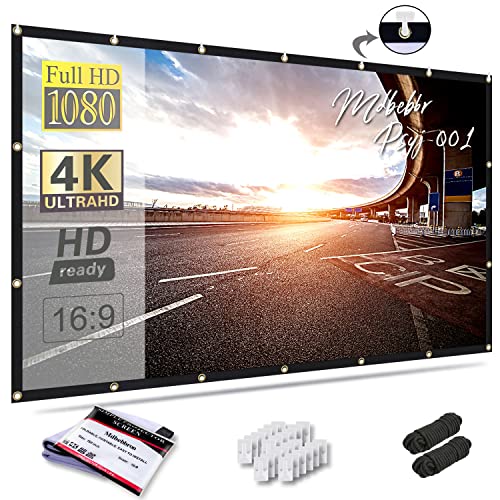
- 150-inch diagonal screen with 130-by-73-inch view
- Foldable 2-pound polyester design
- Front and rear projection with 160-degree viewing
Best For: Portable indoor or outdoor movie setups
Portable Pick

- Lightweight aluminum frame with padded carry bag
- Tool-free setup for indoor or outdoor use
- 80-inch 16:9 display with 160° viewing angle
Best For: Camping, backyards, and compact movie nights
Large-Format Choice

- Oversized 150-inch screen for group viewing
- Front and rear projection with wrinkle-resistant fabric
- LED strips and reinforced frame suit outdoor events
Best For: Backyard parties, presentations, and large gatherings
Best Fixed-Frame Value – Silver Ticket STR Series 120-Inch
For shoppers comparing projector screens for cinemascope, the Silver Ticket STR Series is a practical fixed-frame option for standard 16:9 viewing. Its white 1.1-gain surface, wide viewing angle, and velvet-wrapped aluminum frame suit dedicated home theater installations.
Best For: Wall-mounted home theaters using native 16:9 projectors.
Pros:
- 120-inch diagonal viewing area with a 104.5-by-58.875-inch image area.
- 160-degree viewing angle with no stated resolution loss across the viewing area.
- Supports Full HD, 4K/8K, and Active 3D projection.
- Compatible with long-, short-, and ultra-short-throw projectors, subject to the noted UST limitations.
Cons:
- Designed for 16:9 rather than a native 2.35:1 cinemascope format.
- Wall mounting is required; legs and stands are not available for this product.
- The standard white material is not acoustically transparent.
This screen offers a clean, cinema-style installation at a conventional widescreen ratio. Buyers with an ultra-short-throw projector should verify compatibility or consider the manufacturer’s S7 frame series.
Best Portable Setup – ZUVMITG 120-Inch Screen with Stand
If portability matters more than a permanent cinemascope installation, this 120-inch projector screen offers indoor and outdoor flexibility. Its stand, carry bag, front/rear projection support, and included windproof accessories make it suited to changing locations.
Best For: Backyard movie nights, camping, tailgating, and portable indoor screenings.
Pros:
- 120-inch 16:9 screen with a 160-degree viewing angle.
- Includes a reinforced base, four ground stakes, two ropes, and two sandbags for outdoor stability.
- Washable milk silk fabric is described as supporting vibrant 4K HD visuals.
- Folds for storage and includes a dedicated carry bag.
Cons:
- The 16:9 ratio is not a native cinemascope format.
- Floor-mounted construction requires setup space and may be less permanent than a fixed frame.
- Windproof accessories are needed for more secure outdoor use.
This is a versatile choice when the screen needs to travel. It emphasizes quick assembly and outdoor stability rather than the tailored masking or fixed installation typically associated with cinemascope viewing.
Best Native Cinemascope Choice – Elite Screens Aeon 125
For shoppers specifically seeking projector screens for cinemascope, the Elite Screens Aeon is the most directly matched option in this roundup. Its 2.35:1 aspect ratio, 125-inch diagonal size, and edge-free fixed-frame design are tailored to ultra-wide movie presentation.
Best For: Dedicated cinemascope home theaters and wide-format movie viewing.
Pros:
- Native 2.35:1 aspect ratio with a 115-by-49-inch viewing area.
- ISF-certified CineWhite UHD-B material with 1.3 gain.
- Supports 4K Ultra HD, HDR, and Active 3D projection.
- 180-degree viewing angle and compatibility with standard, ultra-short-, and short-throw projectors.
Cons:
- Fixed wall mounting is less convenient for portable or temporary setups.
- The 125-inch wide-format screen has a narrower height than a comparable 16:9 screen.
- Its 23.1-pound frame requires assembly and installation.
This is the clearest fit for a dedicated cinemascope setup because the aspect ratio is built into the screen rather than adapted from a standard widescreen format. The edge-free frame and included mounting hardware further support a clean theater installation.
Best Large Outdoor Screen – FvcDmik 150-Inch
This 150-inch portable screen is aimed at viewers who want a very large image without committing to a wall-mounted installation. Although its 16:9 format is not native cinemascope, the foldable frame and outdoor-oriented accessories make it useful for large backyard screenings.
Best For: Large outdoor movie nights, events, sports viewing, and presentations.
Pros:
- Large 150-inch-class screen for an immersive viewing area.
- Foldable polyester material is described as wrinkle-free and easy to clean.
- Includes a sturdy iron frame, carry bag, ground nails, and rigging ropes.
- Tool-free assembly is designed for quick indoor or outdoor setup.
Cons:
- Uses a 16:9 format rather than a native 2.35:1 cinemascope ratio.
- Floor-mounted setup needs substantial room for the large frame.
- The supplied dimensions list the screen at approximately 150 inches wide and 150 inches high, so buyers should confirm the exact usable image area.
Choose this model when image size and portability are the priorities. For a true cinemascope presentation, the Elite Screens 2.35:1 model is the more purpose-built alternative, while this screen favors flexible large-format viewing.
Ambient-Light Upgrade – SilverMagic 100-Inch ALR Screen Material
For projector screens for cinemascope setups that need stronger contrast in rooms with some light, this gray SilverMagic material offers a bright, wall-mounted DIY option. Its 100-inch 16:9 format can be trimmed to fit a custom frame or wall installation.
Best For: Home theater users with standard-throw projectors who want a brighter image and some ambient-light reduction.
Pros:
- Up to 2.6x gain for a brighter image from center seating.
- Suppresses approximately 30% of ambient light to improve contrast and color saturation.
- Can be installed with wall-safe tape and trimmed for a custom fit.
- Designed for a flat surface with neat edges similar to a fixed-frame screen.
Cons:
- Not suitable for ultra-short-throw projectors.
- 30-degree viewing angle is narrower than many conventional screens.
- The 16:9 aspect ratio is not a native cinemascope format.
This is a practical choice when brightness and light control matter more than a ready-made frame or wide viewing angle. Confirm your projector type and seating layout before installation.
Motorized Theater Install – Elite Screens 125-Inch Electric Screen
This Elite Screens model is a convenient option for projector screens for cinemascope-style movie rooms where a large, retractable display is preferred. The 125-inch 16:9 screen includes motorized operation, remote controls, and wall- or ceiling-mount hardware.
Best For: Permanent home theater installations using standard UHD or HD projectors and requiring remote-controlled screen operation.
Pros:
- 125-inch diagonal viewing area with a 109-by-61.3-inch image surface.
- Motorized drop-down design includes IR and RF remotes.
- 180-degree viewing angle supports broad seating arrangements.
- Fully assembled and includes installation hardware, programmable drop positioning, and 12-volt trigger options.
Cons:
- Not compatible with short-throw or ultra-short-throw projectors.
- Its 16:9 aspect ratio may require masking or unused space for cinemascope content.
- The 28.4-pound casing requires a suitable wall or ceiling mounting location.
Choose this screen when convenience and a clean retractable installation outweigh the flexibility of a portable or custom aspect-ratio surface. It is best matched with a standard-throw projector.
Portable Big-Screen Pick – Mdbebbron 150-Inch Foldable Screen
For flexible projector screens for cinemascope viewing, this 150-inch Mdbebbron model provides a large, lightweight surface for indoor or outdoor movies. Its foldable polyester construction supports front and rear projection and can be attached with hooks, ropes, nails, brackets, or tape.
Best For: Portable movie nights, presentations, and indoor or outdoor setups where compact storage and a very large image are priorities.
Pros:
- 150-inch diagonal format with a 130-by-73-inch viewing area.
- Lightweight, foldable design fits in a backpack or suitcase.
- Supports both front and rear projection with a 160-degree viewing angle.
- Washable fabric can be hand-washed or machine-washed.
Cons:
- Manual mounting requires separate attachment methods or hardware.
- Designed for 1080p Full HD projection rather than specifically identified 4K or 8K readiness.
- The 16:9 ratio is not a dedicated cinemascope aspect ratio.
This screen is a strong fit when portability and screen size matter more than a rigid, permanently tensioned installation. Plan for a secure mounting method and enough wall or outdoor space for its 130-inch width.
Portable Pick – 80-Inch Outdoor Screen
For shoppers comparing projector screens for cinemascope-style movie nights, this 80-inch portable model offers a compact 16:9 setup for indoor or outdoor use. Its aluminum frame, included carrying bag, and tool-free assembly make it practical for camping, backyards, and small home screenings.
Best For: Portable movie nights, camping, backyards, and smaller viewing spaces.
Pros:
- Lightweight aluminum construction weighs about 5.62 pounds and includes a padded carrying bag.
- Tool-free assembly and disassembly support quick setup and compact storage.
- 80-inch 16:9 screen with a 160-degree viewing angle and support hardware for light outdoor breezes.
- Washable polyester surface is designed to stay fine and wrinkle-free.
Cons:
- The 80-inch size may feel limited for larger groups or spacious home theaters.
- Its glossy finish may not suit viewers who prefer a matte surface.
- Outdoor stability still depends on properly using the included rope, hook, and water bag.
This is a sensible choice when portability and easy storage matter more than maximum screen size. It provides a straightforward 16:9 presentation for casual indoor and outdoor viewing.
Large-Format Choice – 150-Inch LED-Lit Screen
For projector screens for cinemascope-style group viewing, this 150-inch 16:9 model prioritizes scale and atmosphere. Its reinforced frame, anti-crease milk silk fabric, front and rear projection support, and integrated LED light strips make it suited to large indoor or outdoor gatherings.
Best For: Large backyard events, parties, sports viewing, presentations, and theater-style gatherings.
Pros:
- Large 150-inch screen provides an expansive viewing area for groups.
- Thickened metal supports, a widened counterweight base, pegs, and crossbar support improve outdoor stability.
- Wrinkle-resistant fabric supports front and rear projection with a 160-degree viewing angle.
- Included LED light strips add a cinema-like nighttime ambiance, while tool-free setup is designed to take about three minutes.
Cons:
- The oversized frame requires substantially more setup and storage space than smaller screens.
- Its 16:9 format is not a native cinemascope aspect ratio.
- The listing’s stated weight appears inconsistent with the product’s large frame, so buyers should verify handling expectations.
This model stands out when a large audience and immersive presentation are the priorities. The LED accents add atmosphere, while the reinforced structure is intended to make outdoor use more dependable.
Versatile Standout – 100-Inch Front/Rear Screen
For shoppers seeking projector screens for cinemascope-inspired home or outdoor theaters, this 100-inch TOWOND screen balances a larger image with portable support hardware. The 16:9 polyester milk silk surface accepts front or rear projection, while the tripod, sandbag, ropes, and stakes help adapt it to different locations.
Best For: Home theaters, backyard viewing, camping, school, office, church, and event use.
Pros:
- 100-inch 16:9 screen offers more viewing area than compact portable models.
- Thick, wrinkle-free, washable surface supports front and rear projection.
- Detachable tripod and crossbar assemble without tools and pack into the included carry bag.
- Ground stakes, wind ropes, and sandbags provide added outdoor stability when used as directed.
Cons:
- The 7.4-pound weight is less convenient than lighter compact screens.
- It has no stated warranty.
- Outdoor setup requires extra stabilization steps, especially in breezy conditions.
This is a practical middle-ground option for buyers who want a 100-inch image without committing to a very large fixed setup. Its projection flexibility and included stabilization accessories make it adaptable across indoor and outdoor venues.
How We Picked the Best Projector Screens for Cinemascope
We focused on screen size, image format, surface performance, installation style, portability, and stated compatibility with HD, 4K, or 8K projectors. The selection includes fixed-frame screens for dedicated theaters, motorized drop-down models for flexible rooms, ALR material for brighter spaces, and portable screens with stands for outdoor or temporary viewing.
Because cinemascope content is wider than standard 16:9 video, we also considered how easily each screen can support widescreen presentation. Most listed models use a 16:9 surface, so buyers should verify the visible image area, masking options, and projector lens or zoom requirements before purchasing.
Quick Comparison
- Best dedicated-theater options: Fixed-frame screens provide a taut, consistently flat surface.
- Best for flexible rooms: Motorized screens retract when the room has another use.
- Best for ambient light: ALR material can improve contrast when complete darkening is difficult.
- Best for outdoor movies: Stand-mounted screens offer easier setup and teardown, but require stable anchoring.
- Best for large gatherings: 150-inch portable screens create a large image but need substantial viewing distance and space.
Key Buying Factors for Projector Screens for Cinemascope
Aspect Ratio and Cinemascope Compatibility
Check whether the screen supports your intended widescreen image without excessive unused space. A 16:9 screen can display cinemascope content, but black bars or masking may remain unless your projector and screen are designed for a wider presentation.
Screen Size and Viewing Distance
Larger is not always better. Confirm that your projector can produce the desired image size at its throw distance, and leave enough seating distance for comfortable viewing. Measure wall width, ceiling height, and clearance for stands or screen housings.
Gain and Ambient Light
A gain near 1.0 generally offers balanced brightness and viewing angles. Higher-gain or ALR surfaces may produce a brighter image in challenging rooms, but can narrow viewing angles or make surface uniformity more noticeable. Darkening the room is often the simplest way to improve contrast.
Installation and Surface Quality
Fixed aluminum frames are typically the best choice for a dedicated theater because they maintain tension. Portable fabric screens are more versatile, but wrinkles, wind, uneven floors, and outdoor light can affect the image. For motorized models, measure the mounting area and check power and remote-control requirements.
Who Should Buy Which Projector Screens for Cinemascope?
Choose a fixed-frame model such as the Silver Ticket or Elite Screens Aeon for a permanent home theater and a clean, flat viewing surface. Select a motorized Elite Screens Spectrum model when you want to hide the screen between uses. An ALR material is better suited to rooms where windows or lights cannot be fully controlled.
For backyard films, camping, or multi-room use, consider an 80- to 150-inch stand-mounted screen with a carry bag and anchoring accessories. Smaller portable models are easier to transport, while 150-inch versions deliver a more cinematic image but demand more setup space. Before ordering, confirm the included stand, screen dimensions, front- or rear-projection support, and whether the listed size refers to the diagonal image area.