The best soundbars for home studios can simplify your setup while giving you clearer dialogue, fuller music playback, and a more enjoyable way to check mixes outside headphones.
Our selection includes compact 2.0 models, detachable designs, and full surround systems with wireless subwoofers and rear speakers. The right choice depends on your room, connections, bass needs, and how critically you plan to monitor audio.
Best 10 Soundbars for Home Studios Picks for 2026
Best Immersive Setup
ULTIMEA Poseidon M60 5.1CH Sound Bar

- 5.1-channel Dolby Atmos with side-firing drivers
- 300W peak output with wired wooden subwoofer
- 10-band EQ, presets, and surround-level controls
Best For: Immersive home studio, movie, and gaming audio
Best Compact Option

- Slim 24-inch design for space-conscious setups
- Dolby Audio and DTS Virtual:X processing
- HDMI eARC and Bluetooth connectivity
Best For: Compact desks, TV consoles, and streaming setups
Best Bass Value
Saiyin Sound Bar with Subwoofer
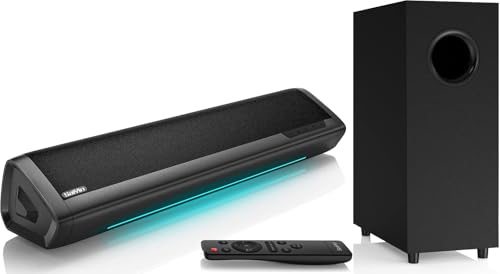
- Dedicated subwoofer for fuller, punchier bass
- Bluetooth, optical, and auxiliary inputs
- Three EQ modes for music, movies, and news
Best For: Affordable stereo setups needing stronger low end
Best Flexible Placement
Assistrust KY-8000 Detachable Sound Bar

- Detachable design supports four placement styles
- 80W output from four high-performance drivers
- ARC, optical, AUX, and Bluetooth inputs
Best For: Flexible desktop, projector, gaming, and TV setups
Immersive Studio Theater

- 5.1 surround with rear speakers
- 600W output and wireless subwoofer
- HDMI, optical, analog, Bluetooth, and USB
Best For: Studios that also serve as home theaters
Precision Tuning Pick

- 2.1 system with wireless subwoofer
- 10-band app EQ and 121 presets
- HDMI ARC, optical, and Bluetooth 6.0
Best For: Compact studios needing adjustable playback
Spatial Sound Upgrade

- 5.1 channels with wireless surrounds
- Dolby Atmos and DTS:X support
- AI Sonic automatic room calibration
Best For: Larger studios and immersive media rooms
Flexible Studio Starter
120W Sound Bar with Wired Subwoofer

- 120W output with dedicated wired subwoofer
- Bluetooth 5.3, ARC, optical, and AUX inputs
- Desktop or wall-mount setup with remote
Best For: Small home studios and mixed PC or TV setups
Immersive Studio Upgrade
JBL Bar 500MK2 with Dolby Atmos

- 750W system with a 10-inch wireless subwoofer
- Dolby Atmos and MultiBeam 3.0 surround processing
- App-based calibration and customizable equalizer
Best For: Larger rooms needing powerful, cinematic playback
Compact Surround Choice

- Wireless rear speakers and wireless subwoofer
- Dolby Digital and DTS Digital compatibility
- App offers bass, treble, and mid-range adjustment
Best For: Home studios doubling as TV rooms with surround needs
Best Immersive Setup – ULTIMEA Poseidon M60 5.1CH Sound Bar
For soundbars for home studios that also handle movies and gaming, the ULTIMEA Poseidon M60 combines 5.1-channel audio, Dolby Atmos, a wired subwoofer, and extensive app-based tuning. Its broad feature set makes it a strong choice when you want room-filling sound without separate rear speakers.
Best For: Home studio users who want immersive surround sound, strong bass, and detailed EQ control in one system.
Pros:
- 5.1-channel Dolby Atmos design uses five built-in speakers and side-firing drivers.
- 300W peak output and a dedicated wooden subwoofer provide powerful low-end impact.
- Ultimea app includes a 10-band graphic EQ, 121 presets, and adjustable surround levels.
- HDMI eARC and Bluetooth 5.4 support high-quality, convenient connections.
Cons:
- The wired subwoofer requires additional placement and cable management.
- Its theater-focused surround features may be more than a simple stereo studio setup needs.
The Poseidon M60 is the most feature-rich option here for listeners who want cinematic scale alongside customization. Its EQ and surround controls can help adapt the system to a room, though buyers seeking a compact, straightforward monitor-style solution may prefer a simpler soundbar.
Best Compact Option – Amazon Fire TV Soundbar
Amazon Fire TV Soundbar, 2.0 speaker with DTS Virtual:X and Dolby Audio, Bluetooth connectivity
Check Price On AmazonThe Amazon Fire TV Soundbar is a compact choice for soundbars for home studios where desk or console space is limited. Its dual speakers, Dolby Audio, DTS Virtual:X, Bluetooth, and HDMI eARC connection provide a simple upgrade over built-in TV or computer audio.
Best For: Small workspaces and hybrid studio rooms that need an easy, compact soundbar for dialogue, music, and streaming.
Pros:
- Compact 24-inch length and 2.5-inch height fit many stands and consoles.
- DTS Virtual:X adds a three-dimensional virtual surround effect.
- HDMI eARC setup is designed for synced audio and simple operation.
- Bluetooth supports wireless streaming from a phone or tablet.
Cons:
- The 2.0 speaker layout does not include a dedicated subwoofer.
- It offers fewer sound-shaping controls than the more configurable systems in this roundup.
- Fire TV integration is especially useful for Fire TV users, but less distinctive with other sources.
This soundbar prioritizes convenience and low-profile placement over deep customization or expansive hardware. It is a practical fit for a compact studio desk, especially when the same system will also serve a TV or Fire TV setup.
Best Bass Value – Saiyin Sound Bar with Subwoofer
For soundbars for home studios that need fuller low end without a complex surround package, the Saiyin system pairs a soundbar with a dedicated subwoofer. Optical, auxiliary, and Bluetooth inputs make it suitable for PCs, TVs, phones, and other everyday sources.
Best For: Budget-conscious studio and entertainment setups that want dedicated bass and flexible wired or wireless connections.
Pros:
- Dedicated subwoofer is designed to deliver deeper, punchier bass.
- Optical and auxiliary cables are included alongside Bluetooth connectivity.
- Three EQ modes cover movie, music, and news listening.
- Compact sound dispersion is designed for more consistent listening across the room.
Cons:
- The subwoofer must be connected to the correctly labeled SUB OUT port.
- The system uses stereo output rather than a more advanced multichannel format.
- The included remote is not compatible with universal or TV remotes.
The Saiyin offers a straightforward way to add bass and connection flexibility to a small studio or media room. Its stereo design is less specialized for immersive production work, but the included accessories and dedicated subwoofer improve its everyday value.
Best Flexible Placement – Assistrust KY-8000 Detachable Sound Bar
The Assistrust KY-8000 stands out among soundbars for home studios with its detachable two-in-one design and multiple placement options. Its 80W output, three EQ modes, and ARC, optical, AUX, and Bluetooth connections make it adaptable to desks, TVs, projectors, and gaming stations.
Best For: Users who need a versatile soundbar that can move between a desktop, wall, tabletop, or vertical setup.
Pros:
- Detachable design supports horizontal, vertical, tabletop, and wall-mounted placement.
- Four high-performance drivers deliver up to 80W of output.
- Movie, music, and news EQ modes provide simple listening adjustments.
- ARC, optical, AUX, and Bluetooth connections support varied equipment.
Cons:
- Its stereo configuration does not provide a dedicated subwoofer or true multichannel surround.
- Bluetooth 5.0 is an older specification than the Bluetooth 5.4 system in this roundup.
- The remote requires batteries, which are not included.
The KY-8000 is a practical choice when placement flexibility matters as much as audio output. It is better suited to general monitoring, gaming, and media playback than highly detailed production monitoring, but its detachable design can be useful in changing studio layouts.
Immersive Studio Theater – Sony HT-S40R
The Sony HT-S40R brings a full 5.1-channel layout to listeners seeking soundbars for home studios that can also handle movies and music. Its 600W output, wireless subwoofer, and rear speakers create a more enveloping setup than a standalone bar, while HDMI, optical, analog, and Bluetooth connections support flexible use.
Best For: Home studios that double as entertainment rooms and need true surround sound with straightforward connections.
Pros:
- 5.1-channel surround system includes rear speakers and a wireless subwoofer.
- 600W maximum output supports room-filling playback.
- Offers HDMI, optical, analog, Bluetooth, and USB connectivity.
- Color-coded connections and remote sound modes simplify setup and use.
Cons:
- Its surround-focused design may be more system than needed for compact studio monitoring.
- No waterproofing, and the supplied details do not identify dedicated studio-monitoring features.
Choose this Sony when immersive playback and flexible home-theater connectivity matter more than a compact, strictly nearfield setup. Dialogue enhancement and bass adjustment add useful control for different listening situations.
Precision Tuning Pick – ULTIMEA Poseidon M30
The ULTIMEA Poseidon M30 is a practical 2.1 option among soundbars for home studios, pairing a soundbar with a wireless subwoofer and app-based EQ control. Its 10-band equalizer, 121 presets, mica-reinforced drivers, and stated 45Hz–18kHz response make it useful for tailoring playback across music, games, and video.
Best For: Compact studios where adjustable EQ, clear dialogue, and flexible wireless subwoofer placement are priorities.
Pros:
- Wireless subwoofer allows more flexible room placement without an audio cable.
- App provides a 10-band equalizer and 121 preset EQ matrices.
- VoiceMX is designed to enhance dialogue across the 120Hz–6kHz vocal range.
- Supports HDMI ARC, optical, Bluetooth 6.0, tabletop placement, and wall mounting.
Cons:
- 2.1-channel stereo does not provide dedicated rear surround speakers.
- 240W peak output is lower than the larger surround systems in this roundup.
- Its bass-focused subwoofer design may require EQ adjustment for balanced studio listening.
The Poseidon M30 stands out when hands-on sound shaping is more valuable than cinematic channel count. Its app control and wireless subwoofer make it especially adaptable to smaller or frequently rearranged spaces.
Spatial Sound Upgrade – TCL S65K 5.1 Dolby Atmos
The TCL S65K is built for listeners who want soundbars for home studios with a broad, theater-style presentation. It combines 5.1 channels, Dolby Atmos, DTS:X, wireless surround speakers, a wireless subwoofer, and AI Sonic auto room calibration to help adapt playback to the room.
Best For: Larger home studios or media rooms where immersive surround sound, room calibration, and wireless speaker placement are important.
Pros:
- 5.1-channel system includes wireless surround speakers and a wireless subwoofer.
- Dolby Atmos and DTS:X support spatial audio from above and behind.
- AI Sonic auto room calibration is designed to tailor sound to the space.
- Built-in center channel and tweeter support dialogue and high-frequency detail.
Cons:
- The multi-speaker setup requires more room and placement planning than a standalone bar.
- Its 630W maximum output and immersive features may be excessive for a small nearfield workspace.
- The supplied details emphasize television and entertainment use rather than dedicated production monitoring.
Consider the S65K if your studio is also a serious movie, gaming, or music-listening room. Auto calibration and wireless surround hardware reduce some setup friction, while the center channel can help keep dialogue intelligible.
Flexible Studio Starter – 120W Sound Bar with Wired Subwoofer
For shoppers seeking soundbars for home studios, this Maraawa system offers a straightforward way to add stronger bass and flexible device connectivity. Its 120W output, wired subwoofer, and compact bar suit PC, TV, projector, and general desktop entertainment setups.
Best For: Small home studios, offices, and mixed PC or TV setups that need wired, reliable bass.
Pros:
- 120W system includes a dedicated wired subwoofer for deeper low frequencies.
- Supports Bluetooth 5.3, ARC, optical, and AUX connections.
- Can sit on a desktop or be wall-mounted, with remote control included.
Cons:
- The wired subwoofer requires cable placement near the soundbar setup.
- Its listed features are geared more toward general entertainment than detailed studio monitoring.
This is a practical, space-conscious choice when easy setup and broad compatibility matter more than advanced calibration or professional monitoring features.
Immersive Studio Upgrade – JBL Bar 500MK2 with Dolby Atmos
Among soundbars for home studios, the JBL Bar 500MK2 stands out for its room-filling presentation and extensive adjustment options. Dolby Atmos, MultiBeam 3.0, a 10-inch wireless subwoofer, and app-based equalization make it suited to creators who also want a cinematic listening setup.
Best For: Larger home studios or entertainment rooms where immersive playback, powerful bass, and room calibration are priorities.
Pros:
- 750W maximum system output and a 10-inch wireless subwoofer provide substantial impact.
- Dolby Atmos and MultiBeam 3.0 create a broad, three-dimensional soundstage.
- JBL ONE app provides sound calibration and a customizable equalizer.
- Includes HDMI eARC, 4K Dolby Vision passthrough, streaming support, and voice-assistant compatibility.
Cons:
- Its high-power, theater-focused design may be more system than a compact desktop studio needs.
- Immersive processing and bass emphasis may not suit users seeking neutral reference playback.
This is the most feature-rich option here for expansive listening, especially if your home studio doubles as a movie, gaming, and music room.
Compact Surround Choice – LG S40TR 4.1-Channel Soundbar
The LG S40TR is one of the more complete soundbars for home studios when you want surround coverage without a separate receiver. It combines a wireless subwoofer, wireless rear speakers, Dolby and DTS compatibility, and app-based tone controls in a relatively space-conscious system.
Best For: Home studios that also serve as TV rooms and need wireless rear-channel surround sound.
Pros:
- 4.1-channel design includes wireless rear speakers and a wireless subwoofer.
- Dolby Digital and DTS Digital compatibility support movies, shows, and music.
- AI Sound Pro, Clear Voice Plus, and a smart up-mixer offer playback enhancement.
- LG Soundbar App includes adjustable bass, treble, and mid-range controls.
Cons:
- Rear speakers still require suitable placement and power access despite wireless connectivity.
- The 3-band equalizer offers less detailed control than a more advanced studio-oriented system.
This LG is a balanced pick for users who want an immersive all-in-one setup, clear dialogue, and basic tonal adjustment rather than a strictly neutral monitor.
How We Picked the Best Soundbars for Home Studios
We focused on features that matter in smaller production rooms and hybrid entertainment setups: clear midrange reproduction, useful connectivity, manageable size, bass control, dialogue clarity, and straightforward setup. We also considered whether each system can work with a computer, TV, streaming device, or audio interface through HDMI ARC, optical, AUX, or Bluetooth.
Because soundbars are designed primarily for entertainment rather than calibrated studio monitoring, we treated surround processing and enhanced bass as benefits for playback and reference checking—not substitutes for neutral nearfield monitors.
Quick Comparison
| Best For | Recommended Type | What to Prioritize |
|---|---|---|
| Small desks and bedrooms | Compact 2.0 soundbar | Clear vocals, low profile, AUX or optical input |
| Music and film playback | Soundbar with wireless subwoofer | Adjustable bass, room placement, Bluetooth |
| Immersive home theater | 5.1-channel system | Rear speakers, Dolby Atmos or DTS support |
| Flexible studio layouts | Detachable or wireless design | Multiple connection options and easy repositioning |
Key Buying Factors for Soundbars for Home Studios
Sound Balance and Monitoring Limitations
Look for a soundbar with intelligible vocals and controlled bass. A powerful subwoofer can make movies and electronic music more exciting, but excessive low-end emphasis may hide problems in a mix. If accuracy is your priority, keep dedicated studio monitors or headphones as your primary reference and use the soundbar as a consumer-playback check.
Connections and Computer Compatibility
HDMI ARC is convenient for compatible TVs, while optical is often dependable for televisions and interfaces with digital output. AUX can be useful for desktop computers and older equipment. Bluetooth is convenient for casual playback, although wired connections are generally preferable when minimizing latency and compression.
Room Size, Placement, and Bass
Measure the space before choosing a wide system with rear speakers or a separate subwoofer. Place the bar near ear level, keep its drivers unobstructed, and avoid trapping the subwoofer tightly in a corner unless you specifically want stronger bass. Wireless speakers still need accessible power outlets.
Processing and Control
Dolby Atmos, DTS:X, virtual surround, equalizer modes, and room calibration can improve films and games, but processing may alter music playback. Choose a model with simple controls or app access so you can switch modes quickly when moving between editing, streaming, and casual listening.
Who Should Buy Which Soundbars for Home Studios?
Choose a compact 2.0 model if desk space is limited or you mainly need clearer TV and computer audio. Choose a subwoofer bundle if you want more impact for music, movies, and games without installing a full speaker system. Choose a 5.1 system with rear speakers for the most convincing surround experience in a dedicated room. Choose a detachable or app-controlled soundbar if your setup changes frequently or you want easier control over sound modes.
For most home studios, the best balance is a soundbar with clear dialogue, wired digital connectivity, adjustable processing, and a subwoofer that can be moderated. Prioritize fit and connection flexibility over headline wattage, and use familiar reference tracks to judge whether the system translates well to your room.