Micro FPV drones make first-person flight more accessible, combining compact frames with responsive controls and immersive video. The right model can suit indoor practice, backyard freestyle, racing, or smoother cinematic footage.
This roundup compares ten options across ready-to-fly kits, bind-and-fly models, beginner-friendly designs, and lightweight 1S brushless whoops. Use the guide below to match features, equipment, and flying style to your budget and experience.
Best 10 Micro Fpv Drones Picks for 2026
Ultralight Freestyle Pick
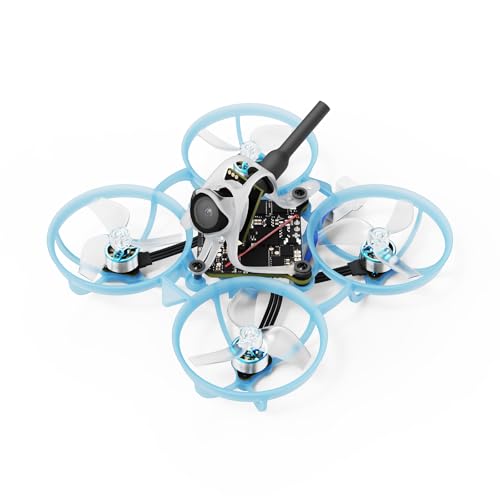
- 0702 25000KV motors and 12A ESC
- Reinforced frame and crash-resistant canopy
- Optimized for smooth freestyle control
Best For: Lightweight freestyle practice indoors or outdoors
DIY Beginner Pick
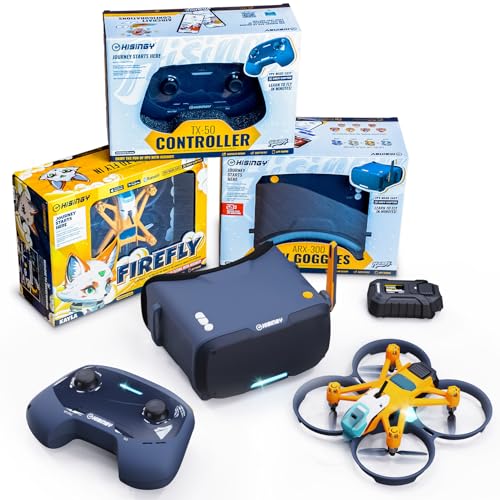
- Goggles, app control, and altitude hold
- Multiple speed modes for learning
- DIY parts and simulator compatibility
Best For: Kids and beginners learning FPV fundamentals
Racing Pick

- 0702 30000KV motors for responsive racing performance
- 12A continuous ESC and reinforced Matrix flight controller
- Ultralight crash-resistant frame and canopy
Best For: Technical-course FPV racing and experienced pilots
Beginner Camera Pick

- HD FPV camera with adjustable 90-degree lens
- Altitude hold, guarded propellers, and one-touch controls
- Two batteries rated for up to 25 minutes total
Best For: First-time pilots and casual indoor or outdoor flying
Freestyle Pick

- 0802 22000KV motors tuned for smooth freestyle control
- 15- to 45-degree adjustable camera angle
- Reinforced frame and flight controller for crash resilience
Best For: Cinematic freestyle and fluid lightweight FPV flights
Best with Extra Features
- 65mm ultralight 1S whoop
- 0702 25000KV brushless motors
- Reinforced frame and 12A ESC
Best For: Lightweight freestyle and impact-prone practice
Champion Racing Choice

- 0802 28000KV brushless motors
- 7.1:1 claimed thrust-to-weight ratio
- Adjustable 15°–45° camera angle
Best For: Experienced pilots and indoor racing
Training and Tuning Platform

- 80mm, 26g low-profile frame
- 0802 20000KV motors with claimed 1:4 thrust-to-weight
- Includes two batteries and charger
Best For: Indoor training, freestyle, and Betaflight tuning
Ultralight Freestyle Pick – Air65 II
The BETAFPV Air65 II is a compelling option for pilots comparing micro FPV drones for agile indoor and outdoor freestyle flying. Its ultralight 1S design combines 0702 25000KV motors, three-blade props, and a reinforced frame intended to handle repeated impacts.
Best For: Pilots who prioritize lightweight freestyle performance, responsive low-throttle control, and crash resilience.
Pros:
- Powerful 0702 25000KV motors with 12A continuous ESC support.
- Reinforced canopy and impact-absorbing frame are designed for repeated crashes.
- Three-blade props and optimized control suit smooth, cinematic-style flying.
Cons:
- It is an ultralight 1S freestyle quad rather than a complete ready-to-fly kit.
- Its feature set is focused on FPV piloting, so additional compatible equipment may be needed.
Choose the Air65 II if your main goal is a durable, highly maneuverable micro FPV drone for practicing freestyle lines and controlled indoor or outdoor flights.
Beginner RTF Pick – Tinyhawk Lite
The Tinyhawk Lite RTF Kit is a practical starting point for beginners shopping for micro FPV drones. Unlike phone-based Wi-Fi drones, it sends a direct FPV feed to the included goggles and bundles the aircraft, controller, and goggles for immediate use.
Best For: New pilots who want a complete, low-latency FPV setup with room to learn Betaflight tuning.
Pros:
- Ready-to-fly package includes FPV goggles and a responsive remote controller.
- Real-time FPV video is designed for a smooth, low-lag experience.
- 1S 750mAh battery is intended to provide longer practice sessions than smaller batteries.
- Betaflight Configurator supports adjustments to flight modes, rates, and responsiveness.
Cons:
- The included 750mAh battery still requires recharging between sessions.
- Its beginner-oriented 37g design is better suited to practice than heavy-duty outdoor use.
For first-time FPV flyers, the Tinyhawk Lite stands out because it avoids the need to assemble a separate system while still offering configuration options as piloting skills improve.
HD Cinematic Pick – Meteor75 Pro P1
The BETAFPV Meteor75 Pro P1 is aimed at pilots who want HD video from a compact micro FPV drone. Its P1 Air Unit records and transmits 1080p footage, while the adjustable camera angle and digital-focused flight controller support cinematic exploration and freestyle flying.
Best For: Pilots seeking digital HD FPV video, extended transmission range, and a compact platform for cinematic flights.
Pros:
- P1 Air Unit provides 1080p video with a 170-degree field of view.
- Claimed transmission range exceeds 5 km, with approximately 60ms video latency.
- 1102 18000KV motors, 45mm three-blade props, and a 12A ESC balance power and efficiency.
- Adjustable camera angle from 0 to 45 degrees helps tailor framing.
Cons:
- The digital HD system is more specialized than a basic analog micro FPV setup.
- Compatible VR04 HD goggles are noted as an option, so goggles may need to be purchased separately.
The Meteor75 Pro P1 makes the most sense when image quality and digital FPV capability matter more than choosing the simplest or lightest setup.
DIY Beginner Pick – Firefly FPV RTF Kit
The HISINGY Firefly FPV DIY Drone Kit is designed for beginners and younger pilots exploring micro FPV drones. It combines goggles, app control, altitude hold, speed adjustment, and a modular DIY approach, making it a more accessible introduction to FPV-style flying.
Best For: Kids and beginners who want a guided FPV experience with app features and opportunities to customize the drone.
Pros:
- Includes FPV goggles and supports real-time video streaming.
- Altitude hold, emergency stop, and multiple speed modes help new pilots learn.
- Can be controlled with the remote or smartphone app, including tuning and OTA upgrades.
- DIY spare parts and simulator compatibility encourage customization and practice.
Cons:
- Its approximately 10-minute flight time is shorter than some larger-battery FPV kits.
- The 2.4G system and app-oriented controls are less specialized than advanced FPV platforms.
- It is designed for beginners, so experienced racers may want more advanced performance.
The Firefly is a sensible choice for a first FPV-style kit when ease of use, safety-oriented controls, and hands-on customization are more important than professional racing performance.
Racing Pick – BETAFPV Air65 II
For pilots comparing micro FPV drones for racing, the BETAFPV Air65 II emphasizes ultralight agility, sharp throttle response, and crash resistance. Its 0702 30000KV motors, 1207 three-blade props, and 12A ESC are aimed at technical courses and demanding 1S flying.
Best For: Experienced FPV pilots who prioritize racing performance and a durable ultralight platform.
Pros:
- High-RPM 30000KV motors and three-blade props support quick throttle response.
- Matrix 5IN1 II flight controller uses a cushioned three-point mount and thickened PCB for crash resilience.
- Reinforced canopy and impact-absorbing frame are designed for repeated crashes.
Cons:
- Its racing-focused setup is less suited to beginners seeking simple operation.
- The product information does not include batteries, goggles, or a transmitter as included components.
The Air65 II is a focused choice for pilots who want a compact 1S racer rather than a general-purpose camera drone. Its strongest advantages are speed-oriented hardware and a frame and electronics package built around frequent impacts.
Beginner Camera Pick – Vrcyu CZ26 Mini Drone
Among micro FPV drones for new pilots, the Vrcyu CZ26 focuses on approachable controls and casual aerial viewing. One-touch takeoff, altitude hold, enclosed propeller guards, and smartphone FPV make it easier to practice indoors or outdoors.
Best For: Beginners, teens, and adults who want an easy-to-use camera drone with stunt features.
Pros:
- One-touch takeoff and landing, altitude hold, and headless mode simplify early flights.
- HD FPV camera has a remotely adjustable 90-degree electric tilt lens.
- Two batteries provide a stated total of up to 25 minutes of flight time.
- Includes three speed modes, 3D flips, guards, a case, and spare propellers.
Cons:
- Wi-Fi FPV and a stated 262-foot maximum range are aimed at casual use rather than dedicated racing.
- The plastic beginner design is less specialized than a brushless FPV racing quadcopter.
The CZ26 is the most accessible option here for learning basic flight and capturing simple smartphone FPV views. Its included accessories and safety-oriented design make it convenient, though it is not intended to match purpose-built racing drones.
Freestyle Pick – BETAFPV Air75 II
For pilots seeking micro FPV drones for freestyle, the BETAFPV Air75 II combines a lightweight build with smooth low-end control and a flexible camera angle. Its 0802 22000KV motors and three-blade props are tuned for fluid, cinematic flying rather than maximum racing aggression.
Best For: FPV pilots who want a lightweight whoop for controlled freestyle and cinematic flights.
Pros:
- 0802 22000KV brushless motors provide smooth control and low-end torque.
- Adjustable camera angle ranges from 15 to 45 degrees for varied flight perspectives.
- Matrix 5IN1 II controller has a 12A continuous, 18A peak ESC and impact-focused mounting.
- Supplied notes cite flight time of up to 7 minutes 30 seconds.
Cons:
- Its freestyle tuning is less specifically optimized for technical racing than the Air65 II.
- The supplied information does not list a complete transmitter, battery, or FPV display kit.
The Air75 II makes a strong case for pilots who value smooth, forgiving freestyle handling and durability. The adjustable camera and reinforced structure add versatility, while the larger Air75 II platform remains focused on lightweight FPV flying.
Best with Extra Features – Air65 II
For pilots comparing micro FPV drones for lightweight indoor flying and freestyle practice, the BETAFPV Air65 II focuses on responsive 1S performance in a compact 65mm whoop design. Its 0702 25000KV motors, 12A ESC, and reinforced frame are aimed at repeated, demanding flights.
Best For: Pilots seeking an ultralight micro whoop for freestyle and impact-prone practice.
Pros:
- Ultralight 65mm 1S whoop format.
- 0702 25000KV dual-ball-bearing motors support strong acceleration.
- Matrix 5IN1 II flight controller includes a 12A continuous, 18A peak ESC.
- Reinforced frame and canopy are designed for repeated impacts.
Cons:
- The compact 1S platform is specialized for lightweight flying rather than larger outdoor applications.
- A remote control and other operating equipment may be required separately.
The Air65 II is a focused choice when low weight, durable construction, and high-revving motors matter most. Its ELRS 2.4G connectivity also suits pilots building around an ELRS control setup.
Champion Racing Choice – Air75 II
Among micro FPV drones built for speed, the BETAFPV Air75 II stands out with a 75mm frame, 0802 28000KV motors, and a high-output 12A ESC. Its reinforced structure and adjustable camera angle make it a performance-oriented option for racing and track flying.
Best For: Experienced pilots prioritizing acceleration, racing performance, and crash resilience.
Pros:
- 0802 28000KV dual-ball-bearing motors provide a claimed 7.1:1 thrust-to-weight ratio.
- Matrix 5IN1 II FC has a 12A continuous and 18A peak ESC.
- Three-point FC mounting and a thickened PCB help reduce impact stress.
- Camera angle adjusts from 15° to 45° for different flying styles.
Cons:
- Its pro-level power and racing focus may be excessive for casual beginners.
- Control and FPV equipment requirements should be confirmed before purchase.
The Air75 II is the more aggressive pick in this group, combining a durable airframe with high-output electronics and a configurable camera angle. Choose it when track performance matters more than the smallest possible footprint.
Training and Tuning Platform – R8 ELRS Whoop
The STARTFPV R8 is a practical option for pilots comparing micro FPV drones for indoor freestyle, racing, and skill development. Its 80mm, 26g frame pairs with 0802 20000KV motors, Betaflight tuning access, two batteries, and a charger for a more complete BNF setup.
Best For: Existing FPV pilots who want a tunable indoor trainer with included batteries and charging hardware.
Pros:
- Low-profile 80mm frame and duct guards are designed for stable, precise handling.
- 0802 20000KV motors and a claimed 1:4 thrust-to-weight ratio support punch-outs and acrobatics.
- Betaflight platform provides access to PID, filter, and rate adjustments.
- Includes two 450mAh batteries, a six-port charger, spare props, and tools.
Cons:
- Transmitter and 5.8GHz FPV goggles are not included.
- Its BNF format assumes the pilot already has compatible ELRS equipment.
- Flight time is listed at approximately 3–6 minutes per battery.
The R8 offers a strong balance of included accessories, indoor-friendly protection, and customization potential. It is especially appealing to pilots who want to repeat drills, adjust flight characteristics, and maintain the drone with available spare parts.
How We Picked These Micro Fpv Drones
We focused on the factors that have the greatest effect on the ownership experience: weight, motor type, video system, radio protocol, durability, included equipment, and intended flying style. The selection includes complete ready-to-fly kits for newcomers, bind-and-fly models for pilots who already own compatible goggles and transmitters, and compact brushless whoops designed for indoor or outdoor practice.
We also considered practical differences between analog and digital video, 1S battery systems, protected propeller ducts, camera adjustment, and replacement-part availability. Product names and configurations can vary by seller, so confirm the exact package before ordering.
Quick Comparison
| Best For | Look For | Typical Choice |
|---|---|---|
| Beginners | RTF package, altitude assistance, durable ducts | Tinyhawk Lite or a beginner-focused mini kit |
| Indoor practice | Ultralight frame, prop guards, gentle tune | Air65 II or similar 1S whoop |
| Freestyle | Responsive brushless motors, low weight, adjustable camera | Air65 II or Air75 II |
| Cinematic flying | HD video, stable handling, suitable recording system | Meteor75 Pro with HD VTX |
| Custom builds | Modular components and accessible replacement parts | HISINGY DIY kit |
Key Buying Factors for Micro Fpv Drones
Ready-To-Fly Versus Bind-And-Fly
A ready-to-fly kit normally includes the drone, transmitter, goggles, batteries, and charger, making it the simplest starting point. Bind-and-fly models usually require compatible goggles, a radio controller, and batteries, but they can offer better value for pilots who already own FPV gear. Check whether the receiver uses ELRS, another protocol, or a proprietary system.
Video System and Camera
Analog video is typically lightweight, inexpensive, and easy to replace, but it has lower image quality. Digital systems can provide a clearer view and HD recording, although they may add weight and cost. A camera’s tilt range also matters: a steeper angle favors fast flight, while a lower angle is easier for beginners.
Weight, Power, and Durability
Most tiny whoops use 1S batteries to keep weight down. Ultralight models feel agile and are less damaging in crashes, while larger 75mm-class drones can carry more capable video hardware and remain steadier outdoors. Brushless motors generally deliver better efficiency and longevity than brushed motors, but replacement motors and ducts should be easy to source.
Flight Location and Support
For indoor use, prioritize prop guards, low weight, and a quiet, manageable tune. Outdoor pilots should consider wind resistance, range, battery availability, and local flying rules. Confirm that spare frames, ducts, motors, propellers, and batteries are sold separately.
Who Should Buy Which Micro Fpv Drones?
Choose a complete RTF kit if you are new to FPV and do not own compatible equipment. Pick an ultralight Air65-class whoop for inexpensive indoor practice and nimble freestyle. Move to an Air75-class model when you want a little more presence and stability outdoors. Select the Meteor75 Pro if HD video is more important than minimum weight. A DIY kit suits learners who want to understand assembly and maintenance, while an ELRS BNF model is best for experienced pilots with an ELRS transmitter and goggles.