The best audio mixers for DJs make it easier to blend sources, connect microphones, add effects, and send a clean signal to speakers, headphones, or recording equipment. The right choice depends on whether you need hands-on DJ control, multiple inputs, portable connectivity, or a mixer that can double as a small recording interface.
We selected 10 options ranging from dedicated DJ controllers to compact analog mixers with Bluetooth, USB, DSP effects, and phantom power. Use the comparison and buying advice below to narrow the list based on your setup, skill level, and budget.
Best 10 Audio Mixers for Djs Picks for 2026
Best Beginner DJ Controller
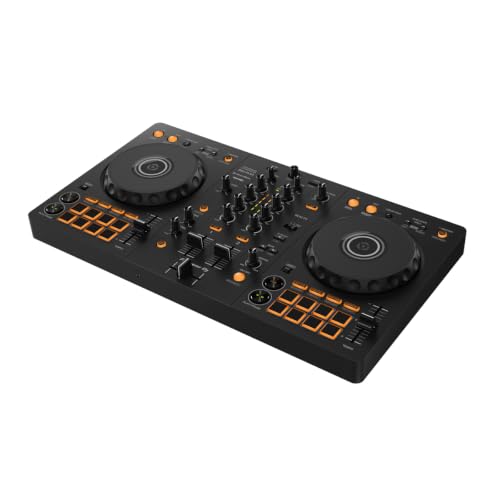
- Two-channel layout with 16 performance pads
- Smart Fader simplifies early blends
- Portable and compatible with computers and mobile devices
Best For: New DJs learning to mix and stream
Best Feature-Rich Mixer

- 10 inputs with USB and SPX digital effects
- D-PRE preamps plus three-band EQ
- Rugged metal chassis with practical compression controls
Best For: Multi-source DJ and performance setups
Best Budget Connectivity

- Bluetooth and USB MP3 playback
- Eight channels with phantom power
- Compact steel design for small performances
Best For: Budget setups using phones, microphones, and line sources
Best Compact Analog Mixer

- Six-channel analog design
- D-PRE preamps with EQ and high-pass filters
- Lightweight metal chassis with XLR outputs
Best For: Small setups that do not need USB or Bluetooth
Feature-Rich Pick

- Eight channels with 48V phantom power
- Bluetooth, USB/MP3 playback, and USB recording
- Slim design with reverb and LED display
Best For: DJs and small event setups needing flexible connectivity
Compact Recording Pick

- USB-B PC recording and USB-drive recording
- Bluetooth streaming with 48V phantom power
- EQ, echo/delay effects, and headphone monitoring
Best For: Home DJs, streamers, and podcasters
Effects-Focused Pick
Pyle PMX466 6-Channel DJ Mixer

- Six channels with four XLR mic/line inputs
- 16 preset DSP effects and MP3 playback
- USB interface, AUX, headphone, and sub outputs
Best For: DJs and performers prioritizing onboard effects
Versatile 12-Channel Pick
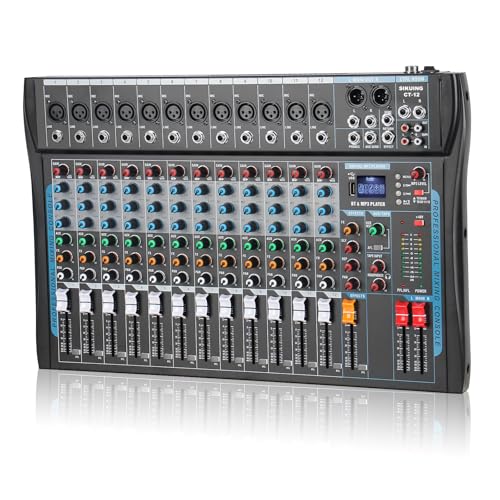
- 12 channels for microphones and instruments
- Bluetooth and USB connectivity
- 3-band EQ, DSP effects, and phantom power
Best For: DJs and performers building larger, flexible setups
Compact Value Pick
Pyle 6-Channel Bluetooth Mixer
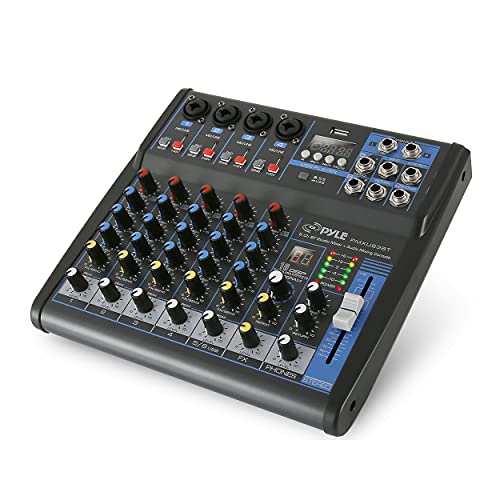
- Six channels in a compact steel chassis
- Bluetooth, USB, flash, and MP3 playback
- 3-band EQ and 16-bit DSP effects
Best For: Small DJ rigs, karaoke, and live gigs
Effect-Focused Starter
6-Channel DJ Mixer with Reverb

- Four XLR inputs with +48V phantom power
- Bluetooth and USB playback functions
- 3-band EQ and 16 built-in DSP effects
Best For: Compact DJ, karaoke, and microphone-based setups
Best Beginner DJ Controller – Pioneer DJ DDJ-FLX4
If you’re comparing audio mixers for DJs but want hands-on deck control, the Pioneer DJ DDJ-FLX4 is a straightforward place to start. Its two-channel layout, 16 performance pads, built-in sound card, and Smart Fader are designed to make learning and progressing easier.
Best For: New DJs who want a portable controller for learning, streaming, and gradual skill development.
Pros:
- User-friendly two-channel, two-deck layout.
- Smart Fader can automatically adjust volume, bass, and BPM for easier blends.
- 16 pads support Hot Cues, Pad FX, Beat Jump, and Sampler functions.
- Works with compatible platforms and can connect to computers, mobile devices, or tablets.
Cons:
- It is a two-channel DJ controller rather than a traditional standalone audio mixer.
- Advanced users may eventually want more channels or expanded hardware controls.
The DDJ-FLX4 is a flexible learning-focused option with useful streaming support and a compact 2.8 kg design. Its Smart Fader and broad device compatibility make it particularly approachable for first mixes.
Best Feature-Rich Mixer – Yamaha MG10XU
For DJs who need more conventional audio routing, the Yamaha MG10XU is one of the more versatile audio mixers for DJs in this group. It combines 10 inputs, USB connectivity, SPX digital effects, channel EQ, high-pass filters, and one-knob compressors in a rugged chassis.
Best For: DJs, performers, and small setups needing multiple inputs, effects, and USB connectivity.
Pros:
- Provides 10 inputs for more flexible source and microphone setups.
- Includes USB connectivity and SPX digital effects.
- Studio-grade D-PRE preamps are designed for natural bass and smooth highs.
- Three-band EQ, high-pass filters, and one-knob compressors offer practical mix control.
Cons:
- At 7.7 pounds, it is less portable than the smaller mixers listed here.
- It requires corded power.
The MG10XU is a strong choice when a DJ setup extends beyond simple deck control. Its input count, USB connection, effects, and hands-on processing give it room for microphones, instruments, and other sources.
Best Budget Connectivity – Pyle PMXU83BT
The Pyle PMXU83BT is a value-oriented pick among audio mixers for DJs, especially if Bluetooth streaming is important. It offers eight channels, microphone and stereo line inputs, USB playback, DSP effects, and +48V phantom power in a compact steel chassis.
Best For: Budget-conscious DJs, karaoke hosts, and small live setups that want Bluetooth and USB playback.
Pros:
- Bluetooth supports wireless music streaming from a smartphone.
- Eight channels include XLR and unbalanced 1/4-inch inputs.
- Features +48V phantom power, 3-band EQ, LED peak indicators, and a 16-bit DSP processor.
- Compact 4-pound design with a rugged steel chassis.
Cons:
- Its warranty description is listed as “-” in the supplied details.
- The mixer uses a corded power supply.
- Bluetooth and USB playback may not replace the deck-control features of a DJ controller.
With Bluetooth, USB MP3 playback, and several input types, the PMXU83BT offers broad functionality for its compact format. It is best suited to straightforward streaming, karaoke, and small performance applications.
Best Compact Analog Mixer – Yamaha MG06
The Yamaha MG06 keeps things simple for buyers who need compact audio mixers for DJs without USB features. This six-channel analog mixer provides D-PRE preamps, three-band EQ, high-pass filters, one-knob compressors, and TRS or XLR outputs.
Best For: Small DJ, lecture, recording, and performance setups that need dependable analog mixing.
Pros:
- Six-channel layout fits smaller setups.
- Studio-grade D-PRE preamps support natural-sounding bass and highs.
- Three-band EQ and high-pass filters help shape and clean up sources.
- Lightweight 2-pound design with a rugged powder-coated metal chassis.
Cons:
- There is no USB connectivity.
- It has fewer channels than the Yamaha MG10XU and Pyle PMXU83BT.
- It does not provide the Bluetooth or digital effects listed for some alternatives.
The MG06 is a focused analog option for users who do not need computer integration. Its small footprint, XLR outputs, EQ, filters, and compression make it practical for simple, source-focused setups.
Feature-Rich Pick – FULUODE 8-Channel DJ Mixer
For DJs who need plenty of connection options, the FULUODE CT-80S is one of the more feature-rich audio mixers for DJs. It provides eight channels, Bluetooth, USB/MP3 playback, USB recording, reverb, and 48V phantom power in a slim, lightweight chassis.
Best For: DJs, karaoke hosts, small live performances, conferences, and home KTV setups that need flexible wired and wireless inputs.
Pros:
- Eight-channel layout supports microphones, instruments, and other connected equipment.
- Built-in Bluetooth, USB/MP3 playback, and USB recording add convenient playback and recording options.
- Offers 48V phantom power, reverb, and a large LED display.
- Ultra-thin 1.57-inch design and a 365-day warranty.
Cons:
- Uses a corded 110V American-plug power supply.
- The supplied notes do not specify supported software updates.
The FULUODE stands out when channel count and built-in playback features matter more than a compact mini-mixer footprint. Its broad feature set suits mixed-use DJ and event setups.
Compact Recording Pick – Aveek 5-Channel Audio Mixer
The Aveek 5-channel mixer is a practical choice for DJs who also stream, podcast, or record to a computer. Among audio mixers for DJs, it combines mic, stereo, RCA, USB, and Bluetooth connectivity with basic EQ, effects, and headphone monitoring.
Best For: Home DJs, live streamers, podcasters, small shows, meetings, and users who want built-in PC or USB recording.
Pros:
- Three XLR inputs include switchable 48V phantom power for condenser microphones.
- Built-in USB-B PC recording and USB-drive playback/recording simplify setup.
- Bluetooth streaming works with phones, tablets, computers, and other compatible devices within 15 feet.
- Includes two-band EQ, gain controls, echo/delay effects, LED level monitoring, and a headphone output.
Cons:
- Bluetooth, USB, and 4/5-channel functions cannot be used simultaneously.
- Bluetooth cannot be used to connect an output device and is intended for active systems.
- Bluetooth range is limited to approximately 15 feet according to the supplied notes.
The Aveek is appealing for compact DJ and content-creation setups where recording and wireless music playback are priorities. Its simultaneous-use limitation is worth considering before building a more complex rig.
Effects-Focused Pick – Pyle PMX466 6-Channel DJ Mixer
The Pyle PMX466 is aimed at DJs who want onboard effects and straightforward device connectivity. This six-channel mixer includes a USB interface, MP3 player, four XLR mic/line inputs, AUX, a headphone jack, and 16 preset digital effects.
Best For: DJs and performers who want multiple mic/line inputs, built-in effects, and MP3 playback in a rugged metal chassis.
Pros:
- Six-channel design includes four XLR mic/line inputs.
- Provides 16 preset digital effects through its DSP effects processor.
- Includes USB interface, AUX, MP3 player, headphone output, and built-in sub output.
- Rugged metal chassis and side panels are suited to regular setup and transport.
Cons:
- The supplied notes do not specify a warranty.
- The notes identify a 48V voltage specification but do not clarify the phantom-power implementation.
- At 2.17 inches high, it is less slim than the FULUODE option.
The PMX466 is a strong fit when effects and physical durability are central to your DJ workflow. Its six-channel configuration offers useful expansion without moving to a much larger console.
Versatile 12-Channel Pick – Bluetooth DJ Mixer with DSP
For DJs who need room for multiple microphones and instruments, this 12-channel board is a flexible option among audio mixers for DJs. It combines Bluetooth and USB connectivity with 3-band EQ controls, onboard DSP effects, and a headphone output for private monitoring.
Best For: DJs, live performers, streamers, karaoke hosts, and studio users who need 12 channels and several connection options.
Pros:
- 12 channels with XLR and balanced line inputs for larger setups.
- Bluetooth and USB support audio streaming, playback, and recording connections.
- Includes 3-band EQ, gain controls, 16-bit DSP effects, and headphone monitoring.
- +48V phantom power supports compatible condenser microphones.
Cons:
- Its broader feature set may be more than needed for a simple two-source DJ setup.
- It requires corded power rather than battery operation.
This mixer stands out when channel count and connectivity matter most. Its compact chassis, sealed controls, and combination of wireless, USB, and analog inputs make it a practical centerpiece for varied DJ and performance rigs.
Compact Value Pick – Pyle 6-Channel Bluetooth Mixer
This compact Pyle model is a practical choice among audio mixers for DJs who want essential mixing features without a larger console. It offers six channels, Bluetooth streaming, USB and flash-drive playback, 3-band EQ, and a built-in MP3 player in a rugged steel chassis.
Best For: DJs, small live gigs, karaoke, bands, and home or studio users who need straightforward playback and mixing functions.
Pros:
- Bluetooth, USB, flash-reader, and MP3 compatibility support several playback sources.
- Six channels provide XLR and unbalanced 1/4-inch input options.
- Each channel includes 3-band EQ, while 16-bit DSP effects add reverb-style processing.
- Compact 3.8-pound design features a dust-resistant steel chassis and multi-voltage power supply.
Cons:
- Six channels offer less expansion room than the 12-channel alternative.
- The built-in effects are specified as 16-bit DSP, which may not suit users seeking advanced processing.
With a small footprint and useful playback controls, the PMXU63BT is well suited to modest DJ and event systems. It balances everyday connectivity with a sturdy enclosure and easy-access controls.
Effect-Focused Starter – 6-Channel DJ Mixer with Reverb
For smaller DJ setups that still need microphone support and onboard effects, this six-channel console is a capable option among audio mixers for DJs. It pairs Bluetooth and USB playback with 3-band EQ, 16 DSP effects, and four XLR inputs with switchable +48V phantom power.
Best For: Entry-level DJs, karaoke users, streamers, and performers connecting microphones, instruments, and wireless audio sources.
Pros:
- Four XLR inputs support compatible condenser or dynamic microphones and instruments.
- Bluetooth and USB interfaces allow wireless streaming and USB-drive or MP3 playback.
- Independent 3-band EQ, gain, faders, and 16 DSP effects provide hands-on control.
- Dedicated phantom-power switching supports condenser microphones on channels 1–4.
Cons:
- Six channels provide less capacity for larger multi-source setups.
- The listed warranty is 90 days from purchase.
- Operation may require careful setup, as the supplied notes warn that errors can result in no sound.
This model offers a useful feature mix for compact systems, especially when reverb and microphone inputs are priorities. Its traditional analog layout keeps control direct, while Bluetooth and USB add convenient playback options.
How We Picked the Best Audio Mixers for Djs
We focused on the features that matter most in real DJ, rehearsal, streaming, karaoke, and small-event setups: channel count, input flexibility, USB or computer connectivity, effects, microphone support, portability, and ease of use. We also separated dedicated DJ controllers from general-purpose audio mixers, since they solve different problems.
A DJ controller such as the Pioneer DJ DDJ-FLX4 is designed for software-based mixing, cueing, looping, and pad performance. Traditional mixers from Yamaha and other brands are better suited to combining microphones, instruments, media players, and other external sources. Models with Bluetooth, USB playback, or built-in recording interfaces add convenience, but their controls and construction may differ from those of a dedicated performance controller.
Quick Comparison
| Type | Best For | Useful Features |
|---|---|---|
| DJ controller | Software-based sets and beginner DJs | Deck controls, performance pads, computer integration |
| Compact mixer | Small rigs and simple source mixing | Portable design, stereo inputs, straightforward controls |
| Multi-channel mixer | Events, karaoke, bands, and complex setups | More inputs, microphone channels, effects, phantom power |
| USB audio mixer | Streaming, podcasting, and recording | Computer connection, playback, and built-in interface |
Key Buying Factors for Audio Mixers for Djs
Channel Count and Input Types
Count every source you plan to use at the same time, including decks, media players, microphones, instruments, and phones. XLR inputs are important for microphones, while line and stereo inputs suit players and other consumer audio devices. Leave some spare capacity if your setup may grow.
DJ Controls Versus Mixer Controls
Dedicated controllers provide jog wheels, cue buttons, pads, and software controls. General mixers usually offer channel faders, equalization, level meters, and routing, but may not control DJ software. Choose based on how you actually perform rather than simply selecting the mixer with the most channels.
Connectivity and Effects
USB can support computer playback, recording, or streaming, but confirm what the connection actually does. Bluetooth is convenient for background music and casual playback, while DSP effects can add reverb or other processing to microphones and sources. For microphones requiring phantom power, verify that the mixer provides 48V support.
Size, Monitoring, and Sound Quality
Check whether the mixer has a dedicated headphone output, independent level controls, balanced main outputs, and useful metering. Compact models save space, but larger boards may offer better routing and more comfortable control during long sets.
Who Should Buy Which Audio Mixers for Djs?
- Beginners and software DJs: Choose a dedicated controller with intuitive deck controls and performance pads.
- Small home setups: A compact Yamaha-style mixer is a sensible choice for a few sources, microphones, or instruments.
- Mobile DJs and karaoke hosts: Look for multiple microphone inputs, Bluetooth or USB playback, effects, and 48V phantom power when needed.
- Streamers and home recordists: Prioritize a reliable USB interface, headphone monitoring, and simple computer routing.
- Growing or event-focused rigs: Select a higher-channel-count mixer with spare inputs, clear metering, and flexible outputs.
Before buying, confirm the connector types, power requirements, software compatibility, and number of simultaneous sources your system requires. Those details matter more than a long feature list when you need dependable performance.