Staying connected on the trail is easier when every member of your group has a radio that fits comfortably in a pack and remains simple to operate. The best compact radios for hiking groups balance range, battery life, durability, and hands-free convenience.
We compared 10 two-way radio options across FRS, GMRS, ham, and cellular-connected POC designs to help you choose the right setup for day hikes, family outings, and larger backcountry groups.
Best 10 Compact Radios for Hiking Groups Picks for 2026
Best Value Group Set
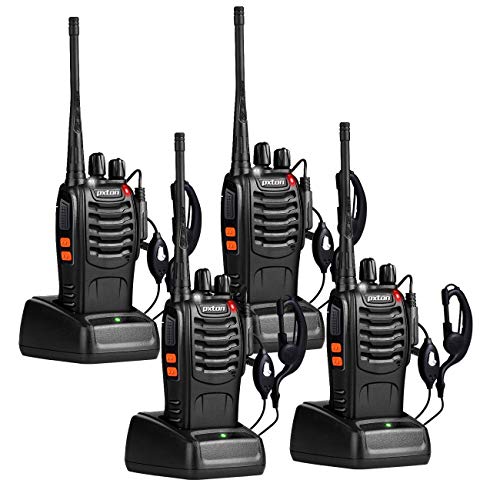
- Four rechargeable radios with earpieces and chargers
- 16 channels, 165 privacy codes, VOX, and flashlight
- Compact, rain-resistant design for outdoor use
Best For: Hiking groups needing four radios and a complete accessory bundle
Most Feature-Rich Mini
BAOFENG UV-5G Mini GMRS 2-Pack
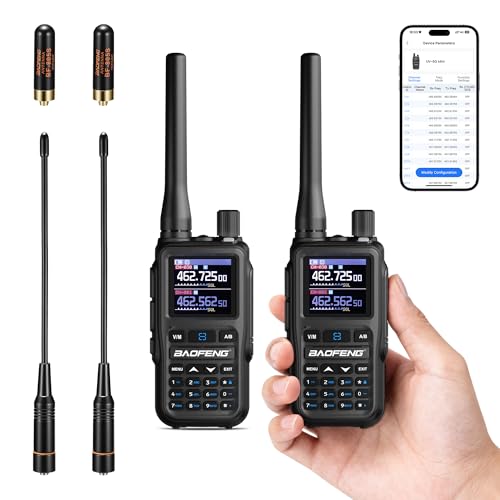
- App programming with up to 999 channels
- USB-C charging from power banks and other USB sources
- GMRS repeater capability with weather alerts
Best For: Tech-oriented groups wanting advanced setup and flexible charging
Best Simple FRS Pick

- License-free FRS radios work out of the box
- Rugged, splash-proof design with one-meter drop resistance
- USB charging bases and up to 24-hour stated battery life
Best For: Small groups wanting simple, durable trail communication
Best Weather-Alert Option

- NOAA weather scan and alerts for changing conditions
- 50 channels and 142 privacy codes
- Rechargeable packs plus AA battery backup
Best For: Hikers prioritizing weather awareness and backup power
Best Compact FRS Pick
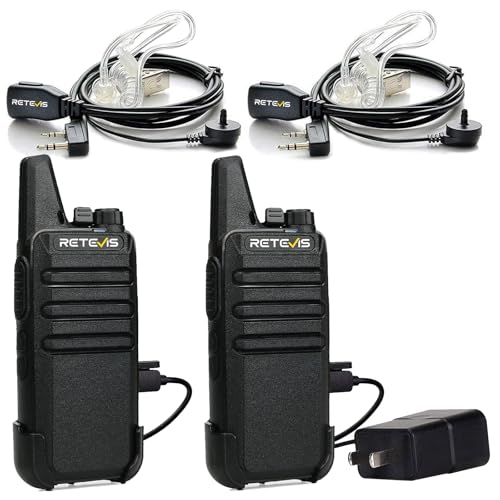
- Slim, lightweight two-pack
- Clear audio and VOX hands-free mode
- Rechargeable batteries with USB-C charging
Best For: Small hiking groups needing portable, license-free communication
Best for Extended-Range Team Calls

- Nationwide network-based communication
- GPS positioning and app management
- 2200mAh battery with Type-C charging
Best For: Organized hiking teams needing connected calling and location features
Best Feature-Packed Budget Pair
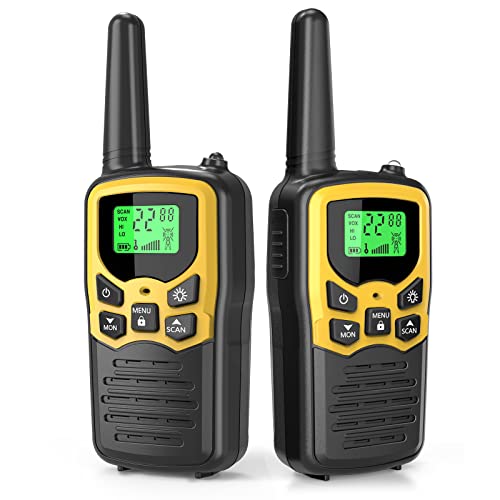
- 22 FRS channels and privacy-code settings
- VOX, backlit LCD, and LED flashlight
- Compact two-pack with belt clips
Best For: Families and casual hiking groups wanting useful extras
Best Feature Set

- App programming and one-touch frequency search
- Private earpiece plus loud speaker microphone
- USB-C charging in a pocket-sized design
Best For: Ham users and teams needing flexible audio
Best Compact Design
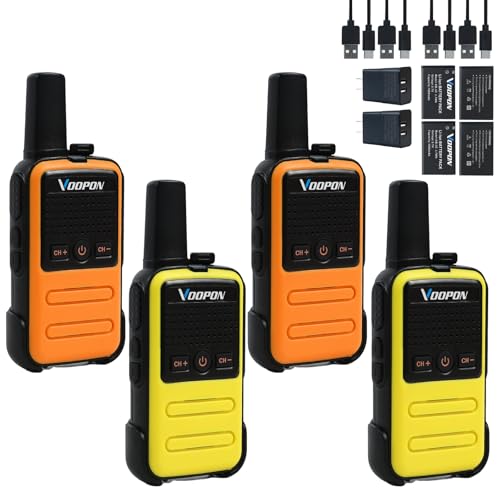
- Slim, lightweight four-radio package
- USB-C charging with 8–12 hours of continuous use
- VOX, keypad lock, privacy codes, and bright colors
Best For: Small groups prioritizing portability and visibility
Best Value Group Set – pxton PX-888S 4-Pack
For groups comparing compact radios for hiking groups, the pxton PX-888S stands out by including four rechargeable radios with earpieces, chargers, and belt clips. Its 16 channels, privacy codes, flashlight, and compact build provide practical features for trail outings and general outdoor use.
Best For: Hiking groups that need four ready-to-use radios and useful accessories in one package.
Pros:
- Four-radio bundle includes earpieces, charging stations, belt clips, and hand straps.
- Offers 16 channels, 165 privacy codes, VOX, scanning, and a low-battery alert.
- Rechargeable 1500 mAh batteries provide up to 8–12 hours of continuous use according to the supplied notes.
- Compact, lightweight, drop-proof, and rain-resistant design includes a flashlight.
Cons:
- Advertised range is up to 2 miles, and actual range varies with terrain and obstructions.
- Charging can take about 3–4 hours from empty.
This is a practical choice when your hiking party needs four matching units rather than a two-pack. Its accessory-rich bundle and straightforward controls make it especially convenient for organized group outings.
Most Feature-Rich Mini – BAOFENG UV-5G Mini GMRS 2-Pack
The BAOFENG UV-5G Mini is a compact option for hikers who want more programming flexibility than a basic walkie-talkie provides. It supports app programming, USB-C charging, up to 999 channels, and repeater-capable GMRS communication, while remaining portable for group trips.
Best For: Tech-oriented hiking groups and outdoor users who want app programming, broad receive coverage, and advanced channel options.
Pros:
- Supports up to 999 channels, including 30 ready-to-use GMRS channels.
- iOS and Android app programming simplifies channel setup and adjustments.
- USB-C charging works with power banks, car adapters, and other USB sources.
- Includes VOX, dual-band dual-standby, weather alert, frequency copy, and repeater capability.
Cons:
- Its large feature set may require more setup than a license-free, out-of-box radio.
- The supplied notes list a two-radio pack, so larger groups may need additional units.
- Up to 5-mile range depends on conditions and may require repeater support for greater reach.
Choose this model if your group values customization and charging convenience over absolute simplicity. The app and USB-C port are particularly useful when preparing radios away from home.
Best Simple FRS Pick – Retevis RT68 2-Pack
The Retevis RT68 keeps communication straightforward for hikers seeking compact radios for hiking groups. These license-free FRS radios work out of the box and combine a rugged enclosure, USB charging bases, a 1200 mAh battery, and splash- and weather-resistant construction.
Best For: Small hiking groups that want simple, license-free radios with durable construction and long stated battery life.
Pros:
- License-free FRS operation works out of the box.
- Compact enclosure is rated to withstand a one-meter free fall.
- USB charging bases and adapters offer convenient charging options.
- 1200 mAh batteries are rated for up to 24 hours of battery life in the supplied notes.
Cons:
- Only 16 channels are provided, with fewer advanced features than the BAOFENG model.
- The two-pack may not cover larger hiking parties without additional radios.
- IP54 protection is suitable for splashes and weather exposure, not submersion.
The RT68 is a sensible fit for groups that prefer easy operation and minimal setup. Its license-free format and charging bases make it convenient for casual hikes, camping, and day trips.
Best Weather-Alert Option – Midland GXT1000VP4
The Midland GXT1000VP4 is a versatile GMRS pair for hikers who prioritize weather awareness and hands-free operation. It provides 50 channels, 142 privacy codes, NOAA weather alerts, rechargeable battery packs, and dual-power support with AA batteries.
Best For: Hiking and camping groups that want weather alerts, hands-free communication, and backup battery flexibility.
Pros:
- Includes 50 channels and 142 privacy codes for flexible group communication.
- NOAA scan and weather alerts can provide advance warning of severe conditions.
- EVOX hands-free voice activation supports communication while handling gear.
- Rechargeable packs can be supplemented with AA batteries through dual-power operation.
Cons:
- At 7.9 inches tall, it is less compact than the other radios in this roundup.
- The supplied battery-life figure is about 10.94 hours, lower than the RT68’s stated rating.
- The advertised 36-mile range depends heavily on terrain, obstructions, and conditions.
This pair is a strong choice for exposed routes and changing weather, especially when NOAA alerts and battery backup matter. Its larger body is a trade-off for the extensive controls and dual-power design.
Best Compact FRS Pick – Retevis RT22
For groups comparing compact radios for hiking groups, the Retevis RT22 stands out for its slim, pocket-friendly design and ready-to-use two-pack. It offers 16 FRS channels, clear audio, VOX hands-free operation, and a rechargeable battery rated for up to 12 hours of average life.
Best For: Hiking partners and small groups that want lightweight, license-free radios with rechargeable batteries.
Pros:
- Compact 5.35-inch design with a pocket-friendly antenna and detachable belt clip
- Clear, loud audio for outdoor or noisy environments
- VOX supports hands-free communication
- Rechargeable 1000mAh batteries and USB-C charging
Cons:
- Maximum listed talking range is 2 miles
- Water resistance is listed, but no specific waterproof rating is provided
The RT22 is a practical choice when portability matters more than maximum range. Its FRS compatibility also makes it useful with supported Retevis radios using the same channel and privacy-code settings.
Best for Extended-Range Team Calls – AT1 5G POC Radio
For hiking groups that need communication beyond ordinary local radio range, the AT1 uses a network-based intercom system with nationwide connectivity. Its compact body, 2200mAh rechargeable battery, GPS positioning, and app controls make it a more feature-oriented option for organized outdoor teams.
Best For: Hiking or camping teams that prioritize nationwide communication, location checking, and group management features.
Pros:
- Network intercom supports nationwide one-to-one and group calling
- Built-in GPS can help check team member locations
- 2200mAh battery with Type-C charging
- Compact design with noise-reduced, clear audio
Cons:
- Sold as a single radio rather than a two-pack
- Network-based communication differs from conventional FRS radios
- Uses app and network features that may be more involved than simple push-to-talk radios
The AT1 is best suited to groups willing to use connected radio technology for broader coverage and tracking features. It is less streamlined than a basic pair of FRS walkie-talkies, but its GPS and app support can add useful coordination tools.
Best Feature-Packed Budget Pair – MOICO 22-Channel Radios
The MOICO two-pack combines compact portability with practical trail features, making it a strong option among compact radios for hiking groups. It provides 22 FRS channels, privacy-code combinations, VOX, a backlit display, and an LED flashlight for basic outdoor communication and visibility.
Best For: Families and hiking companions who want an affordable two-pack with display, flashlight, and hands-free features.
Pros:
- 22 FRS channels with 99 CTCSS tone sets
- VOX offers three sensitivity levels for hands-free use
- Backlit LCD and built-in LED flashlight support nighttime use
- Compact, lightweight, drop-resistant design with belt clips
Cons:
- AAA batteries are required but not included
- Listed range varies from up to 3 miles in open areas to 0.6–1.2 miles in towns
- Obstacles, buildings, vehicles, and weather can reduce range
The MOICO is a versatile pick for casual hikes, family outings, and camping trips. Its flashlight and display add convenience, while the stated range limitations are typical considerations for radios used around terrain and buildings.
Best Group Value – 6-Pack Rechargeable Hiking Radios
For groups comparing compact radios for hiking groups, this six-pack offers a practical mix of shared coverage, rechargeable power, and simple controls. The radios provide 22 channels, 99 privacy-code combinations, belt clips, VOX, and built-in LED flashlights. Claimed range is up to 5 miles in open areas, though wooded or obstructed terrain can reduce it to roughly 0.6–1.2 miles.
Best For: Hiking groups, families, and outdoor teams that need six matching radios in one set.
Pros:
- Six radios make it convenient to equip a full hiking group.
- USB-C rechargeable batteries support approximately 8–12 hours of continuous use.
- Compact, lightweight design includes belt clips, VOX, and LED flashlights.
- Offers 22 channels and 99 CTCSS/DCS privacy-code groups.
Cons:
- Range varies substantially with trees, buildings, and other obstructions.
- The included batteries are nonstandard replacements rather than ordinary AA or AAA cells.
Choose this set when quantity and convenience matter most. Its feature set is well suited to coordinated hikes, but users should plan around the shorter real-world range common in forested terrain.
Best Feature Set – BAOFENG UV-5R Mini Ham Radio
This BAOFENG mini radio stands out among compact radios for hiking groups when flexible audio and quick setup are priorities. It includes smartphone app programming, one-touch frequency search, USB-C charging, and both a private earpiece and handheld speaker microphone. Because the listing identifies it as a ham radio with up to 1,000 channels, it is better suited to users comfortable with radio setup and applicable operating requirements.
Best For: Experienced outdoor users, ham operators, and teams that want private or loud audio options.
Pros:
- Pocket-sized design is easy to carry on a vest, backpack, or belt.
- App programming can simplify frequency and channel configuration.
- Includes both a discreet earpiece and a loud speaker microphone.
- USB-C charging works with power banks, car chargers, laptops, and wall adapters.
Cons:
- The feature set and ham-radio format may be more complicated than basic FRS walkie-talkies.
- The supplied notes do not specify a talking-range figure or water-resistance rating.
This is the most versatile option of the three for users who value customization and audio flexibility. It is less of a simple out-of-the-box group kit, so verify compatibility and configure it before heading onto the trail.
Best Compact Design – VOOPON C56TB 4-Pack
The VOOPON C56TB is a straightforward choice for shoppers seeking compact radios for hiking groups without a large or complicated setup. This four-pack includes 22 preset FRS channels, privacy codes, USB-C charging, VOX, keypad lock, detachable belt clips, and bright yellow and orange colors for visibility. Its listed range is up to 2 miles in unobstructed conditions, with approximately 0.5–1 mile in cities.
Best For: Small hiking groups and families wanting lightweight, visible radios with simple controls.
Pros:
- Ultra-thin 7.68-ounce design is easy to carry in a pocket.
- Four radios provide a practical set for a small group.
- USB-C charging supports approximately 8–12 hours of continuous use.
- VOX, auto squelch, keypad lock, and bright colors improve trail usability.
Cons:
- The radios are listed as not water resistant, despite an IP65 reference in the supplied details.
- Claimed range is limited by terrain and obstructions, especially in built-up areas.
- The included warranty is listed as 30 days.
This pack balances portability and basic group communication well. Its visible colors and slim profile are useful on day hikes, while the lack of clear water resistance calls for protection in wet conditions.
How We Picked the Best Compact Radios for Hiking Groups
We focused on practical group-use features rather than advertised range alone. Our selection considers radio size, charging options, channel flexibility, included accessories, battery capacity, weather alerts, headset support, and ease of setup. We also separated license-free FRS models from GMRS and ham radios, since those categories have different operating requirements.
Advertised range is measured under ideal conditions. Trees, hills, buildings, weather, and the position of the radio can reduce real-world distance, so dependable controls and good battery management matter just as much as headline specifications.
Quick Comparison
| Radio Type | Best For | Main Advantage | Important Consideration |
|---|---|---|---|
| FRS | Families and casual hiking groups | Simple, generally license-free operation | Moderate range in obstructed terrain |
| GMRS | Groups wanting more power and flexibility | Longer potential range with compatible accessories | Requires an FCC license in the United States |
| Ham | Experienced radio users | Advanced programming and broad capability | Requires an amateur radio license to transmit |
| POC | Wide-area or nationwide communication | Uses cellular networks rather than radio-to-radio range | May require app setup, coverage, or service support |
Key Buying Factors for Compact Radios for Hiking Groups
Range and Terrain
Choose a radio based on your environment, not the maximum number printed on the package. Compact FRS units work well when hikers stay relatively close. GMRS models can offer more reach, while POC radios may extend communication beyond local radio range where cellular service is available.
Battery Life and Charging
Rechargeable batteries reduce ongoing costs, but check the claimed runtime and charging method. USB-C is convenient for power banks, while a larger battery can be useful on full-day or multi-day trips. Bring a backup power source for groups that will be away from outlets.
Ease of Use and Accessories
Look for large controls, clear channel displays, channel-lock features, and simple pairing. Earpieces and speaker microphones help when hikers need quiet, hands-free communication. A flashlight, weather alerts, belt clips, and charging cradles can add useful trail convenience.
Licensing and Compatibility
Make sure every radio in the group uses compatible channels and tones. FRS radios are typically the simplest option for casual users. GMRS and ham models can provide advanced features, but operators should follow applicable licensing and transmission rules.
Who Should Buy Which Compact Radios for Hiking Groups?
- For families and occasional hikers: Choose a straightforward FRS pair with rechargeable batteries and simple controls.
- For larger hiking groups: A six-pack offers consistent equipment for every member and simplifies channel coordination.
- For longer local range: Consider a GMRS model if you are prepared to obtain the required license and use compatible accessories.
- For experienced radio operators: A programmable ham radio provides more control, but it demands technical knowledge and proper licensing.
- For nationwide communication: A POC radio can be useful where cellular coverage and the required service are available.
For most casual trail groups, a compact rechargeable FRS radio is the easiest starting point. Prioritize clear operation, dependable battery life, and included headsets over exaggerated range claims.