The best multitrack recorders with external microphone input give musicians, podcasters, and creators a practical way to capture separate sources without relying entirely on a computer. The right model can simplify tracking vocals, instruments, interviews, and live ideas while keeping your setup portable.
This roundup compares 10 capable options, from compact handheld recorders and pocket studios to full-featured digital portastudios. Use the guide below to match input count, track capacity, workflow, and portability to the way you record.
Best 10 Multitrack Recorders with External Microphone Input Picks for 2026
Versatile 8-Track Choice

- Eight-track simultaneous recording
- Two XLR combo inputs plus built-in mics
- USB interface, sampler, and rhythm machine
Best For: Portable multitrack demos and flexible home recording
Pocket Recording Simplicity
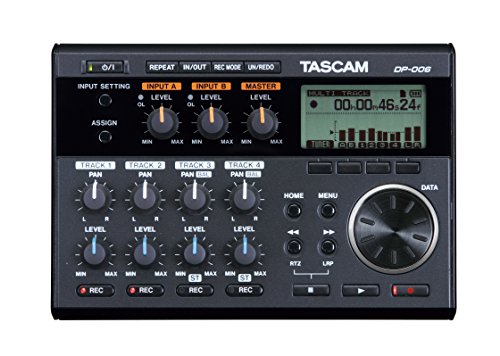
- Lightweight 0.36-kilogram design
- Built-in microphone and WAV recording
- USB 2.0 and 3.5mm headphone output
Best For: Basic battery-powered songwriting and portable capture
Touchscreen Project Recorder
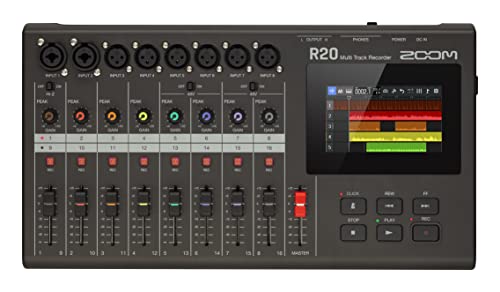
- Up to 16 tracks and eight simultaneous recording
- Six XLR inputs plus two XLR/TRS combo inputs
- Touchscreen editing with effects and rhythms
Best For: Full-band demos and computer-free song production
Portable Practice and Capture
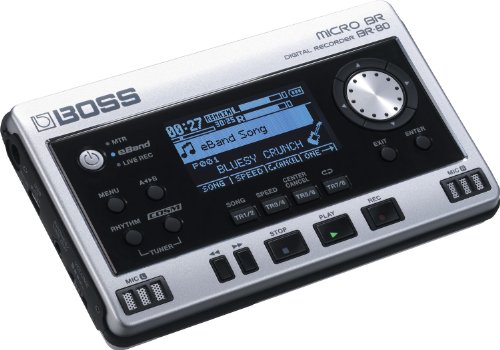
- MTR, eBand, and Live Recorder modes
- Built-in stereo condenser microphone
- USB interface, effects, and backing patterns
Best For: Portable practice, live ideas, and stereo capture
Best Portable Podcast Recorder

- Four XLR inputs with phantom power
- Four individually controlled headphone outputs
- Phone, USB, and multitrack recording support
Best For: Portable podcasts and remote interviews
Best Expandable Multitrack Recorder

- Four XLR inputs and two combo jacks
- Up to 10 individual tracks plus stereo mix
- Interchangeable capsules and 12-channel USB interface
Best For: Expandable music, podcast, and film recording
Best Large-Format Portastudio

- 24-track digital recording
- Eight XLR microphone inputs
- Built-in effects, mastering, and color screen
Best For: Track-heavy home studio and band sessions
Best Portable Touchscreen Pick

- Eight-track recording with two XLR/TRS inputs
- Touchscreen editing, effects, loops, and synths
- USB-C interface and DAW control functionality
Best For: Portable songwriting and computer-free music production
Best High-Input Portastudio

- 32-track recording with up to eight tracks at once
- Eight XLR/TRS combo inputs for external microphones
- Color display, effects, and physical mixing controls
Best For: Bands and project studios with multi-microphone sessions
Best Compact 32-Bit Float Bundle
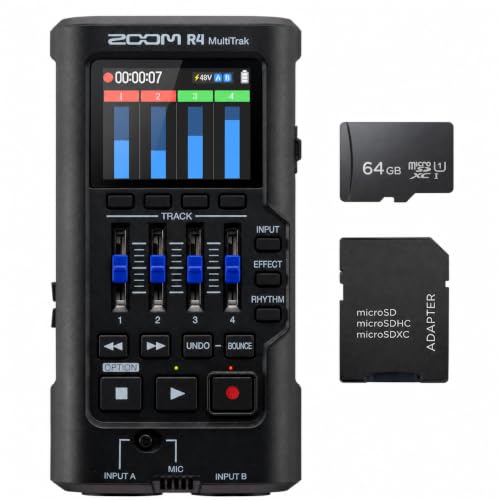
- Two XLR/TRS combo inputs for external microphones
- 32-bit float recording in a compact body
- Includes 64GB microSD card and adapter
Best For: Mobile musicians and portable idea capture
Versatile 8-Track Choice – Zoom R8
The Zoom R8 is a flexible option among multitrack recorders with external microphone input, combining two XLR combo inputs with built-in stereo condenser microphones. It records up to eight tracks simultaneously to SD or SDHC memory and can also function as a USB audio interface.
Best For: Musicians who want standalone recording, built-in microphones, sampling, rhythm tools, and computer connectivity in one compact unit.
Pros:
- Records up to eight tracks simultaneously and supports 16-track playback.
- Two XLR combo inputs accommodate external microphones and other sources.
- Includes built-in stereo condenser microphones, a pad sampler, and rhythm machine.
- Supports WAV recording at 16- or 24-bit resolution and up to 44.1 kHz.
Cons:
- Maximum sample rate is 44.1 kHz.
- SDHC storage support is limited to cards up to 32GB.
The R8 stands out for its broad feature set and simultaneous eight-track recording capability. It is a practical middle ground for home demos, rehearsals, and portable projects that need both external inputs and quick built-in capture.
Pocket Recording Simplicity – Tascam DP-006
The Tascam DP-006 is a compact pocketstudio for straightforward portable recording. Its supplied specifications identify a built-in microphone, WAV format, USB 2.0, and a 3.5-millimeter headphone jack, making it suited to simple recording setups.
Best For: Users who prioritize a lightweight, battery-powered recorder for basic songwriting, ideas, and portable audio capture.
Pros:
- Compact 0.36-kilogram design is easy to carry.
- Uses WAV recording and includes USB 2.0 connectivity.
- Built-in microphone supports recording without a separate microphone.
- Runs on two AA batteries and includes a 3.5-millimeter headphone jack.
Cons:
- The supplied notes list a built-in microphone but do not specify an external microphone input.
- Details do not identify the number of simultaneous recording tracks.
- Its listed 2GB storage capacity is modest compared with larger-card recorders.
The DP-006 is best viewed as a simple, highly portable pocket recorder rather than a clearly specified external-microphone multitrack solution. Buyers who require XLR or other external microphone connectivity should confirm the input configuration before purchasing.
Touchscreen Project Recorder – Zoom R20
The Zoom R20 is designed for musicians who want multitrack recording with external microphone input without relying on a computer. It records up to 16 tracks, handles up to eight simultaneous tracks, and provides six XLR inputs alongside two XLR/TRS combo inputs.
Best For: Bands and producers recording complete demos or song projects directly on a tabletop recorder.
Pros:
- Records up to 16 tracks with up to eight simultaneous inputs.
- Offers six XLR inputs plus two XLR/TRS combo inputs.
- Touchscreen controls support onboard recording, editing, and mixing.
- Includes EQ, compression, 150 rhythm patterns, and an onboard 18-sound synth.
Cons:
- Listed maximum sample rate is 44.1 kHz.
- At 4.3 pounds, it is less lightweight than pocket-style recorders.
- The larger 15-inch width may require dedicated tabletop space.
With abundant microphone connectivity and a DAW-style touchscreen workflow, the R20 is the strongest fit here for multi-source music projects. Its onboard editing and creative tools also reduce the need for immediate computer-based production.
Portable Practice and Capture – Roland BR-80
The Roland BR-80 combines multitrack recording with live capture and practice features. It includes a built-in stereo condenser microphone, records to SD or SDHC cards up to 32GB, and can operate as a USB audio interface with built-in effects.
Best For: Guitarists and musicians who want a lightweight recorder for ideas, practice tracks, backing patterns, and stereo live recording.
Pros:
- Provides MTR, eBand, and Live Recorder modes.
- Built-in stereo condenser microphone enables quick audio capture.
- Offers 64 V-Tracks and eight simultaneous playback tracks.
- Includes COSM amps, effects, backing patterns, rhythm patterns, and USB interface functionality.
Cons:
- The supplied notes identify a built-in microphone but do not specify an external microphone input.
- It uses a small 2-inch screen for operation.
- Its listed warranty is 90 days.
The BR-80 is compelling for portable practice and quick stereo recording, especially when backing tracks and onboard effects matter. However, shoppers specifically seeking an external microphone input should verify the connection options, since the supplied details only confirm the built-in microphone.
Best Portable Podcast Recorder – Zoom PodTrak P4
The Zoom PodTrak P4 is a practical choice among multitrack recorders with external microphone input for podcasts, interviews, and small group sessions. It provides four XLR microphone inputs with phantom power, four individually controlled headphone outputs, and battery-powered operation.
Best For: Podcasters and interviewers who need multiple microphones, separate headphone monitoring, and simple remote-call connectivity.
Pros:
- Four XLR microphone inputs with phantom power.
- Four headphone outputs with individual volume controls.
- Supports multitrack recording, sound pads, phone interviews, and USB audio interface mode.
- Runs on two AA batteries for up to 3.5 hours.
Cons:
- Battery life is limited to up to 3.5 hours.
- It offers fewer microphone inputs than the Zoom H8 and Tascam DP-24SD.
The P4 prioritizes portable podcast production rather than large music sessions. Its headphone monitoring and automatic mix-minus features make it especially convenient for call-in and remote interviews.
Best Expandable Multitrack Recorder – Zoom H8
The Zoom H8 is a flexible option among multitrack recorders with external microphone input, offering four XLR inputs and two combo jacks for microphones, instruments, and other sources. Its interchangeable capsules and dedicated recording modes make it suitable for changing production setups.
Best For: Musicians, podcasters, and filmmakers who want expandable inputs and up to 10 individual tracks plus a stereo mix.
Pros:
- Records up to 10 individual tracks plus a stereo mix.
- Includes four XLR inputs and two combo jacks.
- Interchangeable capsules allow the recording setup to expand.
- Works as a USB audio interface with up to 12 channels over USB.
Cons:
- Requires four AA batteries.
- Its broader feature set may be more than needed for simple recording sessions.
With six physical inputs, capsule expansion, and USB connectivity for PC, Mac, or iPad, the H8 is the most adaptable option here. It is well suited to creators whose sessions range from straightforward recordings to more complex multi-source work.
Best Large-Format Portastudio – Tascam DP-24SD
The Tascam DP-24SD is a desktop-style choice among multitrack recorders with external microphone input, built for larger recording projects. It combines 24-track recording with eight XLR inputs, onboard effects, mastering functions, and a color screen.
Best For: Musicians and home studios that need many tracks and multiple external microphone connections in a dedicated Portastudio format.
Pros:
- Provides 24-track digital recording.
- Includes eight XLR inputs for external microphones.
- Offers onboard effects, mastering, and a color screen.
- Includes 32 GB of memory storage according to the supplied specifications.
Cons:
- At 13.7 pounds, it is substantially less portable than the Zoom recorders.
- Its larger desktop design is less suited to mobile recording.
The DP-24SD is the strongest fit for track-heavy projects where hands-on recording and mixing matter more than battery portability. Its eight XLR inputs and 24-track capacity give it considerably more room for complex sessions.
Best Portable Touchscreen Pick – Zoom R12
The Zoom R12 is a practical choice among multitrack recorders with external microphone input when you want computer-free recording in a portable format. Its two XLR/TRS combo inputs support microphones, while the touchscreen provides DAW-style editing, effects, mixing, and loop-based production.
Best For: Musicians who want an easy-to-carry recorder with touchscreen editing, built-in rhythms, and direct microphone or instrument connections.
Pros:
- Records up to eight tracks through two XLR/TRS inputs.
- Provides 48V phantom power on both inputs for condenser microphones.
- Includes touchscreen editing, effects, 150 drum loops, and 18 FM synth instruments.
- Works as a stereo USB-C audio interface and DAW control surface.
Cons:
- Has only two physical input channels.
- Battery life is rated at up to five hours using four AA batteries.
The R12 stands out for portable songwriting and arrangement work, especially if touchscreen control and built-in creative tools matter more than a large number of simultaneous inputs.
Best High-Input Portastudio – Tascam DP-32SD
The Tascam DP-32SD is built for larger recording setups and is a strong option among multitrack recorders with external microphone input. It records up to 32 tracks and can capture up to eight tracks simultaneously through its XLR/TRS combo inputs, with physical controls for mixing and input processing.
Best For: Bands, project studios, and users who need many microphone inputs and extensive track capacity without relying on a computer during recording.
Pros:
- Records up to 32 tracks and up to eight tracks at once.
- Offers eight XLR/TRS combo inputs for microphones and other sources.
- Includes compression, limiting, guitar amp simulation, and multi-effects.
- Uses SD or SDHC media and includes a 3.5-inch color LCD.
Cons:
- Its 13.7-pound weight and larger dimensions make it less portable.
- Headphone monitoring uses a 6.35 mm jack.
The DP-32SD is the most suitable choice here for multi-microphone sessions, offering substantially more simultaneous inputs and track capacity than compact portable recorders.
Best Compact 32-Bit Float Bundle – Zoom R4
The bundled Zoom R4 is a compact option for musicians seeking multitrack recorders with external microphone input. It includes two XLR/TRS combo inputs, 32-bit float recording, and a 64GB microSD card with adapter, making it convenient for portable idea capture and basic multitrack work.
Best For: Mobile musicians who want a small recorder with external microphone connections and included storage.
Pros:
- Includes two XLR/TRS combo inputs for external microphones and other sources.
- Uses 32-bit float recording for portable capture.
- Bundle includes a 64GB microSD card and adapter.
- Compact 11.2-ounce design runs on two AAA batteries.
Cons:
- Has a small 0.96-inch screen.
- Provides two listed combo inputs rather than a larger input array.
- Its 3.5 mm headphone jack may not suit users who prefer 6.35 mm monitoring connections.
The R4 bundle favors portability and convenience, pairing a small recorder with extra storage for musicians who want to capture performances or ideas away from a studio.
How We Picked the Best Multitrack Recorders with External Microphone Input
We focused on recording flexibility, external microphone connectivity, track capacity, portability, and ease of use. The selection includes models with XLR or XLR/TRS combo inputs for microphones and instruments, as well as dedicated multitrack workflows for songwriting, rehearsal capture, podcasting, and more structured studio production.
We also considered differences between battery-powered portable units, tabletop recorders, and larger SD-based portastudios. Features such as onboard effects, drum patterns, headphone outputs, USB connectivity, monitoring controls, and editing or mastering tools can significantly affect day-to-day usability.
Quick Comparison
- Best for compact all-purpose recording: Zoom R8 or Zoom R12.
- Best for larger sessions: Zoom R20, Tascam DP-24SD, or Tascam DP-32SD.
- Best for simple portable songwriting: Tascam DP-006 or Roland BR-80.
- Best for podcasts and remote interviews: Zoom PodTrak P4.
- Best for flexible field recording: Zoom H8.
- Best for a low-cost, focused setup: Zoom R4.
Key Buying Factors for Multitrack Recorders with External Microphone Input
Input Type and Count
Check whether the recorder uses XLR inputs, XLR/TRS combo jacks, or a mixture of external and built-in microphones. XLR inputs are important for studio and stage microphones, while combo inputs add flexibility for line-level gear and instruments. More inputs are useful when recording a full band, multiple speakers, or several microphones at once.
Track Capacity and Workflow
Do not confuse simultaneous inputs with total track count. A recorder may capture several sources at once but offer many more tracks for overdubbing. Compact models suit layered songwriting, while 16-, 24-, and 32-track portastudios are better for complex arrangements and larger projects.
Portability and Power
Battery-powered handheld and tabletop units are convenient for rehearsals, travel, and location work. Larger portastudios generally provide more controls and connectivity but need more space and may be better suited to a fixed recording area.
Monitoring, Effects, and Editing
Look for headphone outputs, low-latency monitoring, onboard effects, drum loops, and convenient editing controls. These features can reduce the need for additional equipment, especially when building demos or finished arrangements away from a computer.
Computer and Connectivity Options
USB audio interface functionality is useful if you want to record directly into a computer later. Phone inputs, remote-interview support, sound pads, and multiple headphone outputs are particularly valuable for podcasting and collaborative recording.
Who Should Buy Which Multitrack Recorders with External Microphone Input?
Choose a compact recorder such as the R4, R8, R12, DP-006, or BR-80 if you mainly create demos, overdub parts, practice ideas, or record on the move. These models prioritize manageable setups and fast access to core recording functions.
Choose the PodTrak P4 if spoken-word production is your priority and you need multiple XLR microphones, separate headphone monitoring, phone connectivity, or remote guest support.
Choose the H8 if you need a versatile field recorder for musicians, filmmakers, or podcasters and value adaptable microphone and input configurations.
Choose the R20, DP-24SD, or DP-32SD for band sessions, multi-microphone tracking, and projects that benefit from many physical controls and substantial track capacity. Before buying, confirm the number of simultaneous inputs you need, the type of microphones you own, and whether you prefer a computer-free portastudio workflow or USB integration.