The right microphone can make voiceover recordings sound clearer, more detailed, and easier to mix. These 10 condenser microphones cover home studios, podcasts, narration, streaming, and professional vocal work.
We compared capsule designs, pickup patterns, connectivity, noise performance, controls, accessories, and overall value to help you find a mic that suits your room, voice, and recording setup.
Best 10 Condenser Microphones for Voiceover Picks for 2026
Best Hybrid Studio Mic

- XLR and USB-C connectivity
- Very low self-noise and warm voicing
- Shock mount, pop filter, and cables included
Best For: Flexible home or studio voiceover recording
Best Detail-Focused XLR Mic

- Detailed 1-inch true condenser capsule
- Cardioid rear rejection
- Shock mount and magnetic pop filter included
Best For: XLR-based home studio voiceover
Best Ready-to-Record Vocal Mic
- Classic NT1 vocal voicing
- 4.5 dBA self-noise
- Shock mount, pop filter, and XLR cable included
Best For: XLR voiceover and streaming setups
Best Entry-Level Recording Mic

- Clean, modern, detailed capture
- Cardioid design for focused vocals
- Designed for aspiring professional recordists
Best For: Beginners starting an XLR voiceover setup
Studio Precision
- Smooth, natural large-diaphragm sound
- Exceptionally low noise and wide dynamic range
- Includes shock mount, case, and dust cover
Best For: Voiceover artists prioritizing quiet, polished studio recordings
Versatile Value

- Cardioid pattern helps reduce side and rear noise
- 20 Hz to 20 kHz vocal frequency response
- Includes shock mount, adapter, and case
Best For: Home-studio voiceover and podcasting on an XLR setup
Budget Studio Starter
Mackie EM-91C Condenser Microphone

- Affordable large-diaphragm condenser design
- Cardioid pattern helps reduce ambience
- Includes shock mount and XLR cable
Best For: Budget-friendly home-studio voiceover setups
Best All-Arounder

- Cardioid pattern helps isolate voice
- Large diaphragm with low-noise sound
- Includes shock mount, filter, and pad
Best For: Versatile home-studio voiceover recording
Best High-SPL Flexibility
- Hand-tuned capsule for detailed sound
- 160 dB maximum SPL handling
- Dual filters and switchable pads
Best For: Voiceover plus vocals and loud instruments
Best Budget Studio Pick
- Cardioid pickup focuses on the speaker
- Low-mass diaphragm captures vocal detail
- Simple XLR design for home studios
Best For: Beginners building an XLR voiceover setup
Best Hybrid Studio Mic – RØDE NT1 5th Gen
The RØDE NT1 5th Gen is a flexible choice among condenser microphones for voiceover, especially if you want both traditional XLR recording and direct USB-C computer connectivity. Its warm voicing, very low self-noise, high SPL handling, and included mounting and pop-filter accessories make it suitable for voice work in home or studio setups.
Best For: Voiceover artists who want one microphone for both XLR interface workflows and USB-C recording.
Pros:
- Offers both XLR and USB-C connectivity.
- Warm, silky character with extremely low self-noise.
- Includes a shock mount, pop filter, dust cover, and both connection cables.
- USB recording supports high-resolution conversion and clip-proof 32-bit float.
Cons:
- USB features may be unnecessary if you already use an audio interface.
- Requires suitable setup space and accessories typical of a large-diaphragm studio microphone.
This is the most adaptable option in the group. Choose it if you value a quiet, classic NT1-style sound but want the freedom to record through either an interface or a computer.
Best Detail-Focused XLR Mic – LEWITT LCT440PURE
The LEWITT LCT440PURE is a straightforward XLR condenser microphone for voiceover users who want detailed vocal capture and effective rear rejection. Its 1-inch true condenser capsule, cardioid pattern, and included shock mount and magnetic pop filter suit home studios, stages, and broader recording applications.
Best For: Voiceover recording through an existing XLR-equipped audio interface or mixer.
Pros:
- 1-inch true condenser capsule captures detail, depth, and clarity.
- Cardioid pattern helps reject sound from the rear.
- Includes a shock mount and magnetic pop filter.
- Versatile for vocals and instruments as well as voiceover.
Cons:
- XLR-only connectivity requires compatible recording equipment.
- Does not include a USB connection for direct computer recording.
The LCT440PURE is a focused choice for an XLR-based setup. It makes the most sense when you already have the required interface and want a detailed, versatile condenser with useful accessories included.
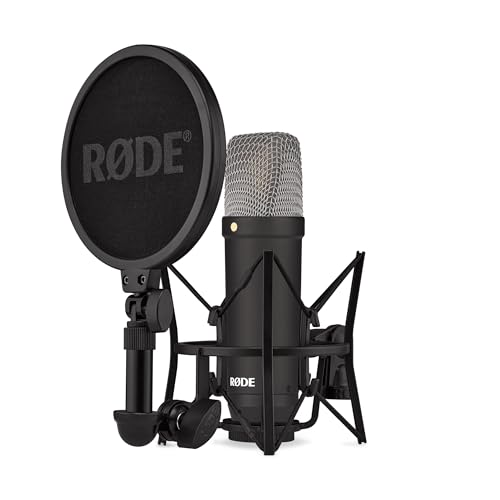
Best Ready-to-Record Vocal Mic – RØDE NT1 Signature
The RØDE NT1 Signature is a practical pick among condenser microphones for voiceover when you already plan to use an audio interface. It combines the recognizable NT1 large-diaphragm voicing with very low self-noise, a cardioid pattern, and a bundled shock mount, pop filter, XLR cable, and dust cover.
Best For: Voiceover, streaming, and vocal recording with an XLR interface.
Pros:
- Legendary NT1 voicing is designed for vocal recording.
- Very low 4.5 dBA self-noise helps keep attention on the performance.
- Cardioid pattern focuses on the voice and rejects room sound.
- Includes an SM6 shock mount with pop filter and a 6-meter XLR cable.
Cons:
- XLR connectivity requires a separate audio interface.
- Lacks the NT1 5th Gen’s direct USB-C recording option.
This model is a strong fit for a traditional vocal chain. It offers a quiet, familiar NT1-style presentation and most of the key physical accessories needed to start recording once an interface is available.
Best Entry-Level Recording Mic – LEWITT LCT 240 Pro
The LEWITT LCT 240 Pro is an accessible XLR condenser microphone for voiceover newcomers taking a step toward professional recording. Its cardioid design, high-performance condenser capsule, clean detailed character, and airy-frequency boost make it a practical option for singing, streaming, and spoken recording.
Best For: Beginners building an XLR-based home recording or streaming setup.
Pros:
- Designed as a versatile next step into professional recording.
- Condenser capsule delivers clean, modern, detailed recordings.
- Cardioid pattern suits focused vocal and streaming capture.
- Air-frequency boost can add openness to the recorded sound.
Cons:
- XLR connectivity requires compatible equipment such as an interface.
- The supplied notes do not list a shock mount or pop filter.
- Its stated 20 dB audible-noise specification is less quiet than the other listed RØDE options.
The LCT 240 Pro is best viewed as a simple starting point rather than a complete plug-and-play package. It is a sensible choice if you are assembling an XLR setup and want a clean, modern condenser sound for voiceover and streaming.
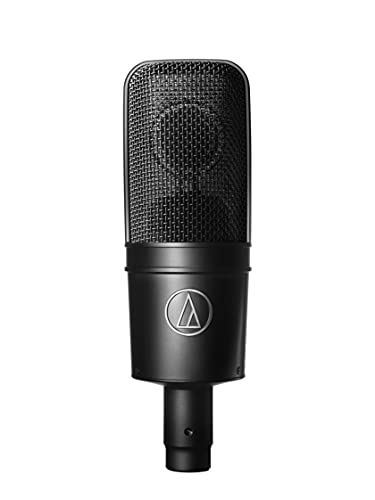
Studio Precision – Audio-Technica AT4040
The Audio-Technica AT4040 is a strong choice among condenser microphones for voiceover when you want a smooth, natural sound and a quiet recording signal. Its large-diaphragm true condenser design, wide dynamic range, and high-SPL capability make it suitable for detailed spoken-word work and other studio applications.
Best For: Voiceover artists and home or professional studios seeking low-noise, natural-sounding recordings.
Pros:
- Large diaphragm is designed for smooth, natural sonic characteristics.
- Exceptionally low noise with wide dynamic range.
- Transformerless circuitry helps reduce low-frequency distortion and preserve fast transients.
- Includes an AT8449 shock mount, dust cover, and protective carrying case.
Cons:
- Requires an audio interface or preamp with XLR connectivity and appropriate microphone power.
- Its studio-focused feature set may be more than needed for basic voice recording.
The AT4040 is the most technically advanced option in this group, with an emphasis on clean, consistent capture and flexible handling of louder sources. It is a compelling pick if recording quality and low noise take priority.
Versatile Value – MXL 990 Condenser Microphone
The MXL 990 is a versatile entry point among condenser microphones for voiceover, with a large-diaphragm design, cardioid pickup pattern, and 20 Hz to 20 kHz frequency response. It is built for detailed vocal recording while helping reduce sound arriving from the sides and rear.
Best For: Home-studio voiceover, podcasting, streaming, gaming, and vocal recording.
Pros:
- Cardioid pattern focuses on the voice and rejects noise from the sides and back.
- FET preamp and balanced output provide detailed sound with smooth lows, mids, and highs.
- Includes a shock mount, stand adapter, and carrying case.
- Supports a broad 20 Hz to 20 kHz frequency response for male and female voices.
Cons:
- Requires +48V phantom power from a compatible interface or microphone preamp.
- Its cardioid pattern reduces, but does not eliminate, room noise.
With useful accessories and a flexible vocal-oriented design, the MXL 990 offers a practical package for creators building an XLR recording setup. Make sure your interface supplies +48V phantom power before buying.
Budget Studio Starter – Mackie EM-91C Condenser Microphone
The Mackie EM-91C is an affordable option among condenser microphones for voiceover, combining a large-diaphragm capsule with a cardioid pattern for studio and home-based recording. Its included shock mount and XLR cable make it a straightforward starting point for an XLR vocal setup.
Best For: Budget-conscious voiceover creators and home studios needing a simple condenser microphone package.
Pros:
- Affordable professional-quality condenser microphone design.
- Cardioid polar pattern helps reduce ambient sound.
- Rugged, reliable construction for regular studio use.
- Includes a shock mount and XLR cable.
Cons:
- Its supplied notes provide less detailed sound-performance information than the other models.
- Requires compatible XLR equipment and microphone power for operation.
The EM-91C keeps the setup simple and cost-conscious while providing the core features needed for voice recording. It is a sensible choice when included accessories and an accessible price matter more than extensive specifications.
Best All-Arounder – Audio-Technica AT2035
The Audio-Technica AT2035 is a versatile choice among condenser microphones for voiceover, especially for home, project, and professional studio setups. Its cardioid pattern helps isolate your voice, while the large diaphragm, low-noise design, high SPL handling, and wide dynamic range support clear, consistent recordings.
Best For: Voiceover artists, podcasters, streamers, and home-studio users who want flexible XLR performance.
Pros:
- Cardioid pickup reduces sound from the sides and rear.
- Large diaphragm delivers smooth, natural sound with low noise.
- Switchable 80 Hz high-pass filter and 10 dB pad add recording flexibility.
- Includes a custom shock mount for improved isolation.
Cons:
- Requires an XLR connection and compatible audio equipment.
- Its feature set may be more than needed for very basic voice recording.
The AT2035 stands out as a balanced, adaptable microphone for spoken-word recording. The included shock mount and onboard filtering make it particularly practical for a growing voiceover setup.
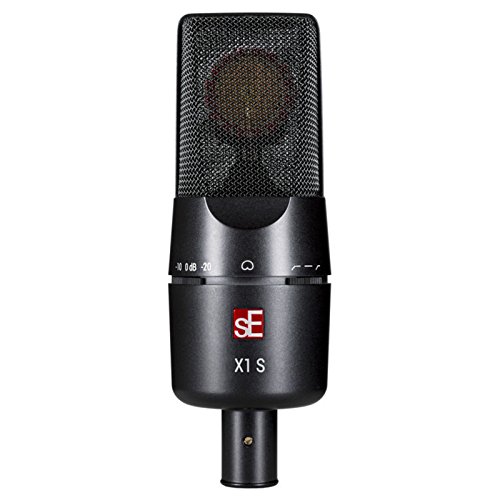
Best High-SPL Flexibility – sE Electronics X1 S
The sE Electronics X1 S combines a hand-tuned large-diaphragm capsule with substantial level-handling flexibility, making it a capable option among condenser microphones for voiceover. Its cardioid pattern, low-cut filters, switchable pads, low self-noise, and rugged metal housing suit detailed voice recording as well as broader studio use.
Best For: Voiceover creators who also record vocals or loud instruments and want extensive input-control options.
Pros:
- Hand-crafted capsule provides clear, balanced, detailed sound.
- Handles levels up to 160 dB for demanding recording sources.
- 80 Hz and 160 Hz filters help manage rumble and proximity effect.
- Includes -10 dB and -20 dB pads plus a gold-plated XLR output.
Cons:
- Its extensive high-SPL controls may be unnecessary for simple spoken-word recording.
- Requires XLR connectivity and phantom-powered studio equipment.
The X1 S is a strong choice when voiceover is only part of your recording work. Its filter and pad options provide useful control, while the low-noise design supports detailed vocal capture.
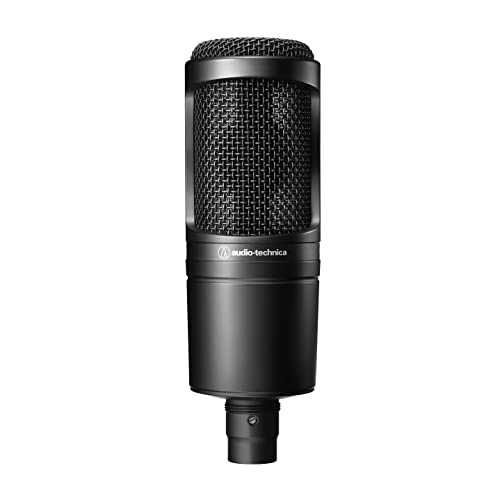
Best Budget Studio Pick – Audio-Technica AT2020
The Audio-Technica AT2020 is a straightforward entry point for condenser microphones for voiceover, with an XLR output designed for project and home studios. Its cardioid pattern helps focus on the speaker, while the low-mass diaphragm, high SPL handling, and wide dynamic range support versatile recording.
Best For: Beginners and home-studio users seeking a simple XLR microphone for voiceover and recording projects.
Pros:
- Cardioid pattern reduces pickup from the sides and rear.
- Low-mass diaphragm supports extended frequency response and transient detail.
- High SPL handling and wide dynamic range provide versatility.
- Designed specifically for project and home-studio applications.
Cons:
- Does not list a built-in high-pass filter or pad.
- Requires phantom power and an audio interface or compatible recording setup.
The AT2020 keeps the feature set focused on dependable studio recording. It is a practical starting point for voiceover users who already have, or plan to add, the necessary XLR equipment.
How We Picked the Best Condenser Microphones for Voiceover
We focused on microphones with a cardioid or similarly voice-friendly pickup pattern, large-diaphragm condenser designs, and a strong reputation for detailed vocal capture. We also considered sensitivity, self-noise, tonal balance, build quality, included accessories, connection options, and price.
Because voiceover environments vary widely, the list includes both straightforward XLR microphones and models with added flexibility. USB compatibility, where available, can simplify computer recording, while pad switches, high-pass filters, and shock-mount support can help with louder sources and cleaner setups.
Quick Comparison
| Best For | What to Look For |
|---|---|
| Professional narration | Low self-noise, smooth detail, and reliable XLR performance |
| Home studios | Cardioid rejection, useful accessories, and good value |
| Podcasting and streaming | Clear midrange presence and an interface that supplies phantom power |
| Flexible recording | USB and XLR connectivity or switchable recording options |
| Budget setups | Consistent vocal response without unnecessary controls |
Key Buying Factors for Condenser Microphones for Voiceover
Room Acoustics and Pickup Pattern
A condenser mic captures fine detail, including room reflections, computer fans, and HVAC noise. Cardioid models reduce sound from behind the microphone, but they cannot replace acoustic treatment. Soft furnishings, absorptive panels, and careful mic placement can make as much difference as the microphone itself.
Self-Noise and Sensitivity
For quiet narration, choose a microphone with low self-noise and enough sensitivity to capture a consistent signal without excessive preamp gain. A clean audio interface with phantom power is required for most XLR condenser microphones.
Tonal Character and Voice Matching
Some microphones emphasize presence and articulation, while others provide a smoother or more neutral response. Bright microphones can help a darker voice cut through a mix, but they may exaggerate sibilance. A neutral option is often safer when several voices will use the same setup.
Controls, Accessories, and Connection
High-pass filters and pad switches are useful for handling proximity effect, plosives, and louder sources. A shock mount, pop filter, sturdy stand, and balanced XLR cable may be necessary additional purchases. USB capability is convenient, while XLR remains the better long-term choice for expandable studio systems.
Who Should Buy Which Condenser Microphones for Voiceover?
Choose a higher-end, low-noise model if you record commercial narration, audiobooks, or frequent client work and want maximum detail. A versatile USB/XLR microphone is a strong choice for creators who want simple computer recording now and an interface-based setup later.
For most home voiceover users, a midrange cardioid condenser offers the best balance of clarity, control, and price. Budget models can work very well for beginners, podcasts, and streaming, especially when paired with a treated recording space, a pop filter, and correct microphone technique.