Choosing samplers for live performances comes down to speed, reliability, and how naturally the device fits your set. The best options make it easy to trigger clips, chop samples, layer sounds, and improvise without breaking flow.
Below, we focus on performance-first samplers that suit different setups, from compact beat-making tools to pad-based instruments and standalone workstations.
Best 10 Samplers for Live Performances Picks for 2026
Performance-First SP Sampler
Roland SP-404MKII Creative Sampler and Effector

- 17 velocity-sensitive RGB pads
- Fast editing with 16 GB internal storage
- Classic Roland effects plus new processing
Best For: Live beatmakers who want a portable, effect-heavy sampler
Portable Groovebox Sampler
Ableton Move Standalone Instrument with Live 12 Intro

- Standalone with battery, speaker, and mic
- Sample, slice, and resample on-device
- Wireless Ableton integration with Live 12 Intro
Best For: Portable live performers in the Ableton ecosystem
Flagship Drum Sampling Pad
Roland SPD-SX PRO Sampling Pad

- Nine pads with advanced trigger tech
- 4.3-inch color display and customizable LEDs
- Up to eight external trigger inputs
Best For: Drummers and musicians building a serious live sampling rig
Pocket Performance Sampler
teenage engineering EP-133 K.O. II
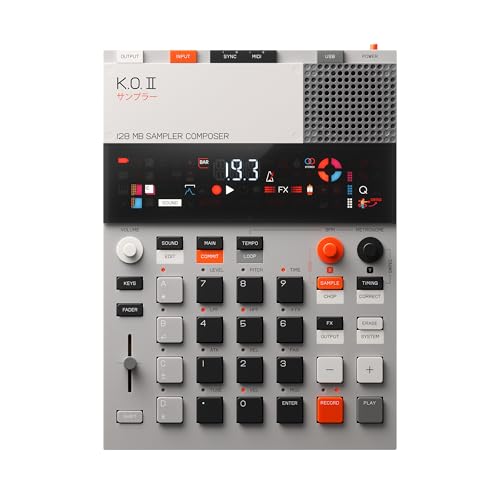
- Built-in mic and speaker with battery power
- Fast pattern-based sequencer for live variation
- 6 master FX and 12 punch-in FX
Best For: Portable performers who like fast, improvisational beat building
Portable Pad Sampler
Akai Professional MPX8 USB MIDI Sample Pad Controller

- 8 backlit velocity-sensitive pads
- Plays WAV samples from SD/SDHC cards
- USB MIDI and standard MIDI I/O
Best For: Players needing a compact pad sampler for triggering preloaded sounds live.
Pocket Creative Sampler
Roland AIRA Compact P-6 Creative Sampler

- Built-in mic for quick sample capture
- Chop, step sampling, and resampling tools
- Granular sound design and chromatic playback
Best For: Mobile performers who want hands-on sampling and fast sound design in a pocket unit.
Standalone Groove Sampler
Akai Professional MPC Sample Portable Sampler

- Standalone battery-powered sampler and sequencer
- Built-in speaker and internal microphone
- 16 pads, color display, and onboard FX
Best For: Performers and DAWless creators wanting a portable all-in-one MPC workflow.
Portable Clip-Based Sampler
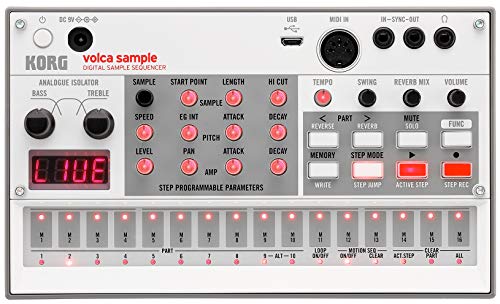
- 8-voice sample sequencer with pattern chain
- Built-in speaker and battery power for portability
- Micro USB and Librarian software for sample management
Best For: Portable sample sequencing in compact live setups
Performance Sculpting Sampler

- Four stereo tracks with granular and filter processing
- Scenes and macros for live changes
- USB-C audio interface and performance-focused mixer
Best For: Live sound sculpting and evolving performance textures
Trigger Pad Sampler

- 1000 built-in sounds with 32GB internal memory
- Bluetooth sampling for direct audio capture
- Customizable LEDs plus MIDI and USB-B connectivity
Best For: Drummers and performers needing live pad triggering
Performance-First SP Sampler – Roland SP-404MKII Creative Sampler and Effector
If you want samplers for live performances, the SP-404MKII is built around speed, portability, and hands-on control. It adds a vivid OLED display, low-latency pads, fast loading, and a deep effects set, so you can trigger, chop, and reshape sounds without breaking momentum on stage.
Best For: Performers who want a compact, battery-friendly sampler with fast editing and classic Roland performance effects.
Pros:
- 17 velocity-sensitive RGB pads with a no-click design for smooth live playability.
- Fast workflow with quick startup, rapid sample editing, and 16 GB internal storage.
- Strong onboard editing tools including auto-chop, auto BPM detect, pitch shift, envelope, and resampling.
- Extensive effects, including SP classics plus lo-fi, cassette simulator, resonator, vocoder, and more.
Cons:
- Best suited to performance sampling rather than traditional keyboard-style playing.
- Compact design means it emphasizes immediacy over deep workstation-style complexity.
The SP-404MKII is a strong choice when live sample manipulation matters more than menu-heavy production. Its portable build and performance-focused workflow make it a dependable stage companion.
Portable Groovebox Sampler – Ableton Move Standalone Instrument with Live 12 Intro
For samplers for live performances, Ableton Move stands out because it lets you sketch, sample, and perform without a computer. The built-in battery, speaker, microphone, and four flexible tracks make it easy to capture sounds, slice them on-device, and build a set wherever you are.
Best For: Ableton users and portable performers who want an untethered sampler, sequencer, and sketchpad in one device.
Pros:
- Standalone operation with built-in battery, speaker, microphone, and processor.
- Sample capture through the mic, 3.5 mm input, or USB-C, with on-device slicing and resampling.
- Four flexible tracks can act as a drum kit, sampler, or synthesizer.
- Includes Live 12 Intro and wireless Ableton integration for moving ideas between devices.
Cons:
- Live 12 Intro is limited compared with the full Ableton Live experience.
- Four-track layout may feel restrictive for users wanting a larger standalone production environment.
Move is a smart pick if your live set starts with sampling and evolves through quick hands-on arrangement. It favors portability and Ableton workflow over deep, all-in-one workstation complexity.
Flagship Drum Sampling Pad – Roland SPD-SX PRO Sampling Pad
If you need samplers for live performances in a drum-pad format, the SPD-SX PRO is built for demanding gigs. It offers nine playing surfaces, customizable LEDs, a color display, strong trigger expansion, and balanced outputs that are designed to fit into a professional stage setup.
Best For: Drummers and stage musicians who need a rugged, performance-ready sampling pad with flexible routing.
Pros:
- Nine pads with advanced trigger technology, including six large pads and three shoulder pads.
- 4.3-inch color display for easier navigation during performance.
- Up to eight external trigger inputs for expanding a live rig.
- Stereo main output plus four direct mono outputs for balanced stage mixing.
Cons:
- More specialized for drummers and pad-based performers than for general-purpose sampling workflows.
- Larger stage-oriented design is less portable than compact groovebox-style options.
The SPD-SX PRO is aimed at serious live rigs where reliable triggering and output flexibility matter most. It’s a strong fit when your show depends on samples, pads, and dependable stage routing.
Pocket Performance Sampler – teenage engineering EP-133 K.O. II
For samplers for live performances, the EP-133 K.O. II focuses on fast ideas, real-time tweaks, and portable fun. It adds a reworked sequencer, built-in mic and speaker, punch-in effects, and a multifunctional fader, so you can record, shape, and perform without slowing down.
Best For: Portable performers who want a compact sampler with quick sequencing and expressive live effects.
Pros:
- Portable design powered by AAA batteries or USB-C, with a built-in microphone and speaker.
- Fast sequencer workflow with 4 groups x 99 patterns and real-time commit control.
- Live-friendly effects including 6 master FX and 12 punch-in FX controlled by a multifunctional fader.
- Supports sampling, resampling, chopping, sidechain, and extended MIDI on OS 2.0.
Cons:
- Limited memory and small physical footprint may not suit larger sample libraries or complex rigs.
- Hands-on performance focus means it is less about deep traditional production than rapid live creation.
The K.O. II is a compelling pick if you want an easy-to-carry sampler that rewards improvisation. It’s especially appealing for players who like to build beats and variations in real time.
Portable Pad Sampler – Akai Professional MPX8 USB MIDI Sample Pad Controller
If you want samplers for live performances that stay simple and compact, the Akai Professional MPX8 gives you a straightforward pad-based setup for triggering WAV samples on stage. Load samples from an SD or SDHC card, then fire them with eight velocity-sensitive pads while keeping the footprint small enough for a tight performance rig.
Best For: Performers who need a lightweight pad sampler for triggering preloaded sounds, loops, and one-shots in a live set.
Pros:
- Eight backlit velocity- and pressure-sensitive pads for expressive triggering.
- Supports 16-bit mono WAV sample playback from SD/SDHC cards up to 32 GB.
- USB MIDI plus standard MIDI in/out makes it useful with software and outboard gear.
- Balanced 1/4-inch outputs and a headphone jack fit studio or live setups.
Cons:
- Internal sample playback does not respond to pad pressure.
- Maximum sample assignment is limited to 30 MB.
- Requires preparing samples on an SD card rather than capturing audio on the fly.
Overall, the MPX8 is a practical choice if you need a compact way to trigger prepared samples during a performance. It is best suited to players who value portability, MIDI connectivity, and fast recall over deeper onboard sampling features.
Pocket Creative Sampler – Roland AIRA Compact P-6 Creative Sampler
For samplers for live performances that lean toward hands-on sound design, the Roland AIRA Compact P-6 offers a pocket-size workflow with built-in capture and editing tools. Its microphone, chop function, step sampling, and resampling features make it easy to create and reshape sounds quickly during a performance or practice session.
Best For: Live performers and mobile creators who want a compact sampler with built-in sampling, chopping, and resampling tools.
Pros:
- Built-in microphone lets you capture sounds without extra gear.
- Chop, step sampling, and chromatic playback support flexible performance use.
- Resampling helps build custom loops and new layers from internal audio.
- Dedicated filter, envelopes, and granular parameters allow detailed sound shaping.
Cons:
- Compact format means controls are intentionally limited compared with larger samplers.
- Sample editing and import/export rely on the P-6 Sample Tool software.
- Designed for portability, so it may not suit users wanting a full-size workstation layout.
The P-6 is a strong pick if you want a small sampler that encourages experimentation on stage. It stands out for quick sample capture and creative manipulation rather than a traditional deep-sequencing approach.
Standalone Groove Sampler – Akai Professional MPC Sample Portable Sampler
If you’re comparing samplers for live performances and want a more complete standalone hub, the Akai Professional MPC Sample Portable Sampler is built around the classic MPC workflow in a compact format. It combines sampling, sequencing, effects, and battery-powered operation, so you can build and perform ideas without relying on a computer or DAW.
Best For: Live performers, DAWless creators, and beatmakers who want a portable standalone sampler with strong onboard workflow.
Pros:
- Standalone, battery-powered design with built-in speaker and internal microphone.
- 16 MPC pads, color display, and chopping workflow make performance and editing fast.
- Internal resampling, timestretch/repitch, and 60 effect types support creative set-building.
- Stereo line in/out, MIDI I/O, USB-C audio/MIDI, and SD card storage cover live and studio use.
Cons:
- MIDI to DIN requires a 1/8-inch adapter that is not included.
- More capable workflow may be more than some users need for simple sample triggering.
- Portability is strong, but the larger feature set adds more complexity than a basic pad sampler.
Overall, the MPC Sample is the most full-featured option here for performers who want one portable box to sample, sequence, and process sounds. It suits players who need flexibility and onboard effects for building complete live arrangements.
Portable Clip-Based Sampler – Korg Volca Sample 2
Korg Volca Sample 2 Digital Sample Sequencer Drum Machine w/Pattern Chain Mode and 16-step Sequencer
Check Price On AmazonIf you want samplers for live performances that stay simple, light, and quick to program, the Korg Volca Sample 2 is built for exactly that kind of use. Its compact body, onboard speaker, battery power, and pattern chain mode make it easy to sketch parts, trigger samples, and keep a set moving without much setup.
Best For: Performers who need a very portable sample sequencer for beat-driven live sets.
Pros:
- 8-voice sample-based engine with a 16-step sequencer and pattern chain mode
- Integrated speaker, headphone output, and battery power for standalone use
- Double the memory of previous models for more samples and longer recordings
- Micro USB and Librarian software for managing samples and patterns
Cons:
- Compact format limits the hands-on depth of larger performance samplers
- Best suited to sample sequencing rather than full multi-track live production
Overall, this is a practical choice when portability and fast sample sequencing matter more than a large control surface. It fits well in setups centered on future bass, trap, lo-fi hip hop, and similar sample-led styles.
Performance Sculpting Sampler – S4 Sculpting Sampler
For samplers for live performances that also double as sound design tools, the S4 Sculpting Sampler offers a much deeper performance workflow. It combines four stereo tracks with granular processing, scenes, and macro control, so you can capture material and reshape it on the fly during a set.
Best For: Live performers who want a hands-on sampler for evolving textures, scene changes, and real-time sound shaping.
Pros:
- Four parallel stereo tracks with Material, Granular, Filter, Color, and Space processing
- Scenes and global macro controls support fast changes during composition or performance
- Four assignable modulators per track for flexible movement and modulation
- USB-C audio interface and four-channel master section for streamlined setup
Cons:
- More complex than simpler sample sequencers
- Auxiliary connector type may not suit every modern live rig
This is the most performance-focused option here if you want to sculpt samples rather than just trigger them. Its strengths are in live manipulation, evolving textures, and advanced control over movement and space.
Trigger Pad Sampler – PD708 Sample Pad
If your live performances rely on pad triggering, built-in sounds, and quick sample capture, the PD708 Sample Pad is designed for that job. It packs 1000 built-in sounds, 32GB internal memory, and wireless sampling via Bluetooth, making it easy to load, record, and play material in a band, club, or rehearsal setting.
Best For: Drummers and performers who want a feature-rich sample pad for live triggering and fast sample capture.
Pros:
- 1000 built-in sounds and 30 ready-to-play kits
- 32GB internal memory supports user samples and recording tracks without external storage
- Bluetooth sampling can capture audio directly from a phone, tablet, or computer
- Customizable LEDs and multiple I/O options, including MIDI and USB-B
Cons:
- Heavier and less portable than compact tabletop samplers
- Primarily a performance pad, so it is less focused on deep sample sequencing
This is a strong live-performance option when you need responsive pads and practical connectivity more than a traditional sequencer layout. It should work especially well in setups that need external trigger expansion and real-time sampling.
How We Picked the Best Samplers for Live Performances
We prioritized instruments built for real-time use, with a focus on fast loading, stable playback, intuitive control layouts, and performance features that matter on stage. We also looked for a mix of form factors so this roundup covers portable sketch tools, pad samplers, and more complete production rigs.
Quick Comparison
When comparing Samplers for Live Performances, think in terms of workflow rather than specs alone. Some models are better for finger drumming and one-shot triggering, while others excel at sequence building, clip launching, or on-the-fly sound mangling. Portability, pad count, storage, and connectivity can make a bigger difference than raw sample memory.
Key Buying Factors for Samplers for Live Performances
Workflow Speed
Look for quick access to samples, simple record-and-play functions, and controls you can operate without menu diving. On stage, fewer steps usually means fewer mistakes.
Performance Controls
Pads, knobs, assignable effects, scene changes, and real-time modulation are important if you want to shape sound during the set. If you play drums or percussion live, pad feel and trigger response matter especially.
Sampling and Sequencing Depth
Some players only need one-shot playback, while others need chopping, slicing, looping, pattern chaining, and step sequencing. Match the feature set to how complex your show really is.
Portability and Power
If you travel often or play short setup windows, size and power options matter. Smaller units can be ideal for mobile rigs, while larger systems often trade convenience for broader control and storage.
Connectivity
Check MIDI, audio outputs, trigger inputs, USB, and sync options so the sampler works cleanly with mixers, drum pads, synths, or a laptop-free stage setup.
Who Should Buy Which Samplers for Live Performances?
If you want a compact sketchpad for clips and beats, a portable standalone unit may be the best fit. If you need hands-on triggering for drums, a pad-style sampler is usually the smarter choice. Producers who want deeper song construction should lean toward groovebox-style systems with stronger sequencing, while performers focused on fast sample playback can keep things simple with a lightweight sample pad or compact hardware sampler.
For most buyers, the right choice is the one that matches your set list, not the one with the longest spec sheet. The best Samplers for Live Performances are the ones you can trust under pressure and shape quickly in front of an audience.