A great murder mystery dinner gives everyone a reason to mingle, suspect one another, and stay engaged between courses. The right choice depends less on the setting than on how many people are coming and how much hosting you want to do.
These 10 games cover small gatherings, larger parties, themed role-play, and clue-driven puzzles. Use the guide below to narrow down the format that fits your table.
Best 10 Murder Mystery Dinner Games Picks for 2026
Flexible Guest List
Murder at the Manor Flexi Party
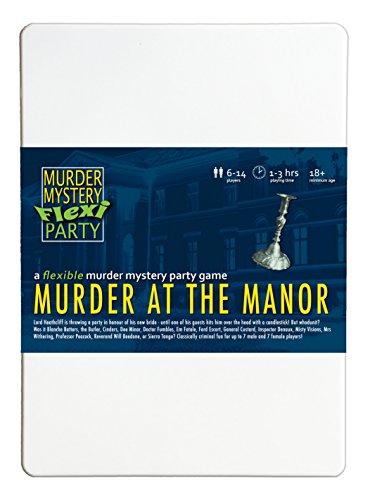
- Plays with any 6–14 guests
- Host can participate
- Murderer chosen on the night
Best For: Adult hosts with changing guest counts
Cooking-Holiday Mystery

- 6–8 adult players
- Approximately two hours
- Hosting guide and character materials
Best For: Small groups that enjoy culinary themes and role-play
Pizzeria Setting

- Flexible 6–14 player range
- Estimated 90-minute playtime
- Host can join the mystery
Best For: Adult dinner groups with uncertain attendance
Question Menu Edition

- Any combination of 6–14 players
- Question menu and hosting guide
- Murderer selected on the night
Best For: Adult manor parties that want guided questioning
Best for a Hotel Whodunit
Culinario Mortale Murder at The Grand Hotel
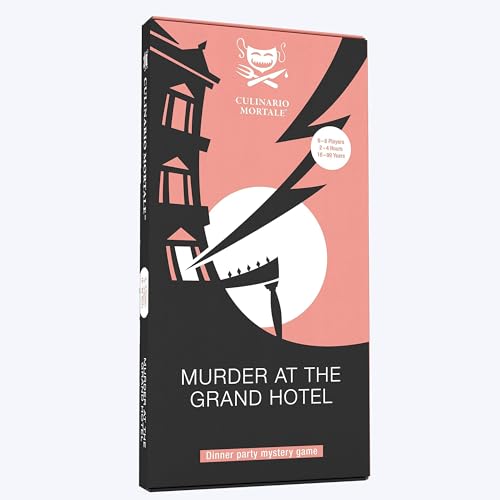
- For 6–8 players ages 16+.
- Runs roughly 3–4 hours.
- Includes roles, secret clues, and name tags.
Best For: A long, role-driven dinner with 6–8 guests.
Best for a Reusable Theatre Theme
Talking Tables 1920s Murder Mystery Kit

- 1920s theatre setting.
- Reusable with multiple endings.
- Sized for 5–12 players.
Best For: A themed dinner party with 5–12 guests.
Best for Flexible Group Sizes
Masters of Mystery Wine & Cheese Whodunnit

- Supports 4–20 players.
- Combines physical evidence with app guidance.
- Variable killer adds replay value.
Best For: Wine-and-cheese gatherings with changing guest counts.
Best Reusable Kit
Talking Tables 1970s Dancefloor Mystery

- Three alternative endings
- Props, clues, and character cards
- For 5–13 players ages 16+
Best For: Repeat-play disco-themed dinner parties
Best Disco Case Game

- 12 challenge cards and 24 clues
- Floor plan and weapon props
- For 5–13 players ages 16+
Best For: Disco-themed character and clue solving
Best Garden Setting
Talking Tables Botanic Gardens Mystery

- 1920s botanic-garden setting
- Character, challenge, and clue cards
- For 5–13 players ages 16+
Best For: 1920s garden-themed dinner parties
Flexible Guest List – Murder at the Manor Flexi Party
Among murder mystery dinner games, Murder at the Manor Flexi Party suits hosts whose guest count may change. Any combination of 6–14 players can take part, and the murderer is chosen on the night.
Best For: Hosts planning an adult manor-house mystery with a flexible guest list.
Pros:
- Every player is a suspect rather than an added-on guest.
- The host can play, and the on-the-night murderer selection accommodates no-shows.
- Includes 14 character sheets, 14 invitations, a question menu, a hosting guide, and whodunit slips.
Cons:
- Requires at least six players.
- Manufacturer recommends ages 18 and up.
Choose this version if attendance is uncertain but you still want everyone involved in the deduction; guilty suspects have different stories that provide clues rather than leaving the solution to random guessing.
Cooking-Holiday Mystery – A Slice of Murder
A Slice of Murder brings a cooking-themed English country manor setting to murder mystery dinner games. Designed for 6–8 adults, it centers on a celebrity chef’s death and runs for approximately two hours.
Best For: Groups of 6–8 adults who enjoy character role-play and a culinary mystery theme.
Pros:
- Includes character booklets, invitations, name tags, clues, and a party planner.
- Step-by-step host instructions help first-time organizers run the game.
- Players interrogate suspects and improvise dialogue to uncover secrets.
Cons:
- The stated player range tops out at eight.
- Improvised role-play may not suit guests who prefer less performance.
This is a structured choice for a smaller dinner party: the supplied materials guide the host, while the questioning and dialogue leave room for guests to inhabit their characters.
Pizzeria Setting – Murder at the Pizzeria
Murder at the Pizzeria gives murder mystery dinner games a restaurant-themed setting for 6–14 adults. Its estimated playing time is 90 minutes, and the guest list can be any combination within that range.
Best For: Adult groups seeking a pizzeria-themed mystery with flexible attendance.
Pros:
- All participating guests are suspects, even when fewer than 14 play.
- The host can play, and choosing the murderer on the night accommodates no-shows.
- Guilty suspects have different stories containing clues to support deduction.
Cons:
- Needs at least six players.
- Manufacturer recommends ages 18 and up.
Its flexible casting is the key advantage for a dinner where RSVPs might shift; the stated 90-minute playtime also gives hosts a useful planning estimate.
Question Menu Edition – Murder at the Manor
This Question Menu Edition of Murder at the Manor is one of the murder mystery dinner games built for variable-sized adult groups. It supports any combination of 6–14 players without assigning anyone a non-suspect role.
Best For: Hosts who want a classic manor mystery and a question menu to guide the party.
Pros:
- Includes character sheets, invitations, a how-to-host guide, whodunit slips, and a question menu.
- The host can participate, and the murderer is selected on the night.
- Guilty suspects receive different stories with clues, rather than relying on random guessing.
Cons:
- Not designed for groups smaller than six or larger than 14.
- Manufacturer recommends ages 18 and up.
Pick this edition if you want the manor setting with a supplied question menu and room for attendance changes; its on-the-night murderer selection means a no-show need not hold up the game.
Best for a Hotel Whodunit – Culinario Mortale Murder at The Grand Hotel
Among murder mystery dinner games, Murder at The Grand Hotel suits a group that wants a substantial, role-driven evening. It gives 6–8 players ages 16 and up suspect roles and secret clues to work through over roughly 3–4 hours.
Best For: Groups of 6–8 planning a long mystery dinner.
Pros:
- Every guest plays a suspect and receives role information and secret clues.
- Includes game instructions, name tags, and a support code.
- The 3–4-hour format can anchor an entire dinner party.
Cons:
- The 6–8-player range leaves little flexibility for smaller or larger groups.
- Its longer runtime may not suit a short game night.
Choose this one when you can commit to the full guest count and want the mystery to be the main event, not a quick activity between courses.
Best for a Reusable Theatre Theme – Talking Tables 1920s Murder Mystery Kit
If you want murder mystery dinner games with a 1920s theatre setting, this Talking Tables kit offers a reusable option for 5–12 players. It includes character-related cards, props, clues, and trophies for a themed party.
Best For: Hosts planning a 1920s-themed gathering for 5–12 people.
Pros:
- The reusable kit offers multiple endings.
- Includes place, name, trait, and occupation cards, plus props and clues.
- Its 5–12-player range accommodates a larger dinner table.
Cons:
- The 1920s theatre theme may not fit every party.
- It is listed for at least five players, so it is not a two-person dinner game.
This is a good fit when the setting matters as much as the puzzle and you want a kit you can bring out for another gathering.
Best for Flexible Group Sizes – Masters of Mystery Wine & Cheese Whodunnit
For hosts comparing murder mystery dinner games across different guest counts, this vineyard-themed kit supports 4–20 players. Physical character booklets and evidence packs pair with an app that helps cast roles and organize the investigation.
Best For: Wine-and-cheese parties that need flexible casting and app-guided hosting.
Pros:
- Supports groups from 4 to 20 players.
- The app can handle invitations, RSVPs, character assignments, and round-by-round evidence.
- A different eligible character can be the killer on a later playthrough.
Cons:
- Using its app-assisted features adds a digital component to the party.
- The wine-and-cheese theme may be less appealing to groups seeking a different setting.
Pick this when guest-count flexibility and hosting guidance outweigh a preference for a wholly paper-based game; the stated playtime is about 1.5–3 hours.
Best Reusable Kit – Talking Tables 1970s Dancefloor Mystery
Among murder mystery dinner games, this 1970s disco kit stands out for its three alternative endings, which let a group revisit the theme on another night. It is designed for 5–13 players ages 16 and up.
Best For: Hosts who want a dress-up disco party with enough materials for repeat play.
Pros:
- Three alternative endings add replay options.
- Includes character cards, clues, weapon props, note sheets, and award trophies.
- Accommodates groups of 5–13.
Cons:
- The 1970s disco setting may not suit groups seeking a different theme.
- Recommended for ages 16 and up.
Choose this one if reusable materials matter more to your group than trying a new setting each time.
Best Disco Case Game – Talking Tables Crack the Case
This 1970s dance-floor entry gives murder mystery dinner games a clue-solving focus, with character roles, challenge cards, a floor plan, and murder clues. It is listed for ages 16 and up and groups of 5–13.
Best For: Groups that want a disco-themed mystery with character roles and structured challenges.
Pros:
- Includes 12 challenge cards and 24 murder clues.
- Floor plan and nine weapon props provide materials for investigating.
- Comes with character cards, name badges, a solution, and instructions.
Cons:
- The disco setting is a specific thematic choice.
- Listed contents specify one solution; the notes also mention three possible endings, so confirm the edition if replayability is important.
Pick this version for its concrete mix of challenges and clues, but check the listing details before counting on multiple endings.
Best Garden Setting – Talking Tables Botanic Gardens Mystery
For shoppers comparing murder mystery dinner games by setting, this kit moves the action to a 1920s botanic garden. It provides character materials, challenges, clues, and an accusation stage for a home dinner party of 5–13 players ages 16 and up.
Best For: Hosts planning a 1920s-themed mystery dinner with a garden backdrop.
Pros:
- Distinctive botanic-garden setting at the renovated Whittaker garden.
- Includes name badges, character cards, challenge cards, and murder clues.
- Provides weapon props, accusation cards, a solution sheet and envelope, and instructions.
Cons:
- Recommended for ages 16 and up.
- No alternative endings are specified in the supplied contents.
This is the thematic pick if a 1920s garden party fits your gathering; consider a kit that explicitly lists alternative endings if repeat play is the priority.
How We Picked These Murder Mystery Dinner Games
We focused on practical differences a host can use to make a choice: stated player ranges, theme, and whether a game is presented as a character-led dinner party, a reusable kit, or a puzzle-and-clue experience. The selections include options for groups starting at four, games aimed at six to eight players, and kits with broader stated ranges. Check the current box contents and instructions before buying; character assignments, preparation, and replay options can vary.
Quick Comparison: Match the Game to Your Party
For a fixed guest list of six to eight, A Slice of Murder and Murder at the Grand Hotel have clearly stated ranges. If your RSVPs may shift, the two Murder at the Manor listings and Murder at the Pizzeria are listed for six to 14 players; compare their exact contents before treating the Manor editions as interchangeable. The wine-and-cheese vineyard game lists the widest range here, four to 20 players. Talking Tables offers a 1970s kit listed for five to 13, alongside a 1920s theatre kit and clue-focused dance-floor and botanic-gardens themes. Confirm the player requirements for those latter titles before settling your guest list.
Key Buying Factors
Guest Count and Roles
Start with the number of people who will actually play, not everyone invited to dinner. A character-led mystery may need enough guests to fill essential roles, while an extra guest may need an optional character. Check whether the host can participate and how the game handles late cancellations.
Role-Play or Puzzle Solving?
Character-led games work best when guests are happy to read a role, share information, and improvise in conversation. A clue- or brain-teaser-led format may suit a group that would rather solve together than perform. For mixed groups, tell guests what participation looks like before they accept.
Preparation, Format, and Theme
Look for what the kit asks the host to do beforehand: assign roles, send invitations, prepare clues, or pace reveals around dinner. Reusable packaging does not necessarily mean the same people can replay the same mystery without knowing the answer. Choose a setting your guests will enjoy dressing for if costumes are part of the appeal, but keep the theme secondary to a workable player count and manageable prep.
Who Should Buy Which Murder Mystery Dinner Games?
Choose a six-to-eight-player title for a settled, intimate table; consider a six-to-14-player mystery when attendance is less certain. For a larger or more flexible gathering, investigate the vineyard game’s four-to-20-player setup and confirm how it scales. Pick the 1920s theatre or 1970s Talking Tables themes if the party atmosphere matters most, or explore the dance-floor and botanic-gardens options if your guests prefer clues. Before checkout, verify the specific edition, age guidance, and what’s included so the game fits both your guests and your hosting plans.