Optical media remains useful for photographers who archive finished galleries, deliver client files, or keep an offline backup away from their main computer and cloud accounts. The right external drive can also help access older discs when a modern laptop lacks a built-in reader.
This roundup compares 10 portable optical disc drives for photographers, focusing on connectivity, disc compatibility, portability, card-slot versatility, macOS and Windows support, and practical archival features such as M-DISC compatibility.
Best 10 Optical Disc Drives for Photographers Picks for 2026
Compact M-DISC Pick

- Slim 14mm portable design
- M-DISC and DVD-RAM support
- Works with PC and Mac
Best For: Lightweight DVD-based photo archiving
Ultra-Slim Legacy Option

- 14mm portable design
- 8x DVD reading and writing
- M-DISC and Mac OS X support
Best For: Simple personal DVD backups
Photo Card Workflow Pick

- SD and Micro-SD card readers
- CD/DVD writer with USB hub
- USB 3.0 and USB-C connectivity
Best For: Camera-card transfers and disc backups
Portable Plug-and-Play Pick
Slim Amicool External DVD Drive
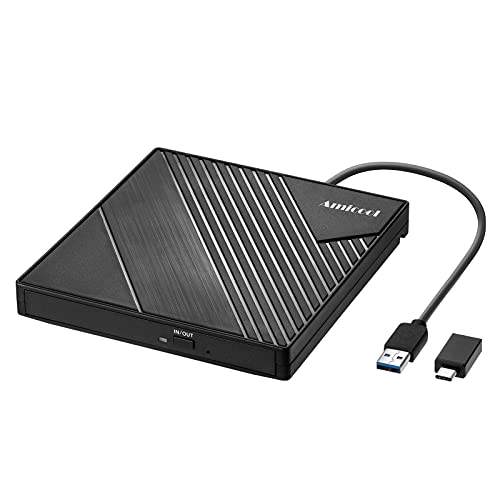
- USB 3.0 and USB-C connectivity
- Up to 8x DVD and 24x CD speeds
- Slim, portable, computer-focused design
Best For: Photographers needing a simple portable CD/DVD burner
Card-Transfer Workstation

- Built-in SD and TF card slots
- USB 3.0 hub with USB-A and USB-C ports
- Includes carrying case and power cable
Best For: Photographers combining camera-card transfers with disc burning
Connectivity Expansion Pick
SUIDEK 7-in-1 External DVD Drive

- Includes SD, Micro SD, USB, and 2.5-inch SATA access
- Reads and writes standard CDs and DVDs
- Plug-and-play with included cables
Best For: Photographers needing optical media and multiple storage interfaces
Best Budget Pick
Antika Portable USB 3.0 DVD Drive

- USB 3.0 with backward compatibility
- Reads and writes CDs and DVDs
- Slim design with built-in cable storage
Best For: Simple computer-based disc backups and travel use
Best for Camera Card Transfers
Unitek 5-in-1 USB-C Optical Drive

- Built-in SD card slot for camera files
- USB-A and USB-C computer connections
- Includes three USB hub ports
Best For: Photographers combining SD transfers with CD/DVD work
Best Connectivity

- Eight-in-one design with card readers
- Four USB ports plus USB-C
- Reads and burns CDs and DVDs
Best For: Expanded photo-transfer and optical-media workstations
Compact M-DISC Pick – LG GP65NS60
For photographers seeking optical disc drives for photographers, the LG GP65NS60 is a slim, straightforward choice for reading and burning CDs and DVDs. Its USB connection, M-DISC support, and compatibility with PC and Mac systems make it useful for portable photo archiving and disc-based backups.
Best For: Photographers who want a lightweight DVD writer with M-DISC support.
Pros:
- Ultra-slim 14mm design and lightweight 6.88-ounce body.
- Reads and writes CDs and DVDs, including DVD-RAM and dual-layer media.
- Supports M-DISC, Silent Play, and Jamless Play.
- Compatible with Windows and Mac systems, including Windows 10 and macOS support.
Cons:
- Uses USB 2.0, with data transfer up to 480 Mbps.
- Does not support Blu-ray discs.
The GP65NS60 balances portability with useful archival features. It is a practical fit when DVD and CD support is sufficient, but photographers needing Blu-ray capacity or faster modern interfaces should look elsewhere.
All-in-One Transfer Hub – ROOFULL 8-in-1 Drive
The ROOFULL combines an external CD/DVD writer with USB expansion and SD card readers, making it especially versatile among optical disc drives for photographers. Its dual USB-A and USB-C connectors and included case suit photographers transferring camera files and managing disc backups on the go.
Best For: Photographers who need disc burning plus direct SD and Micro-SD file transfers.
Pros:
- Includes one USB 3.0 port, three USB 2.0 ports, SD, and Micro-SD slots.
- Supports CD/DVD reading, writing, rewriting, ripping, and DVD-RAM.
- USB-A and USB-C connectors support newer and older computers.
- Includes a protective carrying case and optional supplemental power cable.
Cons:
- Does not support Blu-ray or 4K discs.
- Not compatible with Chromebooks, smartphones, tablets, or iPads.
- Disc functions may require separate playback, burning, or ripping software.
This is the most feature-rich option for photographers who want one travel accessory for optical media and memory-card transfers. Confirm your computer’s operating system and port power before buying.
Ultra-Slim Legacy Option – Samsung SE-218GN DVD Rewriter
The Samsung SE-218GN is a compact DVD rewriter for photographers who need a simple optical drive for reading and burning standard CDs and DVDs. Its 14mm profile, tray loading, Mac OS X compatibility, and M-DISC support make it suitable for basic portable archiving.
Best For: Users who prefer a simple, ultra-slim DVD rewriter for personal backups.
Pros:
- Ultra-slim 14mm portable form factor.
- Reads and writes DVDs at up to 8x.
- Supports M-DISC and includes buffer underrun protection.
- Top-mounted eject button and LED provide convenient access.
Cons:
- Uses a USB 2.0 interface, though it is USB 3.0 compatible.
- Limited to DVD and CD media rather than Blu-ray.
- Listed cache memory is 0.75MB.
The SE-218GN keeps the feature set focused and the physical design slim. It works well for occasional disc backups, but photographers wanting memory-card readers, extra ports, or broader modern compatibility may prefer a newer multifunction model.
Photo Card Workflow Pick – ROOFULL 8-in-1 Drive
For photographers comparing optical disc drives for photographers, this ROOFULL model combines CD/DVD functions with a six-port hub and SD/TF card readers. It is designed to move photos from camera cards, connect peripherals, and create disc-based backups through one USB 3.0 accessory.
Best For: Photographers who want an optical drive integrated with a memory-card transfer workflow.
Pros:
- Combines a CD/DVD reader, writer, ripper, USB hub, and card reader.
- Provides SD and Micro-SD slots for transferring photos and videos.
- Includes USB 3.0 plus USB-A and USB-C connectivity.
- Supports Windows, Linux, and macOS systems and includes supplemental power support.
Cons:
- Does not support Blu-ray or 4K discs.
- Requires suitable software for playback, burning, or ripping.
- The supplemental power cord provides power only, not data transfer.
This ROOFULL is a strong workflow-oriented choice when card transfers matter as much as disc access. Its broad connectivity is convenient, though buyers should verify power availability and software requirements for their setup.
Portable Plug-and-Play Pick – Slim Amicool External DVD Drive
For photographers seeking optical disc drives for photographers, the Amicool offers a straightforward way to read, write, and burn CDs and DVDs from a laptop or desktop. Its USB 3.0 and USB-C interfaces suit newer and older computers, while the slim design is easy to pack for travel or studio use.
Best For: Photographers who want a simple, portable disc burner for computer-based photo backups and media access.
Pros:
- Plug-and-play setup with direct USB or USB-C connection.
- Supports DVD+R, DVD-R, CD-R, and CD-RW formats, with up to 8x DVD and 24x CD speeds.
- Built-in cable, lightweight body, error correction, and anti-shock features improve portability and convenience.
- Works with Windows, Linux, and Intel or Apple Silicon Macs.
Cons:
- Does not support Blu-ray, DVD-RAM, ChromeOS, tablets, phones, TVs, or game consoles.
- Direct computer connection is recommended; some Apple Silicon Macs may need a powered USB-C hub.
- Mac users need compatible playback software such as VLC because Apple DVD Player is not supported.
The Amicool is a practical, uncomplicated choice when you need standard CD/DVD burning without extra hub features. Its main limitation is format and device compatibility, so confirm that your discs and computer are supported before buying.
Card-Transfer Workstation – ORIGBELIE External DVD Drive
Among optical disc drives for photographers, the ORIGBELIE stands out by combining CD/DVD reading and burning with SD and TF card slots. That makes it useful for moving camera photos and videos to a computer while also handling optical media, with USB-A and USB-C connectivity included.
Best For: Photographers who want one portable accessory for camera-card transfers, disc burning, and extra USB connectivity.
Pros:
- Built-in SD and TF card readers simplify photo and video transfers from camera cards.
- Functions as a CD/DVD reader, writer, rewriter, burner, and ripper.
- Offers USB 3.0, USB-A, USB-C, and a supplied power cable for flexible computer connections.
- Includes an integrated cable and carrying case for travel or mobile workflows.
Cons:
- SD and TF slots cannot be used simultaneously.
- Does not support Blu-ray discs, phones, tablets, TVs, cars, or projectors.
- Windows 11 requires a media player and network connection according to the supplied notes.
This is the most photography-oriented option of the group because its card-reader functionality can reduce the need for a separate accessory. Choose it if your workflow involves both memory cards and CDs/DVDs, but verify the supported devices and formats first.
Connectivity Expansion Pick – SUIDEK 7-in-1 External DVD Drive
For photographers comparing optical disc drives for photographers, the SUIDEK adds more than CD/DVD functionality. Alongside disc reading and burning, it provides SD and Micro SD slots, USB ports, and a 2.5-inch SATA connection for accessing compatible external storage.
Best For: Photographers who need disc burning plus card access and occasional connectivity with 2.5-inch SATA drives or SSDs.
Pros:
- Combines a CD/DVD drive with SD, Micro SD, USB-A, USB-C, and 2.5-inch SATA interfaces.
- Supports up to 8x DVD and 24x CD read/write speeds for standard optical media.
- Plug-and-play design includes USB-A-to-C and power cables.
- Compatible with Windows, Linux, and Mac operating systems.
Cons:
- The SATA port supports 2.5-inch drives only; 3.5-inch SATA is not supported.
- Does not support Blu-ray, Chromebooks, phones, tablets, TVs, or car players.
- Direct computer connection is recommended, and the USB interfaces are listed as USB 2.0.
The SUIDEK is a versatile choice for photographers managing several types of storage media, especially 2.5-inch SATA drives. Its broader connectivity comes with more compatibility details to check, so it is best suited to users who will actually use those added ports.
Best Budget Pick – Antika Portable USB 3.0 DVD Drive
For photographers seeking optical disc drives for photographers, the Antika is a straightforward option for reading, burning, and backing up files on compatible computers. Its slim USB 3.0 design is easy to carry, while plug-and-play setup avoids installing a separate driver.
Best For: Photographers who want a simple, portable CD/DVD drive for laptops or desktops.
Pros:
- USB 3.0 connectivity supports data transfer speeds up to 5Gbps and is backward compatible with USB 2.0 and USB 1.0.
- Supports DVD and CD reading and writing, including up to 8x DVD reading and 24x CD reading.
- Built-in cable storage, lightweight construction, and plug-and-play operation suit travel use.
Cons:
- Not compatible with TVs, tablets, or car players.
- Some computers may need an external power source if their USB port supplies insufficient power.
The Antika focuses on essential disc functionality rather than extra ports. It is a sensible choice for photographers who primarily need a compact drive to access or create CD and DVD backups on a computer.
Best for Camera Card Transfers – Unitek 5-in-1 USB-C Optical Drive
The Unitek stands out among optical disc drives for photographers because it combines a CD/DVD burner with an SD card slot and multiple USB ports. Its USB-A and USB-C connectivity makes it useful for moving camera-card files to compatible laptops and desktops without carrying a separate hub.
Best For: Photographers who need disc access and convenient SD card transfers from a computer.
Pros:
- Combines CD/DVD reading and writing with an SD card slot, one USB 3.0 port, one USB 2.0 port, and one USB-C 2.0 port.
- Includes both USB-A and USB-C connection options for compatible Mac and Windows computers.
- Supports up to 8x DVD and 24x CD read/write speeds, with plug-and-play setup.
Cons:
- The optical drive’s maximum DVD speed is 8x, rather than the higher CD speed.
- Compatibility is intended for computers and listed operating systems, not general media devices.
For photographers who regularly import images from SD cards and still work with optical media, the Unitek offers useful consolidation. Its built-in cable storage also helps keep a mobile workstation organized.
Best Connectivity – 8-in-1 USB 3.0 Optical Drive
Photographers looking for optical disc drives for photographers may appreciate this model’s broad connectivity. Alongside CD/DVD reading and burning, it provides USB ports and SD/TF card access for transferring photo and video files from camera cards to a compatible computer.
Best For: Photographers who want an optical drive with multiple expansion ports for a desktop or laptop workflow.
Pros:
- Offers an 8-in-1 design with a USB 3.0 port, three USB 2.0 ports, a USB-C port, and SD/TF card readers.
- Supports CD and DVD reading and writing, including up to 8x DVD and 24x CD speeds.
- USB 3.0 supports transfer rates up to 5Gbps, and the drive includes error correction and plug-and-play operation.
Cons:
- SD and TF cards cannot be used simultaneously.
- Some Windows 10/11 systems may require the extra power cable if the computer’s USB power is insufficient.
- It does not support cars, TVs, tablets, smartphones, projectors, or Blu-ray discs.
This drive is more of a compact media hub than a basic disc reader. The extensive port selection can simplify a photographer’s transfer setup, provided the intended computer supplies adequate USB power.
How We Picked These Optical Disc Drives for Photographers
We focused on external CD and DVD drives that are practical for image workflows rather than simply choosing the fastest-looking specification. The selection includes slim USB models, USB-C-friendly options, drives with SD or TF card slots, and units designed for both reading and burning discs. We also considered portability, broad computer compatibility, included accessories, and features that may matter for long-term storage.
Most of these drives are intended for CDs and DVDs, not Blu-ray discs. Photographers should also remember that drive performance depends on the computer’s USB port, the disc quality, and the burning software used.
Quick Comparison
| Feature | What to look for | Best suited to |
|---|---|---|
| USB connection | USB 3.0, USB-C, or included adapter | Fast setup with newer laptops |
| Disc functions | CD/DVD reading and DVD±RW burning | Archiving, delivery discs, and legacy media |
| Card slots | SD or TF support, often with USB ports | Copying camera cards without a separate reader |
| Portability | Slim body and carrying case | Travel, studio visits, and client meetings |
| Archival support | M-DISC compatibility where available | Long-term, write-once storage projects |
Key Buying Factors for Optical Disc Drives for Photographers
Connection and Operating-System Support
Check whether your computer has USB-A, USB-C, or both. A drive with a fixed USB-A cable may require an adapter for a modern laptop, while a USB-C model can be more convenient. Confirm compatibility with your version of macOS or Windows, especially if the drive includes bundled utilities.
Reading Versus Burning
If you only need to open old client discs, a basic reader may be enough. For creating backups or delivery media, choose a model that explicitly supports DVD±RW writing. Verify supported disc formats before buying, and use reliable media at a sensible write speed to reduce errors.
Card-Slot Convenience
Integrated SD or TF slots can simplify transfers from cameras and mobile storage, but they do not replace a high-end dedicated card reader for every workflow. Treat this feature as a convenience and check supported card types and capacities.
Archiving Practicality
Optical discs should supplement—not replace—your primary backup system. Keep multiple copies, store one away from your workstation, and label discs clearly. M-DISC support may appeal to photographers building a long-term archive, but it still requires compatible media and careful storage.
Who Should Buy Which Optical Disc Drives for Photographers?
Choose a slim LG, Samsung, Antika, Unitek, or similar USB drive if you primarily need straightforward disc access while traveling. Models with USB-C support are especially convenient for newer laptops. Choose a ROOFULL-style unit with USB ports, SD, or TF slots if you want one compact accessory for disc work and basic card transfers. An Amicool or comparable USB 3.0 drive is a sensible middle ground for photographers who want portable CD/DVD reading and burning without extra card features.
For serious archival projects, prioritize confirmed DVD-writing support, dependable software compatibility, and M-DISC support where appropriate. No matter which model you select, verify the connector, dimensions, included cable, and return policy before purchase.