Power interruptions can corrupt data, interrupt services, and shorten the life of valuable server hardware. The right rackmount UPS provides battery backup, voltage regulation, and monitoring without wasting cabinet space.
This roundup compares 10 rack-ready options across line-interactive, online, lithium-ion, extended-runtime, and compact 1U designs. Use the buying guide below to match capacity, outlet configuration, runtime, and management features to your rack.
Best 10 Rackmount Rack Ups Systems Picks for 2026
Best Overall
APC Smart-UPS 1500VA Rackmount UPS

- 1500VA/900W pure sine wave output
- AVR and SmartConnect remote monitoring
- 2U design with included support rails
Best For: Servers, storage, and network closets needing monitored 120V backup
Best Short-Depth Pick

- 10.5-inch short-depth 2U rackmount design
- 1500VA/1000W PFC sinewave output
- Eight outlets and three-year battery warranty
Best For: Compact racks with networking, security, or AV equipment
Best High-Capacity APC
APC Smart-UPS RM 1440VA Rackmount UPS

- 1440VA/1000W sine wave output
- USB and SmartSlot communications
- 2U rackmount form factor with six outlets
Best For: Rack servers and network equipment needing 1000W capacity
Best Compact 1U Model
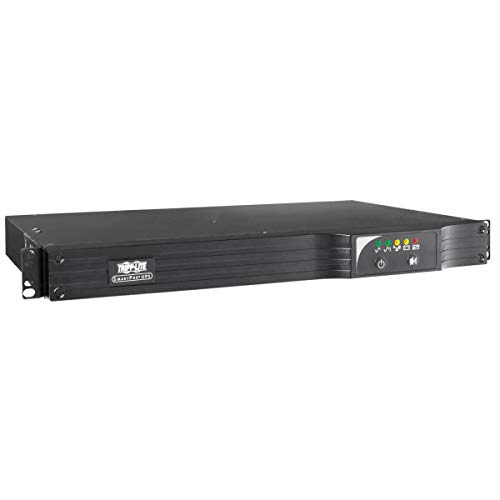
- 500VA/300W 1U rackmount design
- 11.8-inch depth with AVR
- USB, RS232, EPO, and optional SNMP/Web card
Best For: Low-power devices and space-constrained remote installations
Compact Network Protection
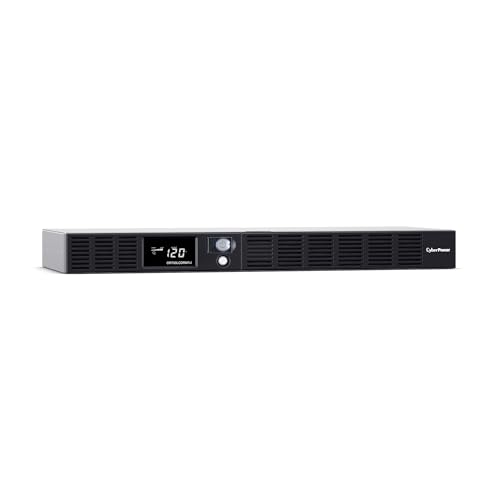
- 700VA/400W capacity in a 1U rackmount design
- AVR and multifunction LCD status panel
- Four battery-backup and two surge-only outlets
Best For: Small servers and network devices with moderate power demands
High-Capacity Online Protection

- 2000VA/1800W online double-conversion protection
- Included Gigabit network card for remote control
- 2U rack/tower design with extended-run support
Best For: Business-critical racks with higher loads and managed power needs
High-Output 1U Backup
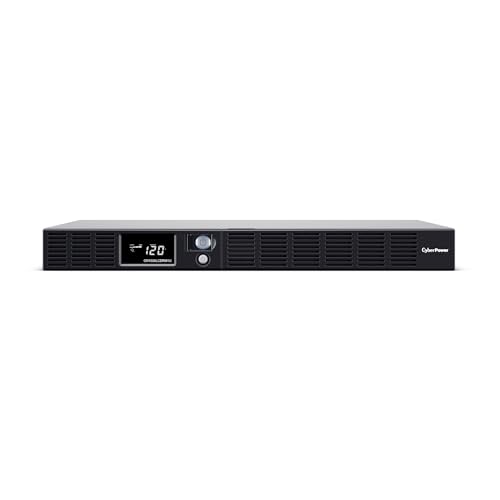
- 1500VA/900W capacity in a 1U rackmount chassis
- AVR, LCD monitoring, and four battery-backed outlets
- Three-year warranty includes the batteries
Best For: Compatible rack equipment needing more 1U capacity
Best Cloud-Managed Pick
Eaton Tripp Lite SMART1500LCDXNC

- 2U rackmount UPS with 1050W output
- Cloud monitoring and Brightlayer app control
- Replaceable battery with optional expansion
Best For: Small business racks needing remote management and runtime flexibility
Best Compact Lithium-Ion Option

- Space-saving 1U short-depth rack design
- Lithium-ion battery with 10-year average life
- Remote monitoring through SmartConnect
Best For: Compact network racks with lighter power demands
Best Simple Pick

- 1500VA/1000W pure sine-wave output
- 2U rackmount design with included rails
- AVR and SmartConnect remote monitoring
Best For: Business racks running servers and sensitive network equipment
Best Overall – APC Smart-UPS 1500VA Rackmount UPS
The APC Smart-UPS SMC1500-2UC is a strong all-around choice for rackmount rack UPS systems, combining 1500VA/900W capacity, pure sine wave output, automatic voltage regulation, and a 2U rackmount design. Its SmartConnect remote monitoring can help administrators track UPS status through a secure portal.
Best For: Servers, storage, and network closets needing monitored 120V battery backup in a standard 2U rack space.
Pros:
- 1500VA/900W capacity with pure sine wave output
- AVR helps correct high and low voltage without relying on battery power
- Includes rack support rails and six NEMA 5-15R outlets
- SmartConnect supports notifications, firmware updates, and remote monitoring
Cons:
- Provides fewer outlets than some competing models
- SmartConnect features purchased or registered after August 1, 2023 begin with a six-month free trial
- Its 17.3-inch depth may not suit very short racks
With a metal enclosure, LCD, pure sine wave output, and remote-management option, this APC model is a balanced pick when dependable rack installation and visibility matter more than maximum outlet count.
Best Short-Depth Pick – CyberPower CP1500PFCRM2U UPS
The CyberPower CP1500PFCRM2U stands out among rackmount rack UPS systems because its 10.5-inch depth fits short-depth racks. It supplies 1500VA/1000W of PFC sinewave battery backup, includes eight outlets, and uses a color LCD to show power and battery conditions.
Best For: Short-depth rack installations supporting networking equipment, security systems, audio/visual devices, and active-PFC power supplies.
Pros:
- Short 10.5-inch depth is useful where rack space is limited
- 1500VA/1000W PFC sinewave output supports active-PFC and conventional power supplies
- Eight NEMA 5-15R outlets provide battery backup and surge protection
- Three-year warranty includes the battery
Cons:
- Listed runtime is approximately three minutes
- Battery charge time is listed as eight hours
- Plastic enclosure may be less rugged than a metal rackmount chassis
This CyberPower is a practical space-saving option, especially when a standard-depth 2U UPS would not fit. Its LCD, AVR, sinewave output, and generous outlet count add useful flexibility for compact installations.
Best High-Capacity APC – APC Smart-UPS RM 1440VA Rackmount UPS
APC MAIN-62525 Smart-UPS RM SMT1500RM2U 1000W/1440VA 2U Rackmount LCD UPS System
Check Price On AmazonThe APC SMT1500RM2U provides 1440VA/1000W of capacity in a 2U rackmount chassis, making it a capable option among rackmount rack UPS systems for equipment with higher power demands. It delivers sine wave output, six NEMA 5-15R outlets, a 3-hour recharge time, and USB plus SmartSlot connectivity.
Best For: Rack servers and network equipment that need 1000W of 120V UPS capacity with management expansion options.
Pros:
- 1440VA/1000W output capacity
- Sine wave output with up to a 5:1 crest factor
- USB and SmartSlot communications support
- Typical recharge time is listed as three hours
Cons:
- At 63 pounds, it is substantially heavier than several alternatives
- Only six output outlets are provided
- The supplied notes list approximately five minutes of runtime
This model makes sense when 1000W output and expansion-friendly communications are priorities. Its heavier chassis and 2U form factor should be considered before installation, particularly in equipment racks with limited weight capacity.
Best Compact 1U Model – Tripp Lite SMART500RT1U UPS
The Tripp Lite SMART500RT1U is a compact 1U choice for rackmount rack UPS systems, providing 500VA/300W of line-interactive backup in an 11.8-inch-deep chassis. It adds AVR, USB and RS232 monitoring, EPO support, and an optional SNMP/Web card for remote management.
Best For: Low-power network devices, remote applications, and installations where a 1U footprint and short depth are important.
Pros:
- Compact 1U rack/tower design with 11.8-inch installed depth
- AVR corrects brownouts without using battery power
- USB, RS232, EPO, and optional SNMP/Web card support
- One outlet can be individually controlled for load shedding
Cons:
- 300W capacity is lower than the other listed UPS systems
- Listed runtime is approximately three minutes
- Battery charge time is listed as 12 hours
This Tripp Lite is best viewed as a space-efficient backup unit for modest loads rather than a high-capacity server UPS. Its 1U format, management connections, and load-shedding outlet make it useful for compact or remote deployments.
Compact Network Protection – CyberPower OR700LCDRM1U
For smaller servers, network devices, and telecom installations, this 700VA/400W unit is a practical rackmount rack ups systems option. Its 1U design, AVR, LCD status panel, and four battery-backed outlets provide useful protection where rack space and moderate power capacity matter.
Best For: Small departments, workgroup servers, and network equipment without Active PFC power supplies.
Pros:
- Compact 1U rackmount form factor with metal enclosure
- AVR corrects minor voltage fluctuations without using battery power
- LCD shows runtime, battery status, and power conditions
- Three-year warranty includes the batteries
Cons:
- 400W capacity is intended for lighter equipment loads
- Uses simulated sine wave output
- Remote management requires the optional RMCARD205
The OR700LCDRM1U is a sensible space-saving choice for modest rack loads. Its four battery-backup outlets and 3-minute stated runtime are better suited to orderly shutdown and short interruptions than extended outage operation.
High-Capacity Online Protection – Eaton 9PX 2000VA Online UPS
For demanding infrastructure, the Eaton 9PX provides 2000VA/1800W of capacity in a 2U rack/tower chassis. Its online double-conversion design, network card, switched outlet banks, and extended-run support make it a strong rackmount rack ups systems choice for equipment that needs detailed monitoring and managed power control.
Best For: Business-critical racks requiring online power conditioning, remote management, and load-shedding control.
Pros:
- Online double-conversion UPS with 1800W output capacity
- Included NETWORK-M2 Gigabit card enables remote access and control
- Switched outlet banks support managed load shedding
- Optional extended battery modules can increase runtime
Cons:
- Larger and heavier than the 1U CyberPower models
- Two-year manufacturer warranty is shorter than the CyberPower warranty
- Its listed output voltage details should be verified for the intended installation
The 9PX is the most capable option here for larger loads and managed environments. Choose it when online power protection and network control justify the added 2U size and 60.1-pound weight.
High-Output 1U Backup – CyberPower OR1500LCDRM1U
When a compact rack needs more capacity than a small 700VA backup can provide, the CyberPower OR1500LCDRM1U delivers 1500VA/900W in a 1U chassis. It combines AVR, an LCD panel, four battery-backed outlets, and a 10-foot input cord for practical protection of servers, network devices, and telecom equipment without Active PFC power supplies.
Best For: Rack users needing higher output in a 1U footprint for compatible moderate-power equipment.
Pros:
- 900W output capacity in a compact 1U rackmount form
- AVR reduces battery use during minor power fluctuations
- LCD reports runtime, battery status, and power conditions
- Three-year warranty includes the batteries
Cons:
- Uses simulated sine wave output
- Remote management requires the optional RMCARD205
- Listed runtime is 2 minutes, so it is primarily for brief interruptions or shutdown time
The OR1500LCDRM1U is a strong middle ground among these rackmount rack ups systems: substantially more output than the OR700 while retaining a 1U footprint. Confirm equipment compatibility with its simulated sine wave output before buying.
Best Cloud-Managed Pick – Eaton Tripp Lite SMART1500LCDXNC
The Eaton Tripp Lite SMART1500LCDXNC is a practical choice for rackmount rack ups systems when you need 1500VA capacity, automatic voltage regulation, and remote visibility. Its 2U design, replaceable battery, cloud monitoring, and optional external battery support make it well suited to small network and server racks.
Best For: Small businesses and IT administrators who want cloud monitoring, configurable alerts, and extended-runtime flexibility.
Pros:
- 2U rackmount design with eight UPS-backed outlets and a 5-foot power cord.
- AVR corrects input voltage back to 120V without relying on battery power for every fluctuation.
- Cloud portal and Brightlayer app support remote monitoring, alerts, alarm control, and outlet-bank management.
- User-replaceable internal battery and compatibility with an optional external battery module.
Cons:
- External battery module is sold separately.
- At 26.5 pounds, it is relatively substantial for a rack UPS.
- Its listed runtime is two minutes, so connected load has a major effect on backup time.
Choose this model when centralized management and serviceability matter as much as basic battery backup. The three-year warranty and connected-equipment coverage add reassurance for business deployments.
Best Compact Lithium-Ion Option – APC Smart-UPS SCL500RM1UC
The APC SCL500RM1UC is a space-saving option among rackmount rack ups systems, using a 1U rackmount chassis and lithium-ion battery. With 500VA/400W capacity, four outlets, sine-wave output, and a short-depth design, it fits lower-power networking and IT equipment where rack space is limited.
Best For: Compact network racks and edge installations with modest power requirements and a preference for lithium-ion battery technology.
Pros:
- 1U rackmount form factor with a 9.13-inch depth for space-constrained cabinets.
- Lithium-ion battery has a listed average life of 10 years.
- SmartConnect provides remote monitoring, notifications, firmware updates, and support services.
- LED indicators show operating, battery, network, event, and replacement-battery status.
Cons:
- 500VA/400W capacity is intended for lighter loads than 1500VA rack UPS models.
- Only four NEMA 5-15R output outlets are provided.
- SmartConnect is listed as a six-month free trial for units purchased or registered after August 1, 2023.
This APC is a strong fit when cabinet space and battery longevity are priorities. Verify the connected load carefully, since its 400W maximum output is better suited to networking equipment and other modest systems than to a larger server stack.
Best Simple Pick – APC Smart-UPS SMT1500RM2UC
The APC SMT1500RM2UC is a conventional 2U line-interactive choice for rackmount rack ups systems requiring 1500VA capacity and pure sine-wave output. Its AVR, six outlets, rack rails, and SmartConnect monitoring make it a practical fit for servers, networking equipment, and other business-critical rack loads.
Best For: Small server rooms and network racks needing 1500VA/1000W capacity, sine-wave output, and managed monitoring.
Pros:
- 1500VA/1000W pure sine-wave output supports a broad range of rack equipment.
- AVR adjusts high and low input voltage to help reduce unnecessary battery use.
- SmartConnect offers secure-portal monitoring, automatic notifications, firmware updates, and advanced support services.
- Includes rack-mount support rails and six NEMA 5-15R outlets.
Cons:
- Its 2U chassis uses more rack space than a 1U UPS.
- SmartConnect is listed as a six-month free trial for units purchased or registered after August 1, 2023.
- The supplied specifications list a two-year manufacturer warranty.
For installations that need more capacity than a compact UPS can provide, this APC combines 1500VA output with familiar line-interactive protection and remote management. Its included rails simplify rack installation, while the pure sine-wave output suits sensitive equipment.
How We Picked the Best Rackmount Rack Ups Systems
We evaluated these Rackmount Rack Ups Systems by looking at the factors that matter most in real installations: usable watt capacity, VA rating, rack height, power topology, outlet configuration, runtime options, monitoring, and manageability. The selection includes compact 1U units for networking and edge deployments, higher-capacity 2U models for servers and storage, and online double-conversion designs for equipment that needs consistently conditioned power.
We also considered practical details such as sine-wave output, automatic voltage regulation, SmartConnect or network-card support, extended-run compatibility, display controls, and whether a model is suitable for short-depth cabinets. Always confirm current specifications, battery availability, and mounting hardware before purchase.
Quick Comparison
- Best for general server racks: A 1500VA line-interactive 2U UPS offers a strong balance of capacity, monitoring, and cost.
- Best for compact installations: A 1U model saves rack space for network closets, edge cabinets, and small equipment stacks.
- Best for sensitive loads: An online double-conversion UPS provides the cleanest and most consistent output.
- Best for longer outages: Choose a compatible extended-runtime model and size the battery system for the required runtime.
- Best for reduced maintenance: Lithium-ion designs can offer longer battery life, lower weight, and improved operating efficiency.
Key Buying Factors for Rackmount Rack Ups Systems
Capacity and Load
Compare both VA and watt ratings, but size the UPS by watts first. Add the actual draw of servers, switches, storage, and accessories, then leave room for startup demand and future expansion. A UPS running near its maximum rating may provide less runtime and less flexibility.
Topology and Output Quality
Line-interactive models use AVR to correct common voltage fluctuations efficiently and are suitable for many offices and server rooms. Online double-conversion units continuously regenerate power and are preferable for highly sensitive, mission-critical, or electrically noisy environments. For modern active-PFC power supplies, verify that the UPS provides sine-wave output.
Rack Fit and Connections
Check whether the unit is 1U or 2U, its depth and weight, rail requirements, and front- or rear-access battery design. Count the protected outlets and confirm plug types, circuit requirements, and whether the outlet layout works with bulky power adapters.
Runtime and Management
Runtime depends on load, battery age, and operating conditions. If shutdown time or sustained backup is important, choose extended-run support rather than relying on a basic internal battery. USB, serial, network cards, cloud monitoring, graceful shutdown software, and alerting can be just as important as raw capacity.
Who Should Buy Which Rackmount Rack Ups Systems?
Home labs and small network racks should prioritize compact 1U units, sine-wave output, quiet operation, and straightforward USB or network monitoring. Small and midsize businesses will usually benefit from a 1500VA-class line-interactive 2U model with AVR and manageable battery replacement. Enterprise and critical infrastructure buyers should consider online double-conversion protection, network management, extended-runtime batteries, and service support. Space-constrained or frequently serviced installations may favor lithium-ion UPS models because of their lower weight and potentially longer battery service life.
Before ordering, calculate the measured load, required runtime, available rack depth, and circuit capacity. Then select the smallest UPS that comfortably meets those requirements with expansion headroom; oversizing unnecessarily can increase cost without delivering a practical benefit.