The right network switch can make a streaming audio system easier to expand, troubleshoot, and integrate with wired streamers, music servers, NAS devices, and multi-room components.
We selected 10 options spanning compact gigabit switches, multi-gigabit models, managed systems, SFP-equipped designs, and audio-focused hardware so you can match features to your setup without overspending.
Best 10 Network Switches for Audio Streaming Picks for 2026
Best Audiophile-Focused Pick

- Audio-focused 1Gbps switch
- Two Ethernet and two SFP ports
- USB-C power with low-noise design
Best For: Compact Hi-Fi streaming systems
Best Silent Multi-Gig Value

- Eight 2.5Gbps RJ45 ports
- Fanless and silent operation
- Plug-and-play desktop or wall mount
Best For: Quiet multi-device home entertainment networks
Best Managed Fiber-Ready Core

- 16-port managed Layer 3 switch
- 1U rack-mount metal chassis
- Designed for servers and storage
Best For: Larger rack-based audio and media networks
Best High-Bandwidth Upgrade

- Eight 10Gbps/multi-gig ports
- Up to 160Gbps switching capacity
- Plug-and-play metal desktop/rack design
Best For: High-speed audio and media networks
Flexible Managed Expansion

- 16 Gigabit Ethernet ports
- Two SFP+ expansion ports
- Managed design in a metal case
Best For: Larger wired audio and media networks
Quiet Plug-and-Play Value

- Eight Gigabit RJ45 ports
- Fanless and quiet operation
- Unmanaged plug-and-play setup
Best For: Small, noise-sensitive audio streaming systems
High-Speed Managed Connectivity

- Eight 2.5 Gigabit Ethernet ports
- Two SFP+ cages
- RouterOS L5 managed platform
Best For: Advanced, high-speed home media networks
Best High-Capacity Pick
NETGEAR 16-Port Gigabit Switch

- 16 auto-negotiating 1Gbps ports
- Fanless, silent metal design
- Plug-and-play setup with desktop or wall mounting
Best For: Larger wired audio systems needing room for expansion
Best Managed Option
TP-Link 8-Port Easy Smart Switch
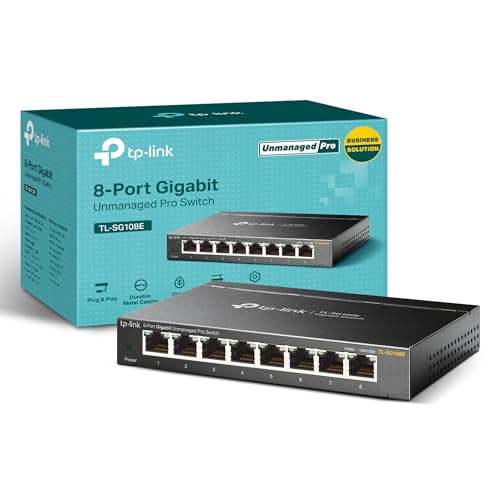
- Eight gigabit Ethernet ports
- QoS, VLAN, IGMP snooping, and monitoring
- Compact metal desktop or wall-mount design
Best For: Audio networks needing traffic control and segmentation
Best Compact Pick
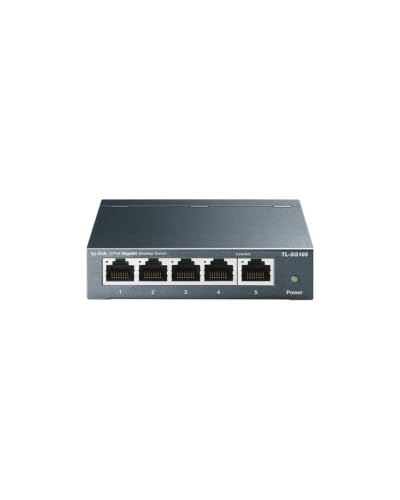
- Five gigabit RJ45 ports
- Fanless metal housing for quiet operation
- Plug-and-play with QoS and IGMP snooping
Best For: Small, simple audio networks with limited wired devices
Best Audiophile-Focused Pick – ARSY NSW-1
For listeners seeking network switches for audio streaming, the ARSY NSW-1 is purpose-built for Hi-Fi systems. It combines two 1Gbps Ethernet ports with two 1Gbps SFP ports, USB-C power, and design features intended to support stable, low-interference digital audio transmission.
Best For: Audiophiles building a compact Hi-Fi streaming setup with Ethernet and fiber connectivity.
Pros:
- Audio-focused design with low-noise power supplies and a precision clock.
- Includes two 1Gbps Ethernet ports and two 1Gbps SFP ports.
- SFP connectivity can provide electrical isolation when used with fiber modules.
- USB-C power allows compatibility with an upgraded low-noise power supply.
Cons:
- Only four total ports are available.
- All network connections are limited to 1Gbps.
- Its audio-specific features may be unnecessary for ordinary home networking.
The NSW-1 is a specialized choice rather than a general-purpose switch. Its compact port count and audio-oriented construction make it most compelling when minimizing interference and integrating fiber links are priorities.
Best Silent Multi-Gig Value – TP-Link TL-SG108S-M2
The TP-Link TL-SG108S-M2 is a practical option among network switches for audio streaming when you need several fast wired connections. Its eight 2.5Gbps ports, automatic speed negotiation, and fanless design suit home entertainment systems and other quiet environments.
Best For: Multi-device home audio and entertainment networks that need silent operation and 2.5Gbps capacity.
Pros:
- Eight 2.5Gbps ports provide up to 40Gbps of switching capacity.
- Auto-negotiates between 100Mbps, 1Gbps, and 2.5Gbps links.
- Fanless construction supports silent operation near listening areas.
- Plug-and-play desktop or wall-mount installation is straightforward.
Cons:
- It is an unmanaged switch with no listed traffic-management features.
- Ports use RJ45 connections only, without SFP support.
- The plastic case may feel less substantial than metal alternatives.
This switch does not add audio-specific clocking or power features, but its quiet fanless operation and ample port count make it a sensible general-network choice for streaming systems and connected home entertainment devices.
Best Managed Fiber-Ready Core – MikroTik CRS317-1G-16S+RM
The MikroTik CRS317-1G-16S+RM is aimed at users who need a rack-mounted, managed network core rather than a simple desktop switch. With 16 ports, Layer 3 capability, and a 1U metal chassis, it can support larger audio streaming networks built around servers and storage devices.
Best For: Rack-based audio systems with multiple servers, storage devices, and managed-network requirements.
Pros:
- Provides 16 ports for larger wired installations.
- Managed Layer 3 design offers more control than an unmanaged switch.
- 1U rack-mount form factor fits structured network equipment setups.
- Metal construction and compatibility with servers and storage devices suit core-network use.
Cons:
- The supplied notes do not list audio-specific noise-reduction features.
- Its rack-oriented design may be excessive for a small home streaming system.
- The listed interface details do not identify standard RJ45 data ports; verify compatibility with your equipment.
The CRS317 makes the most sense when an audio network is part of a broader rack installation. It offers capacity and management potential, but it is less plug-and-play and less audio-specialized than the other options here.
Best High-Bandwidth Upgrade – TP-Link TL-SX1008
For demanding home networks, the TP-Link TL-SX1008 brings eight 10Gbps/multi-gig ports to a setup using high-speed storage, computers, or access points. It is a strong general-purpose candidate among network switches for audio streaming when substantial bandwidth and expansion room matter.
Best For: High-bandwidth audio and media networks with 10Gbps-capable NAS devices, computers, or infrastructure.
Pros:
- Eight 10Gbps ports provide up to 160Gbps of switching capacity.
- Auto-negotiates across 100Mbps, 1Gbps, 2.5Gbps, 5Gbps, and 10Gbps.
- Plug-and-play setup requires no software installation or configuration.
- Metal casing supports desktop or rack-mount placement.
Cons:
- It has no audio-specific clock, power, or interference-control features listed.
- Its capacity may be unnecessary for a basic streaming-only system.
- The smart fan may produce more noise than a fully fanless design.
The TL-SX1008 is best viewed as a fast infrastructure upgrade rather than an audiophile accessory. Its broad speed compatibility and 10Gbps ports provide useful headroom for systems combining streaming audio with large media libraries or network storage.
Flexible Managed Expansion – MikroTik CSS318-16G-2S+IN
MikroTik CSS318-16G-2S+in Managed Network Switch, 16 Gigabit Ethernet Ports, 2 SFP+ Ports
Check Price On AmazonThe MikroTik CSS318-16G-2S+IN is a strong option for network switches for audio streaming when you need many wired connections and managed-switch functionality. It provides 16 Gigabit Ethernet ports plus two SFP+ ports in a metal case.
Best For: Larger wired audio systems, media networks, and setups needing managed connectivity with SFP+ expansion.
Pros:
- Offers 16 Gigabit Ethernet ports for multiple connected devices.
- Includes two SFP+ ports for compatible network expansion.
- Managed switch design supports more configurable network installations.
- Metal construction and a stated upper temperature rating of 70 °C.
Cons:
- Managed features may be more than a simple plug-and-play setup requires.
- No warranty is listed in the supplied specifications.
- Its 16-port format may be excessive for a small audio system.
Choose this model when port capacity and expansion options matter more than simplicity. For a compact streaming setup with only a few devices, a smaller unmanaged switch may be easier to deploy.
Quiet Plug-and-Play Value – TP-Link TL-SG108
The TP-Link TL-SG108 is a practical pick among network switches for audio streaming if you want straightforward wired expansion without configuration. Its eight Gigabit RJ45 ports, fanless design, and metal housing suit quiet home or studio environments.
Best For: Small audio streaming systems, home offices, bedrooms, and other noise-sensitive spaces needing simple wired connectivity.
Pros:
- Eight RJ45 ports support 10/100/1000 Mbps connections.
- Plug-and-play unmanaged operation requires no configuration.
- Fanless design supports silent operation in noise-sensitive rooms.
- Metal housing and shielded ports help with durability and interference protection.
Cons:
- It is unmanaged, so it lacks the configuration options of managed models.
- It has no SFP or SFP+ ports for fiber expansion.
- The supplied specifications list a 40 °C upper temperature rating.
For most smaller wired audio setups, the TL-SG108 keeps installation simple and quiet while providing ample Gigabit ports. It is less suitable when you need advanced management or more than eight Ethernet connections.
High-Speed Managed Connectivity – MikroTik CRS310-8G+2S+IN
The MikroTik CRS310-8G+2S+IN targets network switches for audio streaming where faster wired links and managed control are useful. It combines eight 2.5 Gigabit Ethernet ports with two SFP+ cages, plus RouterOS L5, 256 MB of RAM, and an 800 MHz CPU.
Best For: Advanced home media networks and audio systems using multiple 2.5 Gigabit devices or SFP+ connections.
Pros:
- Provides eight 2.5 Gigabit Ethernet ports.
- Includes two SFP+ cages for compatible high-speed connections.
- Managed switch design with RouterOS L5 offers an advanced platform.
- Lists 48 Gbps data transfer rate in the supplied specifications.
Cons:
- Managed functionality may require more setup than an unmanaged switch.
- Its advanced features may be unnecessary for a basic streaming network.
- Only eight Ethernet ports are listed.
This is the most performance-oriented choice in the group, particularly for networks built around 2.5 Gigabit equipment and SFP+ links. Consider it when you can use its higher-speed interfaces and managed capabilities rather than paying for features you will not configure.
Best High-Capacity Pick – NETGEAR 16-Port Gigabit Switch
For larger home audio systems, the NETGEAR GS316v3 is a practical choice among network switches for audio streaming. Its 16 gigabit Ethernet ports provide room for streamers, receivers, computers, smart-home devices, and future additions without requiring immediate expansion.
Best For: Multi-device audio networks that need plenty of wired connections and quiet operation.
Pros:
- Sixteen 1Gbps ports support multiple wired audio and network devices.
- Fanless design provides silent operation near listening areas.
- Plug-and-play setup requires no software or configuration.
- Desktop or wall mounting and 802.3az energy efficiency add installation flexibility.
Cons:
- As an unmanaged switch, it does not provide web-based traffic configuration.
- Its larger 16-port housing may be more capacity than a small system needs.
- The supplied regional compatibility is limited to U.S. and Canada.
The GS316v3 is a straightforward expansion switch for a growing wired audio setup. Its silent metal housing and generous port count make it especially suitable when reliability and connection capacity matter more than advanced management controls.
Best Managed Option – TP-Link 8-Port Easy Smart Switch
The TP-Link TL-SG108E is a strong option for shoppers comparing network switches for audio streaming who want more control than a basic unmanaged model provides. Its eight gigabit ports are paired with VLAN, QoS, IGMP snooping, monitoring, and link-aggregation features.
Best For: Audio networks where traffic management, multicast support, or device segmentation is useful.
Pros:
- Eight 10/100/1000Mbps ports support high-speed wired connections.
- QoS can help optimize traffic for latency-sensitive applications.
- VLAN support, IGMP snooping, port mirroring, and cable diagnostics add management flexibility.
- Sturdy metal construction with shielded ports supports desktop or wall installation.
Cons:
- Advanced features require management through a web interface or free software.
- Eight ports provide less expansion capacity than a 16-port switch.
- It may be more configuration than a simple plug-and-play audio setup requires.
The TL-SG108E is the most configurable choice in this group. It makes sense for systems that include multiple network services or multicast applications, while still offering a compact metal enclosure and standard gigabit connectivity.
Best Compact Pick – TP-Link 5-Port Gigabit Switch
The TP-Link TL-SG105 is a compact, uncomplicated choice for smaller systems evaluating network switches for audio streaming. Five gigabit ports provide a simple way to connect an audio streamer, network storage, computer, or other wired device without software installation or configuration.
Best For: Small audio setups that need a quiet, space-saving wired switch.
Pros:
- Five 10/100/1000Mbps ports support gigabit connections.
- Fanless metal design operates quietly near listening equipment.
- Plug-and-play installation requires no software or setup.
- Traffic optimization features include 802.1p/DSCP QoS and IGMP snooping.
Cons:
- Five ports leave limited room for additional devices.
- It is an unmanaged switch, so it lacks the configuration options of a smart model.
- The supplied details list a two-year warranty, shorter than some competing warranty claims in this group.
With its small footprint, quiet operation, and gigabit ports, the TL-SG105 is well suited to a basic listening-room network. Choose it when you want straightforward expansion without paying for a larger enclosure or advanced management interface.
How We Picked the Best Network Switches for Audio Streaming
We evaluated these switches by looking at port count, link speed, management features, fan noise, physical design, expansion potential, and installation flexibility. For most audio systems, a stable wired connection matters more than specialized audio claims, so we prioritized dependable Ethernet performance and practical home-network features.
We also included a range of hardware: simple unmanaged switches for plug-and-play installations, smart-managed models for VLAN and QoS control, multi-gigabit switches for modern networks, and SFP or SFP+ options for fiber or high-speed uplinks.
Quick Comparison
- Best for simple systems: A five- or eight-port unmanaged gigabit switch is usually sufficient for one streamer, music server, television, and a few other wired devices.
- Best for expansion: A 16-port gigabit model provides room for multiple listening zones, access points, NAS hardware, and smart-home equipment.
- Best for high-speed networks: Multi-gigabit and 10GbE switches make sense when your router, NAS, workstation, or internet service already supports faster-than-gigabit links.
- Best for advanced setups: Managed switches add VLANs, traffic controls, monitoring, and configuration options, but they require more networking knowledge.
- Best for a dedicated audio rack: An audio-focused model may appeal if its compact design, isolation features, or SFP connectivity suit your system, but compatibility and reliability should remain the priorities.
Key Buying Factors for Network Switches for Audio Streaming
Port Speed and Capacity
Gigabit Ethernet is enough for lossless music streaming and most home media systems. Choose 2.5GbE or 10GbE when you need faster file transfers, high-resolution video, a NAS connection, or a high-speed backbone between network devices. Count current connections and leave several spare ports for future upgrades.
Unmanaged Versus Managed Operation
Unmanaged switches work immediately with virtually no setup. Smart-managed and fully managed switches can support VLANs, QoS, link monitoring, and more precise network segmentation. These features can help complex systems, but they can also create configuration problems if set incorrectly.
Noise, Heat, and Placement
Fanless metal switches are attractive for listening rooms because they operate quietly and generally shed heat passively. Rackmount models and higher-speed switches may use active cooling, so check noise specifications before placing one near a listening position.
Uplinks and Compatibility
SFP and SFP+ ports can provide fiber or high-speed uplinks, depending on the transceiver and cable used. Confirm that the switch, transceiver, router, and network endpoints support the same standard before buying.
Who Should Buy Which Network Switches for Audio Streaming?
Choose a compact unmanaged gigabit switch if you want the simplest way to add wired connections to a streamer or music system. Pick a 16-port model if several rooms or network devices share one central location. A multi-gigabit switch is worthwhile for fast NAS transfers or an upgraded wired backbone, while a managed MikroTik or TP-Link model suits users who need VLANs, monitoring, or detailed traffic control. Consider an audio-oriented switch only after confirming that its port selection, uplink options, and installation format match the rest of your network.