The best memory card readers make it easier to move photos, videos, and other files between cards and modern devices. The right model can also reduce cable clutter by combining multiple card slots or USB ports in one compact adapter.
We selected 10 options covering USB-C laptops and phones, older USB-A computers, camera-friendly CF support, simultaneous card access, and straightforward everyday transfers.
Best 10 Memory Card Readers Picks for 2026
Best All-Around Choice
BENFEI 4-in-1 USB-C/USB 3.0 Card Reader

- Reads SD, microSD, MS, and CF cards
- Supports four cards simultaneously
- USB-C and USB 3.0 connectivity
Best For: Multi-format card users and photographers
Best Compact Option
UGREEN USB-C and USB 3.0 SD Card Reader

- Compact design for travel
- Reads SD and microSD simultaneously
- USB-C and USB-A interfaces
Best For: Mobile photographers and everyday SD transfers
Best for Extra Connectivity
5-in-1 USB-C Card Reader with Dual USB-A
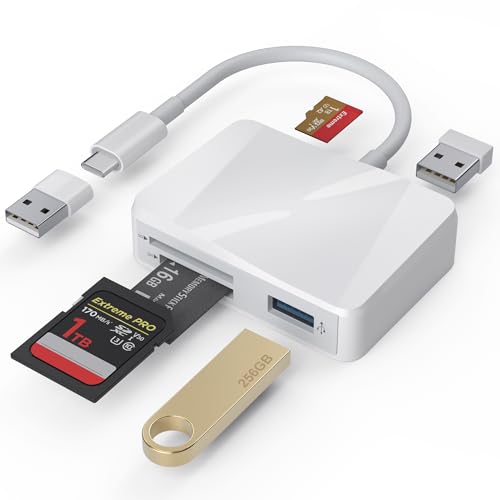
- Includes SD, microSD, and MS slots
- Adds two USB-A ports
- Works with USB-C and USB-A hosts
Best For: Users needing card access and USB-A expansion
Best Traditional USB Choice
SmartQ C368 USB 3.0 Card Reader

- Supports four major card formats
- USB 3.0 plug-and-play operation
- Includes a blue status LED
Best For: USB-A computers and multi-format card transfers
Best USB-C 3-in-1 Pick

- SD, microSD, and USB 3.0 connectivity
- Up to 5Gbps transfers
- Compact aluminum design with plug-and-play setup
Best For: USB-C users needing card slots and an extra USB 3.0 port
Best Multi-Format Hub
UGREEN 4-Slot USB 3.0 Card Reader
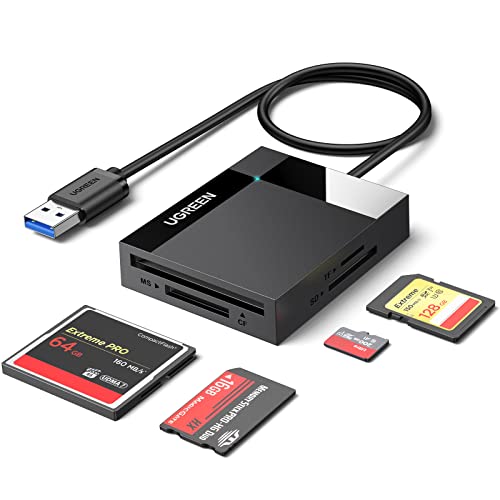
- Supports SD, microSD, CF, and Memory Stick
- Reads and writes four cards simultaneously
- USB 3.0 speeds up to 5Gbps
Best For: Photographers handling several card types or cards at once
Best Ultra-Compact Option
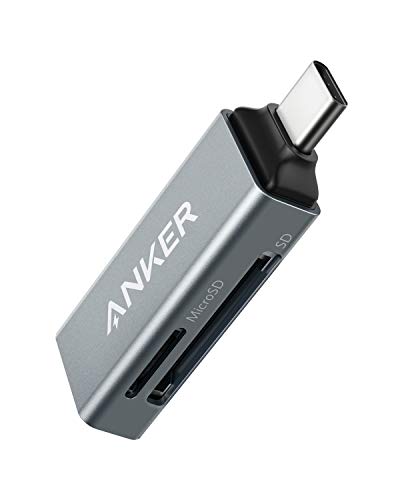
- Standard SD and microSD slots
- Up to 5Gbps transfer rates
- Lightweight 9-gram USB-C design
Best For: Mobile USB-C users who need simple SD and microSD transfers
Most Versatile
7-in-1 Multi-Format Card Reader

- Seven slots cover CF, SD, microSD, XD, and MS formats.
- USB-C and USB-A connectors support varied devices.
- Reads and writes up to five cards simultaneously.
Best For: Multi-format workflows and users managing several memory cards
Best Dual-Header Pick
Acer USB-C Dual-Slot Card Reader

- Reads and writes SD and microSD cards simultaneously.
- USB-C and USB-A headers suit newer and older devices.
- Compact aluminum design includes protective covers.
Best For: Portable SD and microSD transfers across laptops, phones, and tablets
Best Simple Value
Wansurs 2-in-1 USB 3.0 Card Reader

- Supports SD and microSD cards through two slots.
- Offers USB 3.0 transfers up to 5Gbps.
- Compact design includes a two-year warranty.
Best For: Basic SD-family file transfers and portable USB-A use
Best All-Around Choice – BENFEI 4-in-1 USB-C/USB 3.0 Card Reader
If you need versatile memory card readers for a mix of older and newer devices, the BENFEI 4-in-1 model is a practical option. Its USB-C and USB 3.0 connectivity supports SD, microSD, MS, and CF cards, while four cards can be read simultaneously.
Best For: Photographers and users who work with several card formats across USB-C and USB-A computers.
Pros:
- Supports SD, microSD, MS, and CF cards
- USB-C and USB 3.0 connectivity in one design
- Can read and write four cards at the same time
- Up to 160MB/sec in UHS-I mode, depending on the card and port
Cons:
- Not compatible with standard Memory Stick, Memory Stick Micro, or CF Type I
- Older operating systems may not support exFAT SDXC cards
With broad format support, simultaneous card handling, and an 18-month warranty, this reader is a strong fit for multi-card workflows. Keep the stated speed and compatibility limitations in mind before buying.
Best Compact Option – UGREEN USB-C and USB 3.0 SD Card Reader
The UGREEN is one of the more portable memory card readers for photographers, travelers, and content creators. It combines USB-C and USB-A connections in a slim design and can read SD and microSD cards simultaneously.
Best For: On-the-go transfers from cameras, GoPros, dash cams, and other SD or microSD devices.
Pros:
- USB-C and USB-A interfaces support a wide range of devices
- Reads SD and microSD cards at the same time
- Plug-and-play operation requires no drivers or external power
- USB 3.0 supports transfer speeds up to 5Gbps
Cons:
- Supports SD and microSD formats rather than CF or Memory Stick cards
- Actual transfer performance depends on the card and connected device
This reader emphasizes portability and straightforward connectivity. Its two-card design is convenient for quick transfers, while the 24-month warranty adds reassurance for regular travel use.
Best for Extra Connectivity – 5-in-1 USB-C Card Reader with Dual USB-A
This 5-in-1 model is designed for users who want memory card readers with added USB connectivity. It offers USB-C and USB-A host connections, SD, microSD, and MS card slots, plus two USB-A ports for compatible peripherals and storage devices.
Best For: iPhone, iPad, MacBook, Android, and PC users who need card access alongside USB-A ports.
Pros:
- USB-C connection includes a detachable USB adapter
- Supports SD, microSD, and MS card formats
- Includes two USB-A ports for devices such as flash drives or keyboards
- Plug-and-play support across Windows, macOS, Chrome, and Linux
Cons:
- The supplied details do not specify a complete transfer-speed rating
- Compatibility and performance may vary by device, card, and operating system
Its combination of card slots and dual USB-A ports makes it more flexible than a basic card reader. It is especially useful when connecting modern USB-C devices to older USB accessories, though buyers should verify their exact device compatibility.
Best Traditional USB Choice – SmartQ C368 USB 3.0 Card Reader
The SmartQ C368 is a straightforward USB-A option among memory card readers. Its four-in-one design supports SD, microSD, MS, and CF cards, and its independent card reading makes it useful for common camera and computer workflows.
Best For: Windows, Mac, and Linux users who want a traditional USB 3.0 reader for multiple card formats.
Pros:
- Supports SD, microSD, MS, and CF cards
- USB 3.0 transfer speeds up to 5Gbps
- Plug-and-play compatibility with Windows, Mac OS, and Linux
- Blue LED indicates the reader’s powered status
Cons:
- Uses USB-A rather than USB-C
- Does not include a memory card
- Cards are read independently rather than simultaneously
This reader keeps the setup simple while covering several legacy and current card formats. It is a sensible choice for USB-A computers, but users with newer USB-C-only devices may need an adapter.
Best USB-C 3-in-1 Pick – Acer 3-in-1 USB-C Card Reader
The Acer 3-in-1 is a practical choice among memory card readers for USB-C laptops, tablets, and compatible smartphones. It combines SD and microSD slots with a USB 3.0 port, supports transfer speeds up to 5Gbps, and uses a compact aluminum housing for portability and heat dissipation.
Best For: USB-C users who want card access plus an extra USB-A peripheral port in one compact reader.
Pros:
- Reads SD and microSD cards while also supporting a USB 3.0 device connection.
- Supports data transfer rates up to 5Gbps.
- Plug-and-play operation across Windows, macOS, Chrome OS, Linux, and compatible Android devices.
- Compact aluminum construction and a 15cm cable suit travel and mobile work.
Cons:
- Thick device cases may prevent full connector insertion.
- Does not support CF, MS, SDUC, UFS, XQD, UHS-II, or several other listed card formats.
- The USB-A port is not intended for Lightning or USB-A port devices as host connections.
This Acer reader is a well-rounded USB-C option when you need SD and microSD transfers without swapping cards and appreciate an additional USB 3.0 port. Check your device case and card format before buying.
Best Multi-Format Hub – UGREEN 4-Slot USB 3.0 Card Reader
The UGREEN 4-slot hub is one of the more versatile memory card readers for photographers and file-heavy workflows. It supports SD, microSD, CompactFlash, and Memory Stick formats, can read and write four different cards simultaneously, and offers USB 3.0 transfer speeds up to 5Gbps.
Best For: Photographers and users who regularly work with multiple card formats or cards at the same time.
Pros:
- Supports SD, microSD, CompactFlash, and Memory Stick cards.
- Can read and write four different memory cards simultaneously.
- USB 3.0 supports transmission rates up to 5Gbps.
- Works with Windows, macOS, Linux, and Chrome OS without driver installation.
Cons:
- Uses a USB connection rather than USB-C.
- Larger and heavier than the compact dual-slot options in this roundup.
- Simultaneous card operation is limited to the supported slot and card formats.
Choose the UGREEN when format flexibility and simultaneous transfers matter more than the smallest possible footprint. Its 1.7-foot cable and compact hub-style design also make it practical for desk or travel use.
Best Ultra-Compact Option – Anker USB-C Dual-Slot Reader
The Anker PowerExpand is a streamlined choice among memory card readers for USB-C devices. Its dual-slot design supports standard SD and microSD cards, while the 9-gram body is small enough for phone, laptop, and everyday carry use.
Best For: USB-C laptop and smartphone users who want a lightweight reader for SD and microSD cards.
Pros:
- Provides separate standard SD and microSD slots.
- Supports transfer rates up to 5Gbps.
- Ultra-compact 9-gram design is convenient for mobile use.
- Includes an 18-month warranty and compatibility with many USB-C devices.
Cons:
- A device case may need to be removed for proper connection.
- Offers fewer slots and card formats than the UGREEN reader.
- Supplied compatibility details specifically list Chrome OS and macOS rather than every desktop operating system.
The Anker is a good fit when portability and simple SD/microSD access are the priorities. Its dual-slot layout keeps the design uncomplicated, but users needing CF, Memory Stick, or multiple simultaneous card connections should consider a larger hub.
Most Versatile – 7-in-1 Multi-Format Card Reader
For shoppers seeking memory card readers that handle more than standard SD media, this Rocketek model offers seven slots and both USB-C and USB-A connectivity. It supports a broad selection of card formats and can read and write up to five cards simultaneously, making it useful for multi-card workflows.
Best For: Photographers, editors, and users who work with several card formats across computers, tablets, and phones.
Pros:
- Seven slots support CF, SD, microSD, XD, MS, and related formats.
- USB-C and USB 3.0 connectors work with newer and older devices.
- Supports simultaneous reading and writing of up to five cards.
- Offers up to 5Gbps transfer speeds and plug-and-play setup.
Cons:
- Its larger selection of slots may be more than needed for basic SD transfers.
- It does not provide a stated advantage over 5Gbps USB 3.0 readers for individual-card transfers.
This is the strongest choice when format coverage and multi-card access matter most. Its 12-month warranty and broad operating-system compatibility add practical reassurance.
Best Dual-Header Pick – Acer USB-C Dual-Slot Card Reader
This Acer option is one of the more travel-friendly memory card readers, combining USB-C and USB-A connectivity in a compact aluminum body. Its SD and microSD slots can read and write simultaneously, while protective covers and an attached cord help keep it ready for mobile use.
Best For: Photographers and mobile users who need dual-card transfers with laptops, phones, tablets, or other USB-C and USB-A devices.
Pros:
- Supports simultaneous reading and writing of SD and microSD cards.
- Dual USB-C and USB-A headers improve device compatibility.
- Compact 15-gram design includes protective port covers and an attached cord.
- Provides 5Gbps USB 3.0 transfers with plug-and-play setup.
Cons:
- Thick device cases may prevent full insertion.
- Does not support CFexpress, XQD, MS, or Memory Stick cards.
- Not compatible with Lightning-port devices.
Choose this model if you primarily use SD and microSD cards and value flexible connections. Its format range is narrower than a multi-format reader, but its dual-slot workflow and portable design are practical for everyday transfers.
Best Simple Value – Wansurs 2-in-1 USB 3.0 Card Reader
For straightforward SD and microSD transfers, this Wansurs model keeps the design compact and simple. It offers a USB 3.0 plug, 5Gbps transfer speeds, broad Windows, Mac, Linux, and Android compatibility, and plug-and-play operation without requiring drivers.
Best For: Everyday file transfers, photo management, and users who want a small USB-A memory card reader for SD and microSD media.
Pros:
- Dual SD and microSD slots support several SD-family card types.
- USB 3.0 provides transfer speeds up to 5Gbps.
- Compact, lightweight design is easy to carry.
- Includes a two-year warranty and 24/7 customer support.
Cons:
- SD and microSD cards cannot operate simultaneously.
- Uses a USB connection rather than a stated USB-C connector.
- Does not support the broader range of formats offered by seven-slot readers.
This is a sensible pick for basic SD-family card access when you do not need simultaneous transfers or specialized slots. Its small footprint, simple setup, and two-year warranty make it a practical everyday accessory.
How We Picked the Best Memory Card Readers
We focused on compatibility, useful transfer speeds, card-format support, connection options, and practical design. The selection includes simple SD and microSD adapters as well as multi-card readers with CF, MS, MMC, XD, or additional USB ports. We also considered whether each reader suits current USB-C devices, legacy USB-A systems, or both.
Specifications such as USB 3.0 or 5Gbps connectivity indicate the reader’s potential, but actual performance depends on the card, host device, file size, and filesystem. Simultaneous read/write support can be valuable for photographers, though it should not be confused with guaranteed maximum speed on every card.
Quick Comparison
| Best For | Look For | Useful Features |
|---|---|---|
| Everyday SD transfers | USB 3.0 or USB-C | SD and microSD slots |
| Modern phones and tablets | USB-C compatibility | Compact design and broad device support |
| Older cameras and computers | CF or USB-A support | Multiple card formats |
| Multi-card workflows | Several independent slots | Simultaneous read/write capability |
| Desktop expansion | Card hub with extra ports | Additional USB-A connections |
Key Buying Factors for Memory Card Readers
Card Format Compatibility
Check the exact cards you use. SD and microSD are common, but older cameras may require CompactFlash, Memory Stick, MMC, or XD support. A reader with a slot is not automatically compatible with every variation of that format, so verify support for SDHC, SDXC, or other capacity standards when relevant.
Connector and Device Support
USB-C is the most useful choice for many newer laptops, Android devices, iPads, and iPhones, while USB-A remains important for older computers. Dual-connector or hub-style readers offer more flexibility, but they may be larger than a basic single-purpose adapter.
Speed and Workflow
For large photo libraries and 4K video, choose a USB 3.0 or faster reader and use a fast card. If you regularly copy from multiple cards, prioritize independent slots and clearly stated simultaneous read/write support. For occasional document transfers, a simpler reader may be sufficient.
Portability and Reliability
Compact readers are convenient for travel, but short integrated cables or small housings can be easier to misplace. Look for secure card slots, sturdy connectors, and plug-and-play operation. A reader should also fit without blocking neighboring ports on your laptop, hub, or phone.
Who Should Buy Which Memory Card Readers?
Choose a basic SD and microSD reader for routine camera, drone, or smartphone transfers. Pick a USB-C model if your main device lacks USB-A, and choose a dual-connector option when you move between newer and older computers. Photographers using legacy professional equipment should select a reader with CF support. If you manage several cards at once, a multi-slot hub with simultaneous access is the more efficient choice. Finally, travelers and mobile editors should prioritize a compact USB-C reader, while desktop users can benefit from a larger hub with extra USB ports.