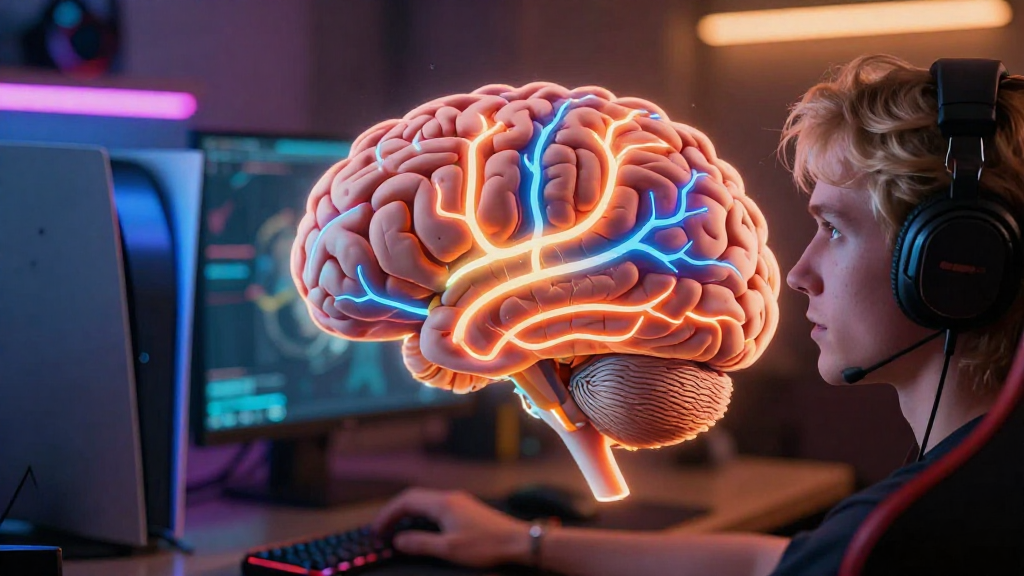
Have you ever wondered how gaming rewires the brain?
This article delves into the fascinating relationship between video games and brain function, exploring the profound effects gaming has on our cognitive abilities, emotional processing, and overall mental health.
What Does It Mean That Gaming Rewires the Brain?
When we talk about how gaming rewires the brain, we’re referring to neuroplasticity, the brain’s ability to reorganize itself by forming new neural connections.
Gaming can influence this process in several ways:
- Enhanced Cognitive Skills: Players often improve skills such as problem-solving, critical thinking, and strategic planning.
- Improved Attention: Many games demand high levels of focus, enhancing players’ ability to concentrate on tasks.
- Multitasking Abilities: Action games, in particular, require players to track multiple objectives, leading to improved attention-shifting skills.
These cognitive shifts showcase how gaming can significantly impact thought processes and emotional regulation.
How Do Video Games Change Brain Structure?
Studies suggest that various types of video games can actually change the structure of the brain. For example:
- Increased Grey Matter: Players often show increased grey matter in areas related to spatial navigation, strategic planning, and motor skills.
- Thicker Cortex: Engaging with complex games can cause a thicker cortex, which is linked with higher order thinking and reasoning.
Such structural changes demonstrate that video gaming is much more than mere entertainment; it can actively reshape our brains.
What Are the Positive Effects of Gaming?
Understanding how gaming rewires the brain invites a closer look at its positive effects, which can include:
- Enhanced Memory: Many games require players to commit various elements to memory, improving overall recall and memory function.
- Better Hand-Eye Coordination: Fast-paced gaming enhances motor skills and coordination, which can benefit real-world activities.
- Social Interaction: Online multiplayer games foster a sense of community, helping to improve social skills and emotional intelligence.
These benefits highlight that the gaming experience can have far-reaching effects on mental faculties and interpersonal skills.
Can Gaming Reduce Stress and Anxiety?
Many players report that gaming serves as an effective stress relief mechanism.
Here’s how gaming can reduce anxiety:
- Distraction: Engaging narratives or fast-paced gameplay can act as a temporary escape from everyday stressors.
- Accomplishment: Completing levels or achieving game objectives can enhance feelings of success and boost self-esteem.
- Community Support: Many players connect with friends or even support groups online, providing emotional support which can combat feelings of isolation.
The interplay of these factors showcases gaming’s potential as a therapeutic tool for mental health.
How Does Gaming Impact Emotional Regulation?
The ability to control and manage emotions is crucial for mental wellbeing.
Gaming can influence emotional regulation in various ways:
- Stress Management: By immersing players in alternate worlds, games can provide an outlet for stress.
- Resilience Development: Facing challenges and overcoming failures in games can build resilience, better preparing players for real-life challenges.
- Emotional Connection: Many narrative-driven games elicit significant emotional responses, allowing players to explore their own emotions in a safe environment.
In understanding how gaming rewires the brain, emotional development stands out as a vital area of impact.
Are There Any Negative Aspects of Gaming?
While the positive effects can be substantial, it’s essential to recognize that how gaming rewires the brain may also have negative repercussions. Here are some concerns:
- Addiction: Excessive gaming can lead to addiction, affecting both mental and physical health.
- Social Isolation: Embedding oneself in virtual worlds may lead to neglecting real-life relationships.
- Decreased Physical Activity: Long hours of gaming can contribute to a sedentary lifestyle, leading to various health issues.
It’s crucial to strike a balance in gaming habits to mitigate these potential downsides.
What Neuroscience Says About Gaming and the Brain?
The scientific investigation into how gaming rewires the brain has yielded promising findings. Researchers have conducted studies revealing that:
- People who regularly engage in gaming often display superior cognitive performance.
- Brain scans of gamers show heightened activity in areas tied to attention and spatial reasoning.
- Cognitive training through gaming can transfer to real-world skills.
These insights suggest that gaming is more than just a pastime; it’s a powerful tool for cognitive enhancement.
How Can We Use Gaming for Learning?
Another exciting aspect of gaming is its application in educational contexts.
Informal learning through gaming empowers players to acquire new skills.
Consider these points:
- Interactive Learning: Games can provide immersive learning experiences that are more engaging than traditional methods.
- Problem-Solving: Many educational games teach critical thinking and problem-solving in a fun and engaging way.
- Customization: Games can be tailored to individual learning speeds, making them an effective tool for diverse learners.
With the correct approaches, educators can harness the potential of video games to enhance learning.
Conclusion: What’s Next for Gaming and Brain Research?
As the gaming industry continues to evolve, so too will the research on how gaming rewires the brain.
With ongoing advancements in technology and a better understanding of neuroplasticity, we can expect to see more innovative approaches to gaming in various fields.
Finally, striking the right balance between gaming and other life activities is essential.
By leveraging the positive aspects of gaming while remaining aware of potential drawbacks, players can enjoy a fulfilling gaming experience that enhances cognitive skills and emotional wellbeing.
In the end, understanding how gaming rewires the brain can empower players and educators alike, enabling them to unlock the full potential of this captivating medium.