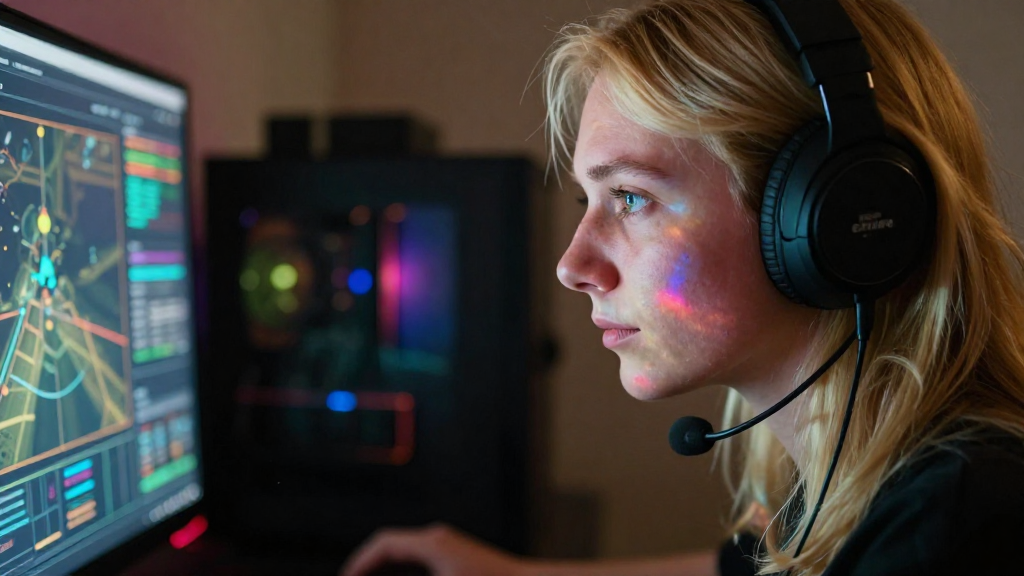
Gaming has evolved from a simple form of entertainment into a powerful medium for developing critical cognitive skills, including systems thinking.
This article will explore how gaming and systems thinking intersect and the underlying benefits of embracing this relationship.
What is Systems Thinking?
Systems thinking is the process of understanding how different parts of a system interact and influence each other.
Why is Systems Thinking Important?
- Holistic Perspective: It provides a comprehensive view of complex situations by analyzing individual components and their relationships.
- Problem Solving: Systems thinking helps in diagnosing issues and predicting consequences, making it easier to devise effective solutions.
- Adaptability: Those who think in systems can quickly adapt to changing environments, a crucial skill in today’s fast-paced world.
How Does Gaming Facilitate Systems Thinking?
Video games are not only entertaining but also inherently designed to encourage players to think in systems.
How do they do this? Let’s break it down:
1. Complex Systems in Gameplay
Many games are built around systems that require players to understand how components interact.
For example:
-
Resource Management: In strategy games like Civilization, players must manage resources while considering the perspectives of various civilizations,
-
Dynamic Environments: Games like Minecraft offer players a world where changes to one aspect can impact the entire ecosystem.
This replicates real-world scenarios, pushing players to adopt systems thinking to strategize and develop successful outcomes.
2. Feedback Loops
In gaming, feedback loops—both positive and negative—are common.
-
Positive Feedback Loops: Building upon successful strategies leads to greater rewards, reinforcing behaviors.
-
Negative Feedback Loops: Failing to account for rivals’ moves may produce setbacks, teaching players to anticipate consequences.
Players learn to appreciate that their actions have ramifications, directly promoting systems thinking in how they approach challenges.
3. Interconnected Challenges
Multiplayer games present interconnected challenges.
In games like Overwatch and League of Legends, players must coordinate with teammates.
This requires:
– Understanding individual roles within the team.
– Recognizing how each player’s success or failure affects the group’s overall performance.
By constantly navigating these interconnected challenges, players cultivate a systems-oriented mindset.
What Are the Educational Benefits of Gaming and System Thinking?
Numerous studies have highlighted the educational benefits of integrating games into learning environments, particularly in promoting systems thinking among students.
Here are several key benefits:
-
Engagement and Motivation: Games often provide a high level of engagement that traditional methods may lack, making learning more appealing.
-
Critical Thinking: Players regularly face complex problems that require critical thinking and strategic foresight.
-
Collaboration: Many games encourage team-based problem-solving, which helps students learn to collaborate and communicate effectively.
-
Adaptability and Resilience: Through trial and error in gameplay, players develop the ability to adapt their strategies in response to evolving game landscapes.
-
Simulation of Real-Life Scenarios: Educational games often simulate real-world problems, allowing players to practice systems thinking in safe environments.
Can Gaming Enhance Professional Skills with Systems Thinking?
Gaming isn’t just for kids anymore.
Many professionals leverage video games to sharpen their skills, particularly in planning and management.
Here are a few professional fields where gaming and systems thinking intersect:
-
Business Strategy: Strategic simulation games encourage players to manage resources, predict market trends, and adapt strategies accordingly.
-
Healthcare Management: Serious games simulate emergency rooms and healthcare systems, teaching future medical professionals about patient flow, resource allocation, and strategic decision-making.
-
Engineering and Architecture: Design games like SimCity require players to think like urban planners, forcing them to consider multiple factors—social, environmental, and economic—when making improvements.
What Types of Games Foster Systems Thinking?
Here are a few categories and examples of games that effectively promote systems thinking:
-
Strategy Games:
– Civilization VI
– StarCraft II -
Simulation Games:
– SimCity
– Cities: Skylines -
Puzzle Games:
– Portal 2 (requires players to understand spatial relations and physics)
– The Witness (encourages pattern recognition and problem-solving) -
Role-Playing Games (RPGs):
– The Witcher 3 (features intricate quest outcomes based on player choices)
– Dark Souls (emphasizes understanding enemy patterns and anticipating attacks)
How Can Educators and Trainers Use Gaming for Systems Thinking?
Educational institutions and corporate trainers can incorporate gaming into curricula or training programs to cultivate systems thinking.
Here are strategic approaches:
-
Integrate Game-Based Learning: Incorporate game mechanics into lessons to encourage participation and collaboration.
-
Develop Custom Games: Create bespoke educational games tailored to specific curricula, incorporating real-world systems.
-
Focus on Reflection: After gameplay, engage learners in discussions about their experiences to cement lessons learned about systems thinking.
Can Gaming Replace Traditional Learning Methods?
While gaming offers unique benefits, it doesn’t completely replace traditional learning methods.
Rather, it serves as a complementary approach:
-
Balance Theory and Practice: Combine gaming with theoretical lessons to provide a more robust educational experience.
-
Employ Varied Learning Styles: Cater to different learning styles by offering various formats—from traditional lectures to hands-on game-based activities.
Conclusion: How Does Gaming and System Thinking Fit Together?
The fusion of gaming and systems thinking creates an opportunity for enhanced cognitive development.
By engaging in games, players immerse themselves in complex systems that require critical thinking, collaboration, and adaptability.
From educational settings to professional environments, incorporating gaming can provide a dynamic approach to fostering these essential skills.
By promoting an understanding of systems and their interconnected parts, gaming opens the door for individuals to navigate the real world with greater insight and foresight.
As we continue to explore the evolving landscape of gaming as a learning tool, its potential for enhancing systems thinking will undoubtedly play a vital role in shaping future generations.