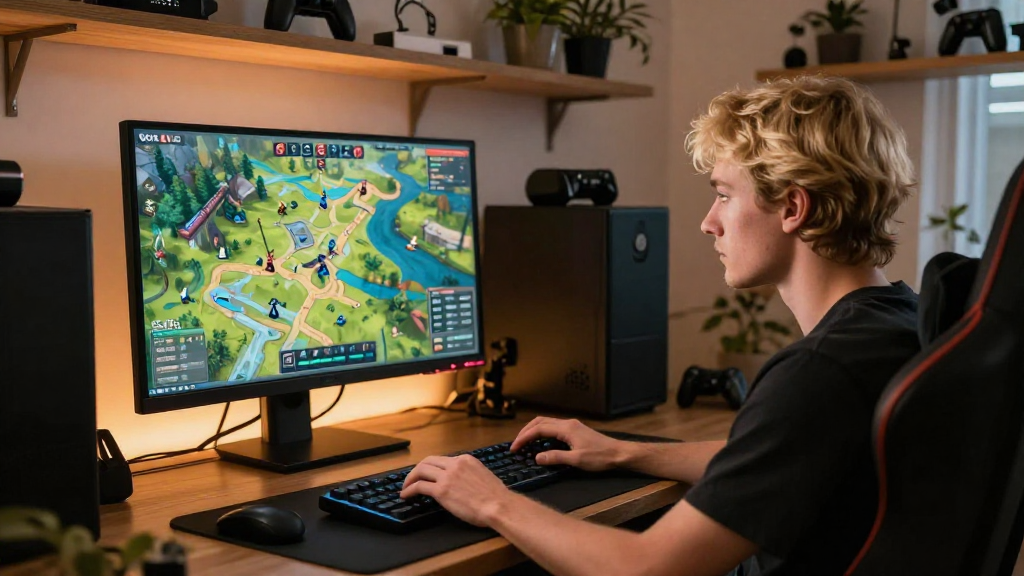
Gaming has evolved into a multifaceted experience that extends beyond mere entertainment.
One of the intriguing benefits of engaging in video games is their potential to aid in long-term planning.
But how exactly can gaming and long-term planning intersect?
What Is the Connection Between Gaming and Long-Term Planning?
At first glance, gaming might seem like just a pastime.
However, various studies indicate that many games require players to employ strategic thinking and resource management—key components of long-term planning.
Whether you’re building cities in simulation games or negotiating peace treaties in strategy war games, the skills you develop can lead to enhanced abilities in planning for the future.
How Do Games Encourage Strategic Thinking?
Many game genres actively promote strategic thinking and foresight.
By taking actions in the present that influence outcomes in the future, players often find themselves engrossed in complex decision-making processes.
Here are some ways games foster this strategic thinking:
-
Resource Management: Many games require players to allocate limited resources effectively.
Players must prioritize what to invest in, which directly translates to skills useful in real-life long-term planning. -
Goal Setting: In role-playing games or simulation games, players often set specific objectives to achieve their desired outcomes.
They learn to visualize future possibilities and navigate pathways to reach them. -
Consequences of Decisions: Most games have a system of rewards and penalties based on players’ decisions.
This teaches players that every action has a result, echoing how choices impact future scenarios in real life.
Can Gaming Enhance Decision-Making Skills?
Absolutely!
Skilled decision-making is integral to both gaming and long-term planning.
Players regularly weigh their options and predict potential outcomes, honing their ability to make informed decisions even under pressure.
In fact, research suggests that certain types of video games can enhance cognitive functions such as:
-
Critical Thinking: Players analyze situations, formulate hypotheses, and test theories.
-
Problem-Solving: Encountering and overcoming challenges is a staple in gaming, building players’ capacity to tackle complex issues in life.
-
Adaptability: Games often place players in unpredictable scenarios, forcing them to adjust their strategies quickly.
How Can Team-Based Games Foster Collaboration and Planning?
While individual gaming experiences certainly bolster decision-making skills, team-based games introduce another dynamic: collaboration.
These games require players to coordinate with others, aligning their strategies to achieve a common goal.
Team-based gaming can improve long-term planning by:
- Fostering Communication: Players must articulate their ideas and listen to others to progress successfully.
- Sharing Responsibility: Everyone has a role to play, encouraging a sense of accountability that is crucial in professional planning.
- Building Trust: Trust is essential in both gaming and planning contexts, and team games foster relationships that can last beyond the screen.
Does Gaming Develop Time Management Abilities?
Indeed!
When it comes to gaming and long-term planning, time management plays a pivotal role.
Games typically operate on strict time limits or deadlines, pushing players to make strategic choices quickly.
For example, many strategy games present players with a clock counting down to an event or challenge.
This pressure forces players to prioritize their tasks and manage their time effectively—skills that are invaluable in real-life planning scenarios.
Time management skills gained from gaming can translate to:
- Task prioritization: Identifying which planning tasks need immediate attention versus those that can wait.
- Pacing: Understanding how to allocate time for various components of a long-term project.
- Deadline adherence: Learning the importance of meeting deadlines and maintaining productivity.
What Role Does Problem-Solving Play in Gaming for Long-Term Benefits?
Problem-solving is an overarching skill that gaming enhances significantly.
In many games, players encounter obstacles that require innovative solutions.
This fosters creativity and analytical thinking, elements that are crucial for successful long-term planning.
Through gaming, players often develop:
- The willingness to experiment: Trying out different strategies teaches players that failure is a part of the process.
- Resilience: Facing challenges regularly habituates players to keep pushing for solutions despite setbacks.
- Analytical skills: Players analyze outcomes and refine their approaches for better future results.
Can Simulation Games Be Particularly Beneficial?
Absolutely!
Simulation games like The Sims, Cities: Skylines, or even Civilization emphasize planning and foresight.
These games mirror real-life situations, providing players with a platform to practice long-term planning.
Simulation games can teach players about:
-
Resource allocation: Managing budgets, time, and human resources effectively.
-
Scenario building: Imagining potential future outcomes based on present decisions.
-
Risk management: Understanding how to balance risk with potential rewards.
How Do Gamification Elements Enhance Long-Term Planning Skills?
Gamification—the application of game-design elements in non-game contexts—can also boost long-term planning skills.
Many educational platforms use gamification to create engaging environments where users can practice planning.
Benefits include:
-
Increased Motivation: Game-like rewards for completing tasks can make long-term planning activities more enticing.
-
Instant Feedback: Players receive immediate results for their actions, an important factor in learning and adapting strategies.
-
Setting Achievable Milestones: Gamification breaks down long-term projects into smaller, manageable parts that can be rewarded as completed.
Conclusion: Can Gaming Improve Long-Term Planning Skills?
In conclusion, the intersection of gaming and long-term planning offers numerous potential benefits.
Through the various mechanics and gameplay elements, players develop essential skills such as strategic thinking, decision-making, time management, and collaboration.
Whether you’re managing a virtual city or strategizing in a team-based game, engaging with gaming can indeed enhance your ability to plan for the long-term future.
So, the next time you sit down to play, remember that beyond mere entertainment, you are also sharpening skills that can benefit you in real life!
As more research delves into the implications of gaming, it becomes increasingly evident that gaming and long-term planning are not as unrelated as one might think.
If you want to improve your organizational abilities, consider incorporating strategic and simulation games into your routine.
They could be the fun and engaging solution to enhancing your long-term planning skills!