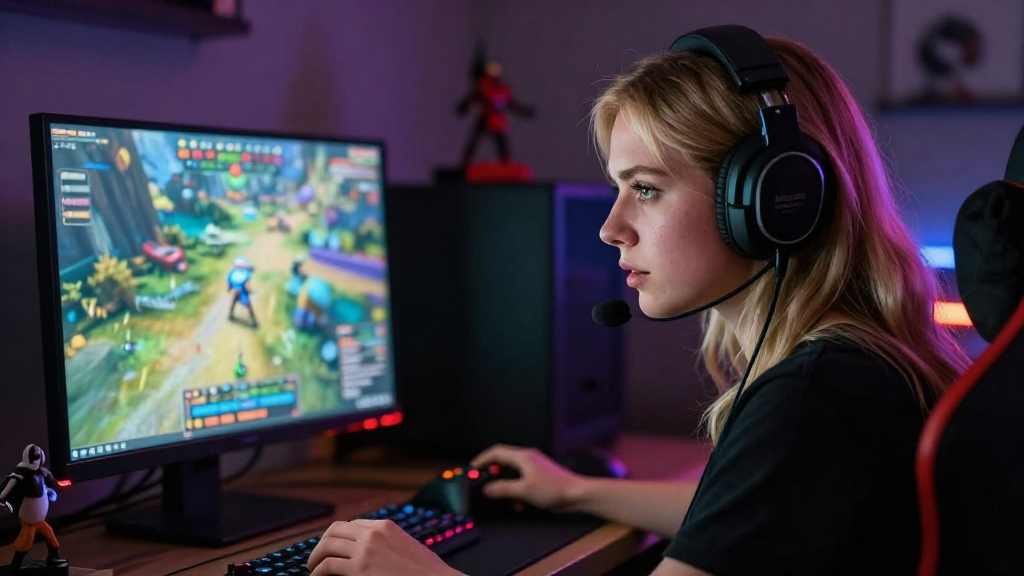
Gaming has emerged as a powerful medium that not only entertains but also builds internal motivation.
This article explores how the mechanics and experiences found in gaming foster intrinsic drive in players.
What is Internal Motivation?
Internal motivation refers to the drive that comes from within an individual to take action.
It’s fueled by personal satisfaction, interest, and the desire to achieve something meaningful.
In the context of gaming, internal motivation is driven by several core elements, including:
- Challenge: The thrill of overcoming obstacles and leveling up.
- Achievement: The sense of accomplishment that comes from completing tasks.
- Autonomy: The freedom to make choices and explore one’s own path.
When players find themselves engaged in a gaming experience, they often do so not just for external rewards but for the joy it brings.
How Does Gaming Create a Sense of Challenge?
One of the fundamental aspects of gaming is its ability to create a sense of challenge.
This is crucial in building internal motivation.
Progressive Difficulty Levels
Most games start off easy and gradually increase in difficulty.
This transition encourages players to improve their skills, thereby creating a sense of achievement as they progress.
Missions and Quests
Games often feature missions or quests that require strategic thinking and problem-solving skills.
The more complex the quest, the more rewarding the completion feels, reinforcing the player’s internal motivation to keep trying.
Competitive Elements
Online multiplayer games bring a competitive aspect that fuels motivation.
Players are driven to enhance their skills to outperform others.
Can Gaming Foster Autonomy?
Yes, gaming provides a unique environment for fostering autonomy.
In most video games, players have the freedom to make their own decisions.
This leads to the development of their own paths, which in turn heightens engagement and motivation.
Choice of Character and Storyline
Players can select characters, customize abilities, and choose story paths.
These choices create personal investment, which translates into increased internal motivation.
Open World Exploration
Games that offer open-world exploration, such as The Legend of Zelda or Skyrim, allow players to dictate their journey.
This autonomy often results in deeper connections and therefore greater motivation to progress.
What Role Does Feedback Play?
Feedback is integral to understanding one’s performance and areas for improvement.
In gaming, feedback is instantaneous, which significantly affects internal motivation.
Positive Reinforcement
Many games utilize positive reinforcement mechanisms such as:
- Leveling up
- Unlocking achievements
- Receiving in-game rewards
These elements enhance internal motivation by rewarding effort and skill acquisition.
Learning from Failure
In contrast, the experience of failing in a game also serves a purpose.
It encourages players to learn from mistakes, fostering resilience and a growth mindset, which further builds internal motivation to succeed.
How Does Social Interaction Influence Motivation?
Another powerful feature of gaming is the social interaction it encourages.
Engaging with others builds community, which can amplify internal motivation.
Teamwork and Cooperation
Playing cooperative games requires players to work together to achieve a common goal.
This brings about a sense of belonging and shared purpose, enhancing internal motivation.
Competitiveness Among Peers
Games like Fortnite or League of Legends feature leaderboards and tournaments.
Friendly competition inspires players to perform better, driving them to improve their skills.
Are There Psychological Benefits To Gaming?
Indeed, gaming offers various psychological benefits that reinforce internal motivation.
Enhancing Cognitive Skills
Constructive gaming requires players to think critically and make decisions on the fly.
This has been linked to improved cognitive abilities, which can enhance overall motivation.
Stress Relief
For many individuals, gaming acts as a stress reliever.
Reducing stress can free up mental resources, which allows individuals to focus more on personal goals.
This sense of relief often fuels internal motivation.
What Unique Skills Can Gaming Help Develop?
Gaming can help build a variety of skills that contribute to lifelong learning.
This cultivates an internal drive to pursue further education and development.
Problem-Solving Skills
Players often encounter puzzles or challenges that require innovative thinking.
Solving these enhances problem-solving skills and increases confidence.
Time Management
Many games require players to manage resources or limited time effectively.
This can translate into better time management skills in real-world scenarios, enhancing internal motivation to succeed.
Strategic Thinking
Strategy games involve planning and foresight.
Engaging in these types of games can develop long-term thinking abilities, which is essential for personal growth.
How Can Parents Encourage Internal Motivation Through Gaming?
If approached thoughtfully, gaming can be a powerful tool for building internal motivation in children.
Set Boundaries
Establishing rules around gaming can help children develop self-discipline while still enjoying the benefits.
Consider limiting playtime or establishing game-free zones.
Engage with Your Child
Playing games together provides an opportunity for bonding, allowing parents to observe their child’s interests.
Discussion about gameplay can reinforce lessons learned through their gaming experiences.
Encourage Goal Setting
Encouragement to set personal goals within games can foster a sense of purpose.
This helps children understand achievement and its intrinsic value.
Conclusion: Why Gaming and Internal Motivation Go Hand-In-Hand
In conclusion, the relationship between gaming and internal motivation is multifaceted.
From providing challenges to fostering autonomy, gaming serves as a rich environment for developing intrinsic motivation.
The dynamically engaging aspects of gaming keep players invested.
They inspire them to explore, learn, and grow continuously.
Understanding this interplay opens up avenues for leveraging gaming not just as a pastime but as a source of personal development and motivation.
So, the next time you pick up a controller or start a game, remember:
You’re not just playing; you’re building your internal motivation.