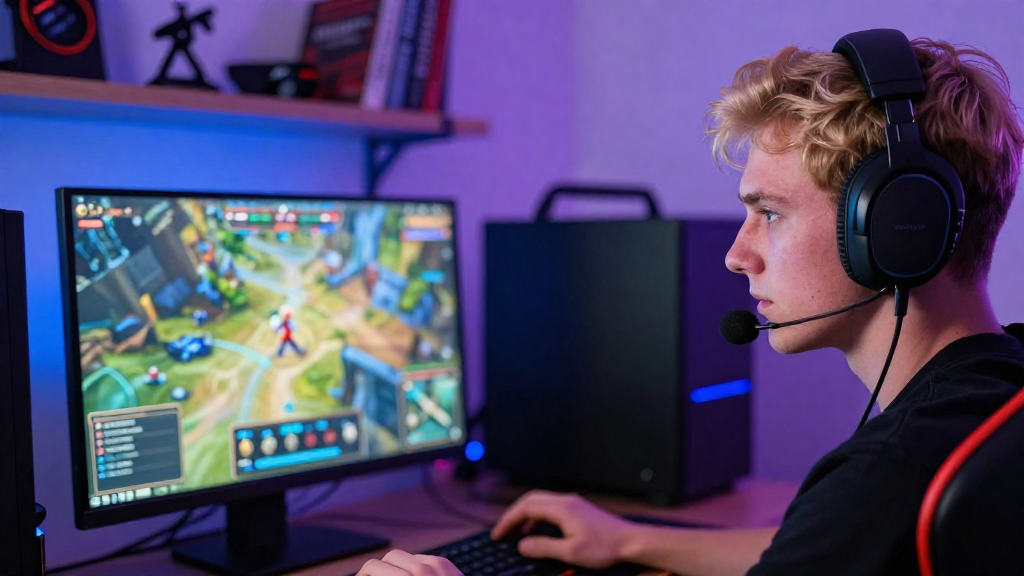
Can gaming improve critical thinking? This question has been gaining traction among educators, researchers, and parents who are keen to explore the benefits of video games beyond mere entertainment.
While gaming is often criticized for its violent content and potential addictive nature, an emerging body of research suggests that gaming and critical thinking are intertwined in surprising ways.
How Does Gaming Encourage Critical Thinking Skills?
Gaming and critical thinking are connected through several mechanics present in video games that stimulate intellectual engagement.
When players navigate complex environments, they encounter puzzles and strategic decision-making scenarios.
Here’s how gaming fosters critical thinking:
-
Problem-Solving: Many games require players to think on their feet and come up with solutions to intricate challenges.
-
Decision-Making: Players often face choices that significantly impact the game’s outcome, encouraging them to weigh pros and cons critically.
-
Pattern Recognition: Games frequently involve recognizing trends, whether in gameplay styles, enemy behavior, or resource management.
-
Adaptability: Games can change scenarios quickly, forcing players to adapt their strategies to succeed.
These elements work together to sharpen one’s capacity for thoughtful analysis and rational judgment.
What Types of Games Enhance Critical Thinking?
Not all games are created equal when it comes to enhancing critical thinking skills.
Here’s a breakdown of types of games that can facilitate this benefit:
1. Puzzle Games
Games like “Portal” or “The Witness” require players to solve intricate puzzles that necessitate logical reasoning and strategic thinking.
2. Strategy Games
Titles such as “Civilization” and “StarCraft” demand long-term planning, resource allocation, and foresight.
3. Role-Playing Games (RPGs)
In RPGs like “The Witcher” or “Final Fantasy,” players delve into character development and world-building while making impactful choices, fostering critical engagement.
4. Simulation Games
Games such as “SimCity” and “Cities: Skylines” enable players to manage resources and navigate complex systems, thereby enhancing analytical thinking.
It’s essential to recognize that the type of game matters when considering the relationship between gaming and critical thinking.
Are There Scientific Studies Supporting This Link?
Numerous studies have researched the correlation between gaming and critical thinking.
One such study published in the Computers & Education journal explored the effects of video games on students’ problem-solving skills.
Here are some noteworthy findings:
- Participants who regularly engaged with strategy games made faster and more accurate decisions.
- Puzzles that required critical thinking improved participants’ cognitive flexibility and adaptability.
- Action games enhanced spatial awareness, crucial for strategic decision-making tasks.
These empirical results pave the way for considering how educational institutions might integrate gaming into curricula to enhance student performance.
Can Gaming Be Used as an Educational Tool?
Absolutely! The integration of gaming and critical thinking in educational settings offers exciting possibilities.
Educators are increasingly recognizing the role of games in developing essential skills.
How Can Teachers Incorporate Gaming in Education?
-
Game-Based Learning Platforms: Use tools like Kahoot! or Classcraft to create a dynamic learning environment.
-
Gamification of Lessons: Implement game mechanics in lessons, such as earning points or badges for completing tasks.
-
Critical Thinking Games: Integrate games that promote problem-solving and strategy, such as “Kerbal Space Program” or “Minecraft Education Edition.”
What Are the Advantages of Using Games in Education?
- Increased Engagement: Students are often more excited to learn when games are involved.
- Real-World Applications: Many games provide real-life scenarios that aid in understanding complex subjects.
- Collaboration: Multiplayer games foster teamwork and communication skills.
These strategies highlight how gaming and critical thinking can coexist beautifully in the classroom setting.
What Should Parents Know About Gaming and Critical Thinking?
As parents, understanding the potential benefits of gaming and critical thinking can inform how you approach your child’s gaming habits.
Here are some crucial points to consider:
-
Monitor Game Content: Choose games that promote strategic thinking and problem-solving rather than purely action-oriented gameplay.
-
Encourage Discussion: Engage in conversations about the games your child plays. Discuss their decision-making processes and encourage them to think critically.
-
Balance is Key: Ensure gaming is part of a balanced lifestyle that includes physical activity, social interaction, and other forms of learning.
Taking an informed approach to gaming can help cultivate critical thinking skills in young minds.
Are There Potential Downsides to Gaming?
While the relationship between gaming and critical thinking can be beneficial, it’s essential to acknowledge potential downsides.
Excessive gaming can lead to:
- Reduced Physical Activity: Prolonged gaming hours might contribute to sedentary lifestyles.
- Social Isolation: Overindulgence in gaming can detract from real-world interactions.
- Impaired Focus: Multi-tasking in gaming might lead to difficulties in concentrating on non-gaming tasks.
Finding a balance is crucial to maximizing the advantages of gaming while minimizing its drawbacks.
Conclusion: Can Gaming Truly Improve Critical Thinking?
In answer to the question, “Can gaming improve critical thinking?” the evidence suggests a resounding yes, particularly when the right types of games are used thoughtfully.
The potential benefits of gaming and critical thinking are exciting, especially in educational contexts.
As research continues to evolve, it will be fascinating to observe how educators, parents, and society at large integrate gaming as a powerful tool for enhancing critical thinking skills in the future.
Ultimately, gaming has the potential not merely to entertain but to educate, challenge, and cultivate one of the most important skills in our rapidly changing world.