The best wireless microphones make it easier to record, present, perform, or stream without dealing with cables. This roundup includes compact lavalier kits, creator-focused systems, handheld microphones, and UHF setups for larger venues.
We compared the selected models by connectivity, microphone type, range, noise control, battery design, and intended use so you can narrow the list to the right fit for your equipment and budget.
Best 10 Wireless Microphones Picks for 2026
Most Versatile

- Four-transmitter and four-channel capability
- 32-bit float backup recording with adaptive gain
- Compact kit with noise control and 28-hour use
Best For: Vloggers, podcasters, and group interviews
Best for Mobile Recording

- Tiny 9 g transmitters with plug-and-play pairing
- 48 kHz/24-bit audio and adjustable noise cancellation
- Up to 30 hours with the charging case
Best For: Mobile creators, vloggers, and streamers
Best Battery Life

- Up to 48 hours with the charging case
- 10 g transmitters with two noise-cancellation levels
- Automatic limiting helps prevent clipping
Best For: Long recording sessions, travel, and livestreaming
Best for Live Events

- Dual UHF handheld microphones with auto scan
- 200 selectable frequencies and up to 328-foot range
- Cardioid pickup and durable metal construction
Best For: Karaoke, DJs, churches, weddings, and public speaking
Best for Mobile Creators

- Ultralight 10 g transmitters
- 300 m range with automatic limiting
- Up to 11.5 hours of operation
Best For: Mobile videos, interviews, livestreams, and DJI Osmo users
Best for Karaoke Duets
JBL Wireless Two Microphone System
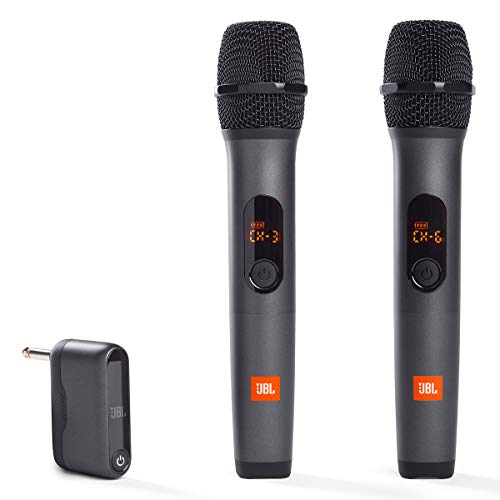
- Includes two handheld microphones
- Dual-channel receiver for mixed voices
- Plug-and-play with compatible PartyBox speakers
Best For: Karaoke, singing, and JBL PartyBox setups
Best for Long Recording Sessions
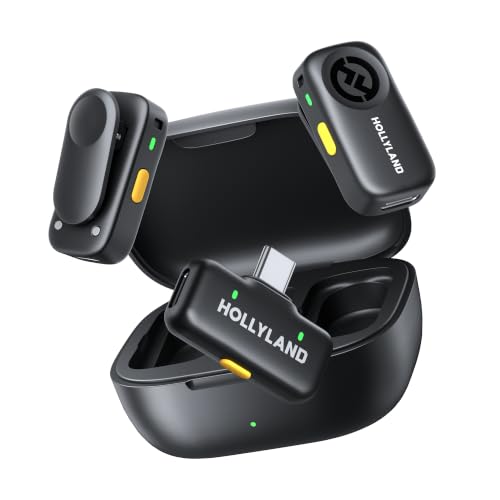
- Up to 54 hours with charging case
- USB-C plug-and-play connection
- Noise cancellation and auto-limit protection
Best For: Streaming, vlogging, interviews, and frequent mobile recording
PartyBox Pick

- Two handheld mics for JBL PartyBox speakers
- Up to 20 hours of battery life
- Cardioid pickup with pop and handling-noise reduction
Best For: JBL PartyBox karaoke and parties
Event Value
HUACAM Dual Wireless Microphones

- Two handheld mics with up to 200-foot line-of-sight range
- Supports 6.35mm and 3.5mm microphone inputs
- Dynamic capsules help reduce background noise and feedback
Best For: Karaoke, events, and PA systems with microphone inputs
Creator Choice

- Two clip-on mics for interviews and two-person recording
- AI noise cancellation with two levels
- Up to 48kHz/24-bit audio and 262-foot stated range
Best For: Vlogging, livestreaming, podcasts, and mobile video
Most Versatile – DJI Mic 3
For creators who need flexible wireless microphones for interviews, vlogs, and group recordings, the DJI Mic 3 combines two transmitters with a receiver, adaptive gain control, multiple noise-cancellation levels, and internal 32-bit float recording. Its compact case and up to 28 hours of use also make it practical for travel.
Best For: Vloggers, podcasters, and small production teams recording multiple voices.
Pros:
- Supports up to four transmitters and four-channel output for expanded interviews or podcasts.
- Adaptive gain control and dual-file 32-bit float recording help protect audio quality.
- Offers three voice tones, two noise-cancellation levels, and dual-band anti-interference.
- Compact kit includes two transmitters, a receiver, adapters, windscreens, and a charging case.
Cons:
- The feature-rich system may be more than needed for simple one-person recordings.
- Its listed maximum 28-hour runtime is lower than some competing kits.
The DJI Mic 3 is the strongest all-around choice here for creators who want room to expand beyond basic two-person recording. Its backup recording and multi-transmitter support are especially useful when a missed take would be costly.
Best for Mobile Recording – Hollyland Lark M2
The Hollyland Lark M2 is a lightweight option among wireless microphones, with 9 g transmitters, direct USB-C connectivity, factory pairing, and up to 1,000 feet of line-of-sight range. It is designed for quick phone, computer, and action-camera recording with app-based control over sound settings.
Best For: Mobile creators, vloggers, streamers, and podcasters who prioritize a small plug-and-play setup.
Pros:
- Very small 9 g transmitters are discreet and comfortable for on-camera use.
- 48 kHz/24-bit audio, a 70 dB signal-to-noise ratio, and up to 115 dB SPL support detailed recording.
- Noise cancellation can be adjusted through the transmitter or HollyAudio app.
- Provides up to 30 hours with the charging case and supports remote recording controls on compatible phones.
Cons:
- The USB-C version is tailored to compatible USB-C devices, so connector compatibility should be checked before buying.
- The advertised 1,000-foot range is specified for line-of-sight use.
Choose the Lark M2 when portability and fast setup matter most. Its small transmitters, automatic pairing, and long case-assisted runtime make it well suited to frequent mobile recording, while the app adds useful control over noise cancellation and volume.
Best Battery Life – DJI Mic Mini
The DJI Mic Mini is a practical pick for wireless microphones when you want a discreet two-transmitter kit with extended operating time. Its 10 g transmitters, 400 m transmission range, two noise-cancellation levels, automatic limiting, and up to 48 hours with the charging case cover a broad range of recording situations.
Best For: Travelers, interviewers, livestreamers, and content creators who record for long stretches.
Pros:
- Ultralight 10 g transmitters are comfortable and discreet on camera.
- Up to 48 hours of battery life with the charging case supports extended use.
- Automatic limiting helps reduce clipping when incoming audio is too loud.
- Provides 48 kHz recording, 120 dB SPL handling, and two noise-cancellation levels.
Cons:
- The two-channel system is less expandable than the DJI Mic 3.
- The listed transmission range is shorter than the Hollyland Lark M2’s advertised line-of-sight range.
The Mic Mini stands out for dependable everyday recording and exceptional case-assisted battery life. It is a sensible middle ground for creators who want DJI ecosystem connectivity and useful audio protection without moving to a larger, more elaborate system.
Best for Live Events – Phenyx Pro PTU-71-2H
For PA systems, karaoke, weddings, churches, and performances, the Phenyx Pro PTU-71-2H takes a different approach from compact camera-focused wireless microphones. This dual handheld UHF system offers auto scanning, selectable frequencies, cardioid pickup, metal construction, and a stated 290- to 328-foot line-of-sight range.
Best For: Live singers, DJs, presenters, churches, karaoke setups, and event venues using a mixer or PA system.
Pros:
- Dual handheld microphones provide a ready-to-use two-speaker or two-performer setup.
- Auto Scan identifies lower-interference frequencies, while 200 selectable frequencies support multiset operation.
- Cardioid pickup helps reject ambient sound, and the tuned EQ provides balanced vocal output.
- Metal construction, mute controls, replaceable microphone heads, and included accessories support regular use.
Cons:
- Handheld microphones are less discreet and less suitable for camera-mounted lavalier recording.
- The system uses AA batteries and is designed around UHF receiver connections rather than direct USB-C phone recording.
The Phenyx Pro is the clear fit for amplified live audio rather than mobile content creation. Its dual handheld format, frequency management, and mixer- and PA-compatible outputs make it better suited to venues and performances than the other listed kits.
Best for Mobile Creators – DJI Mic Mini
The DJI Mic Mini is one of the more travel-friendly wireless microphones for interviews, livestreams, and mobile content. Its 10 g transmitters, mobile receiver, automatic limiting, and two noise-cancellation levels make it practical when you need clear vocals without a complicated setup.
Best For: Mobile creators, interviewers, vloggers, and livestreamers using iPhone, Android, PC, or tablet devices.
Pros:
- Ultralight 10 g transmitters are discreet and comfortable to wear.
- Up to 300 m transmission range and automatic limiting support reliable recordings.
- Two noise-cancellation levels help manage both quiet and noisy environments.
- Two transmitters, a mobile receiver, and up to 11.5 hours of operation suit longer sessions.
Cons:
- The mobile receiver uses USB-C, so device compatibility and adapters may need consideration.
- Its feature set is aimed primarily at mobile and content-creation workflows rather than speaker-based karaoke.
Choose the DJI Mic Mini if portability, flexible device compatibility, and dependable voice capture matter most. Its direct DJI OsmoAudio connections are an added benefit for users already in that ecosystem.
Best for Karaoke Duets – JBL Wireless Two Microphone System
For karaoke nights and home performances, this JBL system is a straightforward choice among wireless microphones. It includes two handheld microphones and a dual-channel UHF receiver, with a plug-and-play setup designed for compatible JBL PartyBox speakers.
Best For: Karaoke duets, casual singing, and JBL PartyBox owners who want two microphones at once.
Pros:
- Two microphones can connect through the dual-channel receiver for mixed voices.
- Plug-and-play setup requires turning on the receiver and microphones.
- Unidirectional pickup and JBL Original Pro Sound support clear vocal output.
- Replaceable AA microphone batteries are convenient for extended use.
Cons:
- Compatibility is specifically centered on listed JBL PartyBox models.
- The system offers up to 6 hours of playback through the rechargeable receiver.
- It is a handheld performance system rather than a discreet lavalier setup.
This JBL package makes the most sense when your priority is simple two-person singing through a compatible PartyBox. It is less suitable for phone-based interviews or creator-focused mobile recording.
Best for Long Recording Sessions – Hollyland Lark A1
The Hollyland Lark A1 is a strong option among wireless microphones for creators who record frequently on phones, tablets, or computers. Its USB-C receiver, magnetic transmitters, charging case, intelligent noise cancellation, and high stated battery capacity are geared toward quick, extended recording sessions.
Best For: YouTube and TikTok creators, livestreamers, interviewers, podcasters, and vloggers needing long battery endurance.
Pros:
- Plug-and-play USB-C receiver avoids Bluetooth pairing and is designed to reduce dropouts.
- Two transmitters and the charging case provide up to 54 hours of battery life.
- Three-level noise cancellation, six-level gain adjustment, and auto-limit protection offer recording control.
- 48 kHz/24-bit audio, EQ, and reverb adjustment support flexible content production.
Cons:
- The supplied receiver is USB-C, so Lightning-device users may need a different connector or version.
- The receiver is powered by the mobile phone, which can affect phone battery usage during recording.
The Lark A1 stands out for creators who value long runtimes and hands-off mobile setup. Its adjustable sound tools also give it more flexibility than a basic plug-and-play microphone kit.
PartyBox Pick – JBL PartyBox Wireless Mics
If you already use a JBL PartyBox, these wireless microphones are a straightforward way to add two handheld mics for karaoke, announcements, and parties. They use a cardioid pickup pattern, built-in noise-reduction features, and a 2.4GHz dongle connection for flexible movement around the speaker.
Best For: JBL PartyBox owners who want a ready-to-use dual-microphone setup for karaoke and gatherings.
Pros:
- Compatible with all JBL PartyBox speakers, from the Encore to the Ultimate.
- Cardioid pickup, shock mounts, and a built-in pop filter help produce clearer vocals with less handling and breathing noise.
- Up to 20 hours of playtime, with charging through the PartyBox and continued use while charging.
- Stable 2.4GHz wireless connection with up to 30 meters of range when using the dongle.
Cons:
- Designed specifically for JBL PartyBox speakers rather than general-purpose microphone systems.
- Playtime is listed as up to 12 hours when using the digital wireless dongle.
For PartyBox users, this is one of the more convenient wireless microphones setups because pairing and charging are built around the speaker. Its main limitation is compatibility: shoppers using another speaker brand should consider a more universal system.
Event Value – HUACAM Dual Wireless Microphones
These dual wireless microphones offer a practical option for karaoke, weddings, church events, classrooms, and small performances. The system connects through a 6.35mm or 3.5mm microphone input and uses a dedicated receiver rather than Bluetooth, with a stated line-of-sight range of up to 200 feet.
Best For: Buyers who need two handheld microphones for speakers, PA systems, amplifiers, or karaoke machines with compatible microphone inputs.
Pros:
- Includes two handheld microphones, a receiver, a 3.5mm adapter, covers, and anti-slip rings.
- Supports up to 200 feet of line-of-sight wireless range.
- Works with compatible devices using 6.35mm or 3.5mm microphone interfaces.
- Dynamic unidirectional capsules are designed to reduce background noise and some feedback.
Cons:
- Not compatible with mobile phones, computers, or tablets.
- The receiver version is randomly shipped, so the included connector configuration may vary.
- An AUX input is not supported.
This HUACAM set makes sense when your audio equipment has a standard microphone jack and you want two mics at a reasonable range. Check your device’s input type carefully before buying, especially if you plan to use a phone, tablet, or AUX-only speaker.
Creator Choice – XIOMOUS Dual Lavalier Mic
For video creators, this wireless microphone system pairs two clip-on transmitters with one receiver for smartphone, tablet, or camera recording. It is built around interviews, podcasts, livestreams, vlogs, and other two-person content, with AI noise cancellation, automatic pairing, and Lightning and Type-C receiver options for compatible devices.
Best For: YouTubers, TikTok creators, vloggers, and interviewers recording two people on compatible mobile devices or cameras.
Pros:
- Two microphones can record simultaneously through one receiver.
- Up to 262 feet of transmission range in a clear, unobstructed environment.
- AI noise cancellation offers two levels and is designed to reduce background noise by up to 90%.
- Supports up to 48kHz/24-bit audio, automatic pairing, mute, reverb, and approximately 6–7 hours of working time per mic.
Cons:
- Actual range can be reduced by obstacles or interference.
- Battery life is approximately 6–7 hours per microphone, shorter than some party-focused handheld systems.
- Receiver compatibility depends on whether the recording device uses Lightning or USB-C.
This is the most specialized option here for content production rather than karaoke or PA use. Its dual-transmitter design and noise-cancellation modes are useful for interviews and social video, provided your phone, tablet, camera, or other recording device supports the included receiver connection.
How We Picked These Wireless Microphones
We selected these Wireless Microphones to cover the most common buying needs rather than rank every model by the same standard. The list includes USB-C and mobile-focused kits, dual-transmitter lavalier systems, handheld microphones for karaoke and events, and UHF equipment suited to presentations or larger spaces.
Our comparison focuses on practical specifications and use cases: transmitter and receiver configuration, device compatibility, claimed operating range, audio detail, noise-reduction features, battery setup, and how simple each system is to configure. Compatibility matters especially because a microphone that works with a phone may not connect directly to a camera, speaker, or venue sound system.
Quick Comparison
| Best For | Look For | Recommended Type |
|---|---|---|
| Phone videos and social content | USB-C or mobile receiver, compact transmitters | Wireless lavalier kit |
| Interviews and two-person recording | Two transmitters and one receiver | Dual-channel clip-on system |
| Karaoke and parties | Two handheld mics, speaker compatibility | Digital handheld system |
| Churches, classrooms, and events | Long range, dependable receiver, UHF support | Handheld UHF system |
| Fast setup and travel | Charging case and automatic pairing | Compact wireless kit |
Key Buying Factors for Wireless Microphones
Compatibility and Connections
Check the receiver connection before buying. USB-C models are convenient for many newer phones, tablets, and laptops, while camera and speaker setups may require a 3.5mm, USB, or dedicated audio output. Some products are designed primarily for mobile devices and may need an adapter for other equipment.
Microphone Style and Pickup
Lavalier microphones clip close to the speaker and are usually best for walking videos, interviews, teaching, and presentations. Handheld microphones are more appropriate for singing, announcements, and situations where the performer controls microphone distance. Omnidirectional clip-on units are easy to use but can capture more surrounding sound than a directional handheld microphone.
Range, Interference, and Noise Control
Advertised range is typically measured in open conditions. Walls, crowds, Wi-Fi equipment, and other radio signals can reduce reliable distance. Noise cancellation can help with steady background sound, but it cannot replace good microphone placement or a quiet recording environment.
Battery and Everyday Usability
Consider transmitter runtime, receiver power, charging method, and whether the case recharges the system between sessions. A charging case, automatic pairing, mute controls, onboard recording, or display can be more valuable than maximum range if you record frequently or travel often.
Who Should Buy Which Wireless Microphones?
Choose a compact USB-C lavalier system if you mainly create phone videos, interviews, or short-form content. A two-transmitter kit is the better choice for interviews and conversations with two speakers. Look for a mobile receiver and charging case when portability and quick setup matter most.
For karaoke, parties, and casual performances, choose a dual handheld system that matches your speaker or sound system. For churches, classrooms, DJs, and larger events, prioritize a dependable UHF system, practical range, and receiver controls over the smallest possible design. If you are unsure, buy for your primary device and setting first; reliable compatibility is more important than a long feature list.