Racing LiPo batteries demand more than a basic gear bag. The right storage box or safety pouch helps keep packs organized and contained during transport, charging, and between heats.
We compared 10 popular options by capacity, construction, closure design, portability, and suitability for race-day use, from compact single-pack bags to larger multi-battery storage solutions.
Best 10 Rc Battery Storage Boxes for Racing Picks for 2026
Best Large-Capacity Pouch
Zeee Fireproof LiPo Storage Bag

- Stores about 25 listed 3S 2200mAh packs
- Layered fire-resistant and flame-retardant construction
- Top handle and single-compartment layout
Best For: Track-day racers carrying many LiPo packs
Best Sealed Charging Design
Tenergy Fire Retardant LiPo Zipper Bag

- Large 8.5 x 6.5 x 5.7-inch format
- Dedicated Velcro-sealed charging hole
- Triple-layer flame-retardant material
Best For: Racers wanting convenient cable access
Best Two-Pack Flexibility
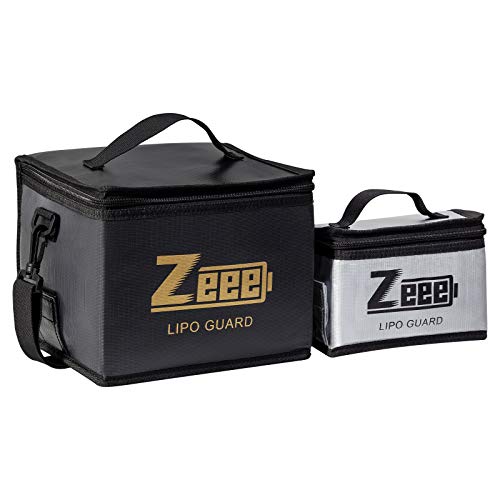
- Includes large and small storage bags
- Layered fiberglass and flame-retardant construction
- Designed for charging, transport, and storage
Best For: Racers needing separate sizes or battery groups
Best Extra-Large Option
Zeee Large LiPo Battery Safe Bag

- 14.17 x 7.87 x 9.84-inch extra-large size
- Side charging hole and zipper closure
- Shoulder strap plus listed 12-month warranty
Best For: Teams carrying batteries and a charger together
Maximum-Capacity Pick
Tamfile Fireproof LiPo Battery Bag

- Holds approximately 25–35 2200mAh 3S packs
- Three-layer refractory construction
- Includes pockets, shoulder strap, and charging port
Best For: Racers transporting a large battery collection
Adjustable Organizer

- Adjustable 10-cell storage layout
- Layered fabric rated up to 1000°F
- Sized for charging, transit, and storage
Best For: Racers wanting flexible battery organization
Compact Protective Pick

- Compact 8.6 x 6.7 x 5.9-inch format
- Waterproof silicone-coated construction
- Reflective strip aids low-light visibility
Best For: Racers carrying a smaller battery load
Best Large-Capacity Pick

- Eight-layer fire-resistant fiberglass construction
- Roomy 9.4 x 8 x 8.7-inch storage area
- Double waterproof zippers and carrying options
Best For: Racers storing and transporting multiple batteries
Best Organized Racing Option

- Stores up to 10 batteries
- Separator strips help organize packs
- Reinforced, double-zipper construction
Best For: Racers managing several batteries in separate sections
Best Compact Choice
ImnBest Reflective LiPo Storage Bag

- Eight adjustable battery storage locations
- Reflective strip improves low-light visibility
- Compact 21.5 x 15 x 17 cm format
Best For: Racers with smaller battery collections and limited space
Best Large-Capacity Pouch – Zeee Fireproof LiPo Storage Bag
For racers needing rc battery storage boxes for racing, this Zeee pouch offers generous room in a portable, single-compartment design. Its layered fabric construction is intended for LiPo charging, transport, and storage, with listed dimensions of 8.46 x 6.5 x 5.71 inches.
Best For: Racers who need one roomy pouch for multiple LiPo packs and convenient transport.
Pros:
- Large capacity listed for about 25 three-cell 2200mAh LiPo batteries.
- Uses inner fire-resistant fabric, flame-retardant non-woven material, and a PVC fiber outer layer.
- Top handle supports carrying to the track or charging area.
- Designed for charging, transit, and storage.
Cons:
- Has one compartment, so batteries are not individually separated.
- The manufacturer notes it is not 100% fireproof above 1000°F.
This is a practical high-capacity choice when consolidated storage matters more than internal organization. As with any LiPo safety bag, follow appropriate charging and storage practices rather than treating it as complete fire protection.
Best Sealed Charging Design – Tenergy Fire Retardant LiPo Zipper Bag
The Tenergy large zipper bag is a straightforward option among rc battery storage boxes for racing, combining a spacious 8.5 x 6.5 x 5.7-inch format with a charging hole and Velcro seal. It is designed for storing and charging LiPo battery packs.
Best For: Racers who prioritize a zipper closure and a dedicated charging cable opening.
Pros:
- Large size is advertised to hold up to 25 LiPo battery packs when not in use.
- Triple-layered flame-retardant protection material.
- Charging hole with Velcro seal helps reduce airflow and oxygen.
- Material meets the listed UL 94 flammability standard requirements.
Cons:
- Only one bag is included.
- The supplied details do not list internal compartments or dividers.
Its charging-port design makes this a compelling everyday pit-bag option for drivers who want easy cable access without leaving the main zipper open. The large single-bag format is best suited to consolidated battery storage.
Best Two-Pack Flexibility – Zeee LiPo Fireproof Safe Bags
This two-pack gives racers flexible rc battery storage boxes for racing in two listed sizes: a large 9.17 x 8.23 x 6.85-inch bag and a small 7.48 x 3.7 x 4.37-inch bag. Both are intended for LiPo charging, transport, and storage.
Best For: Racers who want separate bags for different battery sizes, vehicles, or charging tasks.
Pros:
- Includes two bags in different sizes.
- Layered construction includes fiberglass fabric, flame-retardant non-woven material, and a PVC fiber outer layer.
- Designed for charging, transit, and storage.
- Listed heat insulation temperature reaches up to 1000°F.
Cons:
- The supplied details do not identify internal compartments.
- The product information describes the bags as single-use.
- The 1000°F rating should not be interpreted as unlimited fire protection.
The varied sizing is the main advantage here: use the larger pouch for a group of packs and the smaller one for a compact setup or separate battery batch. It is a useful value-oriented configuration for racers with changing equipment needs.
Best Extra-Large Option – Zeee Large LiPo Battery Safe Bag
For teams and racers with bulky charging setups, this extra-large Zeee pouch is one of the roomiest rc battery storage boxes for racing. Its 14.17 x 7.87 x 9.84-inch size is designed to hold batteries and a charger, while a side hole allows charging without leaving the bag open.
Best For: Racers who need maximum listed capacity for batteries and charging equipment in one portable bag.
Pros:
- Extra-large dimensions provide substantial storage space.
- Side charging hole supports cable access while the bag remains closed.
- Zipper closure and shoulder strap support portability.
- Includes a listed 12-month manufacturer warranty.
Cons:
- One compartment may offer limited organization for mixed packs and accessories.
- The 0.4 kg weight and large footprint may be less convenient for compact pit setups.
- The supplied details do not specify a battery count capacity.
This is the strongest fit when storage volume is the priority. Its shoulder strap and charging access make the large format more practical for transport, though racers with only a few packs may prefer a smaller pouch.
Maximum-Capacity Pick – Tamfile Fireproof LiPo Battery Bag
For racers needing rc battery storage boxes for racing with room for a large battery collection, the Tamfile offers a spacious, organized carry option. Its three-layer refractory construction, external storage area, and charging cable port make it practical for transport, storage, and charging—while still requiring constant supervision during charging.
Best For: Racers who carry multiple LiPo packs, chargers, and accessories to events.
Pros:
- Large 10.6 x 6.3 x 9.1-inch capacity can hold approximately 25–35 2200mAh 3S LiPo batteries.
- Three-layer fire-resistant construction includes silicone-coated fiberglass and aluminum foil fiberglass cloth.
- External storage space, interior mesh pocket, carry handle, and detachable shoulder strap improve organization and portability.
- Side charging port allows a cable to pass through while the bag is closed.
Cons:
- Not water resistant.
- Its large size may be excessive for racers carrying only a few packs.
- The product notes emphasize that rechargeable batteries should never be left unattended while charging.
The Tamfile stands out when capacity and organization matter most. Choose it for a full race-day battery load, but use it in an appropriate area and supervise charging.
Adjustable Organizer – Zeee 10-Cell LiPo Safe Bag
The Zeee is a practical choice among rc battery storage boxes for racing if you want an adjustable layout for transport, storage, and charging. Its 10-cell design and 10.6 x 6.7 x 6.7-inch size provide substantial room, while the layered fabric is intended to help isolate air and reduce damage risks during a LiPo incident.
Best For: RC racers who want adjustable organization for up to 10 battery cells.
Pros:
- Adjustable 10-cell configuration supports multiple storage arrangements.
- Fire-resistant outer fabric, waterproof-effect interlayer, and flame-retardant inner non-woven fabric.
- Designed for LiPo charging, transit, and storage.
- Generous 10.63 x 6.69 x 6.69-inch dimensions.
Cons:
- The listed heat insulation rating is up to 1000°F; the notes state it cannot prevent fire above that temperature.
- It is sold as one bag, so larger collections may require additional units.
- As with any LiPo bag, it should not be treated as an absolute fireproof solution.
The Zeee balances capacity and flexibility well for organized race-day transport. Its adjustable 10-cell format is the main advantage for racers whose battery lineup changes between events.
Compact Protective Pick – FLASLD Compact LiPo Safe Bag
For racers seeking compact rc battery storage boxes for racing, the FLASLD provides a smaller pouch for battery transport, storage, and charging. Its three-layer composite material, silicone coating, waterproof construction, and reflective strip add practical features, though the manufacturer clearly positions it as a risk-reduction product rather than an endlessly fireproof enclosure.
Best For: Racers who need a compact, waterproof LiPo pouch for event transport.
Pros:
- Compact 8.6 x 6.7 x 5.9-inch design fits smaller battery loads.
- Three-layer composite construction is intended to reduce damage and help stop fire spread.
- Silicone coating provides waterproof protection.
- Reflective strip improves visibility in dark conditions.
Cons:
- Smaller capacity than the other listed bags.
- The notes state that it cannot withstand battery-generated heat and flames for a long time.
- It should be stored in an open area away from flammable materials.
The FLASLD is a sensible space-saving option when portability and water resistance outweigh maximum capacity. Its safety guidance is especially important: use it to reduce risk, not as a guarantee against LiPo fire.
Best Large-Capacity Pick – 5200°F LiPo Safe Storage Bag
For racers needing roomy rc battery storage boxes for racing, this JUNDUN LiPo safe bag combines a large 9.4 x 8 x 8.7-inch format with fire-resistant construction. It is designed for battery storage, transport, and charging, with features that make it easier to organize and carry multiple battery types.
Best For: Racers who want a spacious, portable bag for multiple LiPo and other rechargeable batteries.
Pros:
- Eight-layer silicone-coated fiberglass construction is rated to withstand temperatures up to 5200°F and carries UL94 VTM-0 certification.
- Large capacity accommodates multiple batteries and other power packs.
- Double waterproof zippers help limit oxygen and water entry.
- Open-bottom design supports charging cables, while the mesh pocket, handle, and shoulder strap improve organization and portability.
Cons:
- The larger bag may take more room in a compact race box or pit setup.
- The supplied information does not specify individual battery compartments.
This is a practical choice when capacity and portability matter most. Its open-bottom design is especially useful for charging setups, while the foldable construction makes transport and storage easier between races.
Best Organized Racing Option – Yowoo 10-Battery LiPo Guard
The Yowoo LiPo Safe Bag is a strong fit for racers comparing rc battery storage boxes for racing and prioritizing compartmentalized storage. Its 10.63 x 6.69 x 6.69-inch interior can hold up to 10 batteries, with separator strips intended to help prevent contact, short circuits, and leaks.
Best For: RC racers who need organized storage for several differently sized LiPo batteries.
Pros:
- Can hold up to 10 batteries and includes separator strips for organization.
- Fireproof fiberglass and PVC fiber layers provide heat insulation and flame retardant performance.
- Double zippers and reinforced base and handle support regular transport.
- Rated for up to 6 kg of capacity.
Cons:
- Its compartment-focused design may offer less flexible open space for unusually shaped packs.
- It is smaller in volume than some large-capacity battery bags.
With dedicated separation and a stated 10-battery capacity, the Yowoo is well suited to a busy pit bag. Choose it when keeping packs individually arranged is more important than maximizing unrestricted storage volume.
Best Compact Choice – ImnBest Reflective LiPo Storage Bag
For a more compact approach to rc battery storage boxes for racing, the ImnBest LiPo Safe Bag offers eight adjustable storage locations in a 21.5 x 15 x 17 cm format. Its grid classification design is intended to help separate batteries, while the reflective strip makes the bag easier to locate in low light.
Best For: Racers who want a compact, adjustable battery bag with added nighttime visibility.
Pros:
- Eight adjustable battery storage locations support flexible organization.
- Reflective strip helps make the bag easier to find in darkness.
- Designed for LiPo battery charging, transportation, and storage.
- Can also store small valuables, phones, cash, or documents.
Cons:
- The compact size provides less capacity than the larger bags in this roundup.
- The supplied details list the closure type as “no,” so closure security is less clearly specified.
- The product information does not state a fire-resistance temperature rating.
The ImnBest makes the most sense for racers who value compact organization and visibility. Its adjustable sections are useful for smaller setups, but buyers needing a stated temperature rating or maximum capacity may prefer one of the other options.
How We Picked the Best Rc Battery Storage Boxes for Racing
We focused on practical features that matter at the track: stated dimensions, usable capacity, fire-resistant materials, zipper and closure construction, portability, and how easily a box can separate multiple LiPo packs. The selection includes compact bags for pit-table use, multi-pack designs, adjustable interiors, and larger models for racers who carry several vehicles or battery sizes.
Fire-resistant bags are a containment and organization tool, not a guarantee against damage or thermal events. Always follow the battery manufacturer’s charging, inspection, storage, and disposal instructions, and never leave a charging battery unattended.
Quick Comparison
| Best For | What to Look For |
|---|---|
| Single-car racers | Compact dimensions, easy access, and a secure zipper |
| Multiple battery packs | Large capacity, reinforced seams, and internal organization |
| Travel and pit use | Lightweight construction, handles, and a manageable footprint |
| Mixed battery sizes | Adjustable compartments or flexible interior space |
Key Buying Factors for Rc Battery Storage Boxes for Racing
Capacity and Dimensions
Check the interior space rather than relying only on the product name. Measure your fully disconnected packs, including wires and connectors, then allow room to remove them without forcing the zipper. Larger bags are useful for race weekends but can become bulky on a crowded pit table.
Material and Containment Design
Look for clearly stated fire-resistant or retardant construction, reinforced stitching, and a flap or closure that overlaps the main opening. Marketing terms and temperature ratings vary, so treat them as product claims rather than standardized performance guarantees.
Organization and Access
Separate pockets, adjustable dividers, or a multi-cell layout can prevent packs from rubbing together and make voltage checks faster. If the bag is undivided, use compatible protective sleeves and avoid placing damaged or swollen batteries with healthy packs.
Portability and Durability
For racing, handles, double zippers, a stable base, and abrasion-resistant fabric are valuable. A box that is easy to carry and close properly is more useful than an oversized model that stays open in the vehicle.
Who Should Buy Which Rc Battery Storage Boxes for Racing?
Choose a Compact Bag for Focused Race Setups
Racers running one or two vehicles should prioritize a smaller, easy-access model. It keeps essential packs together without consuming valuable pit space.
Choose a Multi-Pack or Adjustable Model for a Full Race Day
If you carry several charged and storage-voltage packs, select a larger design with multiple cells or adjustable capacity. This is especially useful when battery dimensions differ between classes.
Choose a Large-Capacity Bag for Teams and Transport
Team racers, frequent travelers, and hobbyists with multiple vehicles may benefit from a large storage bag. Confirm that it fits your transport case and can be fully closed when loaded.
Whichever option you choose, inspect the bag regularly for torn seams, damaged zippers, scorching, or contamination. Replace it when its structure or closure no longer provides dependable protection.