Choosing the right power amplifier for audiophiles means balancing clean power, speaker compatibility, connectivity, and the kind of presentation you enjoy. The best option may be a compact Class D amp, a warm tube hybrid, or a versatile integrated amplifier with a built-in DAC.
We compared 10 noteworthy models across power ratings, amplifier designs, inputs, features, and system flexibility to help you find a confident match for your speakers and listening room.
Best 10 Power Amplifier for Audiophiles Picks for 2026
Balanced Digital Powerhouse

- 100W per channel with low stated THD
- USB DAC supports high-resolution DSD and PCM
- Phono, optical, coaxial, and flexible speaker outputs
Best For: Versatile high-resolution stereo systems
Compact Monoblock Specialist

- Delivers up to 240W at 4 ohms
- Offers balanced XLR/TRS and RCA inputs
- Compact Class D monoblock for modular systems
Best For: High-power stereo or multichannel speaker systems
Warm Hybrid All-Rounder
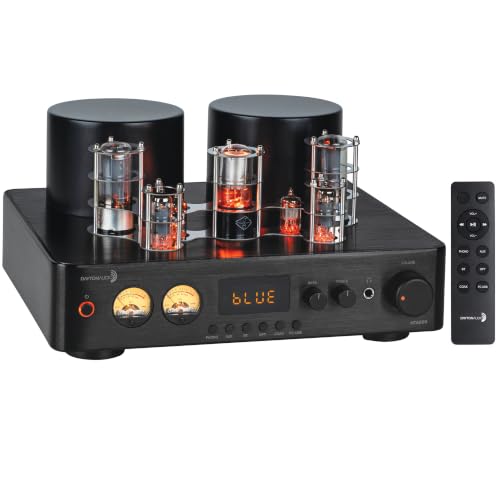
- 100W per channel RMS at 4 ohms
- Hybrid tube preamp with Class A/B amplification
- Bluetooth, USB DAC, phono, and digital inputs
Best For: Feature-rich stereo listening with tube character
Flexible GaN Power Stage

- GaN switching transistor supports up to 1 MHz
- Precise PGA2311 volume control
- Stereo direct mode and XLR mono pairing
Best For: Compact, expandable SMSL-based audio systems
Best Value Integrated Amp
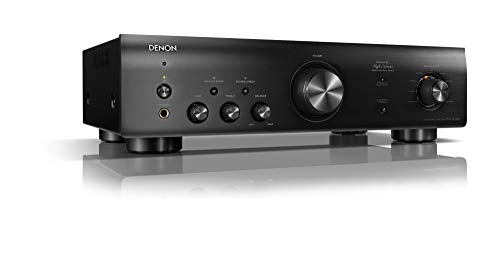
- 70W-per-channel stereo output
- Bluetooth, DAC, digital inputs, and phono input
- Analog Mode for focused analog listening
Best For: Flexible two-channel home audio systems
Best Dedicated Power Upgrade
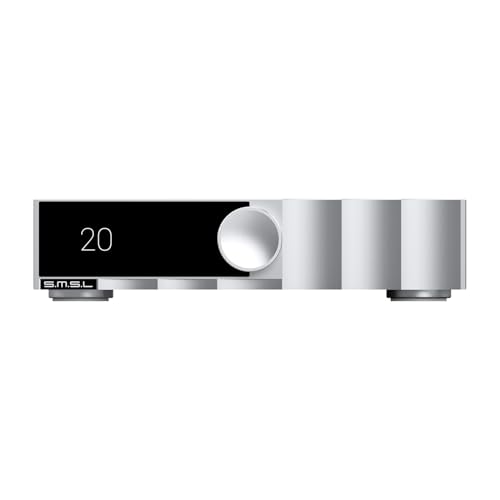
- Stereo and XLR mono operating modes
- GaN power device and PGA2311 volume chip
- Overheat and overcurrent protection
Best For: Expandable systems using a separate preamp
Best Feature-Rich Class D Amp

- TPA3255 amplifier with ESS9038Q2M DAC
- Balanced, USB, optical, coaxial, and Bluetooth inputs
- Subwoofer pre-out, 12V trigger, and digital VU meter
Best For: Flexible digital stereo or 2.1 systems
Classic Warmth

- Pure Class A stereo output for a warm, smooth presentation
- 20W x2 at 8 ohms; 25W x2 at 4 ohms
- Large filter array, toroidal transformer, and relay protection
Best For: Warm-sounding desktop and bookshelf-speaker systems
Tube-Style Versatility
Fosi Audio MC331 Integrated Amplifier
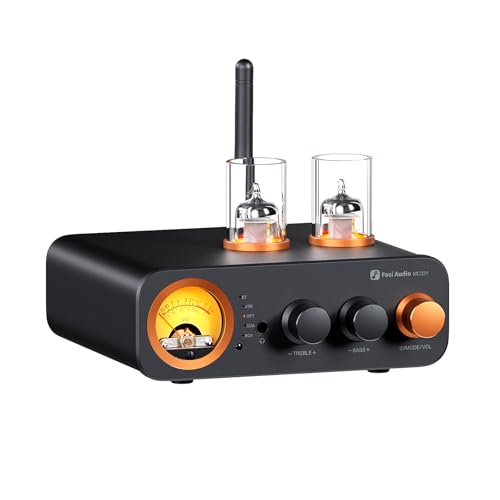
- Integrated DAC, amplifier, preamp, and headphone amp
- Bluetooth, USB, optical, coaxial, and RCA connectivity
- Up to 105W x2 at 4 ohms with replaceable tubes
Best For: Flexible desktop and bookshelf-speaker systems
Compact High Power
Fosi Audio V3 Stereo Amplifier

- Up to 300W x2 for 2–8 ohm passive speakers
- TPA3255 Class D design with low stated noise
- Op-amp swapping and volume-controlled pre-out
Best For: High-output desktop, bookshelf, tower, and home-theater systems
Balanced Digital Powerhouse – Yamaha A-S801BL
The Yamaha A-S801BL is a strong all-in-one choice for anyone seeking a power amplifier for audiophiles with both digital and traditional sources. Its 100-watt-per-channel output, USB DAC, phono input, and flexible speaker switching make it well suited to a detailed stereo system.
Best For: Audiophiles building a versatile digital-and-analog stereo setup.
Pros:
- 100 watts per channel from 20 Hz to 20 kHz at 0.019% THD
- USB DAC supports DSD up to 5.6 MHz and PCM up to 384 kHz/32-bit
- Includes phono, coaxial, optical, and gold-plated analog inputs
- Supports Speakers A, B, and A+B operation
Cons:
- At 26.7 pounds, it is not especially lightweight
- It is an integrated amplifier rather than a dedicated power-amplifier-only component
With its substantial power supply, 12,000 µF block capacitors, and broad 10 Hz–100 kHz frequency response, the A-S801BL is a practical centerpiece for a high-resolution stereo system.
Compact Monoblock Specialist – Fosi Audio V3 Mono
The Fosi Audio V3 Mono is a space-saving power amplifier for audiophiles who want to drive one passive speaker per chassis. Its Class D design, balanced inputs, high rated output, and AVR-friendly monoblock format suit stereo, multichannel, and home-theater builds.
Best For: Modular systems and high-power speaker setups requiring compact monoblocks.
Pros:
- Up to 240 watts at 4 ohms from each monoblock
- Supports XLR/TRS balanced and RCA single-ended inputs
- PFFB technology and TPA3255 platform target low distortion and load stability
- Compact chassis uses integrated heat dissipation and side ventilation
Cons:
- Each unit drives one passive speaker, so a stereo system requires two amplifiers
- Requires the included 48V/5A power supply
- Speaker cables should be connected only while the unit is powered off
The V3 Mono stands out for flexible system expansion, with auto signal sensing and replaceable DIP8 dual op-amps for users who enjoy fine-tuning their setup.
Warm Hybrid All-Rounder – Dayton Audio HTA200
The Dayton Audio HTA200 combines tube-preamp character with Class A/B amplification, making it an appealing power amplifier for audiophiles who want a warmer presentation and broad source compatibility. Bluetooth 5.0, USB, phono, optical, coaxial, and AUX inputs keep system setup straightforward.
Best For: Stereo listeners who want tube flavor, modern connectivity, and strong speaker drive.
Pros:
- Provides 100 watts per channel RMS at 4 ohms
- Hybrid tube and Class A/B design adds a classic listening angle
- Includes Bluetooth 5.0, USB DAC, phono, optical, coaxial, and AUX inputs
- Offers a subwoofer preamp output, headphone output, tone controls, and remote
Cons:
- Its broad feature set may be more than needed for a minimalist power-amp system
- Tube-based operation may not suit listeners seeking a strictly solid-state presentation
With VU meters, exposed tubes, motorized volume, and dedicated 2.1-system support, the HTA200 is designed as a complete and visually distinctive stereo hub rather than a bare power stage.
Flexible GaN Power Stage – SMSL PA200
The SMSL PA200 is a compact power amplifier for audiophiles who value efficient switching technology and system flexibility. It supports stereo operation, a direct post-stage mode, and XLR-based mono pairing for installations that need more power from a modular design.
Best For: Compact stereo systems and expandable setups using SMSL decoding or preamp components.
Pros:
- Uses an Infineon gallium nitride power transistor with switching up to 1 MHz
- PGA2311 volume control is designed for precise adjustment and low distortion
- Supports stereo direct mode and XLR mono-mode pairing
- Includes gold-plated terminals plus overheating and overcurrent protection
Cons:
- Listed output power is 35 watts
- Its mono power-expansion feature requires combining two units
- Best suited to systems that can take advantage of its preamp and mode flexibility
The PA200 is an intriguing option for listeners assembling a compact component stack, especially those interested in direct signal paths and the ability to scale from stereo to paired mono operation.
Best Value Integrated Amp – Denon PMA-600NE
If you want a practical power amplifier for audiophiles without building a separate stack, the Denon PMA-600NE combines stereo amplification, Bluetooth, digital inputs, a built-in DAC, and a phono preamp in a slim chassis. Its 70W-per-channel output at 4 ohms suits a broad range of home speakers.
Best For: Audiophiles seeking a versatile two-channel integrated amplifier for digital sources, Bluetooth listening, and turntables.
Pros:
- 70W-per-channel integrated amplification at 4 ohms
- Includes Bluetooth, two optical inputs, coaxial input, and phono input
- Analog Mode can disengage digital circuits for an undivided analog experience
- Uses Denon’s Advanced High Current push-pull power amplifier circuit
Cons:
- Limited to two-channel stereo operation
- Does not provide the extensive power or mono-bridging options of a dedicated power amplifier
The PMA-600NE is a well-rounded choice when convenience matters as much as sound quality. It is especially appealing for mixed digital-and-analog systems that need one compact control center.
Best Dedicated Power Upgrade – SMSL VMV PA200
The SMSL VMV PA200 is a dedicated power amplifier for audiophiles who want more system flexibility than a conventional integrated amp provides. It supports stereo operation, pass-through mode, and an XLR mono mode that can combine two units for substantially greater power delivery.
Best For: Enthusiasts pairing a dedicated preamp with demanding or power-hungry speakers.
Pros:
- XLR input mono mode allows two units to form a higher-power stereo configuration
- Stereo pure amplifier pass-through mode supports a direct signal path
- Uses an Infineon GaN power device and TI PGA2311 volume chip
- Includes overheat and overcurrent protection
Cons:
- Its advanced mono configuration requires purchasing and integrating a second unit
- Dedicated amplifier design requires a separate preamp or source with suitable control capabilities
- Warranty is listed as 12 months
With its selectable operating modes and protection circuitry, the PA200 is aimed at system builders rather than casual listeners. It makes the most sense when balanced connectivity and future power expansion are priorities.
Best Feature-Rich Class D Amp – AIYIMA A80
The AIYIMA A80 is a feature-rich power amplifier for audiophiles who want high-resolution digital playback, substantial Class D output, and broad connectivity in one compact component. Its TPA3255 amplifier, ESS9038Q2M DAC, balanced inputs, subwoofer pre-out, and Bluetooth support cover both desktop and home audio setups.
Best For: Users building a flexible digital-focused stereo or 2.1 system with high-resolution sources and modern control features.
Pros:
- Combines an ESS9038Q2M DAC with a TPA3255 Class D amplifier
- Supports DSD256 and PCM high-resolution audio
- Offers TRS balanced, USB, optical, coaxial, and Bluetooth inputs
- Includes subwoofer pre-out, tone controls, 12V trigger input, remote, and digital VU meter
Cons:
- Its many features may be unnecessary for a simple analog-only system
- Maximum output depends on the connected speakers and system configuration
- The supplied notes do not specify a warranty period
The A80 stands out for combining DAC functionality, amplification, balanced connectivity, and 2.1-system support. It is a strong fit for listeners who want one versatile hub rather than separate digital and analog components.
Classic Warmth – A1S Pure Class A Amplifier
For listeners seeking a power amplifier for audiophiles with a deliberately traditional presentation, the A1S pairs a pure Class A design with a claimed warm, smooth tonal signature. Its 20W-per-channel output at 8 ohms suits compatible desktop and bookshelf speakers, while the substantial power supply is designed for responsive dynamics.
Best For: Audiophiles building a focused, two-channel desktop or bookshelf-speaker system who value a warm, smooth presentation.
Pros:
- Pure Class A stereo output rated at 20W x2 into 8 ohms and 25W x2 into 4 ohms
- Large filter-capacitor array and toroidal transformer support the amplifier’s power reserve
- Omron relay provides switch-on/off shock and DC-output protection
- Includes RCA cable, power cable, and a one-year manufacturer warranty
Cons:
- Limited to 110V AC input according to the supplied specifications
- Its 25W maximum output may be less suitable for demanding or inefficient speakers
- It is a power amplifier rather than an all-in-one source-equipped unit
The A1S is a specialized choice for buyers who want classic Class A character and a straightforward stereo setup. Confirm speaker sensitivity, impedance, and local voltage compatibility before purchasing.
Tube-Style Versatility – Fosi Audio MC331 Integrated Amplifier
The Fosi Audio MC331 is a flexible power amplifier for audiophiles who want amplification, digital conversion, source switching, and headphone support in one compact component. Bluetooth, USB, optical, coaxial, and RCA inputs make it practical for mixed modern and traditional setups.
Best For: Desktop listeners and small home-audio systems needing broad connectivity, remote control, and a tube-inspired presentation.
Pros:
- Combines DAC, amplifier, preamplifier, and headphone amplifier functions
- Offers Bluetooth, USB, coaxial, optical, and RCA inputs
- Rated up to 105W x2 at 4 ohms for driving bookshelf speakers
- Includes replaceable tubes, bass and treble adjustment, remote control, and pre-out
Cons:
- The supplied notes do not specify output power at other speaker impedances
- Its integrated tube and VU-meter design may not suit listeners wanting a strictly minimalist solid-state component
- A turntable requires a built-in phono preamp or an external phono stage
Choose the MC331 when convenience and system flexibility matter as much as amplification. It is especially appealing for desktop use, but check your source connections and speaker impedance before building around it.
Compact High Power – Fosi Audio V3 Stereo Amplifier
For buyers seeking a power amplifier for audiophiles in a small enclosure, the Fosi Audio V3 emphasizes high output, low noise, and upgrade flexibility. With its included 48V power supply, the Class D design is intended to drive 2–8 ohm passive speakers in desktop, bookshelf, tower, or home-theater systems.
Best For: Listeners who want substantial power in a compact two-channel amplifier and enjoy experimenting with op-amp upgrades.
Pros:
- Up to 300W x2 output and support for 2–8 ohm speakers, according to the supplied notes
- TPA3255 Class D platform with stated 88dB SINAD, 110dB SNR, and 140uV noise floor
- Top-and-bottom ventilation and full-body heatsink design support cooling
- Volume-controlled pre-out and replaceable compatible dual op-amps add flexibility
Cons:
- The supplied notes do not list built-in Bluetooth, DAC, or other source inputs
- Op-amp experimentation requires separately selected compatible components
- System performance depends on the connected source, speakers, and 48V power supply
The V3 is a strong fit for a simple, high-output stereo chain where the source already provides the required inputs. Its compact design and adjustable pre-out also make it useful in systems that may expand later.
How We Picked the Best Power Amplifier for Audiophiles
We focused on amplifiers that offer a meaningful combination of sound quality, usable power, reliable connectivity, and practical value. The selection includes integrated stereo amplifiers, mono power amplifiers, Class D designs, Class A models, tube hybrids, and compact desktop-friendly options.
Our comparisons considered continuous power claims, speaker-driving ability, input and output options, digital features, Bluetooth support, build practicality, and whether each amplifier suits a dedicated hi-fi system, home theater, desktop setup, or secondary listening room. Because wattage alone does not determine performance, speaker sensitivity, impedance, room size, and listening distance should all influence your final choice.
Quick Comparison
- Best all-around integrated option: Yamaha A-S801BL, with substantial connectivity and a built-in DAC.
- Best compact high-power approach: Fosi Audio V3 or V3 Mono, depending on whether you need stereo or separate monoblocks.
- Best hybrid tube flexibility: Dayton Audio HTA200 or Fosi Audio MC331.
- Best traditional two-channel simplicity: Denon PMA-600NE.
- Best pure Class A character: A1S Pure Class A, particularly for efficient speakers and closer listening.
- Best feature-focused compact DAC amplifier: AIYIMA A80.
Key Buying Factors for a Power Amplifier for Audiophiles
Power and Speaker Matching
Check your speakers’ nominal impedance, minimum impedance, sensitivity, and recommended amplifier range before buying. Higher-powered models are useful for larger rooms, inefficient speakers, and dynamic music, while efficient bookshelf speakers may perform beautifully with a lower-powered Class A or tube design.
Amplifier Topology and Sound Character
Class D amplifiers are typically efficient, compact, and powerful. Class A designs can offer a distinctive smooth presentation but produce more heat and usually deliver less power. Tube and hybrid amplifiers may add a warmer character, though tube behavior, maintenance, and speaker matching matter.
Inputs, DACs, and System Expansion
Choose an integrated amplifier if you want a single component with source connections and possibly Bluetooth or digital inputs. A mono amplifier can make sense when you want dedicated amplification per channel. XLR, RCA, optical, USB, subwoofer, headphone, and pass-through connections should match both your current sources and planned upgrades.
Size, Heat, and Controls
Measure your shelf or rack space and allow ventilation around the chassis. Compact amplifiers save room, while larger integrated units often provide more substantial controls and connection options. Consider whether you prefer front-panel controls, a remote, visible meters, or a minimalist design.
Who Should Buy Which Power Amplifier for Audiophiles?
Choose the Yamaha or Denon if you want a conventional, versatile stereo hub. Pick the Fosi Audio V3, AIYIMA A80, or SMSL models for compact systems where efficient power and modern features matter. The Fosi V3 Mono is better suited to listeners building a modular system with one amplifier per speaker. Consider the Dayton or MC331 if you want tube coloration alongside practical modern connectivity. The A1S Pure Class A is best for listeners prioritizing its operating character and pairing it with appropriately efficient speakers.
Before ordering, confirm the amplifier’s power specification, input requirements, speaker impedance compatibility, and return policy. The best Power Amplifier for Audiophiles is the one that fits your speakers, room, sources, and listening habits—not simply the model with the largest number on the box.