Whether you want to revisit old mixtapes, record voice notes, or convert cassettes to digital files, the right cassette recorder can make the process far easier.
This roundup compares 10 cassette recorders across portable players, dual-deck systems, USB converters, and simple voice-recording models so you can choose based on features, format support, and everyday usability.
Best 10 Cassette Recorders Picks for 2026
Most Versatile Portable Option
QFX RETRO-38BT Solar Cassette Recorder
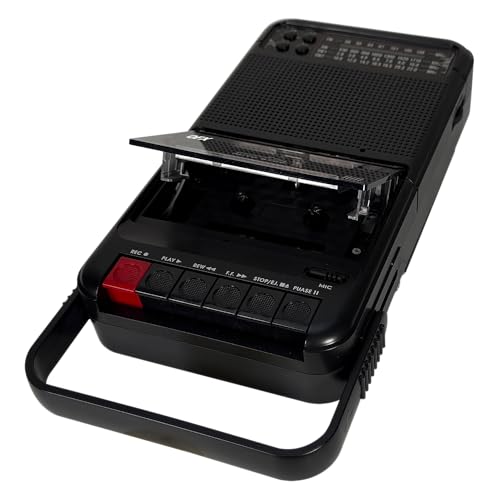
- Records from microphone, Bluetooth, USB, or radio
- Solar and AC rechargeable power
- AM/FM/SW radio and MP3 playback
Best For: Flexible portable playback and recording
Best for Tape Deck Workflows
TEAC W-1200B Dual Cassette Deck

- Dual decks record and play tapes
- USB digital output for PC or Mac
- Dubbing, mic mixing, and pitch control
Best For: Home tape duplication and archiving
Best Compact Analog Pick
SEMIER Portable Cassette Recorder

- Compact, lightweight portable design
- Records audio or AM/FM radio
- DC or AA battery operation
Best For: Simple portable tape playback and recording
Best for Tape-to-Digital Conversion
Gracioso 669W Cassette Converter

- Converts tapes to USB or TF card
- Records USB or TF music to cassette
- Plays tape, USB, and TF card media
Best For: Cassette preservation and format conversion
Most Connected Pick
QFX RETRO-39BT Shoebox Recorder

- USB-to-cassette recording
- Cassette, Bluetooth, FM, mic, and line-in recording to USB
- AC or four C-battery operation
Best For: Versatile home, travel, and digital-to-tape recording
Simple Recording Pick
PROSCAN Portable Cassette Recorder

- One-touch cassette recording
- Standing and external microphone support
- Headphone, AUX-in, fast-forward, and rewind
Best For: Basic voice recording and cassette playback
Best Conversion Features
USB Tape Recorder and Converter

- Converts tapes to WAV on a USB drive
- Records external audio to cassette or USB
- Built-in 3W speaker and portable handle
Best For: Standalone tape preservation and digital conversion
Simple Voice-Note Cassette Recorder
Coby CVR-22 Cassette Player and Recorder

- Plays tapes and records audio
- Built-in microphone for voice notes
- AC or four-C-battery operation
Best For: Easy home or portable voice recording
One-Touch Cassette Recorder
Jensen MCR-100 Portable Cassette Recorder

- One-touch recording control
- Automatic level control for consistent volume
- Aux input and built-in microphone
Best For: Students and casual, low-fuss recording
Tabletop Microphone Cassette Recorder
Coby CVR42BK Cassette Player with Standing Mic
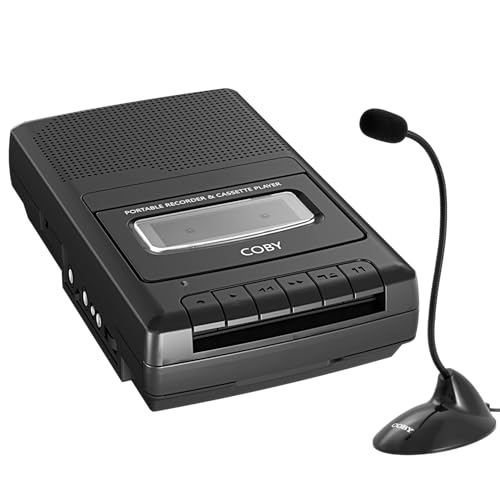
- Detachable standing microphone
- Built-in speaker, headphone jack, and aux
- AC or four-C-battery power
Best For: Hands-free recording at desks, classrooms, or meetings
Most Versatile Portable Option – QFX RETRO-38BT Solar Cassette Recorder
For shoppers comparing cassette recorders, the QFX RETRO-38BT stands out as a portable shoebox-style model with several recording and playback sources. It can record from its built-in microphone, Bluetooth, USB, or AM/FM/SW radio directly to tape, while its rechargeable design supports use away from an outlet.
Best For: Buyers who want a cassette recorder combined with Bluetooth, USB, and multi-band radio playback.
Pros:
- Records to cassette from the built-in microphone, Bluetooth, USB, or radio.
- Includes Bluetooth streaming and USB MP3 playback.
- Solar and AC charging with rechargeable batteries included.
- Supports AM, FM, SW1, and SW2 radio bands.
Cons:
- The larger shoebox-style design is less compact than a pocket cassette player.
- Solar charging may be less convenient than charging solely from an outlet.
The RETRO-38BT is a strong fit when flexibility matters more than minimal size. Its broad source compatibility and rechargeable power make it one of the more adaptable cassette recorders in this group.
Best for Tape Deck Workflows – TEAC W-1200B Dual Cassette Deck
TEAC W-1200B Dual Cassette Deck with Recorder with USB Pitch Control Karaoke-Mic-in and Remote
Check Price On AmazonFor home audio setups and cassette archiving, the TEAC W-1200B is a full-size dual-deck choice among cassette recorders. Both decks support recording and playback, while USB output enables CD-quality digital recording to a PC or Mac.
Best For: Users who need dual-deck recording, dubbing, karaoke features, or computer-based cassette archiving.
Pros:
- Two independent cassette decks support recording and playback.
- Offers one-touch dubbing and parallel recording to two tapes.
- USB output supports up to 48kHz/16-bit PCM digital recording.
- Includes mic mixing, pitch control, remote control, and Type I/II recording support.
Cons:
- Its deck-based design is intended for a home setup rather than portable use.
- It requires a computer for USB-based digital archiving.
The W-1200B is the most capable option here for organized tape duplication and digitization. Choose it when recording controls and dual-deck functionality are more important than portability.
Best Compact Analog Pick – SEMIER Portable Cassette Recorder
Shoppers seeking simple cassette recorders with a small footprint may prefer the SEMIER portable model. It plays tapes, records audio or AM/FM radio through its built-in microphone, and includes an external microphone, headphones, and flexible DC or AA battery power.
Best For: Everyday portable tape listening and straightforward voice or radio recording.
Pros:
- Compact 4.6-by-3.6-by-1.4-inch design weighing 0.43 pounds.
- Records audio or radio to blank cassettes using the built-in microphone.
- Includes an external microphone and headphones.
- Offers DC 5V or two-AA-battery operation.
Cons:
- It lacks the USB, Bluetooth, and digital conversion features found on more multifunctional models.
- Its 3-watt speaker is designed for basic portable listening rather than a larger-room setup.
The SEMIER keeps the cassette experience uncomplicated and portable. It is a practical pick for users who mainly need tape playback, radio listening, and basic recording without extra digital features.
Best for Tape-to-Digital Conversion – Gracioso 669W Cassette Converter
The Gracioso 669W is aimed at buyers who want cassette recorders with modern file-conversion options. It plays tapes, USB drives, and TF cards, records through its built-in or external microphone, and can transfer cassette content to USB or TF card in FAT32 format.
Best For: Users who want to play, record, and convert cassette audio using USB drives, TF cards, or a computer.
Pros:
- Converts cassette content to USB or TF card storage.
- Can record USB or TF card music back to cassette.
- Supports tape, USB, and TF card playback modes.
- Includes a 3.5mm headphone jack and Type-C power/data cable.
Cons:
- USB and TF card recording requires FAT32 formatting.
- Computer transfers use included Audacity software rather than a standalone computer connection workflow.
- Four C batteries may add weight and cost for portable use.
The 669W is the most conversion-focused choice in this roundup. Its broad recording paths make it useful for preserving tapes while still supporting traditional cassette playback and recording.
Most Connected Pick – QFX RETRO-39BT Shoebox Recorder
For shoppers comparing cassette recorders, the QFX RETRO-39BT stands out for its unusually broad connectivity. It can record USB audio to cassette, send cassette or external audio to USB, and play Bluetooth, MP3, and FM content through its built-in speaker.
Best For: Users who want a versatile cassette recorder with USB recording, Bluetooth playback, and multiple input options.
Pros:
- Records digital audio from a USB drive directly to cassette.
- Supports recording from cassette, Bluetooth, FM radio, microphone, or line-in to USB.
- Offers USB, line-in/out, external microphone, Bluetooth, MP3, and FM functionality.
- Works from AC power or four C batteries and includes a carrying handle.
Cons:
- Four C batteries are required but not included.
- Its 1.7-pound shoebox design may be less compact than a basic handheld player.
The RETRO-39BT is a strong all-around option when recording flexibility matters more than a minimalist design. Its USB-to-cassette feature is particularly useful for moving digital audio onto blank tapes.
Simple Recording Pick – PROSCAN Portable Cassette Recorder
PROSCAN Cassette Player & Recorder with Microphone, Headphone Jack, Aux in, Black
Check Price On AmazonThe PROSCAN is a straightforward choice among cassette recorders for playing tapes and capturing spoken audio. Its one-touch recording button, built-in standing microphone, external microphone jack, and automatic level control support interviews, classes, and conferences.
Best For: Buyers seeking a simple, lightweight cassette player and recorder for voice recording and tape playback.
Pros:
- One-touch recording simplifies interviews, classes, and conferences.
- Includes a standing microphone and an external microphone jack.
- Automatic level control is designed to support clear recordings.
- Provides fast-forward, rewind, headphone, AUX-in, and AC/DC operation.
Cons:
- The supplied notes list analog operation and do not indicate USB recording or tape conversion.
- Its corded-electric power specification may require checking the intended AC/DC setup before purchase.
Choose the PROSCAN when ease of use and voice recording are the priorities. It covers the basic cassette functions without the more extensive digital connectivity found on some competing models.
Best Conversion Features – USB Tape Recorder and Converter
This cassette recorder is aimed at shoppers who want to preserve tapes digitally as well as play and record them. It converts cassette content to WAV files on a USB drive without a computer or added software, while also supporting external recording to cassette or USB.
Best For: Tape owners who want standalone WAV conversion, USB recording, and portable cassette playback.
Pros:
- Converts tapes to WAV files directly onto a USB flash drive.
- Can record external audio to cassette or USB in its selectable cassette/USB modes.
- Includes a built-in 3W speaker, integrated microphone, and dedicated microphone.
- Offers a retractable handle, 3.5mm headphone jack, and four-C-battery or USB-to-DC power options.
Cons:
- C batteries are not included, and the AC adapter is sold separately.
- Its 2-pound body is heavier than the PROSCAN listed here.
- The supplied notes specify WAV conversion but do not mention Bluetooth or FM radio.
This model makes the most sense for archiving a cassette collection without relying on a computer. Its direct WAV workflow and flexible recording modes give it a practical edge for preservation projects and classroom or voice use.
Simple Voice-Note Cassette Recorder – Coby CVR-22 Cassette Player and Recorder
The Coby CVR-22 is a straightforward choice among cassette recorders for playing tapes and capturing voice notes, lectures, or interviews. Its built-in microphone, clear controls, and AC-or-battery operation make it practical for home use or portable recording.
Best For: Seniors, students, and anyone wanting an easy cassette player and recorder with built-in voice recording.
Pros:
- Plays cassettes and records audio in one compact device.
- Built-in microphone supports convenient voice-note and lecture recording.
- Runs on four C batteries or AC power.
- Includes a headphone jack and aux input for flexible listening.
Cons:
- Requires four C batteries for portable use.
- The built-in microphone is designed primarily for speech capture.
Choose the CVR-22 if simple operation matters more than advanced recording controls. Large, clearly labeled buttons and multiple listening options keep it accessible for everyday cassette playback and basic audio capture.
One-Touch Cassette Recorder – Jensen MCR-100 Portable Cassette Recorder
The Jensen MCR-100 is one of the more convenient cassette recorders for quick, uncomplicated capture. One-touch recording, automatic level control, a built-in condenser microphone, and an auxiliary input give it useful flexibility for notes, lectures, music, and connected audio sources.
Best For: Students, casual note-takers, and users who want simple recording with automatic level adjustment.
Pros:
- One-touch recording simplifies capturing lectures, music, or personal notes.
- Automatic level control helps maintain consistent recording volume.
- Auxiliary input connects compatible external audio sources.
- Retractable handle and compact shoebox design support portability.
Cons:
- Uses a mono microphone operation mode.
- Includes a limited 90-day manufacturer warranty.
The MCR-100 is a practical pick when ease of recording is the priority. Its automatic level control reduces setup work, while the headphone and auxiliary connections make it adaptable for private listening or recording from another source.
Tabletop Microphone Cassette Recorder – Coby CVR42BK Cassette Player with Standing Mic
The Coby CVR42BK stands out among cassette recorders for its detachable standing microphone and hands-free tabletop setup. It also combines cassette playback and recording with a built-in speaker, headphone jack, aux input, and AC-or-battery power for use at home, school, work, or on the go.
Best For: Classrooms, meetings, interviews, seniors, and users who prefer hands-free voice recording.
Pros:
- Detachable standing microphone supports hands-free tabletop recording.
- Built-in speaker, headphone jack, and aux input provide flexible playback.
- Works with four C batteries or the included AC adapter.
- Large controls are easy to use for playback and recording.
Cons:
- Its 1.8-pound weight is less lightweight than some portable options.
- The microphone operation is listed as mono and stereo rather than a specialized multichannel setup.
Consider the CVR42BK if microphone placement and hands-free use are important. The standing microphone adds convenience for tabletop recording, while the speaker and simple controls make playback accessible to a wide range of users.
How We Picked the Best Cassette Recorders
We evaluated these Cassette Recorders by looking at their primary use cases, recording and playback features, connectivity, portability, and ease of operation. Models were considered for how well they serve different buyers, including listeners who want a basic tape player, users digitizing cassette collections, and households that need a simple voice recorder.
Key distinctions include cassette-to-USB or SD conversion, microphone inputs, built-in speakers, headphone support, AM/FM radio, auxiliary connectivity, battery operation, and dual-deck functionality. We also considered whether each design is better suited to occasional portable use or a more permanent home audio setup.
Quick Comparison
| Best For | Look For |
|---|---|
| Basic portable playback | Built-in speaker, headphone jack, battery power, and compact construction |
| Voice recording | Built-in microphone, one-touch recording, and straightforward controls |
| Tape digitization | USB or SD recording, WAV/MP3 support, and computer connectivity |
| Home cassette copying | Dual cassette decks, recording controls, and reliable line or microphone inputs |
| Flexible listening | Auxiliary input, radio tuning, remote control, or karaoke microphone support |
Key Buying Factors for Cassette Recorders
Playback and Recording Needs
First decide whether you need playback only or want to record onto blank tapes. Some models are designed for voice memos and announcements, while others support broader recording through a microphone, auxiliary source, or second cassette deck.
Digital Conversion
If your goal is preserving older tapes, choose a model that can convert audio through USB, a USB drive, or an SD card. Check the supported file format and workflow: some devices record directly to removable storage, while others require a computer and compatible software.
Inputs, Outputs, and Controls
A headphone jack is useful for private listening, while an auxiliary input can connect phones or other audio sources. Microphone inputs matter for voice recording and karaoke-style use. Simple physical controls may be preferable if several family members will use the recorder.
Power and Portability
Battery-powered models are convenient for classrooms, travel, interviews, and rooms without a nearby outlet. Rechargeable designs reduce battery waste, while AC-compatible units are usually better for extended home listening.
Build and Tape Compatibility
Look for a stable cassette mechanism, accessible controls, and a design that protects the tape during insertion and removal. If you own valuable or irreplaceable recordings, use a well-maintained deck and avoid repeatedly playing damaged tapes.
Who Should Buy Which Cassette Recorders?
Choose a compact portable recorder if you mainly want quick playback, radio access, or occasional voice recording. A model with a built-in microphone is the practical choice for spoken notes, interviews, or simple dictation. Buyers converting a cassette collection should prioritize USB, SD, or computer-based recording rather than choosing solely by speaker size.
For home audio enthusiasts who need to copy tapes or manage multiple cassettes, a dual-deck system offers the most flexibility. If you want one device for music, microphones, and external sources, prioritize auxiliary and microphone inputs. Finally, buyers seeking the simplest option should focus on dependable playback, clear controls, headphone support, and the power method that best matches their routine.