The best glider RC airplanes make learning to fly more approachable while still offering the satisfaction of smooth climbs, long glides, and controlled turns. The models in this roundup range from simple two-channel trainers to advanced sailplanes and aerobatic foam aircraft.
Before buying, consider the plane’s control layout, stabilization features, setup requirements, wingspan, and included electronics. The right choice depends on whether you want a durable first aircraft, a compact park flyer, or a larger glider for more efficient soaring.
Best 10 Glider Rc Airplanes Picks for 2026
Best Beginner Glider
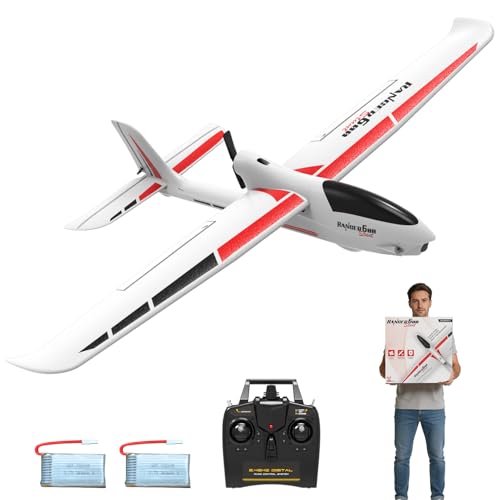
- Three flight-assist levels
- Stabilized outdoor flying
- Ready-to-fly package
Best For: Beginners and adults learning RC flight
Best Compact Performance Glider

- Portable removable-wing design
- 2S/3S brushless power
- Supports sport and aerobatic flying
Best For: Pilots wanting compact performance
Best Accessory Package

- Three flight modes
- Three included flight batteries
- One-key stunts and spare parts
Best For: Adults seeking convenient extended sessions
Best Large Soaring Glider
E-flite Conscendo Evolution 1.5m

- Durable reinforced EPO airframe
- 15–20-plus-minute potential flights
- Telemetry-capable brushless ESC
Best For: Experienced outdoor pilots with Spektrum gear
Beginner Budget Pick

- Self-stabilization helps new pilots learn
- Lightweight crash-resistant foam
- Ready-to-fly kit with two batteries
Best For: Kids and first-time RC pilots
Premium Micro Glider

- AS3X and SAFE Select flight assistance
- Up to 10–20+ minutes of mixed flying
- Removable wing simplifies transport
Best For: Experienced pilots with compatible Spektrum gear
Night-Flying Feature Pick
SU-27 RC Glider with LED Lights

- Six-axis gyro supports stable flight
- LED lights enable night flying
- Two batteries and two takeoff methods
Best For: Outdoor pilots wanting beginner-friendly features and lights
Long-Range Performance Pick

- 82.7-inch reinforced airframe
- Supports 3S or 4S LiPo batteries
- PNP setup requires separate radio gear
Best For: Hobbyists wanting a large, efficient outdoor glider platform
Simple Starter Pick

- Built-in self-stabilization
- Complete ready-to-fly package
- Lightweight foam construction
Best For: Kids and first-time pilots learning basic flight control
Step-Up Beginner Pick
VOLANTEXRC Ranger600 4CH Glider

- Three adjustable flight modes
- Includes three batteries and charger
- Ready-to-fly four-channel design
Best For: New and advancing pilots who want guided progression
Best Beginner Glider – VolantexRC 4CH Trainer
For shoppers comparing glider rc airplanes, this ready-to-fly VolantexRC model is designed to make early flights more manageable. Its Xpilot stabilizer, three flight modes, and pusher-glider layout support gradual skill building and longer power-saving flights.
Best For: Beginners and adults who want an assembled outdoor trainer with assisted flight controls.
Pros:
- Three-level flight assistance supports progression from beginner to expert control.
- Xpilot stabilization helps maintain steady flight in a breeze.
- Ready-to-fly package includes the plane, transmitter, batteries, and spare parts.
- Up to 656 feet of control range and a pusher design can extend flying time.
Cons:
- The transmitter requires four AA batteries.
- It is intended for outdoor use and pilots aged 14 and up.
This is a practical entry point for new pilots who value stability and convenience over a more advanced hobby setup.
Best Compact Performance Glider – E-flite UMX Conscendo
Among glider rc airplanes, the E-flite UMX Conscendo stands out for pilots who want soaring, sport flying, and aerobatics in a smaller format. Its removable wing simplifies transport, while the brushless power system supports both 2S and 3S batteries.
Best For: Experienced RC pilots seeking a portable, feature-rich glider for smaller flying areas.
Pros:
- Compact design is scaled for flying in more places and smaller spaces.
- Removable wing and handled box make storage and transport easier.
- 2S- and 3S-compatible brushless motor includes a folding propeller.
- Optional flaperons and spoilerons add control flexibility.
Cons:
- The BNF Basic version requires compatible radio equipment and a battery setup.
- Its advanced control features may be less suitable for first-time pilots.
Choose this model when portability and aerobatic capability matter more than a complete ready-to-fly package.
Best Accessory Package – VolantexRC Ranger600
This VolantexRC Ranger600 is a convenient choice for shoppers comparing glider rc airplanes with beginner-friendly controls and a generous accessory kit. Three flight modes, one-key stunts, and included spare batteries make it easy to spend more time flying and less time preparing.
Best For: Adults who want a durable foam glider with assisted controls and multiple included batteries.
Pros:
- Three flight modes accommodate beginners through more advanced pilots.
- Rear-mounted propeller helps protect the propeller and electronics.
- Package includes three LiPo batteries, spare propellers, AA batteries, and a five-port charger.
- Offers one-key stunts and up to 656 feet of control distance.
Cons:
- The included features may be more than a casual pilot needs.
- Although listed for indoor/outdoor use, its 23.6-inch span still needs adequate room for flight.
Its strongest advantage is convenience: the included charging and battery accessories support longer sessions with fewer add-on purchases.
Best Large Soaring Glider – E-flite Conscendo Evolution 1.5m
For pilots seeking larger glider rc airplanes, the E-flite Conscendo Evolution combines a 1.5-meter airframe with soaring, sport flying, speed, and aerobatic capability. Its reinforced EPO construction and telemetry-capable ESC suit hobbyists who already own compatible Spektrum equipment.
Best For: Experienced pilots who want a larger, durable BNF glider for extended outdoor flights and aerobatics.
Pros:
- Higher-density EPO creates a stronger, stiffer airframe for faster aerobatic flying.
- Supports soaring, sport flying, high speeds, and high-energy aerobatics.
- Claimed flight times reach 15–20-plus minutes with suitable 3S or 4S batteries and mixed power use.
- Telemetry-capable ESC can provide real-time flight data with compatible equipment.
Cons:
- Transmitter, battery, and charger are sold separately.
- The BNF Basic format requires a compatible Spektrum transmitter.
- Its larger size is less convenient to transport than compact gliders.
This is the most capable option here for pilots who want a full-size-feeling outdoor glider and already have the required radio and batteries.
Beginner Budget Pick – 2CH RC Glider for Kids
For shoppers comparing glider rc airplanes, this ready-to-fly blue model is designed around simple controls and beginner-friendly stability. Its lightweight foam construction, included batteries, and 2.4GHz radio system make it a practical starting point for outdoor practice.
Best For: Kids ages 8 and up, first-time pilots, and buyers seeking a simple ready-to-fly RC glider.
Pros:
- Self-stabilization system supports easier learning.
- Durable, lightweight foam helps handle slight crashes.
- Includes the airplane, remote control, and two lithium-polymer batteries.
- 2.4GHz control supports flying two or more planes without mutual confusion.
Cons:
- Its 2-channel design offers fewer controls than more advanced aircraft.
- Designed for outdoor use, so a suitable flying area is needed.
This is the most approachable option in the group for basic flight practice. The included batteries and one-year aircraft warranty add convenience for beginners, while the limited two-channel layout keeps the learning curve manageable.
Premium Micro Glider – E-flite UMX Radian BNF Basic
Among glider rc airplanes, the E-flite UMX Radian is a compact, factory-finished choice for pilots who already have compatible Spektrum equipment. AS3X and SAFE Select assist with flight control, while the removable wing makes transport and storage easier.
Best For: Pilots age 14 and up who own a compatible transmitter and want a portable micro glider with extended mixed-flight times.
Pros:
- Flight times can reach 10–20+ minutes with power-on and power-off flying.
- AS3X and SAFE Select provide electronic flight assistance.
- One-piece removable wing includes a composite spar for transport.
- Telemetry can show flight-battery voltage on compatible transmitters.
Cons:
- Transmitter, battery, and charger are not included.
- BNF Basic format requires compatible Spektrum equipment.
The UMX Radian is a stronger fit for an established RC hobbyist than a first-time buyer. Its compact design, flight assistance, and telemetry support add capability, but the required transmitter and charging gear increase the setup commitment.
Night-Flying Feature Pick – SU-27 RC Glider with LED Lights
This SU-27 stands out among glider rc airplanes with a fighter-inspired shape, built-in stabilization, and LED lighting for night flights. The ready-to-fly package includes two batteries and supports either hand launches or ground takeoffs, giving newer pilots flexible ways to practice.
Best For: Beginner and intermediate outdoor pilots who want a durable foam aircraft with night-flight lighting and two takeoff options.
Pros:
- Six-axis gyro stabilization is designed to make flight more stable.
- LED light bars support colorful night flying.
- Includes two 3.7V 250mAh batteries.
- Supports hand-throw and ground takeoffs with an approximately 150-meter control range.
Cons:
- Charging takes about 50 minutes for approximately 15 minutes of flying.
- Recommended for open areas and wind below level 4, which limits poor-weather use.
- Some assembly is required for the battery, wheels, and tail.
The SU-27 combines beginner-oriented stabilization with more visual personality than a basic trainer. It is a compelling option for pilots who value LED night flights and flexible takeoffs, provided they follow the included charging and first-flight guidance.
Long-Range Performance Pick – XFLY-MODEL Swift 2100
For shoppers comparing glider rc airplanes, the XFLY-MODEL Swift 2100 is a larger PNP option built around efficient powered flight and longer outings. Its carbon-fiber reinforcement, folding propeller, and 3S/4S brushless power system make it a strong choice for pilots who already have compatible radio gear and batteries.
Best For: Experienced beginners and hobbyists seeking a large, efficient outdoor glider platform.
Pros:
- 82.7-inch wingspan with carbon-fiber reinforcement throughout the model.
- Brushless power system supports 3S or 4S LiPo batteries.
- Folding propeller, metal spinner, and functional flaps support efficient flight.
- Fast assembly requires no glue.
Cons:
- PNP package does not include a transmitter, receiver, or battery.
- Its large size is less convenient for transport and storage.
The Swift 2100 offers the most substantial airframe of this group, with claimed flight times of 10–30 minutes depending on setup and conditions. It is a better fit for pilots prepared to supply and configure the required electronics than for someone seeking a complete starter package.
Simple Starter Pick – HAWK'S WORK 2CH RC Glider
Among glider rc airplanes for new pilots, the HAWK’S WORK 2CH model emphasizes a straightforward learning experience. Its built-in self-stabilization, lightweight foam construction, and included controller, batteries, and charging cable make it a practical ready-to-fly choice.
Best For: Kids ages 8 and up and first-time pilots learning basic directional control.
Pros:
- Self-stabilization system helps beginners learn to fly.
- 2.4GHz controller provides four-direction control.
- Includes two airplane batteries, controller batteries, spare propellers, and USB charging cable.
- Lightweight foam structure is designed to withstand slight crashes.
Cons:
- Two-channel control is less advanced than four-channel alternatives.
- The product is intended for outdoor use rather than indoor flying.
This HAWK’S WORK model is the most accessible option for beginners who want a complete package without sourcing additional equipment. Its stabilization and durable foam body can reduce the learning curve, although experienced pilots may want more control functions.
Step-Up Beginner Pick – VOLANTEXRC Ranger600 4CH Glider
The VOLANTEXRC Ranger600 is one of the more versatile glider rc airplanes for beginners who want room to progress. Its six-axis gyro, four-channel control, three flight modes, included batteries, and ready-to-fly assembly combine guided learning with access to aerobatic features.
Best For: Beginners and advancing pilots who want adjustable assistance and more precise control.
Pros:
- Three flight modes support progression from beginner to expert.
- Four-channel control and six-axis gyro provide stability and precision.
- Includes three LiPo batteries, four AA remote batteries, and a five-port charger.
- Rear-mounted propeller helps protect the propeller and electronics.
Cons:
- Its recommended age is 14 years and up.
- The compact 23.6-inch wingspan is smaller than the XFLY-MODEL option.
With a stated control range of 656 feet and low-battery warnings, the Ranger600 is well suited to outdoor practice and group flying. Its mode selection lets beginners start with assistance and gradually take on more control, while one-key stunts add variety once basic handling improves.
How We Picked the Best Glider Rc Airplanes
We compared these Glider Rc Airplanes by looking at beginner accessibility, control systems, stability technology, construction, power setup, and the amount of equipment required before the first flight. Ready-to-fly and nearly ready-to-fly options were considered separately because they suit different buyers.
We also considered practical details such as wingspan, flight modes, gyro assistance, included batteries and chargers, transmitter compatibility, and whether the aircraft is suited to a small park or a larger open flying area. A good beginner model should be forgiving and durable, while an advanced glider should offer better efficiency, control, or upgrade potential.
Quick Comparison
| Best For | Look For | Typical Setup |
|---|---|---|
| Young beginners | Two-channel controls, lightweight foam, assisted flight | Ready to fly |
| Adult first-time pilots | Four channels, gyro stabilization, multiple flight modes | Ready to fly or bind-and-fly |
| Compact flying | Small wingspan and durable foam construction | Simple battery system |
| Longer glides | Larger wingspan, efficient airframe, suitable launch area | Often PNP or BNF |
| Experienced pilots | Advanced controls, aerobatic capability, upgrade options | May require separate electronics |
Key Buying Factors for Glider Rc Airplanes
Control Channels and Stability
Two-channel aircraft are usually the simplest to learn, while four-channel models provide more control over throttle, rudder, elevator, and ailerons. Six-axis gyros, AS3X, and selectable flight modes can reduce overcorrection and make takeoffs and landings easier, but they do not replace basic piloting skills.
RTF, BNF, and PNP Setup
Ready-to-fly packages generally include the aircraft, transmitter, battery, and charger. Bind-and-fly models typically require a compatible transmitter, battery, and charger. Plug-and-play aircraft usually need a transmitter, receiver, and battery, making them better for pilots who already own compatible equipment.
Wingspan, Durability, and Flying Space
Smaller foam gliders are easier to transport and better suited to parks, but larger wingspans can glide more efficiently in open conditions. Durable foam is valuable for beginners because minor landing mistakes are common. Check local flying rules and choose a clear area away from people, trees, roads, and power lines.
Who Should Buy Which Glider Rc Airplanes?
Choose a two-channel ready-to-fly glider if simplicity, low setup effort, and beginner-friendly handling matter most. Select a four-channel VolantexRC or similar stabilized model if you want room to develop your skills and experiment with different flight modes.
The E-flite UMX models are appealing when compact size, refined stabilization, and compatibility with an existing transmitter ecosystem are priorities. Larger E-flite and XFLY-MODEL sailplanes are better for experienced pilots with adequate open space and the equipment needed to complete the setup. For buyers seeking aerobatics rather than pure soaring, choose a model with multiple modes, stronger control authority, and a durable foam airframe.