The best cinewhoop FPV drones combine protected propellers, stable flight, and compact designs with the camera performance needed for smooth cinematic footage. The right choice depends on whether you prioritize image quality, portability, durability, or an easy all-in-one setup.
We’ve gathered ten notable options, from beginner-ready kits and lightweight whoops to advanced DJI camera drones and dedicated HD shooting platforms. Use the guide below to compare flight systems, video features, control options, and practical ownership costs before you buy.
Best 10 Cinewhoop Fpv Drones Picks for 2026
Ultra-Compact Creator
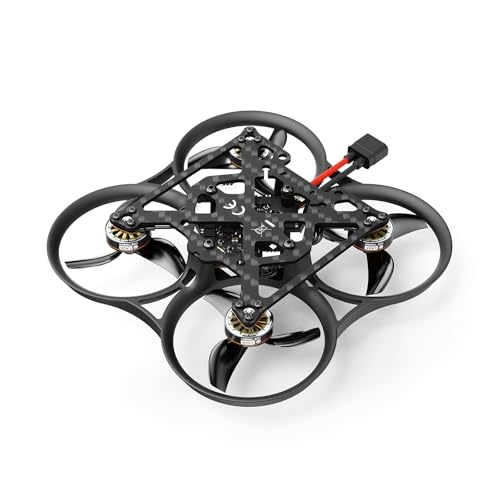
- 39.1g frame without camera or battery
- Integrated four-point vibration damping
- Supports DJI O4 and O4 Pro air units
Best For: Lightweight HD builds and compact cruising
Ready-to-Fly Favorite
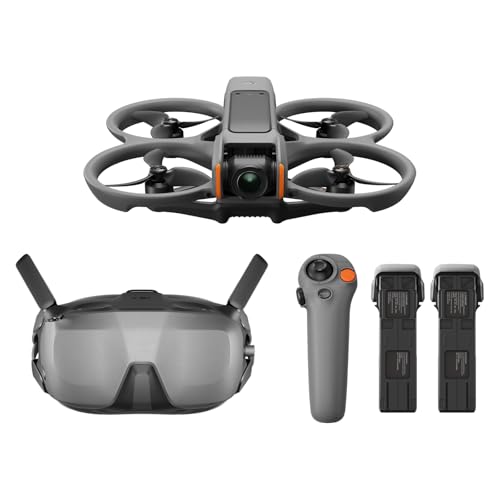
- Complete kit with goggles and motion controller
- 4K/60FPS video with 155-degree field of view
- Three intelligent batteries included
Best For: Beginners wanting an easy complete FPV package
Freestyle Workhorse

- Durable 93.9mm ducted frame
- O4, O4 Wide, and O4 Pro compatibility
- Up to 7.5 minutes with recommended 3S battery
Best For: Freestyle HD shooting and custom FPV builds
Premium 360° FPV Pick

- 8K/60fps HDR 360° imaging
- Integrated guard and obstacle sensing
- Goggles, motion controller, and three batteries included
Best For: Creators seeking immersive FPV flight and flexible 360° aerial footage
Beginner-Friendly Starter Kit

- Three flight modes with speed settings
- Altitude hold and self-protection features
- Complete kit with goggles, transmitter, and batteries
Best For: New pilots learning FPV flight with assisted controls
Ultralight Freestyle Choice
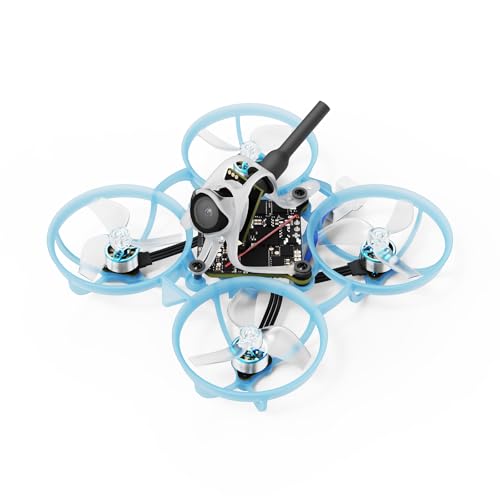
- Ultralight 1S whoop for indoor and outdoor use
- 0702 25000KV motors with three-blade props
- Reinforced frame, canopy, and crash-resistant FC
Best For: FPV pilots seeking compact, durable freestyle performance
Best Premium 360° FPV Camera Drone

- 8K/60fps HDR 360° video capture
- Integrated guard and obstacle sensing
- Three-battery creator-focused bundle
Best For: Creators filming immersive, reframable aerial video
Low-Light Explorer – Gofilm 20 Starlight Cinewhoop
The CADDXFPV Gofilm 20 is a compact option for pilots comparing cinewhoop FPV drones for indoor flights, outdoor exploration, and low-light filming. Its Avatar Moonlight system records 4K/60FPS video, while electronic stabilization and Gyroflow support help smooth footage.
Best For: Pilots and content creators who want lightweight, low-light-capable cinewhoop footage in a compact 115g platform.
Pros:
- 4K/60FPS Starlight video with a 160-degree ultra-wide field of view
- Built-in EIS, Gyroflow support, and 22ms low-latency transmission
- 360-degree protective guards and a lightweight 115g design
- Supports 2S–4S batteries and includes ELRS 2.4GHz
Cons:
- A high-speed microSD card is required for full 4K recording and is not included
- Hover time is listed at approximately 5.5 minutes
Its combination of starlight imaging, protective construction, and compact handling makes the Gofilm 20 particularly appealing for pilots filming in challenging light or tight spaces. Confirm the required goggles, VRX, battery, and microSD setup before buying.
Ultra-Compact Creator – Pavo Pico II O4 Cinewhoop
The BETAFPV Pavo Pico II is a highly compact choice among cinewhoop FPV drones, designed around DJI O4 and O4 Pro air units. Its integrated Bracket II uses four shock absorbers to reduce vibration, while the 39.1g airframe and 1102 motors emphasize nimble indoor and outdoor cruising.
Best For: Builders seeking a lightweight O4/O4 Pro platform with simplified assembly and vibration-damped HD camera mounting.
Pros:
- 39.1g design without camera and battery
- Integrated Bracket II helps reduce jello with four shock absorbers
- Universal carbon plate supports both O4 and O4 Pro air units
- Flight times are listed up to 6.5 minutes
Cons:
- The listing is a PNP configuration, so required control and video components may need to be supplied separately
- Camera and battery are not included in the stated airframe weight
The Pavo Pico II prioritizes low weight, straightforward assembly, and stabilized O4 mounting. It is a strong fit for experienced FPV users who already understand component compatibility and want a small HD cinewhoop platform.
Ready-to-Fly Favorite – DJI Avata 2 Fly Smart Combo
The DJI Avata 2 Fly Smart Combo is a beginner-friendly entry into cinewhoop FPV drones, pairing the aircraft with Goggles N3, RC Motion 3, and three intelligent batteries. Its built-in propeller guard, motion control, and 4K/60FPS camera make it a convenient package for immersive POV filming.
Best For: Beginners and creators who want a complete, easy-to-use FPV package with goggles, motion control, and multiple batteries.
Pros:
- Complete package includes Goggles N3, RC Motion 3, and three batteries
- 4K/60FPS video from a 1/1.3-inch sensor with a 155-degree field of view
- Built-in propeller guards add durability and confidence in tighter spaces
- Motion control and assisted acrobatics are designed for accessible flying
Cons:
- The listed package weight is 1.56kg, making it less minimalist than small custom cinewhoops
- Its included control system may appeal less to pilots seeking a fully manual custom setup
Avata 2 stands out for convenience rather than bare-airframe customization. The included goggles, controller, and three batteries reduce setup decisions, making this one of the most approachable options for newcomers who want to start recording immersive FPV footage quickly.
Freestyle Workhorse – Pavo20 Pro II HD Cinewhoop
The BETAFPV Pavo20 Pro II is built for pilots comparing cinewhoop FPV drones for energetic HD shooting and freestyle flying. Its 93.9mm ducted frame, O4-compatible bracket, adjustable camera tilt, and 3S-focused propulsion system balance crash resistance with responsive performance.
Best For: Experienced FPV pilots who want a durable, O4-ready platform for freestyle footage and longer 3S flights.
Pros:
- Crash-resistant ducts and an ultra-rigid carbon plate use a four-screw assembly
- Supports O4 Air Unit Pro, O4 Wide, and O4 systems
- Camera tilt adjusts from 0 to 40 degrees, with tool-free antenna swapping
- Up to 7.5 minutes of flight time is listed with the recommended 3S 580mAh battery
Cons:
- This PNP configuration requires compatible HD VTX and other setup components
- The higher-power freestyle setup may be more than beginners need
- The recommended battery and O4 system are not identified as included
The Pavo20 Pro II is the more performance-oriented BETAFPV option here, with room for larger 3S batteries and a bracket designed around several O4 configurations. It makes the most sense for pilots comfortable selecting and installing their own FPV electronics.
Premium 360° FPV Pick – DJI Avata 360
The DJI Avata 360 is a premium option for shoppers comparing cinewhoop FPV drones with advanced imaging and immersive flight in mind. Its integrated propeller guard, omnidirectional obstacle sensing, 8K/60fps HDR 360° video, and included goggles and motion controller make it a complete filming-focused package.
Best For: Creators who want 360° reframing, high-resolution aerial footage, and an included immersive FPV setup.
Pros:
- 1-inch-equivalent imaging supports 8K/60fps HDR 360° video.
- Integrated propeller guard and omnidirectional obstacle sensing add flight protection.
- Includes DJI Goggles N3, DJI RC Motion 3, three batteries, and a charging hub.
- Offers 360° and single-lens modes, including 4K/60fps filming.
Cons:
- Its premium imaging features may be more than beginners need.
- At 455 g, it is less ultralight than small whoop-style FPV drones.
- The DJI Fly app must be downloaded from DJI’s official website on Google Play-incompatible devices.
Choose this model when image quality and creative reframing matter as much as FPV flight. It is a feature-rich, ready-to-use package rather than a minimal beginner whoop.
Beginner-Friendly Starter Kit – BETAFPV Cetus Pro FPV Kit
The BETAFPV Cetus Pro is a practical entry point for shoppers exploring cinewhoop FPV drones and wanting the flight gear included. Its brushless whoop design, altitude hold, self-protection features, and three flight modes help new pilots progress from assisted indoor flying toward sport and manual control.
Best For: Beginners who want a complete FPV kit with goggles, transmitter, batteries, and safety-oriented flight assistance.
Pros:
- Includes the drone, LiteRadio 2 SE transmitter, VR02 goggles, two batteries, and charger.
- Normal, Sport, and Manual modes support gradual skill development.
- Altitude hold enables automatic hovering in Normal mode.
- Self-protection and Turtle Mode help with crashes and upside-down landings.
Cons:
- Its 80-meter maximum range is modest compared with longer-range FPV models.
- Altitude hold is limited to Normal mode.
- The beginner-focused 1200TVL video specification is less suited to high-resolution filmmaking.
The Cetus Pro makes sense as a learning-oriented package, especially for indoor practice and first flights. It prioritizes accessible controls and recovery features over advanced camera performance or long-range flying.
Ultralight Freestyle Choice – BETAFPV Air65 II
The BETAFPV Air65 II is a compact choice for shoppers comparing cinewhoop FPV drones for agile freestyle and indoor or outdoor flying. Its ultralight whoop frame, 0702 25000KV motors, reinforced canopy, and impact-resistant flight controller are designed for responsive performance and repeated crashes.
Best For: Experienced FPV pilots who want a lightweight freestyle whoop with strong crash resilience and smooth low-throttle control.
Pros:
- Ultralight 1S design is sized for indoor and outdoor freestyle flying.
- 0702 25000KV motors and 1219S three-blade props provide strong propulsion and low-throttle torque.
- Reinforced frame, canopy, and cushioned flight-controller mounting improve crash resilience.
- Optimized for smooth, cinematic control.
Cons:
- The supplied notes do not specify a transmitter, goggles, batteries, or charger.
- Its freestyle-focused design may be less suitable for shoppers seeking a complete beginner kit.
- The listed dimensions and ultralight 1S setup favor compact performance over long-range capability.
Consider the Air65 II when agility, durability, and a small footprint are priorities. It is best approached as a performance whoop for pilots who already have, or plan to choose, compatible FPV equipment.
Best Beginner Micro FPV Kit – Tinyhawk Lite
The Tinyhawk Lite is a compact cinewhoop FPV drone-style starter kit for beginners who want real-time goggles-based flying rather than delayed phone video. Its ready-to-fly setup includes the drone, controller, and FPV goggles, while Betaflight support gives you room to adjust flight modes and responsiveness as your skills improve.
Best For: Beginners seeking a lightweight, durable FPV kit for indoor practice and casual outdoor flights.
Pros:
- Real FPV video feed is designed for a responsive, low-latency flying experience.
- Complete ready-to-fly package includes goggles and a remote control.
- Lightweight 37g design and tough plastic frame suit learning and crash-prone practice.
- Betaflight configuration supports tuning as your piloting skills develop.
Cons:
- The 720p camera resolution is more modest than higher-end filming drones.
- The small, lightweight design prioritizes agility and learning over heavy-duty aerial imaging.
Choose the Tinyhawk Lite if accessible setup, durability, and hands-on FPV learning matter more than advanced cinematic video quality. Its compact format and adjustable controls make it a practical entry point.
Best Learning-Focused Whoop Kit – BETAFPV Aquila20
The BETAFPV Aquila20 is a beginner-friendly cinewhoop FPV drone kit built around a guided learning path. Its altitude-hold N mode, progressive S and M modes, durable frame, and included goggles and transmitter make it suitable for pilots who want to start stable and gradually move toward manual control.
Best For: New pilots who want a complete FPV system with altitude hold, multiple flight modes, and longer practice sessions.
Pros:
- Three flight modes let beginners progress from stable hovering to manual acrobatics.
- The 2S 1100mAh smart battery provides approximately 10 minutes of flight time.
- PA410 construction is designed to absorb bumps, crashes, and hard landings.
- RTF package includes the drone, VR04 goggles, transmitter, batteries, charger, and carrying case.
Cons:
- The drone cannot switch from N mode to S or M mode during flight.
- A microSD card is excluded despite the goggles’ one-button recording feature.
The Aquila20 stands out for structured skill-building and convenience. It is a strong choice when altitude hold, crash resistance, and included accessories are more important than maximum range or advanced camera specifications.
Best Premium 360° FPV Camera Drone – DJI Avata 360
The DJI Avata 360 is a premium cinewhoop FPV drone option for creators who want immersive 360° capture alongside traditional aerial video. Its integrated propeller guard, omnidirectional obstacle sensing, high-resolution 360° recording, and bundled RC 2 controller make it geared toward creative filming rather than basic FPV practice.
Best For: Content creators who want reframable 360° footage, single-lens aerial video, and an extended multi-battery kit.
Pros:
- 1-inch-equivalent sensors support 8K/60fps HDR 360° video capture.
- 360° footage can be reframed after recording for multiple viewing angles.
- Integrated propeller guard and omnidirectional obstacle sensing add flight confidence.
- Bundle includes an RC 2 controller, charging hub, carrying bag, three batteries, and two 128GB microSD cards.
Cons:
- The listed 4-pound weight is substantially higher than lightweight micro whoop designs.
- The DJI Fly app must be downloaded from DJI’s website rather than Google Play.
- Its advanced 360° imaging features may be excessive for buyers focused mainly on basic FPV training.
For cinematic experimentation, the Avata 360 offers a broader creative toolkit than entry-level cinewhoop FPV drones. Its cost and feature set make the most sense for buyers who will use 360° reframing and dual shooting modes.
How We Picked the Best Cinewhoop Fpv Drones
We evaluated these Cinewhoop Fpv Drones and related protected-propeller models by looking at their intended use, camera and video capabilities, flight performance, included equipment, battery setup, and learning curve. We also considered whether each model is sold as a complete ready-to-fly kit or requires a separate radio transmitter, goggles, batteries, charger, or HD video system.
Because “cinewhoop” can cover several sizes and configurations, this selection includes compact brushless whoops, ducted camera platforms, beginner kits, and advanced DJI systems. Buyers should confirm the exact package contents and compatibility of replacement batteries, goggles, controllers, and video transmitters before ordering.
Quick Comparison
- Best for polished stabilized footage: DJI Avata 2 and DJI Avata 360 models.
- Best for compact HD builds: CADDXFPV Gofilm 20 and BETAFPV Pavo Pico II.
- Best for beginners: BETAFPV Cetus Pro, Aquila20, and Tinyhawk Lite kits.
- Best for lightweight freestyle: BETAFPV Air65 II.
- Best for flexible FPV shooting: BETAFPV Pavo20 Pro II with a compatible HD setup.
Key Buying Factors for Cinewhoop Fpv Drones
Camera and Video System
Check resolution, frame-rate options, stabilization, low-light performance, recording format, and whether video is recorded onboard or transmitted to goggles. A high-resolution camera is useful for editing, but stabilization and reliable image transmission often matter more during real flights.
Flight Time and Batteries
Actual flight time varies with battery size, payload, wind, and flying style. Bundles with multiple batteries cost more upfront but reduce downtime. Verify whether the package includes a charger and whether batteries use proprietary connectors or common FPV formats.
Controls, Goggles, and Skill Level
Ready-to-fly kits are usually the simplest path for new pilots because the radio, goggles, and drone are designed to work together. Experienced pilots may prefer a bind-and-fly or PNP model for compatibility with an existing transmitter and HD video system.
Durability and Operating Environment
Propeller guards help protect people, walls, and propellers, making ducted drones more practical indoors and around obstacles. They add weight and can reduce efficiency, so lightweight open whoops may be better for freestyle or short outdoor sessions. Follow local FPV rules and maintain a clear line of sight where required.
Who Should Buy Which Cinewhoop Fpv Drones?
New pilots should start with a complete kit such as the Cetus Pro, Aquila20, or Tinyhawk Lite, especially if they need goggles and a controller included. Content creators seeking dependable stabilized footage should consider the DJI Avata 2 or an Avata 360 package, while checking camera workflow and accessory costs.
Experienced FPV builders may get more value from the Pavo Pico II, Pavo20 Pro II, or Gofilm 20 because these platforms offer more flexibility for selecting video equipment and control hardware. Indoor and lightweight flying enthusiasts should look closely at the Air65 II, while buyers wanting longer sessions should prioritize multi-battery bundles and readily available replacement packs over headline camera specifications alone.