A well-chosen patch bay can make a podcast studio easier to connect, troubleshoot, and expand. Instead of reaching behind interfaces, preamps, compressors, and recorders, you can manage key signal paths from one accessible panel.
These 10 patch bays for podcasting cover common TRS and XLR workflows, from compact setups to larger balanced studio installations. Use the buying guide below to match the panel format, routing flexibility, and channel count to your equipment.
Best 10 Patch Bays for Podcasting Picks for 2026
Most Flexible Routing

- 48 balanced TRS points
- Normal, half-normal, and thru modes
- 1U rack-mount design
Best For: Flexible balanced routing in a podcast rack
Premium TRS Connectivity

- 48 patchbay points
- 96 gold-plated TRS connectors
- Three-way mode switch
Best For: TRS-based podcast and recording setups
Best Mode Selection
Behringer ULTRAPATCH PRO PX3000

- 48-point balanced patchbay
- Four selectable channel functions
- Rugged high-quality jack construction
Best For: Complex podcast routing with multiple connection modes
Best XLR-Focused Option

- 16 XLR patch points
- 32 gold-plated XLR connectors
- Compact aluminum construction
Best For: Smaller XLR-based podcast studios
Compact Balanced Routing
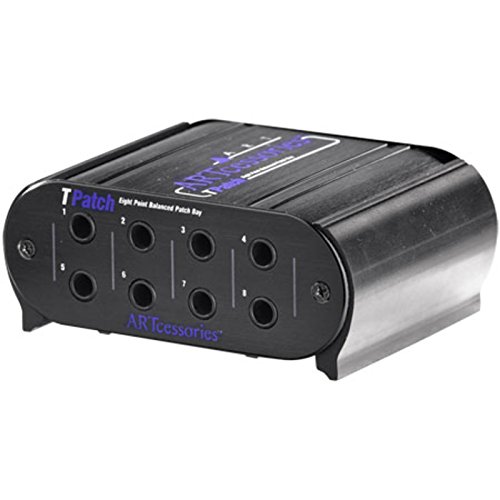
- Eight balanced signal points
- Four linked input/output pairs
- Selectable half-normal or normal modes
Best For: Compact podcast rigs using balanced TRS connections
High-Capacity TRS Connectivity
Black Lion Audio PBR TRS Patchbay

- 48 patchbay points
- 96 gold-plated TRS connectors
- Black-anodized stainless steel construction
Best For: Larger podcast studios with extensive TRS routing needs
Rackmount XLR Organization

- 16 channels with 32 XLR connectors
- 19-inch 1U rackmount format
- Shielded all-steel enclosure with reversible ears
Best For: Rack-based podcast studios using XLR equipment
Compact Modular Routing

- Eight 1/4-inch TRS patch points
- Steel enclosure for rack setups
- Works with compatible audio gear
Best For: Small podcast studios using TRS connections
Flexible XLR Expansion
16-Channel Modular XLR Patch Panel

- Configurable from 4 to 16 channels
- Four removable modular blocks
- Reversible front or rear rack mounting
Best For: Growing XLR-based podcast studios
Front-Panel XLR Access
12-Point XLR Balanced Patchbay

- Brings rear mixer inputs forward
- Twelve XLR patch points
- Reversible rack-friendly design
Best For: Podcast racks needing accessible XLR connections
Most Flexible Routing – Samson S-Patch Plus
For podcast studios that need adaptable patch bays for podcasting, the Samson S-Patch Plus offers 48 balanced points and front-panel switches for changing each channel’s routing mode. Its rack-mount design can make recurring connection changes easier to manage.
Best For: Podcasters who want balanced connections with selectable normal, half-normal, and thru operation.
Pros:
- 48-point, fully balanced 1/4-inch TRS patch bay.
- Front-panel switches select normal, half-normal, or thru modes.
- 1U rack-mount construction centralizes front and rear connections.
Cons:
- Uses 1/4-inch phone connections rather than XLR connectors.
- The many routing options may require careful labeling during setup.
The S-Patch Plus is a strong choice when a podcast rack needs flexible signal routing and convenient access without repeatedly reaching behind other equipment.
Premium TRS Connectivity – Black Lion Audio PBR TRS3
The Black Lion Audio PBR TRS3 is a focused option for patch bays for podcasting, combining 48 points with 96 gold-plated TRS connectors. Its three-way mode switch supports practical routing changes for a multi-device audio setup.
Best For: Podcasters who prioritize gold-plated TRS connections and straightforward three-way routing.
Pros:
- 48-point patchbay with 96 gold-plated TRS connectors.
- Three-way mode switch provides routing flexibility.
- Specified support for sample rates up to 192 kHz.
Cons:
- TRS connectivity may not suit setups centered on direct XLR patching.
- The supplied notes do not identify the specific three switch modes.
With its high connector count and gold-plated TRS hardware, the PBR TRS3 is suited to podcast rooms that want a substantial central patching point for compatible equipment.
Best Mode Selection – Behringer ULTRAPATCH PRO PX3000
Behringer ULTRAPATCH PRO PX3000 Multi-Functional 48-Point 3-Mode Balanced Patchbay
Check Price On AmazonThe Behringer ULTRAPATCH PRO PX3000 gives users several routing choices in a 48-point balanced design, making it a versatile candidate among patch bays for podcasting. Its selectable channel functions can help organize connections between microphones, interfaces, processors, and other compatible studio gear.
Best For: Podcast studios that need multiple selectable routing modes and broad connector compatibility.
Pros:
- 48-point balanced patchbay with 96 pins.
- Channels support parallel, half-normalled, normalled, and open functions.
- Rugged construction and high-quality jack connectors.
Cons:
- The supplied details do not specify a rack size.
- Multiple operating modes may add setup complexity for simple rigs.
The PX3000 stands out when routing flexibility matters more than a minimal configuration, particularly in a podcast studio that connects several types of audio equipment.
Best XLR-Focused Option – Black Lion Audio PBR XLR
For podcast rigs built around XLR microphones and studio hardware, the Black Lion Audio PBR XLR provides a compact 16-point patchbay with 32 gold-plated XLR connectors. It is designed for easy signal routing in recording or live sound environments.
Best For: XLR-centered podcast and recording setups that do not need a larger 48-point patchbay.
Pros:
- 16 patch points with 32 gold-plated XLR connectors.
- Purpose-built for XLR signal routing.
- Compact aluminum construction with a two-year warranty.
Cons:
- Offers fewer points than the 48-point models in this roundup.
- Uses XLR connectivity rather than TRS patching.
The PBR XLR is a sensible fit for a smaller podcast studio that wants convenient XLR routing and does not require the capacity of a full 48-point patchbay.
Compact Balanced Routing – ART Pro Audio TPatch
The ART Pro Audio TPatch is a compact option for patch bays for podcasting setups that need balanced signal routing without a large rack footprint. It provides four linked input/output pairs, 1/4-inch TRS connections, and selectable half-normal or normal operation.
Best For: Podcasters needing straightforward balanced routing and flexible normalled connections.
Pros:
- Offers eight points of balanced direct signals.
- Provides four linked input/output pairs.
- Supports switchable half-normal and normal modes, including through-type connections.
- Uses 1/4-inch TRS jacks in a rugged extruded aluminum case.
Cons:
- Uses 1/4-inch TRS connections rather than XLR.
- Provides four linked pairs, making it less extensive than larger patch bays.
Choose the TPatch when balanced TRS routing and selectable connection modes matter more than a high channel count. Its compact, rugged construction suits a focused podcast signal chain.
High-Capacity TRS Connectivity – Black Lion Audio PBR TRS Patchbay
The Black Lion Audio PBR is a high-capacity choice for patch bays for podcasting, with 48 points and 96 gold-plated TRS connectors. Its broad connectivity makes it suitable for larger or more involved audio setups that use TRS connections throughout.
Best For: Larger podcast studios needing many TRS patch points in one unit.
Pros:
- Provides 48 patchbay points.
- Includes 96 gold-plated TRS connectors.
- Uses a black-anodized finish and stainless steel material.
- Is listed as compatible with all devices.
Cons:
- Its 48-point capacity may be more than needed for a small podcast rig.
- Uses TRS connectivity rather than XLR.
- Its listed dimensions and 4.31-pound weight may require dedicated rack or desk space.
The PBR stands out when connection count is the priority. It is a practical fit for expanding studios, but smaller setups may not need its extensive TRS capacity.
Rackmount XLR Organization – ART P16 XLR Balanced Patchbay
The ART P16 is a rackmount XLR solution for patch bays for podcasting, with 16 channels and 32 XLR connectors. Its front-mounted female and rear-mounted male connectors provide a clear way to organize XLR connections in a professional rack setup.
Best For: Rack-based podcast studios built around XLR microphones and equipment.
Pros:
- Provides 16 XLR channels and 32 total XLR connectors.
- Uses reliable PCB wiring for all connections.
- Fits a 19-inch, 1U rack space and includes reversible rack ears.
- Features a fully shielded black all-steel enclosure and a 3-year warranty.
Cons:
- Is limited to XLR connectivity.
- Its 16-channel layout may be unnecessary for smaller podcast systems.
- Requires rack space for installation.
The P16 is a strong match for podcasters who want organized, rack-mounted XLR access. Its channel count and steel enclosure make it better suited to established studio installations than minimal desktop setups.
Compact Modular Routing – 8-Point TRS Patchbay
The Hosa MHB-350 is a compact choice for patch bays for podcasting when your setup uses 1/4-inch TRS connections. Its eight points and modular design can help organize routing between compatible mixers, recorders, and outboard gear.
Best For: Podcasters and small studios using compatible 1/4-inch TRS equipment.
Pros:
- Provides eight 1/4-inch TRS patch points.
- Works with compatible mixers, recorders, and outboard gear.
- Steel enclosure supports a durable installation.
- Covered by a limited lifetime warranty.
Cons:
- Limited to eight points.
- Requires compatible 1/4-inch TRS connectors.
- Does not provide XLR patching.
Choose this model when a straightforward, compact TRS patchbay matches your podcast rack. It is less suitable for systems that primarily use XLR connections or need more than eight points.
Flexible XLR Expansion – 16-Channel Modular XLR Patch Panel
The AA AUDIO ACCESSORY AP16 is designed for patch bays for podcasting setups that rely on balanced XLR connections and need flexible channel management. Its four factory-assembled modular blocks can be configured in 4-, 8-, 12-, or 16-channel arrangements without cutting or PCB modification.
Best For: Rack-based podcast studios needing configurable XLR routing and easier module maintenance.
Pros:
- Supports 4-, 8-, 12-, or 16-channel configurations.
- Uses four independently removable modular blocks.
- 24K gold-plated XLR pins are designed for corrosion resistance and low signal loss.
- Reversible rack ears support front or rear mounting.
Cons:
- It is an XLR-only patch panel, so it is not suited to 1/4-inch TRS routing without additional compatibility.
- The 16-channel chassis may be more than a small setup requires.
- Its larger package and 3.08-pound weight may require careful rack planning.
For growing podcast systems, the AP16 stands out for its modular channel layout and installation flexibility. It is a strong fit when clean XLR organization and replaceable blocks matter more than a minimal footprint.
Front-Panel XLR Access – 12-Point XLR Balanced Patchbay
The Hosa PDR-369 brings hard-to-reach XLR mixer inputs to the front of a rack, making it a practical option among patch bays for podcasting. Its 12-channel design uses male-to-female XLR3 connections for compatible mixers, interfaces, and microphone preamps.
Best For: Podcast racks that need convenient front access to existing XLR inputs.
Pros:
- Provides 12 XLR patch points.
- Reversible design supports flexible installation.
- Compatible with audio mixers, interfaces, and microphone preamps.
- Steel chassis is suited to rack use.
Cons:
- Limited to XLR connections.
- Offers fewer points than a 16-channel patch panel.
- Its white finish may not match every rack setup.
The PDR-369 is a focused solution for improving access to rear-facing XLR connections without changing the rest of a compatible audio system. Consider it when 12 channels are sufficient and front-panel convenience is the priority.
How We Picked the Best Patch Bays for Podcasting
We focused on practical studio needs: balanced signal support, connector format, channel capacity, routing flexibility, build quality, and ease of integration. The selection includes compact eight-point units, larger 16- and 48-point panels, TRS patchbays for rack gear, and XLR models suited to microphones and other balanced connections.
We also considered whether each design offers useful normalization or switching options. For podcast studios, those features can reduce repatching while still allowing quick access for guest microphones, headphone systems, outboard processors, and backup recorders.
Quick Comparison
| Studio need | Best format to consider | Why it matters |
|---|---|---|
| Multiple rack-mounted processors | 48-point TRS | Provides many accessible send-and-return connections in a standard rack workflow. |
| Microphone-focused routing | XLR patchbay | Matches common microphone and preamp connections without relying on extra adapters. |
| Small podcast desk | 8-point patchbay | Offers basic routing in a compact, easy-to-manage format. |
| Flexible signal paths | Configurable balanced patchbay | Allows normal, half-normal, or through-style routing where supported. |
Key Buying Factors for Patch Bays for Podcasting
Connector Type
Choose TRS if most of your equipment uses balanced 1/4-inch line connections, such as interfaces, mixers, compressors, and channel strips. Choose XLR when microphone inputs, preamp outputs, or installed balanced audio connections are central to your setup. Confirm every device’s connector and signal direction before ordering.
Point Count and Rack Space
Count the connections you expect to use now, then allow room for expansion. An eight-point unit may suit a compact two- or four-microphone studio, while a 16- or 48-point model is more appropriate for several rack devices and permanent routing. Check whether the panel fits your available rack or desktop space.
Normalled Versus Through Routing
Normalled connections pass signals automatically until a patch cable changes the route. This is convenient for regular microphone-to-preamp or interface-to-recorder paths. Through or fully configurable designs provide more freedom when your routing changes often, but they require more careful labeling and setup.
Balanced Wiring and Signal Standards
Balanced patchbays help preserve clean connections over typical studio cable runs, but the bay cannot correct mismatched levels or incorrect wiring. Keep microphone-level, line-level, and instrument connections clearly identified, and use suitable balanced cables throughout the signal path.
Labeling and Cable Management
Clear labels are essential once a patchbay becomes part of a busy podcast workflow. Leave space for channel names, number inputs and outputs consistently, and use short, high-quality patch cables to reduce clutter and troubleshooting time.
Who Should Buy Which Patch Bays for Podcasting?
Choose a compact eight-point model if you run a small podcast desk and only need to access a few recurring connections. Select a TRS patchbay with more points if your studio uses multiple interfaces, preamps, compressors, or monitor paths. An XLR patchbay is the better fit when microphone routing is the main priority, especially in a rack-mounted installation.
For studios that are still evolving, a configurable 48-point unit offers the most room to reorganize and expand. If your routing is stable and straightforward, a smaller panel may be easier to wire, label, and maintain. In every case, verify connector types, point count, mounting requirements, and the desired normaling mode before buying.