Choosing the right club mixer affects everything from transitions and monitoring to effects, connectivity, and long-term reliability. The best setup depends on your booth layout, DJ software, performance style, and budget.
We’ve gathered 10 strong options for professional venues, mobile DJs, turntablists, and home users who want club-ready features without buying blindly.
Best 10 Dj Mixer for Clubs Picks for 2026
Club Standard

- Four-channel professional mixer
- 96 kHz/64-bit processing
- Extensive channel and Beat FX
Best For: Club DJs needing flexible four-channel performance and effects
Motorized Performance

- Motorized 7.2-inch platters
- Serato DJ Pro included
- 29 FX and Stems support
Best For: Scratch and open-format DJs using a tactile Serato setup
Feature-Heavy Value
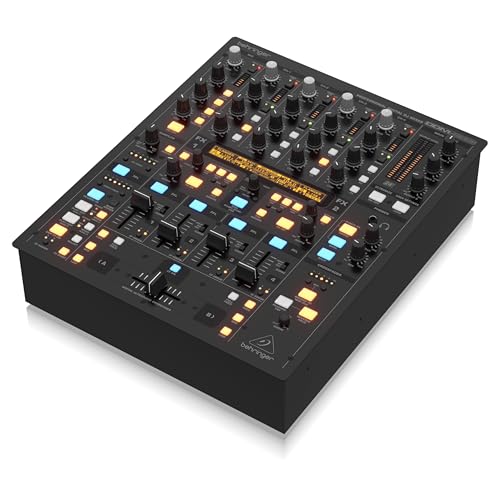
- Five-channel digital mixer
- Four multi-FX sections
- Sampler and MIDI control
Best For: DJs needing many sources, microphones, effects, and sampling
Four-Deck Creativity

- Four-channel Serato controller
- Motorized high-torque platters
- DVS, Stems, and extensive FX
Best For: Performance-focused Serato DJs needing four-deck control and club I/O
Best Starter Club Mixer

- Two-channel club-style workflow
- Free rekordbox DVS unlock
- Channel filters and Magvel Fader
Best For: Beginners building a separates setup
Best Performance-Focused Club Mixer

- Serato DJ performance layout
- MPC pads and internal FLEX FX
- MAG FOUR faders with tension adjustment
Best For: Serato DJs performing scratch and effects-heavy sets
Best Beginner DJ Controller
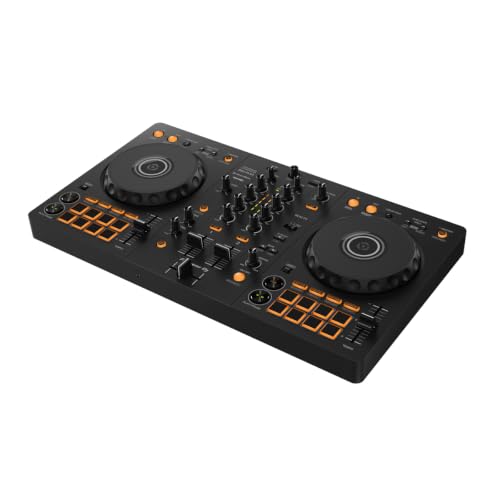
- Portable two-deck layout
- Smart Fader for easier blends
- USB and Bluetooth device support
Best For: New DJs practicing, streaming, and mixing on the go
Effects-Ready Club Workhorse
Behringer DJX750 5-Channel Mixer

- Five channels for multi-source club setups
- Dual auto-BPM counter with beat-sync display
- Digital effects and VCA-controlled crossfader
Best For: Club DJs needing channels and onboard effects
Scratch-Focused Serato Control
Pioneer DJ DJM-S5 2-Channel Mixer

- MAGVEL FADER PRO crossfader with adjustable resistance
- Six Scratch Cutter patterns for live cutting
- USB-powered design with XLR, TRS, and RCA outputs
Best For: Scratch DJs using Serato DJ
Analog-Style Rackmount Flexibility
Pyle PYD1964B.5 6-Channel Mixer

- Six channels with Bluetooth connectivity
- 10-band equalizer and multiple digital effects
- Two microphone inputs with EQ and kill controls
Best For: Rack-based DJ and event audio setups
Club Standard – Pioneer DJM-900NXS2
For a dj mixer for clubs, the Pioneer DJM-900NXS2 emphasizes detailed sound, flexible effects, and professional connectivity. Its four-channel layout, 96 kHz/64-bit processing, and balanced output options make it a strong fit for demanding booth and sound-system setups.
Best For: Club DJs who want a traditional four-channel professional mixer with extensive built-in effects and USB integration.
Pros:
- 96 kHz/64-bit processing with enhanced dithering and a low-jitter clock.
- Six sound effects are available on every channel, plus 14 Beat FX controlled through the X-Pad.
- Includes RCA, TRS, and XLR outputs, gold-plated RCA terminals, and USB connectivity.
- Supports TRAKTOR SCRATCH control media for digital scratching.
Cons:
- At 22 pounds, it is relatively substantial for transport.
- Its feature set may be more than needed for simple two-channel setups.
The DJM-900NXS2 is a capable centerpiece for club-oriented mixing, especially when effects, multiple source connections, and high-resolution digital processing matter more than portability.
Motorized Performance – RANE ONE MKII
The RANE ONE MKII takes a controller-based approach to a dj mixer for clubs, combining a two-channel mixer with motorized 7.2-inch platters and Serato DJ Pro. It suits DJs who want tactile scratching, software control, and a relatively compact setup for live performance or travel.
Best For: Open-format, scratch, and mobile DJs who prefer motorized turntable-style control with Serato integration.
Pros:
- Motorized platters offer adjustable torque and an authentic turntable feel.
- Includes Serato DJ Pro, 29 internal effects, channel effects, and Stems integration.
- Precision Feel channel faders are tension-adjustable for detailed control.
- Dual USB Type-B connectivity supports PC/Mac setups.
Cons:
- Its two-channel design offers less standalone channel capacity than a four-channel club mixer.
- At 26.5 inches wide, it still requires meaningful booth or table space.
Choose the ONE MKII when hands-on platter control and software-driven creativity are priorities. It is particularly compelling for performers who scratch, use Stems, or move between home, club, and mobile environments.
Feature-Heavy Value – Behringer DDM4000
If you need a dj mixer for clubs with multiple inputs and built-in performance tools, the Behringer DDM4000 provides five channels, four multi-FX sections, MIDI, and a sampler. It can accept up to eight phono or line sources simultaneously, making it practical for complex source configurations.
Best For: DJs seeking a flexible five-channel digital mixer with sampling, microphone controls, and multiple effects at the center of the setup.
Pros:
- Five-channel design supports up to eight connected phono or line sources.
- Includes four multi-FX sections and two BPM counters.
- Sampler provides beat-controlled loops, pitch control, sampler effects, and crossfader start.
- Two microphone inputs include gain, EQ, talk, and FX functions.
Cons:
- The listed frequency specification is 20 kHz, lower than the high-resolution specification of some alternatives.
- Its extensive controls may require more setup familiarity than a simpler mixer.
The DDM4000 is a versatile option for DJs who value source capacity and built-in creative tools. Its five-channel layout and sampler make it useful for setups involving multiple players, microphones, and live performance elements.
Four-Deck Creativity – RANE PERFORMER
The RANE PERFORMER combines a four-channel DJ controller layout with motorized high-torque platters, Serato DJ Pro features, and club-ready connections. For a dj mixer for clubs, its adjustable faders, DVS support, multiple outputs, and broad effects control offer a performance-focused setup.
Best For: Serato DJs who want four-deck control, motorized platters, advanced Stems features, and robust booth connectivity.
Pros:
- Two 7-inch motorized aluminum platters provide high-torque tactile control.
- Offers four channels, DVS support, 29 main FX, and four channel FX.
- Includes adjustable-tension volume faders and a MAG FOUR crossfader.
- Provides XLR main outputs, 1/4-inch booth outputs, microphone inputs, and RCA deck inputs.
Cons:
- At 28.2 pounds and over 30 inches wide, it is not especially portable.
- Its extensive controller and software features may be excessive for straightforward mixing.
The PERFORMER is a strong choice for DJs who want physical, expressive control without giving up modern Serato features. Its four-channel architecture and comprehensive I/O make it well suited to elaborate performance setups.
Best Starter Club Mixer – Pioneer DJM-250MK2
The Pioneer DJM-250MK2 is a practical entry point for anyone shopping for a dj mixer for clubs. Its two-channel layout mirrors a standard booth workflow, while the dedicated channel filters and smooth Magvel Fader support both basic blending and light scratching.
Best For: Beginners building a separates setup and learning club-style beatmatching.
Pros:
- Two-channel layout teaches a familiar professional workflow.
- Includes a free rekordbox DVS unlock for digital-file control with turntables or media players.
- Dedicated Sound Color FX Filter on each channel.
- Magvel Fader offers smooth cuts and blending.
Cons:
- Two channels provide less room for larger, more complex setups.
- Its feature set is intentionally simpler than performance-focused mixers.
The DJM-250MK2 keeps the learning curve manageable without abandoning club-oriented controls. It is a sensible choice when straightforward operation and DVS expansion matter more than extensive effects or pad features.
Best Performance-Focused Club Mixer – RANE SEVENTY
The RANE SEVENTY is a performance-oriented dj mixer for clubs built around Serato DJ. It combines a solid two-channel layout with internal effects, dedicated loop controls, MPC performance pads, and contactless MAG FOUR faders for hands-on sets and scratch-focused transitions.
Best For: Serato DJs who want integrated effects, pads, looping, and flexible fader control.
Pros:
- Three contactless MAG FOUR faders include external crossfader tension adjustment.
- Six dual post-fader FLEX FX engines and dedicated Serato DJ FX controls.
- Sixteen dual-layer Akai Professional MPC pads support multiple performance modes.
- Two USB connections support DJ handoffs, with two microphone inputs.
Cons:
- The extensive performance feature set may be more than a beginner needs.
- It is substantially heavier than a compact entry-level mixer.
With its pads, effects, loop controls, and adjustable faders, the SEVENTY is designed for DJs who actively manipulate their sets rather than simply blend tracks. Its two-channel format remains focused while the control surface supports demanding Serato performances.
Best Beginner DJ Controller – Pioneer DJ DDJ-FLX4
The Pioneer DJ DDJ-FLX4 is a portable two-deck controller for beginners who want an accessible alternative to a traditional dj mixer for clubs. Its familiar Pioneer DJ layout, 16 performance pads, built-in sound card, and support for rekordbox, Serato DJ Pro, and compatible mobile devices make it easy to practice and stream.
Best For: New DJs who prioritize portability, streaming, and guided mixing features.
Pros:
- Simple two-channel, two-deck layout supports an easy learning path.
- Smart Fader can adjust volume, bass, and BPM for simpler transitions.
- Sixteen performance pads provide Hot Cue, Pad FX, Beat Jump, and Sampler control.
- Works with PC, Mac, iPhone, iPad, and Android via USB or Bluetooth.
Cons:
- It is a controller rather than a standalone club mixer.
- Its lightweight design and simplified feature set are aimed at learning and portability.
The DDJ-FLX4 is best viewed as a flexible training and streaming platform, not a replacement for a full club booth mixer. Smart Fader and broad device compatibility make it especially approachable for first mixes and mobile practice.
Effects-Ready Club Workhorse – Behringer DJX750 5-Channel Mixer
The Behringer PRO MIXER DJX750 is a practical dj mixer for clubs that need five channels, flexible RCA and USB inputs, XLR output, and built-in tools for keeping a mix moving. Its dual auto-BPM counter, digital effects, and VCA-controlled crossfader make it suited to multi-source setups where hands-on control matters.
Best For: DJs and small club setups that need five channels, beat-synced effects, and a reliable crossfader.
Pros:
- Five-channel layout supports larger source setups.
- Dual auto-BPM counter provides time and beat-sync information.
- Includes adjustable XPQ stereo surround and advanced digital effects.
- VCA-controlled crossfader is designed for smooth, reliable performance.
Cons:
- At 11.9 pounds, it is less portable than compact mixers.
- The supplied notes do not confirm current software-update support.
The DJX750 is a feature-heavy choice for DJs who prioritize channel count and onboard effects over a compact footprint. Its corded design and 4.11-by-12.6-by-14.6-inch dimensions make it more appropriate for a permanent or semi-permanent booth than frequent travel.
Scratch-Focused Serato Control – Pioneer DJ DJM-S5 2-Channel Mixer
The Pioneer DJ DJM-S5 is a focused dj mixer for clubs built around two-channel Serato DJ performance and scratch control. Its MAGVEL FADER PRO crossfader, adjustable resistance, effects levers, USB power, and scratch-oriented features favor DJs who want tactile manipulation rather than a high channel count.
Best For: Scratch DJs and Serato users who want a portable two-channel mixer with specialized fader features.
Pros:
- MAGVEL FADER PRO crossfader offers adjustable weight and resistance.
- Six Scratch Cutter patterns support real-time cutting effects.
- Effects levers can be held, released, or locked for flexible control.
- USB-powered design adds setup flexibility, and the unit weighs 3.2 kg.
Cons:
- Two channels may be limiting for larger club source configurations.
- Its scratch-focused feature set may be more specialized than traditional club mixers.
The DJM-S5 is a strong fit when scratch performance is the priority. XLR, TRS, and RCA output options add connection flexibility, while Hot Cue and Scratch Cutter functions support rapid, performance-oriented techniques.
Analog-Style Rackmount Flexibility – Pyle PYD1964B.5 6-Channel Mixer
The Pyle PYD1964B.5 is a practical dj mixer for clubs, events, and rack-based systems that need six channels, Bluetooth connectivity, slider controls, and extensive voice and output shaping. Its 10-band graphic equalizer, microphone EQ, echo, delay, repeat, and digital effects provide broad control for music and announcements.
Best For: DJs and event operators seeking a six-channel, 5U rackmount mixer with Bluetooth and microphone-focused controls.
Pros:
- Six-channel design supports multiple sources and flexible routing.
- 10-band graphic equalizer provides detailed output control.
- Two microphone inputs include bass, mid, high, and kill-switch controls.
- Bluetooth connectivity and 5U rackmount construction suit installed systems.
Cons:
- Its 19-inch-wide, 5U rackmount format is less convenient for mobile setups.
- The supplied notes do not identify detailed compatibility or software-update support.
The PYD1964B.5 emphasizes conventional sliders and dials, making it a useful option for DJs who also handle announcements or event audio. It is best considered when rack integration, microphone processing, and broad equalization are more important than compact portability.
How We Picked the Best Dj Mixer for Clubs
We evaluated these models by focusing on the features that matter most in real DJ booths: channel count, input and output flexibility, fader and crossfader design, software compatibility, effects, performance controls, monitoring options, and ease of integration with players, turntables, microphones, and sound systems. We also considered whether each product suits a permanent club installation, a touring setup, a mobile rig, or a beginner-friendly workspace.
A true club mixer should offer dependable controls, clear signal routing, and enough headroom for demanding sets. Controllers are included where their integrated decks, pads, and software control can provide a practical all-in-one alternative.
Quick Comparison
| Best For | Recommended Type | What to Prioritize |
|---|---|---|
| Large clubs and professional booths | Four-channel professional mixer | Multiple inputs, booth output, durable faders, network or digital integration |
| Turntablists and scratch DJs | Battle mixer | Crossfader quality, pad control, Serato compatibility, low-latency response |
| Hybrid performers | DJ controller | Integrated decks, performance pads, software support, portability |
| Budget installations | Five- or six-channel mixer | Channel capacity, effects, microphone inputs, straightforward controls |
| Small venues and home practice | Two-channel mixer | Compact size, essential outputs, simple setup, upgrade potential |
Key Buying Factors for a Dj Mixer for Clubs
Channel Count and Inputs
Two channels can handle a simple setup, but clubs often benefit from four channels or more for multiple media players, turntables, samplers, microphones, and backup sources. Check the exact phono, line, USB, and microphone inputs rather than relying only on the channel number.
Outputs and Booth Monitoring
Look for balanced master outputs when connecting to professional sound systems. A dedicated booth output with independent level control is especially useful because DJs need to monitor their mix at a different volume from the audience.
Faders, Crossfader, and Effects
Smooth channel faders and a responsive crossfader improve transitions and scratching. Built-in effects can add creative flexibility, but they should complement—not replace—solid mixing controls. Confirm whether effects are available per channel and how they are assigned.
Software and Hardware Compatibility
If you use Serato DJ, rekordbox, or another platform, verify licensing, mapping, USB connectivity, and operating-system support. Standalone mixers offer more hardware independence, while controllers may provide deeper software integration.
Build Quality and Serviceability
Club equipment receives heavy use, so sturdy construction, replaceable faders, dependable switches, and accessible service support are valuable. A less expensive mixer may be suitable for occasional events, but permanent venues should prioritize reliability.
Who Should Buy Which Dj Mixer for Clubs?
Choose a four-channel professional mixer if you run a club, host multi-DJ sets, or need room for several players and external instruments. A battle-style mixer is better for scratch-focused performers who value crossfader action and pad-based control. Choose an integrated controller if portability, software performance features, and an all-in-one workflow matter more than standalone booth integration.
Two-channel mixers are sensible for compact setups, practice rooms, and DJs who mainly mix two sources. Five- and six-channel models can be practical for budget-conscious venues that need extra inputs and basic effects. Before purchasing, confirm the mixer’s dimensions, power requirements, output connectors, software support, and return policy so it fits both your booth and your performance workflow.