Clear speech can make the difference between an interview viewers trust and one they abandon. The right microphone reduces distracting noise, preserves natural voices, and fits the way you record.
This roundup compares 10 condenser microphones for interviews across smartphones, cameras, computers, and wireless workflows, so you can match sound quality, connectivity, and portability to your production needs.
Best 10 Condenser Microphones for Interviews Picks for 2026
Best Wired Smartphone Interview Mic
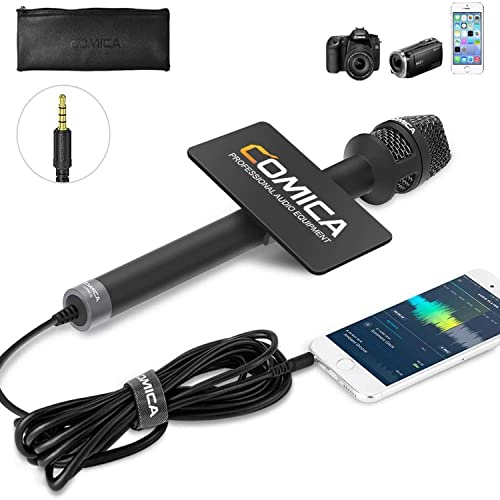
- Cardioid pickup focuses on the speaker
- All-metal body with low self-noise
- 3.5mm TRRS plug-and-play connection
Best For: Wired smartphone interviews and speeches
Best Wireless Lavalier Set
Mini Mic Pro Wireless Microphone

- Wireless, clip-on design for hands-free recording
- USB-C and Lightning adapters included
- Up to 6 hours of rechargeable use
Best For: Mobile interviews and outdoor creator videos
Best Camera-Mounted Shotgun Mic

- Super-cardioid pickup for video production
- XLR output with phantom or AA power
- Shock mount and windshields included
Best For: Camera-based interviews and ENG/EFP recording
Best Wireless Handheld Option
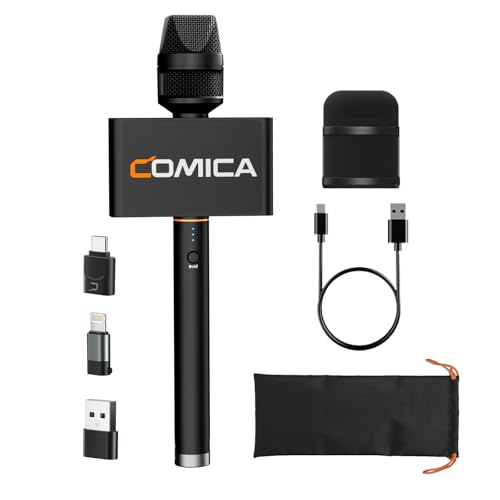
- Wireless handheld design with USB-C receiver
- 48kHz/24bit recording and one-key denoise
- Up to 15 hours of battery use
Best For: Mobile news interviews, podcasts, and live video
Best Complete Kit
VidPro XM-55 Shotgun Microphone Kit

- 13-piece kit includes mounts, cables, and wind protection
- Super-cardioid pickup supports focused voice capture
- Works with XLR and 3.5mm equipment
Best For: Flexible camera, broadcast, and field interview setups
Best Wireless Interview Mic
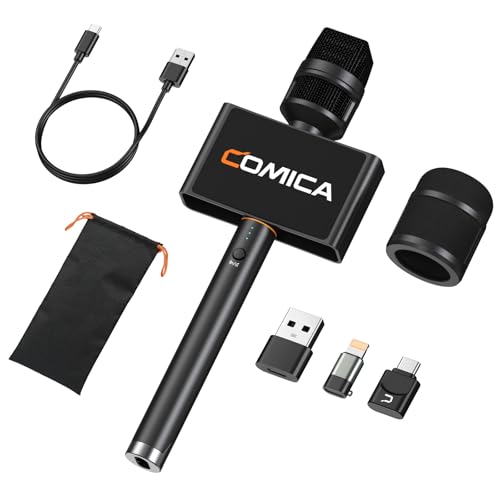
- Wireless USB-C operation with up to 65-foot range
- 48kHz/24-bit audio and cardioid condenser capsule
- Up to 15 hours of battery life with multiple adapters
Best For: Wireless smartphone interviews and mobile reporting
Best Budget Lavalier

- Plug-and-play 3.5mm TRRS connection
- Omnidirectional condenser capsule with clip
- Low-frequency cut, gain control, and monitoring jack
Best For: Simple wired interviews and vlogging
Best On-Camera Shotgun

- Cardioid shotgun pickup for camera interviews
- Compact 11-inch body with holder and wind cap
- About 26 hours from one 1.5V battery
Best For: DSLR and camcorder interview production
Best Wired Smartphone Interview Mic – COMICA HRM-S Handheld Mic
For creators seeking condenser microphones for interviews with a phone, the COMICA HRM-S is a straightforward wired option. Its cardioid pattern focuses on the person speaking while reducing sound from the sides, and the 3.5mm TRRS connection supports plug-and-play use with compatible devices.
Best For: Smartphone interviews, speeches, event hosting, and social media videos where a handheld microphone and wired connection are practical.
Pros:
- Cardioid pickup helps isolate the intended voice and reduce side sound.
- All-metal construction and low self-noise support clearer recordings.
- 60Hz-20kHz frequency response suits interviews, speeches, and general voice recording.
- Lightweight handheld design weighs about 29g.
Cons:
- The 3.5mm TRRS connection may require an original adapter for iOS and USB-C Android devices.
- It is corded, so it offers less freedom of movement than a wireless microphone.
The HRM-S is a sensible pick when reliable wired operation matters more than wireless convenience. Check your phone’s adapter requirements before buying.
Best Wireless Lavalier Set – Mini Mic Pro Wireless Microphone
The Mini Mic Pro is a compact alternative for creators comparing condenser microphones for interviews and wanting hands-free recording. It includes USB-C and Lightning adapters, connects without an app or Bluetooth, and uses noise reduction plus supplied wind protection for mobile recordings.
Best For: Phone interviews, TikTok and YouTube videos, outdoor recordings, and creators who prefer a clipped-on wireless microphone.
Pros:
- Wireless design supports hands-free recording and easy movement.
- USB-C and Lightning adapters cover many iPhone and Android setups.
- Foam and deadcat wind protection are included for outdoor use.
- Rechargeable operation provides up to 6 hours per charge.
Cons:
- Its omnidirectional pickup may capture more surrounding sound than a directional interview mic.
- Device compatibility still depends on using the correct included connector.
Choose this set for portability and quick phone recording rather than a traditional handheld reporter format. The small clip-on form is especially convenient for mobile video.
Best Camera-Mounted Shotgun Mic – BOYA BY-BM6060 Shotgun Mic
For camera crews evaluating condenser microphones for interviews, the BOYA BY-BM6060 offers a super-cardioid shotgun design for video production and broadcast work. Its XLR output supports 24-48V phantom power, while an AA battery can power it when phantom power is unavailable.
Best For: DSLR and camcorder interviews, documentaries, ENG/EFP work, independent films, and outdoor video production.
Pros:
- Super-cardioid pattern is designed to focus audio toward the front.
- XLR connection supports professional audio equipment and 24-48V phantom power.
- AA battery option adds flexibility with devices that lack phantom power.
- Kit includes a shock mount, fur windshield, foam windshield, and cold-shoe mount.
Cons:
- It requires an XLR-compatible setup or suitable camera interface.
- At about 230g, it is less compact than smartphone-focused microphones.
The BY-BM6060 makes the most sense for a camera-based workflow where directional pickup, mounting options, and XLR connectivity are priorities. Its included accessories help prepare it for field recording.
Best Wireless Handheld Option – COMICA Revo S Interview Mic
The COMICA Revo S combines a handheld reporter format with digital wireless transmission, making it a flexible choice among condenser microphones for interviews. Its 14mm condenser capsule, cardioid pattern, 48kHz/24bit recording, and one-key denoise are designed for clear mobile and computer recordings.
Best For: Wireless interviews, podcasts, news-style videos, live streams, and creators using USB-C phones, tablets, laptops, or computers.
Pros:
- Cardioid 14mm condenser capsule focuses on the interview subject.
- 48kHz/24bit recording supports detailed digital audio.
- One-key CalMix denoise and three gain levels offer recording control.
- Built-in battery provides up to 15 hours of use.
Cons:
- Lightning devices require a USB-C-to-Lightning adapter with OTG support.
- The wireless system requires charging before extended recording sessions.
Revo S is a strong fit when you want the visual presence of a handheld interview mic without a cable to the phone. Its long stated battery life and adjustable gain suit longer production days.
Best Directional Pick – BOYA BY-BM6060 Shotgun Microphone
For interviews where isolating the speaker from surrounding sound matters, the BOYA BY-BM6060 is a practical choice among condenser microphones for interviews. Its super-cardioid pickup pattern focuses on forward sound, while the switchable low-cut filter can reduce low-frequency noise from sources such as air conditioning or traffic.
Best For: Camera, DSLR, ENG, film, and documentary interviews requiring directional sound capture.
Pros:
- Super-cardioid pattern helps reduce side and rear sound.
- Switchable high-pass filter helps address low-frequency noise.
- Supports 24–48V phantom power or one AA battery.
- Includes shock mount, foam windscreen, fur windshield, and carrying bag.
Cons:
- Uses an XLR connection rather than a direct wireless setup.
- Directional placement requires aiming the microphone toward the speaker.
The BY-BM6060 balances focused pickup with flexible powering and useful wind protection. It is especially suitable for video crews that need a conventional XLR shotgun microphone with a backup battery option.
Best for Everyday Use – RØDE Interview PRO
The RØDE Interview PRO offers a streamlined handheld option for interviews and content creation. As one of the more flexible condenser microphones for interviews, it combines a broadcast-grade omnidirectional capsule with wireless compatibility, automatic GainAssist level adjustment, and over 40 hours of 32-bit float onboard recording.
Best For: Interviewers using RØDE Series IV receivers who want handheld wireless recording and an onboard backup.
Pros:
- Broadcast-grade omnidirectional capsule is designed for detailed voice recording.
- GainAssist automatically adjusts volume levels.
- Provides over 40 hours of 32-bit float onboard recording.
- Supports timecode synchronization with compatible receivers such as Wireless PRO.
Cons:
- Requires compatibility with RØDE Series IV receivers or supported RØDE consoles.
- Its omnidirectional pattern can capture sound from all directions.
This is a strong fit for mobile interview workflows built around the RØDE wireless ecosystem. The onboard recording is particularly useful as a backup, while the handheld design suits reporter-style interviews.
Best Complete Kit – VidPro XM-55 Shotgun Microphone Kit
The VidPro XM-55 is a practical package for shoppers who need more than a microphone alone. This 13-piece kit makes it a versatile option among condenser microphones for interviews, with a super-cardioid shotgun design, multiple cables and adapters, mounting hardware, wind protection, and AA-battery operation.
Best For: Indoor and outdoor video interviews, film shoots, broadcasts, and creators assembling a flexible microphone setup.
Pros:
- Super-cardioid pickup provides off-axis signal attenuation.
- Includes XLR, 3.5mm, and 6.3mm connection options through supplied cables and adapter.
- Comes with shock and stand mounts, camera shoe adapter, hand grip, wind muff, and wind shield.
- Runs on one included AA alkaline battery.
Cons:
- Its listed frequency response is 100 Hz–16 kHz.
- The full kit weighs 2.4 pounds.
- It is a battery-operated setup rather than a phantom-power-only microphone.
The XM-55 stands out for included accessories and connection flexibility rather than minimal size. It is a useful starting package for interviewers working across cameras, mixers, tripods, boom poles, and microphone stands.
Best Wireless Interview Mic – COMICA Revo S
For creators who need condenser microphones for interviews without a cable tether, the COMICA Revo S combines wireless USB-C connectivity with a handheld reporter-style design. Its cardioid pickup, 48kHz/24-bit recording, one-key noise reduction, and three-level gain control make it practical for mobile interviews and on-the-go reporting.
Best For: Wireless smartphone interviews, reporting, podcasts, and presentations.
Pros:
- Wireless range of up to 65 feet with plug-and-play USB-C receiver.
- 14mm condenser capsule and cardioid pattern focus on the speaker’s voice.
- Up to 15 hours of battery life, with included USB-C, Lightning, and USB-A adapters.
- Three gain levels and one-key noise reduction support changing recording environments.
Cons:
- Requires charging because it uses a built-in rechargeable battery.
- Handheld form factor may be less discreet than a lavalier for seated interviews.
The Revo S is a flexible choice when interview mobility matters. Its wireless design and broad device compatibility simplify field recording, while the directional condenser capsule helps keep attention on the person speaking.
Best Budget Lavalier – NEEWER CM10
The NEEWER CM10 is a straightforward wired option for creators comparing condenser microphones for interviews. This clip-on omnidirectional condenser mic connects through 3.5mm TRRS, needs no battery or driver, and includes controls for low-frequency cut and gain reduction.
Best For: Phone, camera, and computer interviews, vlogs, tutorials, and calls.
Pros:
- Plug-and-play 3.5mm TRRS connection requires no batteries or drivers.
- Omnidirectional capsule captures sound from all directions for flexible placement.
- Low-frequency cut helps reduce rumble, while -10dB gain control can limit distortion.
- Includes a clip, long cable options, and a monitoring headphone jack in smartphone mode.
Cons:
- Wired operation limits movement compared with a wireless microphone.
- Omnidirectional pickup does not isolate the speaker from background sound as strongly as a directional pattern.
- Device compatibility depends on having the appropriate 3.5mm connection.
The CM10 favors simplicity and low operating cost. It is a sensible starter mic for interviews where the subject can remain near the recording device and a compact clip-on setup is preferred.
Best On-Camera Shotgun – Ruittos 11-Inch Mic
For camera crews looking at condenser microphones for interviews, the Ruittos 11-inch shotgun mic offers a directional alternative to handheld and lavalier designs. Its cardioid pickup is intended to emphasize the main sound source, and the compact body is designed to stay out of the frame when mounted on a camera.
Best For: DSLR and camcorder interviews, conferences, stage work, and video production.
Pros:
- Cardioid pattern helps focus pickup on the primary speaker and reduce background sound.
- Compact 11-inch design is intended for on-camera use without dominating the frame.
- Includes a holder, stand, anti-wind foam cap, and approximately 8-meter XLR cable.
- Runs on one 1.5V battery for about 26 hours of operation.
Cons:
- Camera and battery are not included.
- Requires a compatible 3.5mm or 6.35mm input, and some cameras may need a hot-shoe adapter.
- Its battery-powered, camera-mounted design is less convenient for smartphone interviews.
The Ruittos is aimed at traditional camera-based production rather than quick mobile recording. Its directional pattern, mounting hardware, wind cover, and long cable make it better suited to controlled video setups and field camera work.
How We Picked These Condenser Microphones for Interviews
We selected microphones that suit common interview formats, including handheld reporting, on-camera conversations, smartphone recording, DSLR and camcorder production, and wireless presentations. We considered pickup pattern, connection type, power requirements, portability, included accessories, and whether each model is practical for solo creators or larger production kits.
Because interview environments vary widely, this list includes focused shotgun microphones, handheld condenser designs, lavalier options, and wireless systems rather than treating one microphone style as universally best.
Quick Comparison
| Microphone Type | Best For | Key Advantage | Watch For |
|---|---|---|---|
| Handheld | Street and reporter interviews | Easy subject positioning | Requires someone to hold it |
| Wireless handheld | Mobile video and presentations | Freedom from cables | Battery life and compatibility |
| Shotgun | Camera-mounted or boom recording | Directional pickup | Needs careful aiming |
| Lavalier | Hands-free interviews | Small and discreet | Clothing and handling noise |
Key Buying Factors for Condenser Microphones for Interviews
Pickup Pattern and Placement
Cardioid and super-cardioid microphones help prioritize sound from the front while reducing some side noise. Shotguns can work well when aimed accurately, but they are not a substitute for close placement. Handheld microphones should stay consistently near the speaker’s mouth, while lavaliers need secure placement away from rubbing fabric.
Connection and Device Compatibility
Check whether your recording device uses 3.5mm TRRS, USB-C, Lightning, USB, or XLR. Smartphone microphones may require an adapter, and some XLR models need an audio interface or a camera with a compatible input. Wireless systems also need matching transmitters, receivers, and supported phone connectors.
Power, Recording Quality, and Noise Control
Condenser microphones commonly need plug-in power, batteries, USB power, or 24V/48V phantom power. Confirm the required power source before buying. Higher-resolution recording can preserve more detail, but clean placement and a controlled room usually matter more than specifications alone. Windscreens, shock mounts, low-cut filters, and noise cancellation can be valuable in outdoor or moving-camera work.
Portability and Workflow
For travel and quick social content, prioritize compact designs, simple setup, and dependable battery life. Studio-style or XLR microphones may deliver a more flexible professional workflow but add stands, cables, interfaces, and setup time.
Who Should Buy Which Condenser Microphones for Interviews?
Choose a handheld microphone for street interviews, press-style reporting, and situations where the microphone should appear on camera. Choose a wireless handheld when the interviewer or subject needs to move freely without a cable between the microphone and recording device.
Choose a shotgun microphone for camera-mounted, boom, documentary, and film setups where directional pickup and distance are important. Choose a lavalier for hands-free interviews, tutorials, and discreet recordings, especially when the speaker remains relatively stationary.
Before ordering, verify the connector, required power, included mounts, and compatibility with your exact phone or camera. The best option is the one that delivers clean voice capture without creating extra steps your interview workflow cannot support.