A good lavalier microphone keeps interview audio clear, consistent, and easier to edit than built-in phone or camera microphones. The right model can also reduce setup time when you are recording in the field.
These 10 picks cover wireless systems, dual-microphone kits, phone-friendly options, and budget clip-on designs for interviews, podcasts, videos, and mobile reporting.
Best 10 Lavalier Microphone for Interviews Picks for 2026
Best Overall
DJI Mic Mini with Charging Case

- Two transmitters for two-person interviews
- Up to 48 hours with charging case
- Noise cancellation and automatic limiting
Best For: Interviewers needing a complete, long-lasting wireless kit
Best Wired Value
PowerDeWise Dual Lavalier Microphone Set

- Two microphones for simultaneous speakers
- No batteries, charging, or apps required
- Includes cables, adapter, windscreens, and pouch
Best For: Simple two-person interviews using 3.5 mm equipment
Best for Mobile Interviews

- Two lightweight transmitters for interviews
- USB-C receiver for compatible mobile devices
- Noise cancellation and up to 11.5 hours of operation
Best For: Mobile creators recording two-person interviews
Best Budget Wireless
Ecomxia WM300 Dual Lavalier Mic

- Two transmitters with charging case
- Three noise-reduction modes
- Up to 8 hours of use per charge
Best For: Budget mobile interviews and casual video recording
Best Lightweight Pick
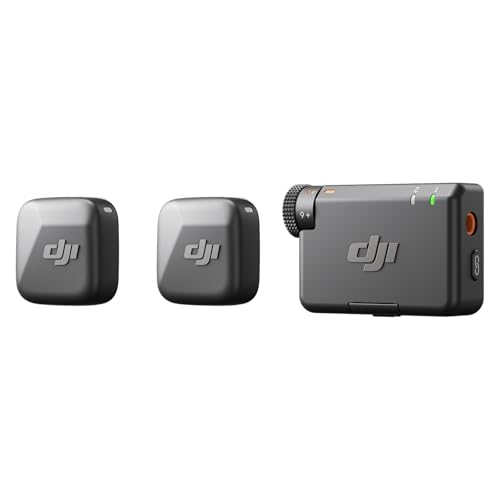
- 10 g transmitters for discreet wear
- 400 m transmission range
- Two-level noise cancellation
Best For: Lightweight two-person interviews and outdoor shoots
Best Plug-and-Play Value

- USB-C and Lightning adapters included
- Two microphones for interviews
- Foam and deadcat wind protection
Best For: Mobile interviews with iPhone or Android
Best Audio Detail

- 48 kHz/24-bit recording
- Three-level noise cancellation
- Up to 18 hours with two transmitters
Best For: Detailed two-person interviews with USB-C phones
Dual-Device Interview Kit
Labstandard K9 Wireless Lavalier

- Two microphones for dual-speaker recording
- Lightning and USB-C compatibility
- Noise reduction with low-latency syncing
Best For: Two-person mobile interviews and podcasts
Flexible Phone Pick
MAYBESTA WM356 Wireless Lavalier

- Works with iPhone, Android, tablets, and laptops
- Long receiver can accommodate many phone cases
- Plug-and-play setup with noise reduction
Best For: Multi-device mobile interviews and teaching
Portable Charging Option

- Two microphones with automatic pairing
- Receiver can charge the phone while recording
- Up to four hours of working time
Best For: Portable two-person interviews and field recording
Best Overall – DJI Mic Mini with Charging Case
The DJI Mic Mini is a strong all-around lavalier microphone for interviews, especially when you need two-speaker recording, long battery life, and dependable wireless performance. Its compact 10 g transmitters, 400 m range, noise cancellation, and automatic limiting make it suitable for both indoor and outdoor shoots.
Best For: Interviewers and creators who want a complete wireless kit with extended battery life.
Pros:
- Includes two transmitters, a receiver, charging case, clips, windscreens, and adapters.
- Offers up to 48 hours of use with the charging case.
- Provides two noise-cancellation levels and automatic limiting to help protect recordings from excessive volume.
- Works with cameras and smartphones, with DJI OsmoAudio direct-connection support for compatible DJI devices.
Cons:
- Requires battery charging rather than a simple plug-in setup.
- The full kit may be more equipment than a casual interviewer needs.
Choose this model if flexibility and long recording sessions matter more than having the simplest possible setup. It is particularly well suited to interview work that moves between controlled rooms and noisy outdoor locations.
Best Wired Value – PowerDeWise Dual Lavalier Microphone Set
The PowerDeWise set is a practical wired lavalier microphone for interviews when you want two clip-on microphones without charging or pairing. It uses a 3.5 mm connection and includes extension cables, a TRS adapter, windscreens, and a carrying pouch for straightforward recording with compatible equipment.
Best For: Budget-conscious interviewers recording two speakers with 3.5 mm-compatible devices.
Pros:
- Includes two microphones for recording two speakers at the same time.
- Plug-and-play operation requires no batteries, charging, or apps.
- Works with devices including DSLR cameras, laptops, tablets, PCs, and smartphones with the appropriate adapter.
- Includes extension cables, foam windscreens, a TRS adapter, and a carrying pouch.
Cons:
- The wired design limits movement compared with wireless interview microphones.
- Smartphones without a 3.5 mm input may require an additional Lightning adapter.
This is a sensible choice for stationary interviews, classroom conversations, and simple podcast setups. Its main advantage is dependable, immediate operation, provided your recording device supports the included 3.5 mm connection or a suitable adapter.
Best for Mobile Interviews – DJI Mic Mini Mobile RX
The DJI Mic Mini with Mobile RX is a compact lavalier microphone system for interviews recorded directly on USB-C mobile devices. It includes two lightweight transmitters, a mobile receiver, active noise cancellation, automatic limiting, and up to 300 m of stated transmission range for flexible on-the-go production.
Best For: Smartphone creators who record two-person interviews and want a small wireless setup.
Pros:
- Two 10 g transmitters support interviews with two speakers.
- USB-C mobile receiver supports compatible iPhone, Android, PC, and tablet setups.
- Offers Basic and Strong noise-cancellation modes for different environments.
- Provides up to 11.5 hours of operating time and automatic limiting to help prevent clipping.
Cons:
- The mobile receiver uses USB-C, so device-port compatibility should be checked before buying.
- The supplied notes list a shorter maximum transmission range than the charging-case version.
For creators who record primarily on a compatible phone or tablet, this kit keeps the workflow compact and cable-free. It is a good fit for mobile interviews, livestreams, and content shoots where portability is more important than a full camera-oriented accessory kit.
Best Budget Wireless – Ecomxia WM300 Dual Lavalier Mic
The Ecomxia WM300 is an affordable wireless lavalier microphone option for phone-based interviews and video recording. Its two transmitters, charging case, three noise-reduction modes, and stated 70 ft range provide a simple setup for creators using compatible iPhone, iPad, or Android devices.
Best For: Casual mobile interviews and content creation on a budget.
Pros:
- Includes two transmitters and a receiver for recording two people.
- Provides three noise-reduction modes, including automatic, manual, and reverberation settings.
- Offers up to 8 hours of use on a charge and a case with battery-level indicator lights.
- Plug-and-play design and a compact charging case support portable shooting.
Cons:
- The listed connector is Lightning, so compatibility may be limited by the recording device.
- Its stated 70 ft range is more limited than the longer-range DJI systems.
- The product notes identify one channel, which may provide less flexibility for some recording workflows.
This model makes sense when you need a low-cost wireless lavalier microphone for interviews and primarily record on a compatible mobile device. Its noise modes and dual-transmitter design add useful flexibility, while the shorter range favors close-range interview setups.
Best Lightweight Pick – DJI Mic Mini
For interviews where a discreet setup matters, the DJI Mic Mini is a compact lavalier microphone for interviews with two transmitters, a receiver, and up to 400 meters of transmission range. Its noise cancellation and automatic limiting are useful when recording in changing environments.
Best For: Lightweight two-person interviews, outdoor shoots, and creators already using compatible DJI Osmo devices.
Pros:
- Very light 10 g transmitters are comfortable and discreet on camera.
- Two noise-cancellation levels accommodate quiet rooms and noisier locations.
- Automatic limiting helps prevent clipping from unexpectedly loud audio.
- Up to 10 hours of operating time supports extended interview sessions.
Cons:
- The strongest ecosystem integration is with compatible DJI Osmo products.
- The supplied specifications list a single channel, which may limit some setups.
The DJI Mic Mini is a strong choice when portability, reliable wireless range, and simple voice protection matter more than advanced recording controls.
Best Plug-and-Play Value – Mini Mic Pro
The Mini Mic Pro is a convenient lavalier microphone for interviews with USB-C and Lightning adapters included. It connects without Bluetooth or an app, and its charging case, wind protection, and support for two microphones make it practical for mobile creators.
Best For: Smartphone interviews, TikTok and YouTube creators, and users who need broad iPhone and Android compatibility.
Pros:
- Includes both USB-C and Lightning adapters for iPhone and Android devices.
- Plug-and-play operation requires no app or Bluetooth pairing.
- Two microphones support interviews with two speakers.
- Foam tips and deadcat covers help with outdoor wind protection.
Cons:
- Battery life is rated at up to 6 hours per charge.
- The supplied warranty coverage is limited to a 90-day refund and six-month replacement or warranty period.
Choose the Mini Mic Pro for a simple mobile workflow and flexible connector support. It is especially appealing when fast setup is more important than long-range wireless specifications.
Best Audio Detail – Hollyland Lark A1
The Hollyland Lark A1 combines 48 kHz/24-bit recording with three levels of noise cancellation, making it a capable lavalier microphone for interviews in rooms or outdoors. Its USB-C receiver offers direct phone connection without Bluetooth, while the two transmitters support two-person recording.
Best For: Interviewers who prioritize detailed audio, adjustable noise reduction, and long battery endurance with USB-C phones.
Pros:
- 48 kHz/24-bit recording captures detailed sound with 120 dB SPL handling.
- Three noise-cancellation levels help adapt to different surroundings.
- Up to 200 m of wireless transmission provides room to move.
- Each transmitter runs up to 9 hours, with two transmitters enabling up to 18 hours of use.
Cons:
- The listed receiver is USB-C, so connector compatibility should be checked before purchase.
- The receiver is powered by the mobile phone rather than having its own stated battery runtime.
With strong audio specifications, adjustable processing, and long transmitter endurance, the Lark A1 is well suited to interview production where clean, detailed speech is the priority.
Dual-Device Interview Kit – Labstandard K9 Wireless Lavalier
The Labstandard K9 is a practical lavalier microphone for interviews when two people need to record with a compatible iPhone, iPad, or USB-C device. Its two microphones, noise-reduction chip, and low-latency wireless transmission are designed to keep dialogue aligned with video.
Best For: Two-person interviews, podcasts, vlogs, and livestreams recorded on Lightning or USB-C mobile devices.
Pros:
- Includes two wireless omnidirectional microphones for recording two speakers.
- Supports Lightning and USB-C devices with a rechargeable adapter.
- Offers real-time auto-sync, stated 0.008-second latency, and noise reduction.
- Provides approximately six hours of battery life.
Cons:
- The supplied compatibility information is centered on mobile and compatible port-based devices.
- The plastic or metal-alloy construction may not suit buyers seeking a premium build.
Choose this set when dual-speaker recording and flexible phone connectivity matter most. Its included accessories and lifetime VIP customer service add convenience for frequent creators.
Flexible Phone Pick – MAYBESTA WM356 Wireless Lavalier
The MAYBESTA WM356 is a convenient lavalier microphone for interviews across iPhone, Android, tablet, and laptop setups. It uses plug-and-play pairing, an extended receiver, and a noise-reduction chip to simplify recording when a phone case or multiple devices are involved.
Best For: Mobile interviews, teaching, video conferences, podcasts, and creators who switch between Lightning and USB-C devices.
Pros:
- Includes two clip-on microphones and supports both Lightning and USB-C connections.
- The longer receiver is designed to work with most phone cases.
- Requires no adapter or application after selecting the appropriate receiver connection.
- Includes windscreen tips and noise reduction for clearer spoken audio.
Cons:
- The listed warranty is limited to an 18-month free replacement period and a 120-day refund policy.
- The product details list one channel, so buyers should verify their preferred recording setup.
This is a strong convenience-focused option for creators who record on different mobile platforms. Its case-friendly receiver and straightforward automatic connection reduce setup friction before an interview.
Portable Charging Option – KUKIHO 2-Pack Wireless Mic
The KUKIHO two-pack is a compact lavalier microphone for interviews with automatic pairing and support for iPhone, iPad, Android phones, and computers through the listed adapters. Its two microphones make it suitable for conversations, while the receiver can charge a phone during use.
Best For: Portable two-person interviews, outdoor video shoots, podcasts, and creators who need phone charging while recording.
Pros:
- Includes two microphones for simultaneous recording by two participants.
- Plug-and-play operation needs no Bluetooth connection or application.
- Noise reduction, windproof foam, and omnidirectional pickup support clear speech capture.
- Offers up to four hours of working time after about 1.5 hours of charging, with a receiver that can charge the phone.
Cons:
- The listed operating time is shorter than some competing options at up to four hours.
- The supplied details specifically list a USB-C receiver connector, with an iOS port converter included.
- The stated wireless range of 66 feet applies in unobstructed conditions.
Consider this kit when portability and phone power management are important. Its simple pairing and dual-microphone design make it well suited to quick interviews without app-based setup.
How We Picked the Best Lavalier Microphone for Interviews
We focused on the factors that matter most during real interviews: speech clarity, connection reliability, compatibility, portability, and ease of use. The selection includes wireless systems with transmitters and receivers, plug-and-play phone microphones, and wired or budget-friendly alternatives.
We also considered whether each kit suits one or two speakers, how easily it can be carried between locations, and whether the listed accessories support common phones, cameras, tablets, or computers. Because recording environments vary, no single microphone is ideal for every interviewer.
Quick Comparison
- Best for a complete wireless kit: DJI Mic Mini packages with two transmitters and a receiver offer a flexible setup for interviews with one or two people.
- Best for mobile creators: USB-C or phone-focused kits simplify recording directly to a compatible smartphone.
- Best for low-cost two-person recording: Dual lavalier sets and two-pack wireless systems can cover both interviewer and guest.
- Best for simple operation: Plug-and-play models reduce pairing and configuration steps.
Key Buying Factors for a Lavalier Microphone for Interviews
Compatibility and Connectors
Check the receiver or cable connection before buying. USB-C models suit many newer Android phones, tablets, and some cameras, while Lightning versions are intended for compatible iPhones and iPads. A camera-oriented kit may use a 3.5mm input. If you record across several devices, look for included adapters or a receiver designed for multiple connection types.
One or Two Speakers
For interviews, two transmitters are valuable because they let you mic both the interviewer and guest separately. A single-transmitter kit is smaller and may be enough for solo videos, voiceovers, or situations where only one person speaks on camera.
Wireless Range and Interference
Wireless range is useful when the camera or phone is positioned away from the subject, but advertised distance depends on walls, crowds, and radio interference. For controlled indoor work, reliability and fast pairing may matter more than maximum range.
Noise Control and Audio Quality
Noise reduction can help with fans, traffic, and background activity, but aggressive processing may make voices sound unnatural. Look for clear voice capture, sensible gain control, and a windscreen if you frequently record outdoors.
Battery Life and Handling
Consider recording time, charging-case capacity, and whether the microphones can be charged between takes. Small magnetic or clip-on transmitters are convenient, but secure clips and low handling noise are equally important during movement.
Who Should Buy Which Lavalier Microphone for Interviews?
Interviewers and documentary creators should prioritize a two-transmitter wireless kit with dependable range and a receiver that works with their camera or phone. Mobile journalists and social creators may prefer a compact USB-C or Lightning system that starts recording quickly. Podcast and video teams on a budget can choose a dual wired or wireless set, provided the connector matches the recording device. Occasional users should favor simple plug-and-play operation, a charging case, and broad device compatibility over advanced controls they may not use.