When it comes to making learning enjoyable, educational board games can be a game changer for kids. They blend fun with essential skills like critical thinking and teamwork. With a variety of themes and age ranges, these games cater to different interests and learning styles. Curious about which ones stand out? Let’s explore the top ten options that promise to turn learning into an engaging adventure.
Learning Resources Math Island Addition & Subtraction Game
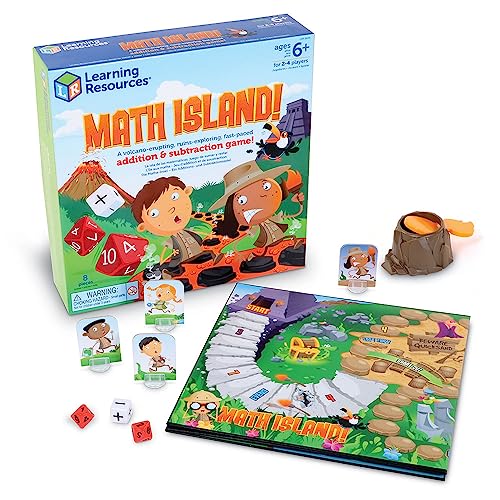
If you’re looking for a fun and engaging way for your kids to master addition and subtraction, the Learning Resources Math Island Addition & Subtraction Game is the perfect choice. This educational board game turns math practice into an exciting adventure as your children navigate a colorful volcano island. With math manipulatives, flashcards, and a volcano popper that launches dice, kids stay motivated while developing quick mental math skills. Designed for 2-4 players aged 6 and up, it’s ideal for family game nights, accommodating siblings or parents. Watch your kids build confidence in math while having a blast together!
Best For: Families with children aged 6 and up who want to make math practice enjoyable and engaging.
Pros:
- Engaging gameplay that transforms math practice into an adventure.
- Encourages the development of quick mental math skills through fun mechanics.
- Suitable for 2-4 players, making it perfect for family game nights or playdates.
Cons:
- May require adult supervision to help younger children understand the rules.
- Limited to addition and subtraction, which may not cover advanced math concepts.
- The volcano popper mechanism might require occasional maintenance to ensure proper function.
Hasbro Gaming Scrabble Junior Board Game

The Hasbro Gaming Scrabble Junior Board Game stands out as an excellent choice for young learners aged 5 and up, making it a fantastic addition to any family’s game night. Suitable for 2-4 players, it offers engaging letter-matching fun. You’ll love that the game features a two-sided board, catering to both beginners and advanced players. Players can create their own words as they improve their skills, enhancing vocabulary and word recognition. With adorable character tokens for scorekeeping, it’s perfect for classrooms and family time. Consider gifting it as a back-to-school surprise that grows with your child’s learning journey!
Best For: The Hasbro Gaming Scrabble Junior Board Game is best for children aged 5 and up who are looking to enhance their vocabulary and word recognition skills while having fun with family and friends.
Pros:
- Encourages vocabulary development and enhances word recognition in young learners.
- Features a two-sided gameboard, making it suitable for both beginners and advanced players.
- Includes adorable character tokens for scorekeeping, adding a fun element to the game.
Cons:
- Limited to 2-4 players, which may not accommodate larger groups.
- The advanced level may be challenging for some younger players.
- Gameplay might become repetitive for older children as they outgrow the word-building aspect.
Number Hunter Math Board Game for Kids Ages 4-8

Looking for a fun way to boost your child’s math skills? The Number Hunter Math Board Game is perfect for kids ages 4-8, transforming math learning into an exciting adventure. Your little ones will engage in addition, subtraction, and number recognition while rolling dice and solving math challenges. This easy-to-learn game is ideal for classrooms, homeschooling, or family game nights. Made from non-toxic materials, it’s durable and offers a screen-free way to master math concepts. With a 4.7-star rating, it’s a popular gift that inspires a love for math in young learners. Get ready for some educational fun!
Best For: The Number Hunter Math Board Game is best for children ages 4-8 who are looking to improve their math skills in a fun and engaging way.
Pros:
- Engages children in essential math skills like addition and subtraction through interactive play.
- Made from non-toxic, durable materials ensuring safety during use.
- Highly rated by customers, fostering a love for math in young learners.
Cons:
- Limited to basic math concepts, may not challenge advanced learners.
- Requires adult supervision for younger players to explain rules and assist with gameplay.
- Gameplay may become repetitive for children who master the skills quickly.
University Games Scholastic Race Across the USA Board Game

For families seeking a fun and educational way to explore U.S. geography, the University Games Scholastic Race Across the USA Board Game stands out as an excellent choice. In this engaging game, you’ll race against 2 to 4 players, visiting six states and answering grade-appropriate geography questions. It’s tailored to guarantee everyone from different grades can join in, fostering collaboration and friendly competition. Ideal for family game nights or classrooms, it combines the thrill of racing with valuable learning. This board game provides a hands-on approach to understanding U.S. geography, making education entertaining and memorable for all involved.
Best For: Families and educators looking for an engaging way to teach U.S. geography to children aged 8 and up.
Pros:
- Engages players with interactive geography questions tailored to different educational levels.
- Promotes collaboration and friendly competition among players from various grades.
- Ideal for family game nights or classroom settings, enhancing social interaction and learning.
Cons:
- Limited to 2 to 4 players, which may exclude larger groups.
- May require adult supervision to assist younger players with questions.
- Gameplay could become repetitive after multiple sessions due to the fixed set of questions.
Chuckle & Roar Matching Game Alphabet for Kids 3 and Up

Designed specifically for kids aged 3 and up, the Chuckle & Roar Matching Game Alphabet stands out as a fantastic tool for enhancing letter recognition and memory skills. Featuring 52 durable card tiles with both upper and lower case letters paired with fun illustrations, this game makes learning engaging. As your child matches the cards, they’ll improve concentration and cognitive development while having a blast. With dimensions of 1.65 x 10.43 x 8.46 inches and weighing just 9.9 ounces, it’s perfect for solo or group play. Highly rated by users, it’s a must-have for preschool learning!
Best For: The Chuckle & Roar Matching Game Alphabet is best for preschoolers aged 3 and up who are beginning to learn letter recognition and enhance memory skills.
Pros:
- Engaging and fun illustrations paired with letters make learning enjoyable for children.
- Promotes cognitive development and improves concentration through matching activities.
- Suitable for both solo and group play, making it versatile for different settings.
Cons:
- Limited to letter recognition and matching, which may not cover broader educational topics.
- The game may not hold the attention of older children beyond preschool age.
- Requires parental supervision for younger children to ensure safe play and understanding of the rules.
Learning Resources Money Bags Coin Value Game for Kids
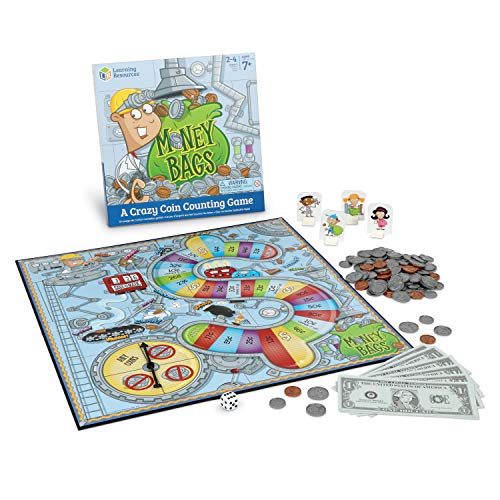
The Learning Resources Money Bags Coin Value Game is perfect for kids aged 7 and up who are enthusiastic to master money management skills in a fun and engaging way. This game features a colorful board, a spinner, and 100 realistic plastic coins, allowing players to collect, count, and exchange money. As kids race to the finish line, they learn essential skills like counting coin combinations and making change. With gameplay for 2-4 players, it’s ideal for family fun. Rated 4.7 stars, it makes an excellent gift for birthdays or holidays, ensuring learning happens while having a blast!
Best For: Children aged 7 and up who want to learn money management skills through an engaging and fun board game.
Pros:
- Educational Value: Helps children develop essential money skills like counting, exchanging coins, and making change.
- Engaging Gameplay: Offers fun and interactive gameplay for 2-4 players, making it ideal for family game nights.
- High Customer Rating: Rated 4.7 stars by nearly 3,000 reviews, indicating strong customer satisfaction.
Cons:
- Limited Player Count: The game is only suitable for 2-4 players, which may exclude larger groups.
- Age Restriction: Designed primarily for children 7 and up, which may not appeal to younger kids.
- Components Size: The game pieces, including coins and bills, may be small and pose a choking hazard for very young children.
Educational Insights The Sneaky, Snacky Squirrel Game for Kids
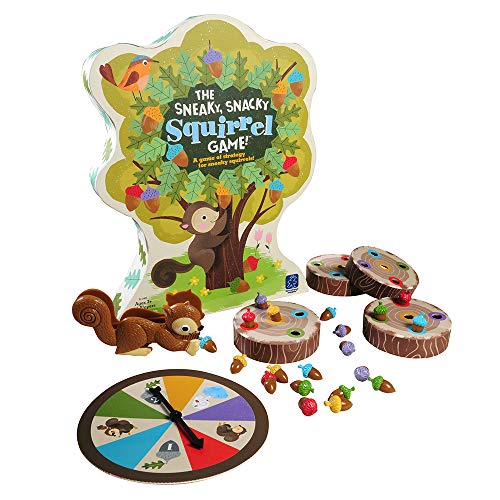
Looking for a fun way to introduce preschoolers to educational concepts? The Sneaky, Snacky Squirrel Game is perfect for kids ages 3 and up! In this engaging board game, you’ll help your little ones collect colorful acorns using a squirrel squeezer while spinning the spinner. This game fosters color recognition, strategic thinking, and hand-eye coordination, all while encouraging essential social skills like taking turns and sharing. With no reading required, it’s easy for young learners to jump in. Plus, it’s lightweight and portable, making it ideal for parties or playdates. Get ready for a playful learning experience!
Best For: The Sneaky, Snacky Squirrel Game is best for preschoolers ages 3 and up who are learning colors and social skills through engaging gameplay.
Pros:
- Encourages color recognition and strategic thinking in young children.
- Promotes social skills like taking turns and sharing among players.
- Easy to set up and play without any reading required, making it accessible for preschoolers.
Cons:
- Limited to only 4 players, which may not accommodate larger groups.
- The gameplay may become repetitive after several rounds.
- Some children may find the squirrel squeezer challenging to use at first.
QUOKKA Board Game for 1 to 10 Players – Educational Geography Facts

If you’re seeking an engaging way to boost geography knowledge for kids and adults alike, the QUOKKA Board Game stands out as an excellent option. Designed for 1 to 10 players, this game features 100 educational question cards that cover oceans, continents, and cultural sites. Players move their pawns across a world map, answering trivia to navigate obstacles. It’s perfect for family game nights or birthday parties, accommodating various ages—especially beneficial for kids aged 8-12. With a compact size and a flexible gameplay experience, QUOKKA makes learning geography fun and interactive while enhancing strategic thinking and social skills.
Best For: Families, kids aged 8-12, and anyone interested in enhancing their geography knowledge through interactive gameplay.
Pros:
- Encourages educational engagement through trivia on geography and culture.
- Suitable for a wide age range, making it a great family-friendly activity.
- Flexible gameplay options allow for varied experiences, accommodating both casual and more strategic play.
Cons:
- Limited to geography-focused content, which may not appeal to those interested in other subjects.
- Gameplay duration can extend with more players, potentially leading to longer sessions.
- May require adult supervision for younger players to ensure understanding of the questions.
hand2mind Numberblocks Race to Pattern Palace! Board Game for Toddlers

Designed specifically for toddlers aged 3-5, the hand2mind Numberblocks Race to Pattern Palace! Board Game makes learning numbers and patterns exciting. Inspired by the beloved TV series, this game engages young learners through colorful tiles and playful gameplay. You’ll move Numberblocks One to Four over bridges while creating patterns shown on the cards. With two levels of challenge, children can progress as they build essential math skills. The game set includes a board, pawns, a dice popper, bridges, and various pattern cards. It’s a fun way to foster a love for learning as your child evolves into kindergarten!
Best For: The hand2mind Numberblocks Race to Pattern Palace! Board Game is best for toddlers aged 3-5 who are starting to learn numbers and patterns.
Pros:
- Engaging gameplay that promotes learning through play.
- Two levels of challenge suitable for varying skill levels.
- Supports essential math skills and fosters a love for learning.
Cons:
- Limited to basic math concepts, may not challenge older children.
- Requires adult supervision for younger toddlers during play.
- Components may be small and pose a choking hazard for very young children.
Peaceable Kingdom Alphabet Bingo Educational Board Game for Kids

The Peaceable Kingdom Alphabet Bingo! is perfect for kids aged 4 and up who are enthusiastic to learn their letters while having fun. This engaging game accommodates 2 to 6 players, featuring 6 double-sided boards and 26 letter tokens. Kids will boost their early reading skills by recognizing letters and associating them with objects. With gameplay variations like Letter Sound Bingo and Cooperative Bingo, you can cater to different learning styles and keep the excitement alive. Plus, it’s an award-winning game recognized for enhancing learning both at home and in classrooms. Get ready for a delightful way to reinforce literacy!
Best For: Kids aged 4 and up who are eager to learn their letters while having fun in small group settings.
Pros:
- Engages children with multiple gameplay variations to cater to different learning styles.
- Helps improve letter recognition and early reading skills in an interactive way.
- Award-winning game recognized for its educational value both at home and in classrooms.
Cons:
- Limited to 6 players, which may not accommodate larger groups.
- May require adult supervision for younger children to understand the rules.
- Some children may lose interest if played repeatedly without variation in gameplay.
Factors to Consider When Choosing Educational Board Games for Learning
When you’re choosing educational board games, consider factors like age appropriateness and the skills you want to develop. Think about the gameplay mechanics and how they align with your educational goals. Also, make sure the game works well for the group size you have in mind.
Age Appropriateness
Choosing the right educational board game for your child hinges on age appropriateness, as selecting games that align with their developmental stage is key to effective learning. Always check the recommended age range on the packaging—this helps guarantee the content and complexity match your child’s abilities. For younger kids (ages 3-5), look for games focusing on basic skills like letter recognition and counting. In contrast, games for older children (ages 8+) typically involve more complex strategies and critical thinking. Age-appropriate games not only enhance learning but also keep your child engaged and motivated. Consider opting for games with varying difficulty levels to support your child’s growth while keeping the challenges suitable for their age.
Skill Development Focus
Finding educational board games that align with your child’s interests and abilities naturally leads to contemplating the skills you want them to develop. Consider games that enhance essential math skills through activities like addition and money management, which promote quick mental math. For younger kids, look for games focusing on foundational literacy skills, like letter recognition and vocabulary, to foster early reading. Many games also encourage social skills, teaching the importance of taking turns, sharing, and handling both winning and losing gracefully. Opt for games with hands-on manipulatives that make abstract concepts concrete. Finally, choose age-appropriate challenges that adapt to various skill levels, allowing your child to progress at their own pace while staying engaged and motivated.
Gameplay Mechanics
Engaging gameplay mechanics are essential in making educational board games appealing and effective for learning. When choosing a game, consider features like rolling dice or spinning spinners to boost kids’ motivation. Incorporating competition, such as racing to the finish or collecting items, can make learning more dynamic and exciting. Look for games that encourage collaborative play, fostering teamwork and social skills as players strategize together. Multi-level challenges are also valuable; they let children progress at their own pace while keeping them engaged. Finally, interactive components like poppers or manipulatives enhance tactile learning, helping to make abstract concepts more tangible and enjoyable. With these mechanics, you’ll find games that truly inspire and educate.
Educational Value
When considering educational board games, it’s crucial to evaluate how well they integrate core learning objectives like math skills, vocabulary enhancement, and critical thinking. Look for games that provide a hands-on learning experience, allowing kids to engage actively with the material. Choosing games with varying levels of difficulty guarantees that all players find the gameplay both challenging and accessible. Additionally, opt for games that promote social interaction and collaboration, as these elements boost communication skills and foster teamwork. Finally, assess how well the game keeps children engaged and motivated through fun mechanics, like thematic elements or competitive aspects. These factors collectively enhance the educational value of board games, making learning enjoyable and effective.
Group Size Compatibility
Choosing the right educational board game involves guaranteeing it fits the group size you plan to play with. Games typically accommodate anywhere from 2 to 10 players, so consider how many people will join in. For family game nights, look for games designed for 2-4 players that allow siblings or parents to engage together and share a learning experience. If you’re in a classroom or hosting a gathering, opt for games that cater to larger groups, promoting collaboration across different ages and skill levels. Always check the game’s instructions to guarantee smooth gameplay with your chosen number of players. The right game not only teaches but also fosters teamwork and communication, making it essential to choose wisely.
Replayability Factor
The replayability factor of educational board games plays an essential role in keeping players coming back for more, as varied gameplay mechanics can greatly enhance the experience. Games that offer changing objectives or multiple paths to victory can make each session feel fresh and exciting. Incorporating random elements, like dice rolls or spinner outcomes, keeps the game unpredictable and engaging, encouraging repeated play. Additionally, having different skill levels allows players to return as their abilities grow, maintaining interest over time. Interactive components, such as player interaction and strategic choices, create dynamic experiences that evolve with each session. Frequent updates or expansions introduce new content, ensuring the game remains appealing and challenging long after its initial playthrough.
Theme and Engagement
Engaging themes in educational board games not only make learning enjoyable but also motivate children to actively participate. Games featuring adventures or competitions spark excitement and encourage kids to plunge into learning. When you choose games that incorporate popular narratives—like geography exploration or math challenges—you boost their interest and help them retain information better. Visually appealing designs with vibrant colors and relatable characters capture children’s attention, fostering a positive learning environment. Additionally, interactive elements, such as spinning wheels or hands-on manipulatives, deepen engagement and reinforce concepts. It’s also essential to select games with varying levels of play, ensuring everyone has appropriate challenges. This inclusivity keeps all players engaged and enthusiastic to learn together.
Materials and Safety
When it comes to selecting educational board games, prioritizing materials and safety is essential for ensuring a positive experience for young players. Choose games made from non-toxic, child-safe materials to keep kids safe during play. Look for products that have received safety certifications, confirming they meet established standards. Durable materials are vital since children often engage in repeated play sessions, so opt for high-quality components that can withstand wear and tear. Additionally, check for age-appropriate designs that minimize small parts to avoid choking hazards. Finally, don’t forget to review customer feedback and ratings to assess the game’s construction and overall safety based on other parents’ experiences. This will help you make a well-informed choice.