HyperX Cloud III review is straightforward: this is a comfort-first wired gaming headset built for long sessions across PC, PlayStation, Xbox, and mobile-friendly 3.5mm use.
If you want a headset that prioritizes fit, clarity, and broad compatibility over flashy extras, the HyperX Cloud III deserves a close look.
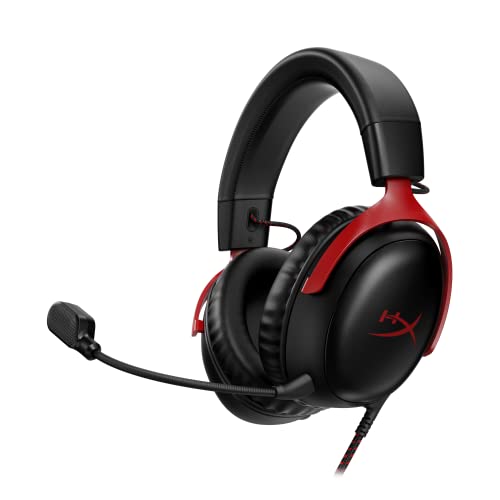
Cloud III Review Summary
The HyperX Cloud III Wired Gaming Headset makes sense for players who spend long hours in games and want a headset that stays comfortable without forcing a complicated setup.
Its strongest appeal is the combination of memory foam comfort, a durable aluminum frame, angled 53mm drivers, and a detachable-feeling practical design that is aimed at everyday gaming rather than niche enthusiast tuning.
Verdict: this is a sensible pick for gamers who want dependable comfort, clean voice chat, and simple cross-platform compatibility.
It is less compelling if you want wireless freedom or deep customization, but as a wired daily driver it is easy to understand and easy to recommend.
Review Scorecard
| Category | Score | Why it rates here |
|---|---|---|
| Comfort | 10/10 | Memory foam and the Cloud line’s comfort-first design are the product’s clearest strengths. |
| Mic clarity | 8/10 | The 10mm noise-cancelling mic is built for clear chat and includes a mute indicator. |
| Audio immersion | 8/10 | Angled 53mm drivers and DTS Headphone:X spatial audio favor gaming detail and directionality. |
| Durability | 8/10 | The aluminum frame and flexible build are positioned for travel and daily wear. |
| Compatibility | 9/10 | USB-C, USB-A, and 3.5mm support make it easy to move between platforms. |
| Value-for-fit | 9/10 | It concentrates on the features most buyers actually use instead of unnecessary extras. |
Key Features and Specifications of Cloud III
The HyperX Cloud III is built around a few clear selling points rather than a long spec sheet for its own sake.
The headline features are the angled 53mm drivers, memory foam cushioning, a durable aluminum frame, a 10mm noise-cancelling microphone, and DTS Headphone:X spatial audio.
Those choices tell you what the headset is for: comfortable long sessions, practical voice chat, and consistent gaming audio across multiple systems.
Platform support is one of the strongest reasons to consider it.
The listing specifically calls out PC, PS5, Xbox Series X|S, and 3.5mm connectivity, plus USB-C and USB-A support.
That is useful for buyers who switch between a console, laptop, and desktop and do not want a headset that gets trapped inside one ecosystem.
The microphone is another practical point.
HyperX describes it as an ultra-clear 10mm mic with noise-cancelling behavior and a built-in mesh filter.
It also includes an LED mute indicator, which sounds minor until you use a headset regularly and want instant confirmation that your mic is muted.
Key listed details:
- Angled 53mm drivers tuned for gaming audio
- 10mm noise-cancelling microphone
- Memory foam ear cushions
- Durable aluminum frame
- DTS Headphone:X spatial audio lifetime activation
- USB-C, USB-A, and 3.5mm connectivity
- Compatibility for PC, PS5, Xbox Series X|S, and mobile-style analog use
What stands out is not raw complexity but the way the parts work together.
This is a headset designed to reduce friction: comfortable on the head, easy to connect, and clear enough for games with voice chat.
That makes the Cloud III more appealing as a practical purchase than as a hobbyist audio project.
Pros and Cons of Cloud III
Pros
- Excellent comfort focus thanks to the Cloud line’s signature memory foam approach.
- Broad compatibility across modern consoles, PC, and standard 3.5mm devices.
- Clearer team chat focus with a noise-cancelling 10mm mic and mute indicator.
- Durable daily-use design with an aluminum frame and flexible construction.
- Gaming-oriented sound from angled 53mm drivers and spatial audio support.
Cons
- Wired by design, so it will not suit buyers who want a wireless setup.
- Feature set is practical, not premium-fragile, so it does not lean into luxury extras or elaborate software claims.
- Audio tuning is aimed at gaming utility, which may not be the best match for buyers who want a more studio-like headphone response.
The tradeoff is clear.
HyperX is selling comfort and reliability first, not a feature checklist built to win spec-sheet comparisons.
For many buyers, that is exactly the right call.
For others, especially those who want portability without cables, the limitations are obvious.
Who Should Buy Cloud III?
The HyperX Cloud III is best for players who value comfort enough to make it a buying priority.
If you play competitive matches, co-op sessions, or long single-player games and dislike headsets that clamp too hard or feel fatiguing, this is the kind of product that fits your routine.
It is also a strong choice if you move between devices.
A headset with USB-C, USB-A, and 3.5mm support can be a lot easier to live with than a platform-specific model.
That matters if you alternate between a console, gaming PC, and other compatible devices.
Buy it if you want:
- A comfortable wired gaming headset for long sessions
- Easy compatibility across several platforms
- A microphone focused on clear voice chat
- A durable frame rather than a fragile, flashy design
Skip it if you want:
- Wireless freedom
- Deep customization or advanced enthusiast tuning
- A headset that is more about luxury presentation than practical use
In other words, the Cloud III is not trying to be everything.
It is trying to be the headset you keep reaching for because it is comfortable, simple, and dependable.
Cloud III Sound, Comfort, and Mic Performance
Comfort for Long Sessions
The comfort story is the main reason to consider this headset.
HyperX leans heavily on memory foam and the Cloud line’s reputation for a fit that does not wear you down quickly.
For buyers who spend several hours at a time in games, that matters more than almost any extra feature.
Gaming Audio Tuning
The angled 53mm drivers are tuned for gaming, which usually means emphasizing clarity, direction, and immersion rather than flat reference sound.
Paired with DTS Headphone:X spatial audio, the Cloud III should appeal to players who want better sense of space in shooters, action games, and open-world titles.
Voice Chat Clarity
The 10mm noise-cancelling microphone is one of the more obviously useful additions.
If you regularly use voice chat, the built-in mesh filter and LED mute indicator make the headset easier to use day to day.
That is the sort of practical detail that keeps a headset from feeling annoying after a week.
Durability and Everyday Use
The aluminum frame is a meaningful signal that this is meant to survive normal handling, travel, and repeated wear.
It is not presented as a ruggedized tactical headset, but it does sound more confidence-inspiring than a lightweight, plastic-only design.
Alternatives to Cloud III
If the HyperX Cloud III is close but not perfect for your setup, the most reasonable alternatives are other well-known gaming headset lines with their own strengths.
Choose the SteelSeries option if wireless flexibility matters most.
Choose the Razer or Logitech lines if you want a more competitive-gaming oriented alternative with a different tuning philosophy.
Choose the older HyperX Cloud II if you specifically want to compare against another comfort-first wired model from the same family.
Is Cloud III Worth It?
Yes, the HyperX Cloud III is worth it if your priorities are comfort, simple compatibility, and dependable gaming chat rather than wireless convenience or feature overload.
It looks especially strong for PC and console players who want one headset that can move between setups without drama.
The reason to buy it is not mystery or novelty.
It is the combination of comfort-first design, clear voice-chat hardware, gaming-focused drivers, and a durable frame in a wired package that stays easy to live with.
If that describes your use case, the Cloud III is an easy recommendation.