Choosing the right compressor can make podcast vocals sound more consistent, more polished, and easier to listen to. The best options help tame peaks without making voices feel flat or over-processed.
Below, we’ve narrowed the field to 10 strong choices for different podcasting setups, from simple desktop rigs to rackmount studio chains.
Best 10 Audio Compressors for Podcasting Picks for 2026
Podcast Channel Strip Interface
Universal Audio Volt 276 USB Audio Interface

- Built-in 76 compressor for vocal punch
- UA 610 Vintage mode adds richer tone
- 2x2 USB-C interface for multiple devices
Best For: Podcasters who want compression built into a compact recording interface
Budget Rack Dynamics Processor
Behringer Composer Pro-XL MDX2600 Compressor with De-esser

- 2-channel compressor/limiter/gate
- Built-in de-esser for vocal harshness
- Rackmount unit for studio installs
Best For: Budget podcasters needing a rack processor with de-essing
Reliable Rack Compressor/Gate
dbx 266xs Professional Audio Compressor/Gate

- Smooths uneven vocal levels
- Program-adaptive gate helps reduce noise
- Front-panel LEDs simplify setup
Best For: Podcasters who want a dependable rack compressor with gate control
Vintage FET Vocal Compressor
Klark Teknik 76-KT Classic FET-Style Compressor

- 1176LN-style FET compression
- MIDAS transformers add classic color
- Selectable ratios and all-button mode
Best For: Podcasters seeking a vintage-style compressor with studio character
Dual-Channel Rack Control
ART SCL2 Dual/Stereo Compressor/Limiter
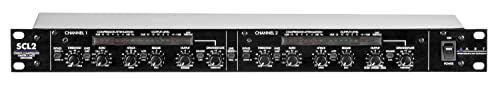
- Dual-channel or linked stereo operation
- Balanced XLR and 1/4-inch TRS inputs
- Auto/manual attack and release plus LED meters
Best For: Podcast setups needing two-channel or stereo dynamics control
Channel Strip Convenience
Empirical Labs EL-9 Mike-E Compressor

- Microphone preamp, DI, and compressor/limiter in one unit
- Sidechain input adds routing flexibility
- Studio-focused channel strip design
Best For: Podcast studios wanting an integrated preamp-plus-compressor chain
Modern Dual-Channel Value
Professional Dual-Channel Dynamic Processor

- Overeasy compression with auto attack/release
- Built-in noise gate and side chain insert
- XLR/TRS I/O in a 1U rackmount design
Best For: Podcast and streaming studios wanting flexible dual-channel dynamics control
Tube/Opto Hybrid
ART Solo VLA Single Channel Multi-Voice Compressor

- Selectable Tube or Solid State control
- Optical compression with variable dry/wet blend
- +4dBu/-10dBV level mode switching
Best For: Podcast setups needing flexible single-channel compression and tonal options
4-Channel Channel Strip
Universal Audio 4-710d 4-channel Microphone Preamp and Compressor
- 4-channel tube/FET preamp and compressor
- Tone blending knob for input character
- 24-bit/192kHz A/D conversion
Best For: Multi-host podcast studios needing four channels and integrated conversion
Classic FET
Warm Audio WA76 Single Channel Discrete Compressor

- Single-channel discrete compressor
- CineMag USA transformers and discrete path
- All-buttons-in ratio setting
Best For: Podcasters wanting a classic analog compressor with straightforward controls
Podcast Channel Strip Interface – Universal Audio Volt 276 USB Audio Interface
If you want audio compressors for podcasting built into a simple USB interface, the Universal Audio Volt 276 is a strong all-in-one option. It pairs a vintage-style UA 610 preamp mode with an analog 76 compressor, so you can track vocals with more clarity and punch before editing.
Best For: Podcasters who want a compact interface with built-in compression for recording voice on Mac, Windows, iPad, or iPhone.
Pros:
- Built-in analog 76 compressor helps smooth and add punch to vocal recordings.
- Vintage mode uses UA 610-style preamp coloration for a richer sound.
- 2×2 USB-C design works with Mac, Windows, iPad, and iPhone.
- Includes LUNA DAW access and UAD plug-in workflow support.
Cons:
- Requires an external Volt power supply.
- iPad use may require an Apple Lightning to USB Camera Adapter on non-USB-C models.
For podcast creators who want compression at the recording stage rather than relying only on post-production, the Volt 276 offers a practical and portable path. Its value comes from combining interface, preamp flavor, and compression in one unit.
Budget Rack Dynamics Processor – Behringer Composer Pro-XL MDX2600 Compressor with De-esser
Among audio compressors for podcasting, the Behringer Composer Pro-XL MDX2600 stands out as a low-cost rack unit with compressor, limiter, gate, and de-esser functions. That makes it useful if you want a single processor for controlling voice levels and reducing unwanted noise in a small studio or live recording setup.
Best For: Budget-conscious podcasters who need a 2-channel rack processor with gate and de-esser tools.
Pros:
- 2-channel compressor/limiter/gate design covers several core dynamics tasks.
- Includes a de-esser, helpful for taming harsh vocal sibilance.
- Rackmount format fits a more permanent studio setup.
- Useful for audio production, mixing, and mastering.
Cons:
- Requires corded electric power and rack space.
- Less portable than desktop or interface-based options.
If your podcast setup is already rack-based, this unit gives you a straightforward way to shape voice dynamics without paying for extra features you may not need. It is best thought of as a practical utility processor rather than a premium color box.
Reliable Rack Compressor/Gate – dbx 266xs Professional Audio Compressor/Gate
The dbx 266xs is a classic rack-style choice when shopping for audio compressors for podcasting and other voice-heavy work. With compression, gate, sidechain insert, and clear LED metering, it is designed for simple setup and reliable level control in a studio or portable rig.
Best For: Podcasters who want a dependable 1U compressor/gate with easy front-panel operation.
Pros:
- Error-proof operation is designed to smooth uneven levels.
- Program-adaptive expander/gate helps manage room noise between spoken lines.
- Separate LED displays make gain reduction and threshold setup easier.
- Sidechain insert adds flexibility for more advanced routing.
Cons:
- Requires a rack-mount setup and corded power.
- Analog hardware may be more than needed for basic solo podcast recording.
For creators who want a proven dynamics processor with clear controls, the 266xs is an easy recommendation. It focuses on the fundamentals: leveling voice, controlling noise, and keeping operation fast.
Vintage FET Vocal Compressor – Klark Teknik 76-KT Classic FET-Style Compressor
If you are looking for audio compressors for podcasting with a more characterful sound, the Klark Teknik 76-KT brings a classic FET-style design modeled after the famous 1176LN revisions. Its discrete signal path, MIDAS transformers, and selectable ratio buttons make it a strong fit for adding controlled energy to spoken-word tracks.
Best For: Podcasters who want a vintage-style compressor with transformer color and fast control.
Pros:
- Modeled after iconic 1176LN D and E revisions.
- Discrete signal path with custom MIDAS input and output transformers.
- Push-button ratio selection includes 4:1, 8:1, 12:1, and 20:1.
- Includes all-button mode plus adjustable attack and release times.
Cons:
- Rackmount format is less portable than desktop gear.
- More character-focused than a transparent, set-and-forget compressor.
For podcasting, the 76-KT makes the most sense when you want compression that is not just functional but also adds a recognizable studio flavor. It is a strong option if you prefer hands-on control and a more classic approach to dynamics.
Dual-Channel Rack Control – ART SCL2 Dual/Stereo Compressor/Limiter
If you want audio compressors for podcasting that can handle two sources at once, the ART SCL2 is built for dual-channel or linked stereo operation. It offers balanced XLR and 1/4-inch TRS inputs, plus selectable auto or manual attack and release for more controlled voice leveling.
Best For: Podcast setups that need dual-channel or stereo dynamics control with straightforward rack connections.
Pros:
- Dual-channel or linked stereo operation supports flexible podcast routing.
- Balanced XLR and 1/4-inch TRS inputs fit common studio connections.
- Selectable auto/manual attack and release help tailor compression behavior.
- Precise LED level meters make gain reduction easier to monitor.
Cons:
- No microphone preamp is included, so it is not an all-in-one channel strip.
- Rack-style hardware is less convenient for portable recording rigs.
Overall, the SCL2 is a practical choice when you want reliable stereo or dual-mono compression with clear metering and balanced connectivity. It is especially useful if your podcast workflow already includes an external preamp or mixer.
Channel Strip Convenience – Empirical Labs EL-9 Mike-E Compressor
For podcasting workflows that benefit from an integrated front end, the Empirical Labs EL-9 Mike-E combines a microphone preamp, DI, and compressor/limiter with sidechain input. That makes it a strong fit for producers who want compression as part of a broader recording chain rather than a standalone unit.
Best For: Voice chains that need a microphone preamp and compressor in one unit.
Pros:
- Built-in microphone preamp reduces the need for separate gear.
- Compressor/limiter includes a sidechain input for more routing options.
- Channel strip design can simplify a podcast recording setup.
Cons:
- Weighs 12.19 pounds, so it is not especially light.
- Large chassis dimensions make it a rack-oriented studio piece.
If you want one device to cover preamp and compression duties, the Mike-E is the most integrated option here. It suits studios that prioritize control and signal-chain consolidation over compact size.
Modern Dual-Channel Value – Professional Dual-Channel Dynamic Processor
This dual-channel processor is aimed at audio compressors for podcasting, streaming, and other studio tasks where clean dynamics control matters. It includes XLR and 1/4-inch TRS inputs and outputs, overeasy compression, auto attack/release settings, and a built-in noise gate for taming unwanted room sound.
Best For: Podcast and streaming setups that want flexible compression with noise gating in a rackmount format.
Pros:
- Dual-channel design handles two voices or a stereo path.
- Auto attack/release and overeasy compression support smoother setup.
- Built-in noise gate helps reduce background noise.
- Side chain insert adds targeted frequency control when needed.
Cons:
- Rackmount format is best suited to stationary setups.
- Feature set may be more than a simple voice-only chain needs.
For podcast creators who want modern controls and noise management in one box, this unit offers a lot of practical utility. It is especially appealing if your studio also records live streaming or other dynamic sources.
Tube/Opto Hybrid – ART Solo VLA Single Channel Multi-Voice Compressor
If you want audio compressors for podcasting that can add flexible control without locking you into one character, the ART Solo VLA is built around a mastering-quality signal path with selectable Tube or Solid State control. Its optical compression design, variable uncompressed/compressed blend, and +4dBu/-10dBV level modes make it a practical option when you need to shape spoken-word dynamics with some precision.
Best For: Podcast hosts or studios looking for a versatile single-channel compressor with blend control and switchable voicing.
Pros:
- Selectable MultiVoice Tube/Solid State control for different compression flavors
- Optical isolators and a mastering-quality audio signal path
- Variable blend lets you mix compressed and dry signals
- Switch-selectable +4dBu/-10dBV level modes
Cons:
- Single-channel design only
- Tube-based hardware is relatively large and heavy
This is a flexible outboard compressor for users who want more than basic level control, especially if blend and voicing options matter in a podcast chain. The Solo VLA leans into hands-on tone shaping rather than minimal setup.
4-Channel Channel Strip – Universal Audio 4-710d 4-channel Microphone Preamp and Compressor
For audio compressors for podcasting that also handle front-end capture, the Universal Audio 4-710d combines a 4-channel tube/FET preamp and compressor with tone blending and 24-bit/192kHz A/D conversion. That makes it a strong fit when you want multiple mic inputs and an all-in-one path for recording spoken word with analog control before conversion.
Best For: Multi-host podcast studios that want four channels of preamp, compression, and conversion in one unit.
Pros:
- 4-channel tube/FET preamp and compressor section
- Tone blending knob for shaping the input character
- 8-channel 24-bit/192kHz A/D conversion
- Useful for setups that need several channels at once
Cons:
- Heavier and larger than a simple single-channel compressor
- May be more unit than a solo podcaster needs
The 4-710d makes sense when podcasting is part of a broader studio workflow and you want compression plus conversion in one box. Its strength is channel count and flexibility, not compactness.
Classic FET – Warm Audio WA76 Single Channel Discrete Compressor
If you’re comparing audio compressors for podcasting and want a classic, straightforward approach, the Warm Audio WA76 is a single-channel discrete compressor with CineMag USA transformers and a fully discrete signal path. It is designed to stay close to the classic ’76 style and even includes the famous “all buttons in” ratio setting for more aggressive compression behavior.
Best For: Podcasters and voice-over users who want a classic single-channel compressor with a familiar studio workflow.
Pros:
- Single-channel discrete compressor with a fully discrete signal path
- Custom CineMag USA transformers
- Classic ’76-style design and performance
- All-buttons-in mode for a more assertive compression option
Cons:
- Single-channel only
- Requires external DC power supply
- Built for professional audio applications, so it may be more than a basic starter unit
The WA76 is a strong choice when you want a proven compressor style that can bring a direct, controlled sound to spoken word. It is best viewed as a dedicated analog tool rather than a multi-purpose channel strip.
How We Picked the Best Audio Compressors for Podcasting
We focused on models that suit spoken-word recording, not just general studio use. That means clear gain control, predictable compression behavior, practical connectivity, and features that help voices sit naturally in a mix. We also considered whether each unit fits solo creators, multi-host shows, or more advanced studio workflows.
Quick Comparison: What Matters Most
For podcasting, the biggest differences usually come down to channel count, compressor style, and how much setup you want to manage. A simple interface with built-in compression may be ideal for one host. Rack processors and standalone compressor units make more sense when you need more control, multiple microphones, or integration with a larger recording chain.
Key Buying Factors for Audio Compressors for Podcasting
Compression Style
Different compressor types affect voice in different ways. FET-style designs tend to sound fast and assertive, while opto and VCA-style processors often feel smoother and easier to dial in. For podcast speech, a transparent or gently colored response is usually the safest choice unless you want a more distinctive sound.
Ease of Setup
Many creators benefit from straightforward controls such as threshold, ratio, attack, release, and output gain. If you’re new to dynamics processing, units with fewer surprises are easier to use correctly. Look for sidechain or de-esser options only if your voice or room really needs them.
Channel Count and Expandability
Solo podcasters can often get by with a single-channel solution or an interface with onboard compression. If you record interviews, co-hosted shows, or remote guests through a hardware chain, dual-channel and multichannel units offer more flexibility.
Noise and Signal Quality
Clean gain staging matters as much as compression itself. A compressor should control dynamics without adding hiss, distortion, or pumping. For spoken voice, transparency is often more valuable than extreme coloration.
Who Should Buy Which Audio Compressors for Podcasting?
If you want a simple all-in-one recording path, an audio interface with built-in compression is a smart fit. If you already own a microphone preamp or mixer, a dedicated rack compressor may deliver better control and upgrade potential. Creators aiming for a more broadcast-style sound may prefer classic analog designs, while those who want maximum precision should look for units with flexible routing and clear metering.
In short, the best Audio Compressors for Podcasting are the ones that match your workflow, your room, and how hands-on you want to be. Choose the simplest tool that gives you clean, controlled voice without adding unnecessary complexity.