If you need crisp detail, smooth surfaces, and dependable repeatability, resin printing is still one of the best ways to prototype parts quickly.
This roundup of the best resin printers for prototypes in 2026 focuses on machines and materials that help you move from concept to test-fit with less sanding, fewer failures, and better results.
Best 10 Resin Printers for Prototypes Picks for 2026
Automatic Setup Pick
ELEGOO Mars 5 Resin 3D Printer
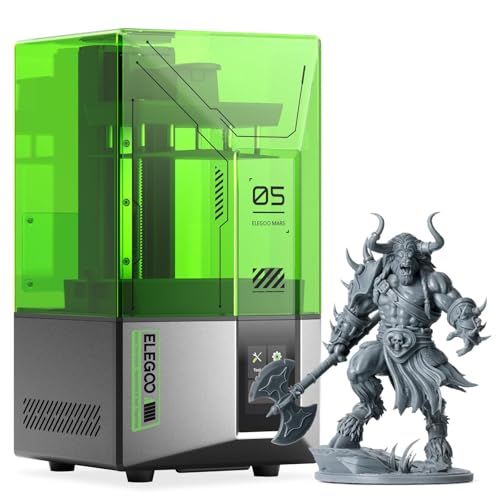
- One-click auto leveling simplifies setup.
- Self-check and alerts help avoid failed prints.
- 4K mono LCD supports fine prototype detail.
Best For: Users who want easier, more automated resin prototype printing.
Durable Resin Choice

- Higher toughness and elongation than the prior version.
- Low viscosity helps with flow and print success.
- Low odor and low shrinkage suit practical prototyping.
Best For: Prototype parts, fixtures, and functional prints that need extra toughness.
Ultra-Detail Printer
UniFormation GK3T 16K Resin Printer

- 16K screen and tiny pixel size target fine detail.
- Factory pre-leveling and resin feeding simplify use.
- Heating and app monitoring support stable printing.
Best For: Detailed prototypes and users wanting a highly automated workflow.
Functional Material Pick
Tough Heat-Curable 405nm Resin
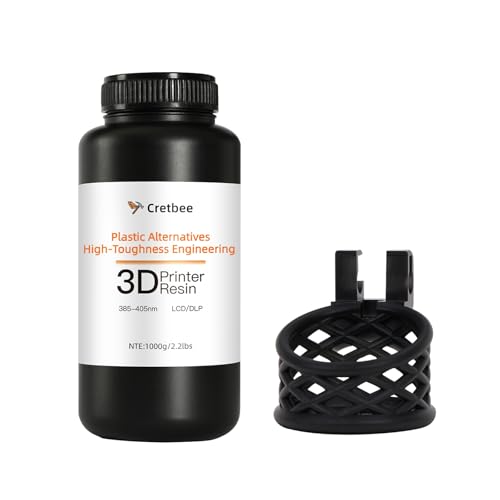
- Heat curing boosts toughness and stability.
- Can be drilled and tapped after curing.
- Works with 385-405nm LCD, DLP, and MSLA printers.
Best For: Functional prototypes, drillable parts, and durable maker projects.
Dual-Material Prototyping Pick
ANYCUBIC Photon P1 Resin 3D Printer with Dual-Color/-Material Printing

- Dual-color and dual-material printing for flexible prototype builds
- Wave Release Technology lowers release force by 60%
- Auto-leveling and AI monitoring reduce setup and print issues
Best For: Prototype makers who want multi-material or dual-color prints
Tough Functional Resin
ELEGOO ABS-Like 3.0 3D Printer Resin Grey 2000g

- Strong and tough enough for functional prototype use
- Low shrinkage helps maintain detail and accuracy
- Low viscosity supports faster curing and easier peel
Best For: Functional prototypes and mechanical parts that need durability
Easy-Clean Prototype Resin
ELEGOO Water Washable 3D Printer Resin 2.0

- Water washable formula simplifies cleanup
- Produces smooth surfaces, fine details, and sharp edges
- Works for prototypes, figures, jewelry, and mechanical parts
Best For: Makers who want simpler post-processing for detailed prototypes
High-Strength Prototype Pick
ANYCUBIC ABS-Like Resin Pro 2, Grey 1kg

- Tougher ABS-like formula for functional prototypes
- Low shrinkage helps preserve detail and dimensions
- Low odor and wide LCD/DLP compatibility
Best For: Structural parts, fixtures, and durable test prototypes
Budget-Friendly Standard Resin
SUNLU Fast Curing Standard Grey 1kg

- Easy to use with strong fluidity
- Low shrinkage supports accurate prototype shapes
- Affordable, low-odor, widely compatible
Best For: Novice users and general-purpose prototype prints
Functional Prototype Favorite
ELEGOO ABS-Like 3.0 Translucent 1kg
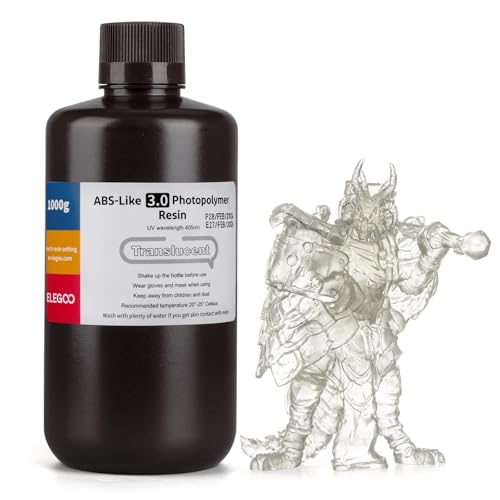
- Tough enough for functional and mechanical parts
- Low shrinkage supports accurate, smooth prints
- Fast-flowing formula helps rapid prototyping
Best For: Functional prototypes and industrial-style test parts
Automatic Setup Pick – ELEGOO Mars 5 Resin 3D Printer
If you want resin printers for prototypes without a steep setup curve, the ELEGOO Mars 5 focuses on fast onboarding and dependable print checks. Its one-click auto leveling, self-check routine, and sensor alerts help reduce the trial-and-error that often slows down prototype work.
Best For: Users who want an easier, more automated resin printer for detailed prototype prints.
Pros:
- One-click automatic leveling simplifies setup for beginners and busy users.
- Self-check, residue detection, and resin shortage alerts help prevent wasted prints.
- 4K mono LCD with COB light source is built for fine detail and texture reproduction.
- Overheat protection adds an extra layer of safety during longer jobs.
Cons:
- 4K resolution is strong, but not as high as some newer ultra-detail models.
- It is more focused on ease of use than advanced workflow extras.
Overall, the Mars 5 is a practical option for prototype makers who value simpler operation and reliable print safeguards over maximum spec chasing. It is especially appealing if you want to spend less time calibrating and more time iterating designs.
Durable Resin Choice – ANYCUBIC ABS-Like Resin Pro 2
For resin printers for prototypes, the right material matters as much as the machine. ANYCUBIC ABS-Like Resin Pro 2 is aimed at stronger, tougher functional parts, with higher elongation, low shrinkage, and better flow to improve print success on structural and test-fit models.
Best For: Prototype parts, fixtures, and other functional prints that need more toughness.
Pros:
- Improved toughness and elongation make finished parts stronger than the previous version.
- High fluidity and low viscosity can help shorten curing time and reduce print failures.
- Low shrinkage supports sharper detail and better dimensional accuracy.
- Low-odor formula is more comfortable for indoor printing.
Cons:
- It is a resin material, so it still requires a compatible resin printer.
- The strength-focused formula is less about display-only finishing and more about function.
This is a sensible pick when prototypes need to hold up to handling, testing, or structural use. If your workflow needs a stronger resin with a friendlier printing experience, it fits that brief well.
Ultra-Detail Printer – UniFormation GK3T 16K Resin Printer
If your resin printers for prototypes need the highest level of visible detail, the UniFormation GK3T is built around a 16K display and very fine pixel size. It pairs that resolution with a factory pre-leveled setup, resin heating, and monitoring tools to make intricate prototype work more manageable.
Best For: Detailed prototypes, miniatures, and users who want a highly automated resin workflow.
Pros:
- 16K resolution and 14×19μm pixel size are designed for extremely fine detail.
- Factory pre-leveling, smart resin feeding, and anti-drip design support easier use.
- Built-in heating helps maintain resin fluidity in cold environments.
- Remote control and real-time monitoring add convenience during long prints.
Cons:
- The feature set is extensive, which may be more than casual users need.
- It is a large and heavy printer compared with simpler desktop options.
The GK3T stands out when prototype quality depends on very fine surface detail and a smoother workflow. It looks especially strong for users who want a more complete, connected printing system.
Functional Material Pick – Tough Heat-Curable 405nm Resin
For resin printers for prototypes, this heat-curable resin is aimed at parts that need to do more than look good. After thermal curing, it is designed for better toughness and real-world handling, making it a practical choice for functional prototype pieces, brackets, and modified test parts.
Best For: Functional prototypes, drillable parts, and durable maker projects.
Pros:
- Heat-curable formula is designed to improve toughness and long-term stability.
- Supports drilling and tapping after curing for functional use.
- ABS-like flexibility and impact resistance suit demanding parts.
- Wide compatibility with 385-405nm LCD, DLP, and MSLA printers.
Cons:
- Requires a 110°C thermal curing process to reach its full toughness.
- As a specialty material, it is less straightforward than standard UV resin.
This resin makes sense when your prototype needs mechanical usefulness, not just clean surface detail. If you plan to test fit, drill, tap, or modify parts, it is built with that kind of work in mind.
Dual-Material Prototyping Pick – ANYCUBIC Photon P1 Resin 3D Printer with Dual-Color/-Material Printing
If you want resin printers for prototypes that can do more than basic single-material parts, the Anycubic Photon P1 stands out for dual-color and dual-material printing. It is built to reduce wasted resin on small models, improve release reliability, and keep the workflow simple with auto-leveling and AI monitoring.
Best For: Prototype makers who want multi-material or dual-color prints with less setup hassle.
Pros:
- Dual-color and dual-material printing adds flexibility for creative prototype builds.
- Wave Release Technology reduces release force by 60% for easier detachment and fewer failures.
- Factory-calibrated Smart Leveling 3.0 reduces manual leveling work.
- AI monitoring checks plate installation, resin level, and residue for more reliable printing.
Cons:
- The feature set is geared toward more advanced printing needs, not just basic one-off parts.
- Industrial resin support may be more than casual prototype users need.
For prototype workflows that benefit from multi-material capability and fewer failed prints, the Photon P1 is a strong productivity-focused choice. Its automation features make it easier to stay focused on design rather than constant calibration.
Tough Functional Resin – ELEGOO ABS-Like 3.0 3D Printer Resin Grey 2000g
For resin printers for prototypes, material choice matters just as much as machine quality, and ELEGOO ABS-Like 3.0 is aimed at strong, accurate parts. It is designed for functional prototypes and mechanical parts, with low shrinkage, good fluidity, and wide printer compatibility.
Best For: Functional prototypes, mechanical parts, and users who need a tougher resin.
Pros:
- High strength and toughness support drilling and impact resistance for functional parts.
- Low shrinkage helps preserve fine details and dimensional accuracy.
- Low viscosity improves flow, peel behavior, and print speed.
- Wide compatibility with many 405nm LCD/DLP printers.
Cons:
- Best results depend on a compatible 405nm resin printer.
- Primarily a functional material, so it may be less focused on decorative finishing than specialty resins.
If your prototypes need to be handled, tested, or assembled, this resin is built with durability in mind. It is a practical pick when strength and dimensional stability matter more than special effects.
Easy-Clean Prototype Resin – ELEGOO Water Washable 3D Printer Resin 2.0
When you are comparing resin printers for prototypes, cleanup can be a big part of the workflow, and this water washable resin is built to simplify that step. It delivers fine details and smooth surfaces while removing the need for alcohol or IPA rinsing.
Best For: Makers who want cleaner, simpler post-processing for prototypes and detailed prints.
Pros:
- Water washable formula cuts out alcohol or IPA cleaning.
- Produces smooth surfaces, fine details, and sharp edges.
- Suitable for prototypes, figures, jewelry, and mechanical parts.
- Compatible with ELEGOO and other brand resin printers.
Cons:
- Water cleanup is convenient, but you still need proper post-processing.
- Performance still depends on using a compatible resin printer and correct settings.
This is a practical pick if you want to reduce mess and simplify finishing while still getting clean-looking prototype parts. It is especially appealing for makers who value easy cleanup without giving up detail.
High-Strength Prototype Pick – ANYCUBIC ABS-Like Resin Pro 2, Grey 1kg
If you need resin printers for prototypes that can handle functional test pieces, this ABS-like option is built with strength and toughness in mind. Anycubic says the formula boosts elongation at break by more than 100% versus the previous version, while also keeping shrinkage low for sharper detail and better dimensional accuracy.
Best For: Structural prototype parts, fixtures, and other test models that need more toughness than standard resin.
Pros:
- Enhanced strength and toughness for industrial prototype parts and fixtures
- Low viscosity and high flowability help shorten curing times
- Lower shrinkage supports sharper detail and reduced distortion
- Low-odor formula is more comfortable for longer print sessions
Cons:
- Not positioned as a budget standard resin
- Designed around performance, so it may be more than you need for simple display models
Overall, this is a practical pick when prototype durability matters as much as surface detail. It aims to balance print success, precision, and toughness for users making parts that need to stand up to real handling.
Budget-Friendly Standard Resin – SUNLU Fast Curing Standard Grey 1kg
For resin printers for prototypes where you want an affordable, easy-to-use baseline material, this SUNLU standard resin is a sensible place to start. It emphasizes strong fluidity, low shrinkage, and broad compatibility, which makes it a straightforward choice for everyday prototype printing and general model work.
Best For: Novices, budget-focused makers, and general-purpose prototype prints that don’t need extra toughness.
Pros:
- Easy to use with strong fluidity for smoother printing
- Low shrinkage helps keep sizes and shapes accurate
- Good stability for a wide range of printing needs
- Low odor and easy cleaning simplify post-processing
Cons:
- Standard resin is less specialized for heavy-duty functional parts
- Best fit is general prototyping rather than demanding mechanical use
This is a practical all-rounder if your prototype workflow values simplicity and cost control. It offers a balanced mix of printability, finish, and compatibility without pushing into premium performance territory.
Functional Prototype Favorite – ELEGOO ABS-Like 3.0 Translucent 1kg
If you’re comparing resin printers for prototypes and need a resin that leans toward functional parts, ELEGOO ABS-Like 3.0 is designed for strength, impact resistance, and accuracy. The brand also highlights lower viscosity for faster curing and easier peel behavior, which should help speed up rapid prototyping while preserving detail.
Best For: Functional prototypes, mechanical parts, and industrial-style models that need strength and stability.
Pros:
- High strength and toughness for drilling holes and handling impacts
- Low shrinkage supports precise dimensions and smooth surfaces
- Low viscosity improves fluidity for faster curing and quicker print turnaround
- Strong stability helps prevent delamination and color separation
Cons:
- Works best with ELEGOO printers, so results may vary elsewhere
- Translucent finish may not suit every visual presentation need
This resin is a strong fit when prototype parts must look good and also survive real use. Its mix of toughness, precision, and flow improvement makes it especially appealing for users focused on efficient functional prototyping.
How We Picked These Resin Printers for Prototypes
We focused on the factors that matter most for prototype work: dimensional consistency, surface quality, practical build volume, ease of setup, and the ability to print parts that can survive handling. For materials, we favored options that improve toughness, reduce brittleness, or simplify post-processing.
Quick Comparison: What Matters Most
Not every project needs the same setup. A compact machine is often enough for small test parts, while larger or multi-material systems make sense when you need functional assemblies, ergonomic mockups, or several iterations at once. For Resin Printers for Prototypes, the best choice usually depends on whether your priority is detail, speed, strength, or workflow convenience.
Detail Vs. Strength
Ultra-high resolution is great for cosmetic models and tight features, but prototype parts often need more than looks. If the part will be test-fitted, snapped, screwed, or handled repeatedly, choose a printer or resin with better toughness and impact resistance.
Speed Vs. Reliability
Faster print times help you iterate, but stable printing and good support performance are just as important. A slightly slower machine that succeeds consistently is usually better for design validation than a faster one that wastes resin on failed runs.
Key Buying Factors for Resin Printers for Prototypes
Resolution and XY Accuracy
Look for fine pixel size and consistent layer control if your prototypes include logos, snap features, small bosses, or tight mating surfaces. Resolution helps, but accuracy is what determines whether parts actually fit.
Build Volume
Choose a build area that matches the size of your most common parts. A larger platform is useful for enclosures, brackets, and multiple small parts printed in one batch.
Resin Compatibility
Standard resin is fine for appearance models, but ABS-like, tough, or heat-resistant formulations are better for functional prototypes. Water-washable options can simplify cleanup, though they still need proper curing.
Odor and Workflow
Low-odor resins and easy-to-use printers can make a big difference if you work in a small office or shared shop. Also consider whether your post-processing tools and ventilation are ready for the system you choose.
Post-Cure Performance
Many prototype parts reach their final mechanical properties only after full washing and curing. If your parts will see heat or stress, check the resin’s cured behavior rather than judging it by the raw bottle specs.
Who Should Buy Which Resin Printers for Prototypes?
If you want the safest all-around setup for general prototyping, pick a balanced printer-and-resin combination that emphasizes accuracy and easy workflow. If your parts need durability, look at ABS-like or tough resins. If you’re building presentation models or fine-detail concept pieces, prioritize resolution and surface finish. If your goal is faster iteration for multiple designs, choose a printer with stable output and a resin that is easy to clean, cure, and handle.
In short, the best Resin Printers for Prototypes are the ones that match your part size, mechanical needs, and turnaround time without making the workflow harder than it needs to be.