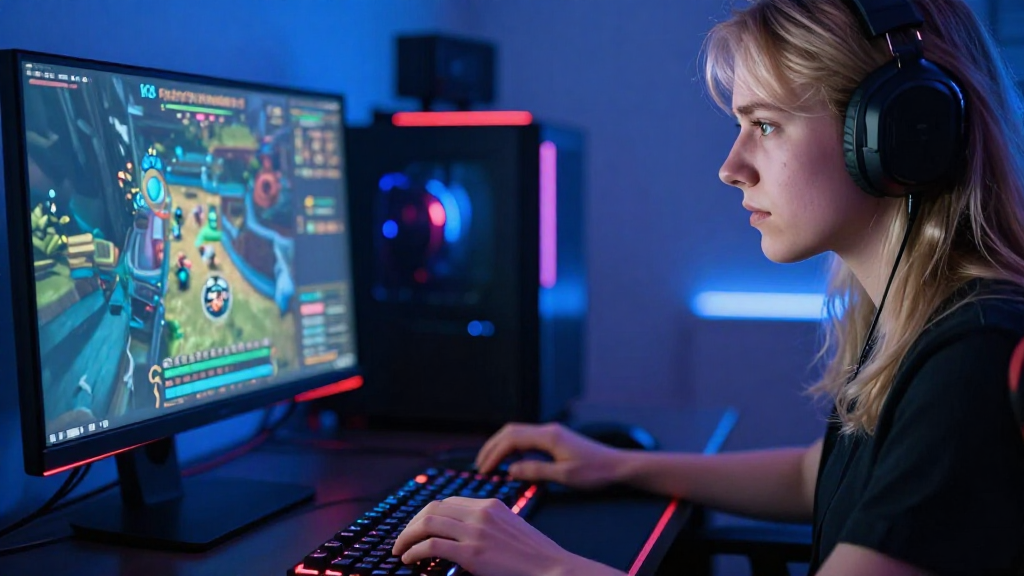
In the world of gaming, procedural memory plays a crucial role in how players interact with game mechanics and environments.
What Is Procedural Memory in Gaming?
To understand gaming and procedural memory, we first need to define what procedural memory is.
Procedural memory refers to the type of long-term memory that allows us to perform tasks without conscious thought.
It’s often associated with motor skills and actions that become automatic through practice.
In the context of gaming, this memory is essential for mastering complex controls and intricate game mechanics.
Players often rely heavily on procedural memory to execute swift movements, navigate challenging terrains, and defeat formidable enemies.
How Does Procedural Memory Develop in Gaming?
One of the fascinating aspects of gaming and procedural memory is how it develops.
Repetition and Practice
Repetition is the cornerstone of building procedural memory.
The more you play a game and repeat certain actions, the more automatic those actions become.
For example:
– Learning to jump: In a platformer, repeatedly pressing the jump button leads to better timing.
– Combos in fighting games: Practicing specific combinations of moves helps players execute them flawlessly.
Feedback and Rewards
Games are designed to provide instant feedback.
Positive reinforcement, such as points or achievements, encourages players to improve their skills.
Feedback loops help players acknowledge their progress, further solidifying their procedural memory.
Environment and Context
The environment also impacts how gaming and procedural memory work.
In immersive environments, players might learn specific patterns and strategies that require less conscious thought.
For instance, a player who frequently navigates a complex map will rely on procedural memory to guide their movements.
How Does Procedural Memory Enhance Gameplay Experience?
Understanding what is procedural memory in gaming highlights its benefits.
Fluid Gameplay
Procedural memory enhances fluidity in gameplay.
When players perform actions without thinking about them, they can focus more on strategy and enjoyment.
This leads to a more immersive experience, allowing players to get lost in the game world.
Skill Mastery
With the foundation of procedural memory, players can achieve mastery over their chosen games.
This mastery provides:
– Satisfaction: Successfully executing skills feels rewarding.
– High-level competition: Players can compete at higher levels, showcasing their skills.
Accessibility
Procedural memory can help players of all skill levels enjoy gaming.
For newcomers, repetition makes complex controls easier to grasp over time.
Experienced players can rely on their memory to quickly adapt to new challenges.
Can Procedural Memory Be Overcome?
While gaming and procedural memory are largely beneficial, there are scenarios where it may hinder performance.
Over-Reliance on Patterns
Sometimes, players become overly reliant on familiar patterns.
This can lead to predictable behavior, making it easier for opponents in competitive games to counter strategies.
Difficulty with New Information
Players might struggle if a game introduces radically new mechanics or controls.
Breaking established procedural habits can be challenging, requiring significant effort and adaptability.
Examples of Procedural Memory in Popular Games
Several popular games effectively utilize procedural memory to enhance player engagement and skill development.
1. First-Person Shooters (FPS)
In FPS games like Call of Duty or Counter-Strike, players develop procedural memory for:
– Aiming and shooting mechanics.
– Map layouts and positioning.
– Movement and evasion techniques.
Players who master these elements rely on procedural memory during high-pressure situations.
2. Fighting Games
In games such as Street Fighter or Mortal Kombat, players memorize complex combos and move sets.
Through repetition, they internalize:
– Defensive maneuvers.
– Offensive strategies.
– Character-specific techniques.
All these elements underscore the importance of gaming and procedural memory.
3. Platformers
Classic and new platformers like Super Mario or Celeste challenge players to develop precision and timing.
Players learn to:
– Execute jumps.
– Time attacks.
– Navigate intricate levels.
Procedural memory becomes key as players find rhythm in their movements.
4. Role-Playing Games (RPGs)
RPGs like The Witcher 3 and Final Fantasy XIV feature vast worlds.
Players build procedural memory by:
– Memorizing quest locations and character interactions.
– Learning battle mechanics and strategies.
This allows for deeper immersion into the narratives and environments.
How Can Players Improve Their Procedural Memory?
Improvement in gaming and procedural memory is a gradual process that can take time and commitment.
1. Consistent Practice
Regularly playing the game helps reinforce learned skills. Aim for:
– Daily practice to enhance muscle memory.
– Targeted practice sessions focusing on specific skills.
2. Explore New Challenges
Engaging in new challenges can help refresh procedural memory.
This might mean:
– Playing different game modes.
– Challenging yourself to use new characters or strategies.
3. Minimize Distractions
Creating a focused gaming environment allows for improved concentration.
A clutter-free space helps players stay engaged and reduce outside interference.
Conclusion: The Impact of Procedural Memory on Gaming
Understanding what procedural memory is in gaming reveals its central role in players’ experiences.
By relying on procedural memory, players can enhance their skills, achieve mastery, and create more immersive gameplay experiences.
From first-person shooters to intricate RPGs, the significance of gaming and procedural memory cannot be overstated.
As players continue to practice and challenge themselves, their mastery over the gaming world only grows.
This, ultimately, leads to a richer, more satisfying gaming experience for everyone involved.
By continuously evolving in our understanding of gaming and procedural memory, we can harness its power for even more engaging and enjoyable gameplay.