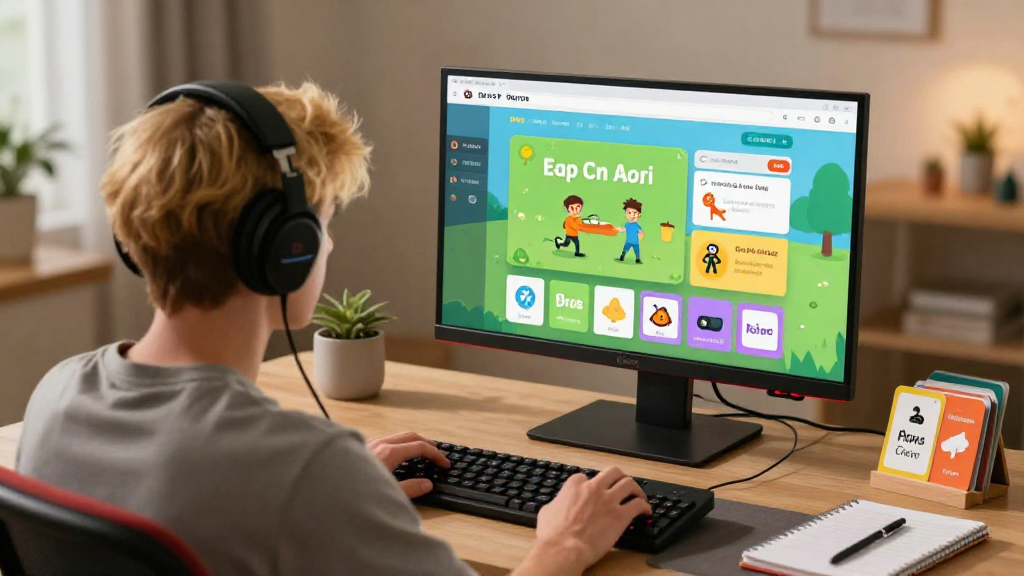
In recent years, the intersection of gaming and language learning has sparked interest amongst educators and gamers alike.
As technology advances, various avenues for learning languages have emerged, prompting the question:
What Role Does Gaming Play in Language Learning?
Gaming and language learning involve using video games as tools to enhance linguistic skills.
These games not only provide entertainment but also immerse players in new languages, creating an engaging context for vocabulary and grammar acquisition.
How Do Games Enhance Vocabulary Skills?
One of the primary benefits of gaming in language acquisition is its effectiveness in building vocabulary.
Players encounter words in context, which aids in memory retention.
-
Contextual Learning: In-game dialogue, quests, and items often require understanding context, pushing players to use their vocabulary in various scenarios.
-
Repetition and Reinforcement: Frequent exposure to terms and phrases helps reinforce learning. Actions often require players to repeat commands or phrases, solidifying knowledge.
-
Interactive Learning: Games often employ interactive elements like quizzes or multiple-choice questions, further stimulating learning through play.
Can Gaming Improve Listening and Speaking Skills?
Yes, gaming can significantly enhance listening and speaking skills.
Many games require players to listen carefully to instructions or dialogues, which helps in developing auditory comprehension.
-
Voice Acting: Many titles feature professional voice acting, which provides authentic pronunciation examples.
-
Shadowing Techniques: Players can practice shadowing, or repeating phrases in real-time, allowing for improvement in intonation and accent.
-
Online Multiplayer Games: Engaging in chat with other players, especially in voice chat scenarios, creates opportunities to practice speaking in a natural context.
Are There Specific Genres that Promote Language Learning?
Certain genres of games tend to promote gaming and language learning more effectively than others.
-
Role-Playing Games (RPGs): RPGs often feature extensive narratives and dialogues, offering rich language experiences.
– For example, games like Final Fantasy or The Witcher are filled with storylines that require understanding character interactions. -
Educational Games: These are specifically designed to teach languages.
– Duolingo and Rosetta Stone have gamified modules that make language learning fun. -
Simulation Games: Games like The Sims or Animal Crossing often use everyday language.
– These simulations provide context for everyday vocabulary and common phrases.
What Are the Social Benefits of Gaming in Language Learning?
The social aspect of gaming and language learning is noteworthy.
Multiplayer games connect players from around the world, fostering cultural exchange and language practice.
-
Community Interaction: Engaging with other players encourages dialogue, teamwork, and cultural exchange, providing a platform for real-life practice.
-
Peer Learning: Collaborative gameplay allows players to help each other learn new words and phrases.
-
Global Perspectives: Games help players understand cultural nuances and idioms used in various languages.
Can Gaming Be Efficient for Different Age Groups?
Absolutely! The benefits of gaming and language learning extend across various age demographics.
-
Children: Educational games specifically designed for younger audiences can facilitate vocabulary development.
– For instance, games like Endless Alphabet provide a fun way for children to learn new words. -
Teens and Adults: Action and narrative-driven games engage older audiences and can help improve complex language skills.
– Games like Dark Souls may not only enhance vocabulary but also foster critical thinking. -
Seniors: There are games targeting older adults to help keep their minds sharp while enhancing language skills, such as brain teasers and word puzzles.
What Are Some Effective Gaming Practices for Language Learning?
To maximize the benefits of gaming and language learning, consider the following practices:
-
Set Clear Goals: Define what you want to achieve with each gaming session, whether it’s expanding vocabulary, improving grammar, or enhancing listening skills.
-
Choose the Right Games: Opt for games that suit your language level and interests. Make sure they include dialogue and text in the target language.
-
Active Participation: Engage actively by mimicking pronunciation, repeating phrases, and even pausing the game to explore new vocabulary.
-
Join Online Communities: Participate in forums or social media groups where members discuss the language you are learning; share tips, and support one another.
-
Use Supplementary Resources: While gaming is beneficial, using additional resources like language apps, books, or tutors can complement your learning process.
What Are Potential Challenges in Using Gaming for Language Learning?
While gaming and language learning can be effective, there are challenges to be mindful of:
-
Over-Dependence on Gaming: Relying solely on games for language acquisition without other learning methods can limit overall proficiency and understanding.
-
Limited Vocabulary Scope: Not all games cover comprehensive vocabulary, especially in niche areas.
-
Frustration Levels: Some players may find certain games challenging, leading to discouragement. It’s essential to choose appropriate difficulty levels.
Conclusion: Is Gaming The Future of Language Learning?
In conclusion, gaming and language learning can complement each other in powerful ways.
With engaging narratives
and interactive environments, games not only make language learning enjoyable but can also yield significant educational benefits.
While challenges do exist, employing effective strategies, along with a balanced approach to language learning, can lead to successful outcomes.
As technology continues to evolve, we can expect further innovations that will further integrate gaming into language education.
The next time you sit down to play, remember—you might just be taking a step towards fluency!