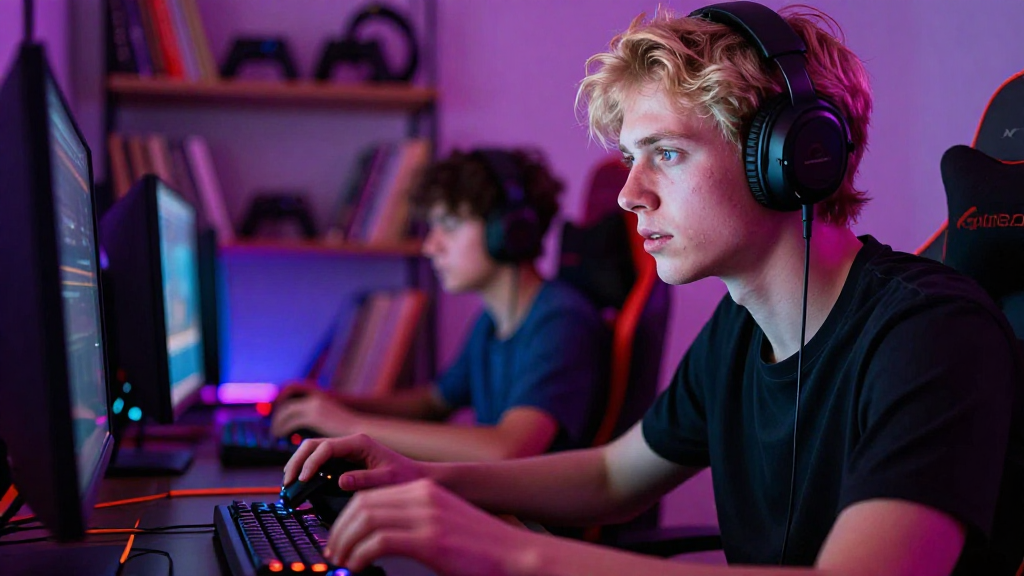
In today’s digitally-driven world, the relationship between gaming and rapid learning has become a hot topic among educators and parents alike.
What is the Connection Between Gaming and Rapid Learning?
Several studies suggest that gaming can enhance cognitive functions.
These functions include:
- Critical thinking
- Problem-solving
- Hand-eye coordination
- Multitasking
But how exactly does gaming facilitate this accelerated learning process?
How Do Video Games Enhance Cognitive Skills?
Cognitive skill development through gaming includes various aspects that boost rapid learning capabilities.
Players often engage in:
-
Strategic planning: Many games require players to think several steps ahead, teaching them to anticipate consequences and adapt their strategies.
-
Attention to detail: Quick decision-making in high-stakes environments sharpens the ability to focus on multiple details simultaneously.
-
Memory enhancement: Games that require players to remember complex puzzles or strategies boost both short-term and long-term memory abilities.
This interactive approach leads to engagement, which is essential for effective learning.
Can Gaming Improve Academic Performance?
Research has shown some correlation between gaming and rapid learning in academic settings.
How can gaming translate to better grades at school?
-
Engagement in learning: Video games often provide instant feedback, keeping players motivated to improve. This immediate reward system can mirror the instant gratification that comes from successful learning experiences in school.
-
Collaboration and teamwork: Multiplayer online games encourage players to work together, fostering communication skills and a sense of community.
-
Adaptability: By constantly adapting to new challenges in games, players develop a mindset that can be transferred to academic challenges.
So, can gaming create better learners in the classroom? The answer appears to be yes!
Which Types of Games are Best for Learning?
When it comes to maximizing the potential of gaming and rapid learning, not all video games serve the same educational purpose.
Here are some types of games that are particularly helpful:
-
Puzzle Games: Games like Sudoku and Tetris promote critical thinking and problem-solving skills.
-
Strategy Games: Titles like Civilization or StarCraft encourage strategic planning and resource management.
-
Role-Playing Games (RPGs): These immerse players in expansive narratives, teaching empathy, moral decision-making, and the importance of character development.
-
Simulation Games: Life simulation games like The Sims teach players about real-life scenarios, promoting social awareness and life skills.
Each of these genres contributes uniquely to various learning points.
Does Gaming Foster Creativity?
Creativity is another area where gaming can have a profound impact.
How does gaming encourage creative thinking?
-
Open-World Exploration: Games like Minecraft allow players to build and create their worlds, stimulating their imagination and creative problem-solving abilities.
-
Story Creation: Many games have narrative components where players can influence the outcome. This encourages them to think about story arcs, character development, and even ethical dilemmas.
-
Artistic Expression: Games that involve design elements inspire players to explore their artistic capabilities.
As a result, gaming not only builds skills but also fosters an innovative mindset.
Are There Any Downsides to Gaming?
While there are numerous benefits to gaming, the relationship between gaming and rapid learning is not without its pitfalls.
It’s important to be aware of the potential downsides:
-
Screen Time Overload: Excessive gaming can lead to health issues, including eye strain and a sedentary lifestyle.
-
Addiction Potential: Some players may find it challenging to moderate their gaming time, leading to addiction and negative impacts on academic performance.
-
Imbalance in Learning Techniques: Relying solely on gaming as a learning tool could inhibit the development of other essential skills that traditional educational methods provide.
These factors emphasize the importance of a balanced approach to learning.
How to Integrate Gaming into Education Effectively?
To capitalize on the gaming and rapid learning relationship, educators and parents must consider practical ways to integrate gaming into the learning process.
Here’s how:
-
Choose Educational Games: Select games designed with educational objectives, ensuring they align with learning goals.
-
Limit Play Time: Establish specific time frames for gaming to keep a balance between learning forms.
-
Encourage Group Play: Foster social interactions through multiplayer games, thus boosting teamwork skills and collaboration.
-
Debrief Post-Play: Discuss the skills and lessons learned after gaming sessions. This helps reinforce those skills in real-world scenarios.
-
Monitor Progress: Keep track of improvements in cognitive skills or academic performance to see if gaming strategies are effective.
By strategically implementing these methods, parents and educators can leverage the benefits of gaming for educational purposes.
Conclusion: The Future of Learning and Gaming
The intersection of gaming and rapid learning offers new avenues for education and skill development.
As research continues to evolve, we are likely to see more formal integrations of gaming in educational settings.
Understanding how to harness the potential of video games can transform learning experiences.
With the right balance and approach, educators and parents can create an enriching environment where gaming facilitates accelerated learning.
This fosters a generation that not only learns rapidly through gameplay but also enjoys the process.