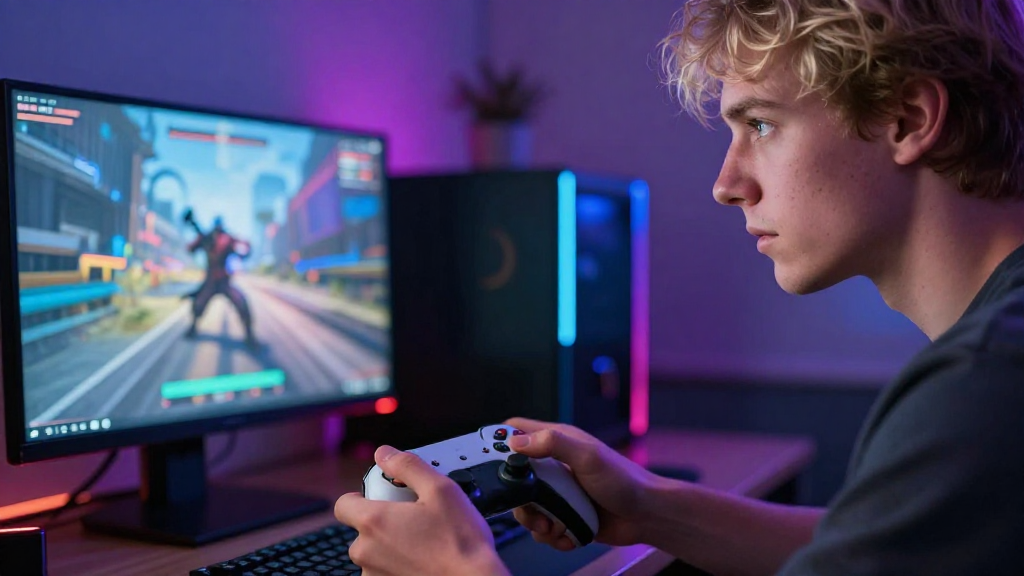
In today’s digital age, a growing number of people are exploring the relationship between gaming and fine motor skills.
While many parents worry about the impact of video games on their children’s development, researchers are uncovering potential benefits that gaming may offer.
What Are Fine Motor Skills?
Fine motor skills are critical for everyday tasks. They involve the small muscles in our hands and fingers, which enable us to perform precise movements.
These skills are essential for activities such as:
- Writing: Holding a pencil correctly and forming letters takes a high level of control.
- Eating: Using utensils and cutting food requires coordination.
- Typing: Typing accurately on a keyboard showcases nimble finger movement.
- Crafting: Engaging in arts and crafts necessitates intricate hand movements.
In essence, fine motor skills support various areas of life, ranging from academic to practical daily activities.
How Does Gaming Influence Fine Motor Skills?
The question on everyone’s mind is whether gaming and fine motor skills are connected.
Research indicates that engaging in video games can facilitate the development of these fine motor skills through:
- Hand-eye coordination: Many games require players to synchronize visual input with their physical responses.
- Reaction time: Fast-paced games can enhance a player’s ability to respond quickly to changing environments.
- Precise control: Strategy games and platformers often demand careful manipulation of game characters.
Numerous studies have illustrated these connections, suggesting that gaming may indeed serve as a valuable tool for improving fine motor skills.
What Types of Games Are Most Beneficial?
Not all games are created equal when it comes to developing fine motor skills.
Here are some genres that may be particularly effective:
-
Action Games: These fast-paced games typically require quick reflexes and precise aiming.
– Benefits: Improved reaction times and hand-eye coordination. -
Puzzle Games: Games that challenge players to solve complex puzzles often require fine control and strategic thinking.
– Benefits: Development of problem-solving skills alongside enhanced dexterity. -
Simulation Games: These often mirror real-life scenarios, such as flying an airplane or playing musical instruments, enhancing precise motor skills.
– Benefits: Fine-tuning skills in an engaging and risk-free environment. -
Rhythm Games: Games that require players to hit notes in time with music can significantly boost timing and coordination.
– Benefits: Increased finger agility and coordination through repetitive motions. -
Platformers: These games involve navigating characters through complex landscapes, promoting fine movement control.
– Benefits: Improved manipulation and control of hand movements.
By engaging in these types of games, players can develop crucial fine motor skills that are beneficial both on and off the screen.
Is There Scientific Support for Gaming and Fine Motor Skills?
When discussing gaming and fine motor skills, one cannot overlook the scientific studies that have explored this relationship.
A prominent research finding published in Neuroscience & Biobehavioral Reviews showcased how action video game players exhibited superior hand-eye coordination compared to non-gamers.
Additionally, a study in Computers in Human Behavior highlighted that children who played video games showed marked improvement in specific fine motor tasks, particularly those requiring timing and dexterity.
The evidence is compelling:
- Skill Transfer: Players often find that skills acquired in gaming can transition to actual tasks.
- Practice and Repetition: The repetitive nature of gaming reinforces neural pathways responsible for fine motor skills.
Could Gaming Harm Fine Motor Skills?
While there are numerous benefits of gaming and fine motor skills, there are potential drawbacks worth considering.
Excessive gaming can lead to:
- Poor Posture: Long periods of gaming may encourage improper seating, impacting overall motor skill development.
- Limited Variety of Movement: Focusing exclusively on gaming may restrict the engagement in other physical activities that also promote fine motor skills.
- Eye Strain: Prolonged screen time can lead to fatigue, impacting visual motor coordination.
It is essential for gamers, particularly younger individuals, to strike a balance.
Incorporating other activities that promote physical engagement can lead to well-rounded development.
How Can Parents Support the Development of Fine Motor Skills Through Gaming?
Parents play a pivotal role in guiding their children’s gaming experiences.
Here are actionable tips to ensure gaming is beneficial for fine motor skills:
-
Choose Appropriate Games: Focus on games that promote fine motor skills, such as action and puzzle games.
-
Set Time Limits: Ensure that gaming is balanced with physical activities and limited to appropriate durations.
-
Engage Together: Play games as a family to model healthy gaming habits and share the experience.
-
Encourage Breaks: Promote regular breaks to avoid fatigue and encourage moving around during gaming sessions.
-
Monitor Progress: Observe your child’s gameplay to understand their engagement levels and any noticeable improvements in fine motor skills.
By adopting these strategies, parents can nurture the benefits of gaming and fine motor skills while mitigating potential downsides.
Conclusion: Should You Embrace Gaming for Fine Motor Skills?
The connection between gaming and fine motor skills presents a fascinating subject for further exploration.
Evidence suggests that engaging in video games may enhance various fine motor skills, particularly in children and adolescents.
As the digital landscape continues to evolve, acknowledging the positive aspects of gaming can foster a balanced approach to its integration into our lives.
Ultimately, gaming in moderation, alongside other physical activities, can lead to improved fine motor skills and support overall developmental goals.
So, the next time someone questions the benefits of video gaming, you can confidently share the insights gleaned from research.
Gaming might just be a modern pathway to advancing fine motor skills.