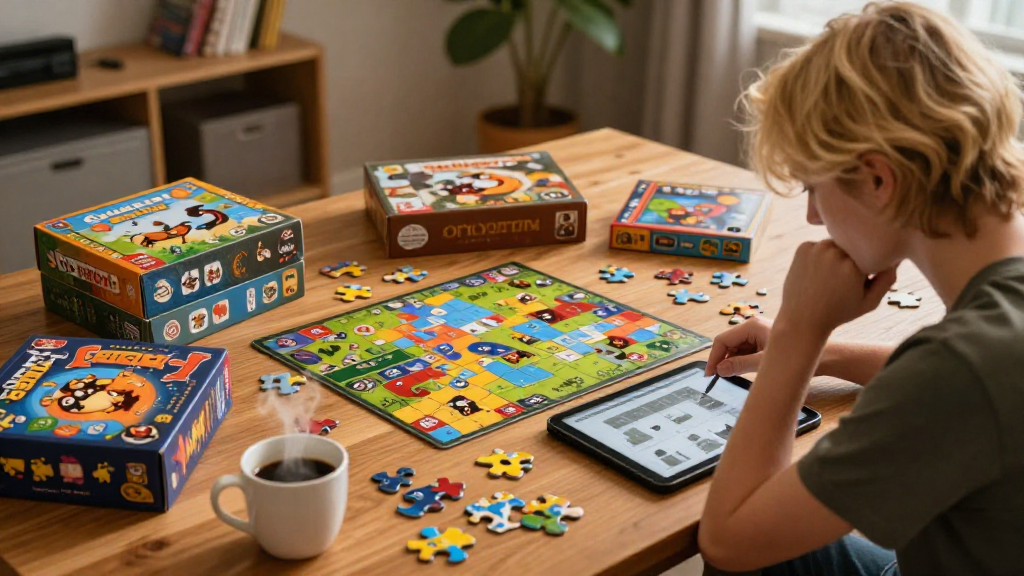
Have you ever wondered why gamers love puzzles?
If so, you’re not alone.
Puzzle games have captivated audiences for decades, combining mental challenge with engaging gameplay.
In this article, we’ll explore the reasons behind the popularity of puzzle games and why they continue to attract dedicated fans.
What Makes Puzzle Games So Appealing?
Puzzle games are unique because they offer:
- Mental Stimulation: Puzzles require players to think critically, enhancing problem-solving skills and encouraging logical thinking.
- Escapism: These games provide an escape from reality, allowing players to immerse themselves in a world where solving problems takes center stage.
- Satisfaction of Achievement: There’s a unique pleasure derived from solving a difficult puzzle, leading to a rush of satisfaction that keeps gamers coming back for more.
Understanding why gamers love puzzles requires a nuanced view of the interplay between cognitive challenge and emotional satisfaction.
How Do Puzzle Games Enhance Critical Thinking Skills?
One compelling aspect of the question of why gamers love puzzles revolves around the enhancement of critical thinking skills.
Puzzle games often require players to:
- Analyze patterns and deduce relationships.
- Consider multiple solutions to arrive at answers.
- Apply various strategies and adapt when necessary.
This mental workout not only sharpens players’ cognitive abilities but also translates to improved skills in real-life situations.
What Role Does Game Design Play in Enjoyment?
The mechanics of puzzle games significantly contribute to their allure. Game design elements that engage players include:
- Intuitive Controls: Most puzzle games are designed with user-friendly interfaces, making it easier for players to jump right in without overwhelming complexity.
- Reward Systems: Games often incorporate reward mechanics, offering points or unlockable content when players solve puzzles, which hooks them into continual play.
- Progressive Difficulty: To keep players engaged, many puzzle games start easy and gradually increase in difficulty, giving a sense of accomplishment without being overly frustrating.
These elements ensure that players remain engaged and challenged, answering part of the question about why gamers love puzzles.
How Do Social Interactions Impact Puzzle Gaming?
The social aspect of gaming cannot be overlooked. Puzzle games, especially those with cooperative or competitive elements, foster a sense of community. Features such as:
- Online Leaderboards: Players can compare their scores with friends or the global community.
- Multiplayer Modes: Cooperative puzzle games allow players to work together, enhancing not only the challenge but also the enjoyment factor.
- Streaming and Sharing: Many gamers enjoy sharing their puzzle-solving experiences on platforms like Twitch and YouTube, fostering engagement through shared strategies.
These social interactions create a communal atmosphere around puzzling, propelling the enjoyment factor even further.
Are Puzzle Games Good for Stress Relief?
Another reason why gamers love puzzles is their potential for stress relief.
Engaging in puzzle games allows individuals to:
- Focus on Problem Solving: This creates a temporary distraction from stressors in daily life.
- Engage in Calm Activities: Many puzzle games, such as jigsaw puzzles or casual mobile games, offer a serene gaming experience, promoting relaxation.
- Experience Mindfulness: The repetitive nature of certain puzzle games can create a meditative state, leading to enhanced mental well-being.
This stress-relieving quality helps to explain why many gamers gravitate towards puzzles as a form of entertainment and relaxation.
What Psychological Benefits Do Puzzle Games Provide?
Beyond stress relief, puzzle games have several psychological benefits that further answer why gamers love puzzles. These include:
- Improved Memory: Many puzzles, especially ones involving pattern recognition, help in enhancing memory skills.
- Boosted Creativity: Engaging with intricate puzzles allows for creative thought processes, nurturing innovative problem-solving.
- Increased Resilience: Players often need to try multiple times before solving a puzzle. This trial-and-error process builds resilience as they learn from their mistakes.
These psychological benefits provide additional motivation for gamers to engage with puzzle games, solidifying their place in the gaming landscape.
Do Puzzle Games Encourage Lifelong Learning?
An often-overlooked aspect is the educational value that puzzle games provide. These games can encourage lifelong learning by:
- Teaching New Concepts: Many puzzle games incorporate educational themes, introducing players to subjects like math, language, or science.
- Encouraging Curiosity: Players often search for information or strategies outside the game to improve their play.
- Fostering a Growth Mindset: The challenges presented by puzzles help to instill a belief in the value of efforts and learning over mere talent.
In this way, puzzle games serve not only as entertainment but also as tools for personal development.
Why Are Classic Puzzle Games Still Popular?
Classic puzzle games like “Tetris,” “Sudoku,” and “Minesweeper” have remained popular for years, continuously attracting new generations of gamers. The enduring popularity of these games can be attributed to:
- Simplicity: Classic puzzle games are typically easy to understand but difficult to master, making them accessible to all.
- Timeless Gameplay: Their straightforward mechanics ensure that they withstand the test of time.
- Nostalgia: For many older gamers, classic puzzles invoke fond memories of their early gaming experiences, fostering a connection that transcends generational gaps.
This timeless appeal adds a layer to the ongoing conversation about why gamers love puzzles.
Conclusion: Why Gamers Love Puzzles
In conclusion, the question of why gamers love puzzles can be answered through multiple lenses.
From enhancing critical thinking skills to providing stress relief, puzzle games encompass a multifaceted appeal.
Through their engaging game design, social dynamics, and psychological benefits, these games fulfill a variety of needs that resonate deeply with players.
As the gaming industry evolves, puzzle games will undoubtedly continue to challenge, engage, and entertain, confirming their beloved status among gamers.
So next time you see someone immersed in a puzzle game, remember: they’re not just playing— they’re engaging in a rewarding experience rooted in the very essence of what makes gaming enjoyable.